Marketing Automation AI Tools That Actually Make Work Easier
Explore how marketing automation AI tools help teams save time, personalize campaigns, and scale results without losing the human touch.
Jan 8, 2026



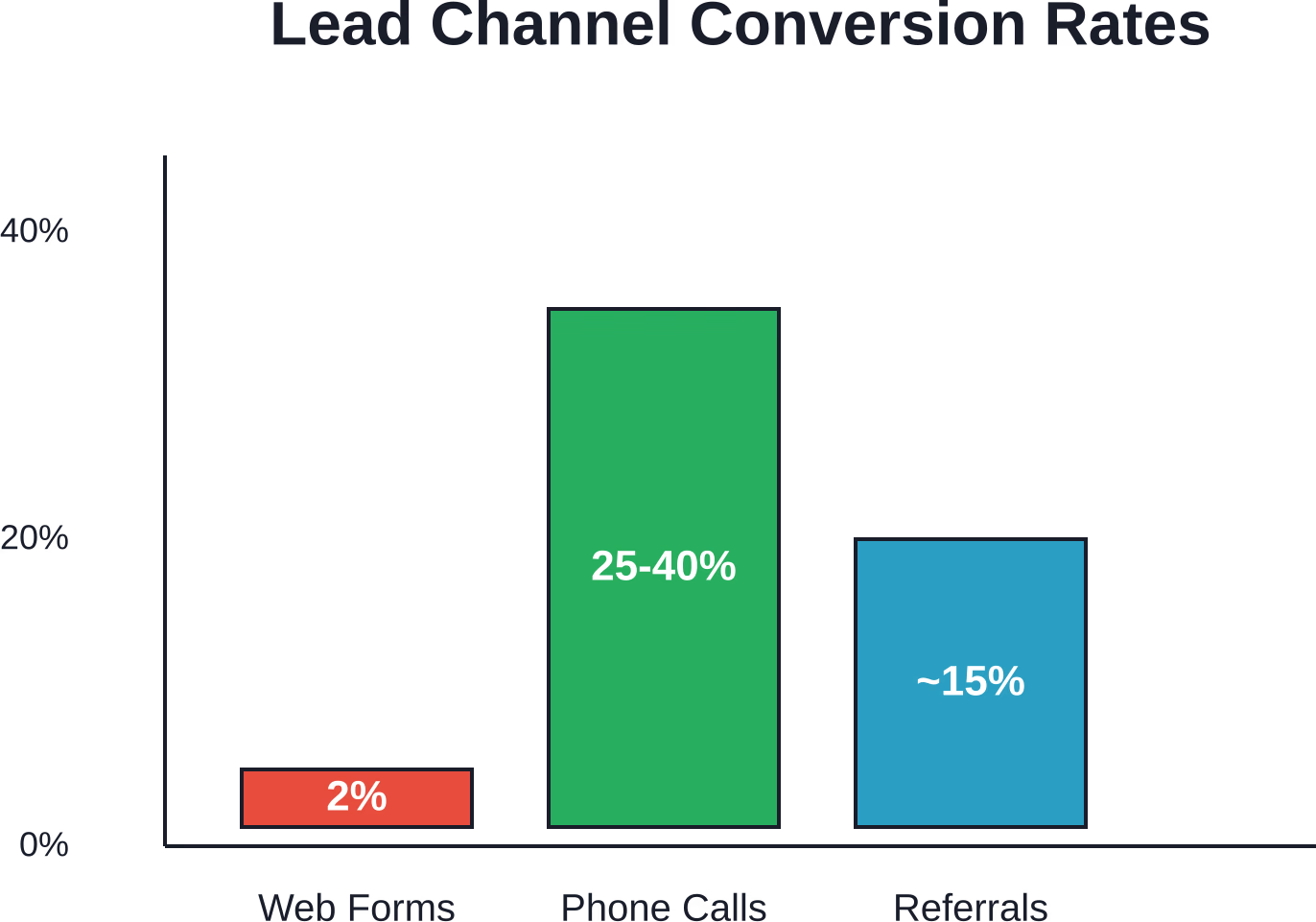
Insurance agents can boost sales through a multi-channel approach combining digital marketing (SEO, social media, email automation), relationship-building tactics (referrals, community events, partnerships), and technology tools (CRM automation, AI-driven analytics). Authoritative research shows agents who automate administrative tasks save 8–10 hours per week, while inbound phone calls convert at 25–40% compared to just 2% for web forms, making integrated strategies essential for profitability.
Competition in the insurance industry has never been fiercer. With thousands of agencies vying for the same pool of prospects, standing out requires more than just good coverage and competitive rates.
Marketing effectively separates profitable agencies from those that struggle. But here's the thing—not all marketing tactics deliver the same returns.
This guide covers actionable marketing ideas insurance agents actually use to generate leads, retain clients, and build sustainable businesses. These aren't theoretical concepts. They're strategies grounded in what works in 2026, backed by data from academic research and industry organizations.
The insurance landscape has shifted dramatically. Consumers research online before they ever pick up the phone. They read reviews, compare quotes, and evaluate your digital presence before deciding whether you're worth their time.
Academic research from Walden University examined profitable small independent insurance agencies in Fort Lauderdale and identified four critical success themes: targeted and adaptable competitive strategies, customer satisfaction, professionalism, and referrals. These agencies didn't just sell policies—they built marketing systems that delivered consistent results.
Real talk: if your agency doesn't have a clear marketing plan, you're leaving money on the table. The good news? You don't need a massive budget to compete. You need the right strategies executed consistently.
Before diving into advanced tactics, nail the fundamentals. Your digital presence serves as your 24/7 sales representative.
Too many insurance agents treat their website as an online brochure. That's a mistake. Your site should actively generate leads.
Focus on clear calls to action—quote requests, contact forms, phone numbers prominently displayed. Make it dead simple for visitors to take the next step. Navigation should be intuitive, with separate pages for each insurance type you offer.
Mobile optimization isn't optional anymore. Most of your traffic comes from smartphones. If your site looks broken on mobile, prospects bounce immediately.
When someone searches "auto insurance agent near me," you want your agency appearing in those results. Local search engine optimization makes that happen.
Claim and optimize your Google Business Profile. Keep your hours updated, add photos of your office, and respond to every review—positive or negative. Consistency matters: your name, address, and phone number should match exactly across every directory listing.
Create location-specific content. Write blog posts about insurance requirements in your state, local events your agency sponsors, or community stories. Search engines reward relevant local content.
Here's a sobering stat: research shows 95% of consumers rely on reviews to make purchasing decisions. Your online reputation directly impacts your bottom line.
Don't just hope for good reviews—build a system to generate them. After closing a policy or resolving a claim smoothly, send a simple follow-up email requesting a review. Make it easy by including direct links to your Google or Yelp profile.
When negative reviews appear (and they will), respond professionally and quickly. Show you care about customer experience. Prospects reading reviews pay attention to how you handle criticism, not just the complaints themselves.

Extuitive helps businesses predict which ads are more likely to get clicks and conversions before launch. It can test creative options at scale, compare them against performance signals, and help teams avoid putting budget behind weak ideas.
For insurance agents, this can support service, quote, or local campaign ideas without relying only on guesswork.
Extuitive can help with:
👉 Book a demo with Extuitive to review your ad ideas.
Social media can be a time sink or a lead-generation machine. The difference comes down to strategy.
You don't need to be everywhere. Focus on where your prospects actually spend time.
Facebook remains a valuable platform for insurance agents. Its demographic skews older—exactly where many insurance buyers live. Facebook's advertising tools also offer exceptional targeting for local businesses.
LinkedIn works well for commercial insurance and business-focused agents. The professional network lets you connect with business owners, HR managers, and decision-makers.
Instagram can work if you serve younger demographics or want to showcase company culture. Research indicates 73% of businesses using Instagram report acquiring new clients from Instagram Story views.
Nobody wakes up excited to read insurance content. Your job is making it interesting anyway.
Share client success stories (with permission). Post quick insurance tips that save people money. Create short videos explaining confusing coverage terms in plain English.
Video performs exceptionally well. Industry data shows 61% of Facebook users report increased interest in a product or service after watching a video. These don't need Hollywood production value—smartphone videos shot in your office work fine if the information is valuable.
Consistency beats perfection. Posting three times a week on schedule outperforms sporadic bursts of daily posts followed by weeks of silence.
Email remains one of the highest-ROI marketing channels available. The key is sending messages people actually want to receive.
Start with your existing clients. Every policyholder should be on your email list (with permission). They're your warmest audience and most likely source of referrals.
Offer value in exchange for email addresses. Create a free downloadable guide—"10 Ways to Lower Your Home Insurance Premium" or "Business Insurance Checklist for New Entrepreneurs." Promote it on your website and social channels.
Segment your list. Don't send the same message to a 25-year-old renter and a 55-year-old business owner. Targeted emails based on demographics, policy types, or life stage perform significantly better than generic blasts.
According to data from insurance technology experts, agents who automate administrative tasks report saving 8–10 hours per week, according to insurance technology experts—time that can be reinvested in selling or meeting with clients.
Set up automated email campaigns triggered by specific actions. When someone requests a quote, they enter a nurture sequence that follows up over the next two weeks. When a policy renewal approaches, send automated reminders starting 60 days out.
Email automation platforms let agents set up these sequences once and let them run continuously. The technology handles the repetitive work while maintaining consistent prospect communication.
Nobody wants an inbox full of "BUY NOW" messages. Mix in genuinely helpful content.
Monthly newsletters can include insurance tips, local news, seasonal reminders (winterizing homes, safe driving in summer), and coverage updates. Keep the tone conversational and the length scannable.
Use emails to educate. Explain coverage gaps people don't realize they have. Share claim stories that illustrate why certain policies matter. Position yourself as a trusted advisor, not just a salesperson.
Academic research on profitable insurance agencies identified referrals as one of four critical success themes. Referrals close faster, cost less to acquire, and tend to be higher-quality clients.
But referrals don't just happen. They require systems.
Make it crystal clear you want referrals and reward people who provide them. Simple programs work best: "Refer a friend and you both get a $25 gift card when they purchase a policy."
Timing matters. Ask for referrals right after delivering exceptional service—after helping with a claim, after someone expresses gratitude, or during policy renewal when satisfaction is high.
Provide referral cards clients can hand out. Make them attractive and professional, with your contact information and a clear benefit for the referred person ("Mention this card for a free insurance review").
Partner with businesses that serve similar clients but don't compete with you. Real estate agents, mortgage brokers, auto dealerships, and financial planners all encounter people who need insurance.
Create mutual referral arrangements. You send your clients to a trusted real estate agent; they send their buyers to you for homeowners insurance. Both parties benefit.
Consider formal partnership programs with clear expectations. Some agents formalize these with co-marketing agreements, joint seminars, or shared client appreciation events.
Visibility in your community translates directly to trust and referrals. Sponsor local sports teams, participate in chamber of commerce events, or volunteer for community organizations.
These activities put your name in front of potential clients repeatedly. Familiarity breeds trust. When someone needs insurance, they'll think of the agent whose name they've seen around town.
Host educational workshops at local libraries or community centers. Free seminars on "Understanding Medicare Options" or "Insurance for New Homeowners" position you as an expert while generating qualified leads.
Organic marketing builds long-term success, but advertising can accelerate growth when done strategically.
Facebook's advertising platform offers unmatched targeting for local insurance agents. You can target by location, age, homeownership status, life events (recent moves, new jobs), and interests.
Start with small budgets and test different audiences. A $10-per-day campaign can generate meaningful leads if targeted correctly. Focus on specific offers: "Free Auto Insurance Quote—Could Save You $500" performs better than generic "We Sell Insurance" ads.
Use lead generation ad formats that let prospects submit contact information directly within Facebook, removing friction from the process. Follow up on these leads immediately—speed to contact matters enormously.
When someone searches "car insurance quotes in [your city]," they're ready to buy. Google Ads puts you at the top of those searches.
Focus on local, specific keywords. "Auto insurance Dallas" works better than just "auto insurance." Use location extensions to show your office address and make it easy for nearby prospects to find you.
Budget carefully. Insurance keywords can be expensive. Start with a limited geographic area and specific policy types where you're most competitive.
Most website visitors don't convert on their first visit. Retargeting ads follow them around the web, keeping your agency visible.
Set up retargeting pixels on your website. When someone visits your auto insurance page but doesn't request a quote, they'll see your ads on Facebook, Instagram, and across the web for the next 30 days.
Retargeting costs significantly less than cold advertising because you're reaching warm audiences who already know your brand. Conversion rates tend to be much higher.
Technology isn't replacing insurance agents—it's making the best agents more productive and profitable. According to insurance technology organizations, global spending on AI and Generative AI (GenAI) systems is experiencing rapid growth, with the market valued at nearly $235 billion in 2024 and projected to grow by almost 30% annually, exceeding $300 billion in 2026 before approaching $632 billion by 2028.
Customer relationship management software organizes your contacts, tracks interactions, and automates follow-up tasks. Without a CRM, leads fall through cracks and opportunities get missed.
Modern insurance CRMs automate email campaigns, send text message reminders, and track where each prospect sits in your sales pipeline. They eliminate the mental burden of remembering to follow up with dozens of prospects.
Choose a system designed for insurance agents specifically. Generic CRMs require extensive customization, while insurance-focused platforms include policy tracking, renewal reminders, and compliance features built in.
Artificial intelligence tools now help agents identify which prospects are most likely to convert, when to contact them, and what messaging resonates best.
Predictive analytics can score leads based on conversion probability, letting agents prioritize their time on the highest-value opportunities. Email platforms use AI to determine optimal send times for each recipient individually.
Data visualization tools turn raw numbers into actionable insights. Instead of staring at spreadsheets, agents see clear charts showing which marketing channels deliver the best ROI, which policy types generate the most profit, and where to focus their efforts.
Research shows agents who automate administrative work save 8–10 hours per week. That's an entire workday recovered to focus on revenue-generating activities.
Automate appointment scheduling with tools that let clients book directly on your calendar. Set up automated text confirmations to reduce no-shows. Use e-signature platforms to eliminate printing, scanning, and mailing paperwork.
Create email templates for common scenarios—quote follow-ups, policy renewal reminders, claim status updates. Personalize them with merge fields, but eliminate the need to write from scratch each time.
Content marketing builds trust and authority over time. It's not the fastest marketing strategy, but it compounds.
Write blog posts addressing questions prospects actually ask. "What Does Liability Insurance Cover?" and "How Much Life Insurance Do I Need?" target searches your ideal clients make.
Optimize posts for search engines with clear titles, proper headings, and internal links to related content. But write for humans first—search engines reward content that genuinely helps readers.
Consistency matters more than volume. Publishing one quality post per week outperforms sporadic bursts of daily posts. Build a sustainable content calendar and stick to it.
Video content continues to dominate online engagement. YouTube is considered the second largest search engine in the world, and research shows Video content continues to dominate online engagement on platforms like YouTube.
Create simple explainer videos for different insurance types. Record quick tips for lowering premiums or avoiding common coverage mistakes. Film client testimonials (with permission).
Production quality matters less than content quality. Smartphone videos shot in good lighting with clear audio work perfectly fine. Authenticity resonates more than polish.
Create valuable guides, checklists, or worksheets prospects can download in exchange for their email address. These "lead magnets" grow your email list while providing genuine value.
Examples: "New Homeowner Insurance Checklist," "Small Business Insurance Planning Guide," "Life Insurance Needs Calculator." Make them professionally designed but focused on usefulness over flashiness.
Promote these resources through social media, blog posts, and paid advertising. They serve dual purposes—lead generation and authority building.
Digital tactics dominate modern marketing discussions, but traditional methods still deliver results for insurance agents.
Physical mail stands out in an inbox dominated by digital noise. Well-targeted direct mail campaigns generate responses, particularly with older demographics.
Focus on specific triggers: new movers, new car registrations, business license filings. Send personalized letters addressing their specific situation, not generic postcards.
Include a clear call to action and make responding easy. QR codes bridge offline and online by letting recipients quickly visit a mobile-optimized landing page.
Community newspapers, local magazines, and neighborhood newsletters reach engaged local audiences. These readers actively seek local businesses and tend to be loyal customers.
Design ads that educate rather than just promote. "5 Insurance Mistakes New Parents Make" with your agency information performs better than "Call for a Quote!"
Consistency matters in print advertising. Running an ad once gets ignored; running it monthly for six months builds recognition and trust.
Join local business networking groups, chambers of commerce, and professional associations. Regular attendance builds relationships that turn into referrals.
Don't join with the immediate expectation of sales. Focus on building genuine relationships and providing value to other members. Referrals follow naturally when people know, like, and trust you.
Consider leadership roles in these organizations. Serving on committees or boards significantly increases your visibility and positions you as a community leader.
Marketing without measurement wastes money. Track key metrics to understand what's working and what's not.
Lead volume by source tells you which channels generate the most prospects. Track phone calls, form submissions, email inquiries, and walk-ins separately.
Conversion rate by source matters even more than volume. Ten referrals that convert at 50% are more valuable than 100 web leads that convert at 2%.
Cost per acquisition shows how much you're spending to gain each new client. Calculate this by dividing total marketing spend by new clients acquired. Compare across channels to optimize budget allocation.
Customer lifetime value indicates how much revenue each client generates over their entire relationship with your agency. This metric justifies marketing spend—if each client is worth $5,000 over ten years, spending $200 to acquire them makes perfect sense.
Google Analytics tracks website traffic, behavior, and conversions. See which pages perform best, where traffic comes from, and which sources lead to quote requests.
Call tracking software assigns unique phone numbers to different marketing channels, revealing which ads or campaigns drive phone calls. Remember, phone calls convert at 25–40% compared to just 2% for web forms, making call tracking particularly valuable.
CRM reporting shows pipeline velocity, conversion rates by agent, and revenue by client source. Modern platforms include built-in dashboards that visualize key performance indicators.
Marketing is never "done." The best agents continuously test new approaches, learn from results, and adjust their strategies.
Run A/B tests on email subject lines, ad headlines, and landing page designs. Small improvements compound over time. A landing page that converts at 5% instead of 3% generates 67% more leads from the same traffic.
Review marketing performance monthly. What improved? What declined? Why? Use data to guide decisions rather than hunches.
Don't abandon strategies too quickly, but don't cling to tactics that clearly aren't working. Give new approaches 60–90 days to show results before making major changes.
Learning from others' mistakes saves time and money. Here are pitfalls many insurance agents encounter.
Trying to execute every marketing tactic simultaneously guarantees mediocre results. You can't master SEO, run daily social media, manage paid ads, attend networking events, produce video content, and write blog posts all at once—at least not well.
Choose three to five core strategies and execute them consistently. Master those before adding more to your plate.
Obsessing over new clients while ignoring existing ones is expensive and short-sighted. Retention costs far less than acquisition, and satisfied clients generate referrals.
Balance acquisition marketing with retention efforts. Send birthday cards, policy anniversary notes, and regular check-ins. Host client appreciation events. Make existing clients feel valued, not forgotten once they've signed.
Most insurance searches happen on smartphones. If your website isn't mobile-friendly, you're losing prospects before they ever contact you.
Test your site on actual phones, not just desktop browsers. Forms should be easy to complete with thumbs. Phone numbers should be clickable. Load times should be fast even on slower connections.
Your website says one thing, your Facebook page says something different, and your business cards look nothing like either. Inconsistent branding creates confusion and undermines trust.
Develop clear brand guidelines—colors, fonts, logo usage, messaging tone—and apply them consistently across every touchpoint. Consistency builds recognition and professionalism.
The insurance agents who consistently generate leads and grow their businesses don't rely on one magic marketing tactic. They build integrated systems where multiple strategies work together.
Your website captures traffic from SEO and paid ads. Email automation nurtures those leads over time. Social media keeps you visible between purchase cycles. Referral programs turn happy clients into a consistent lead source. Each component supports the others.
Start with the fundamentals—clean website, optimized Google Business Profile, email system, and referral process. Master those before layering on advanced tactics. Consistency beats complexity every single time.
Track your results, learn from the data, and continuously refine your approach. Marketing evolves, consumer behavior changes, and new platforms emerge. The agents who stay curious and adaptable will always have a competitive advantage.
Now the question is: which three marketing strategies will you implement this month? Pick your starting point, commit to 90 days of consistent execution, and measure what happens. Your future clients are out there searching for exactly what you offer. Make sure they can find you.


