Best Shopify Page Builder: What Actually Works
Looking for the best Shopify page builder? We compared top tools by speed, flexibility, and real-world results - just honest insights.
Jan 6, 2026



The best dropshipping products for 2026 span tech accessories, beauty essentials, home organization items, and pet supplies—categories that combine high demand with strong profit margins. According to Statista Market Forecast, revenue in the eCommerce market is projected to reach US$3.88tn in 2026, creating massive opportunities. Winning products share three traits: low shipping costs, high perceived value, and clear problem-solving benefits that resonate with today's consumers.
The dropshipping market keeps expanding, but here's the thing—finding products that actually sell profitably has become harder. Too many stores compete on the same tired items, leading to price wars that destroy margins.
According to the U.S. Census Bureau, electronic shopping and mail-order houses grew by 106% between 2017 and 2022, adding $546.7 billion in revenue. That growth continues in 2026, but success now requires strategic product selection rather than copying what competitors already sell.
This guide breaks down the most profitable dropshipping products for 2026, backed by real sales data and market analysis. The focus stays on items with proven demand, strong profit potential, and sustainable competitive advantages.
Not every trending item makes a profitable dropshipping product. The best performers share specific characteristics that separate them from mediocre choices.
Look for products that check these boxes: compact and lightweight (to minimize shipping costs), solve a clear problem or fulfill a strong desire, have a wow factor that stops scrolling, and offer margin potential of at least 3x cost.
Real talk: the old advice about selling what's trending on Facebook ads doesn't cut it anymore. Markets saturate fast in 2026.
According to analysis from multiple dropshipping platforms, winning products consistently demonstrate low shipping costs (keeping them compact and under 2 pounds), high consumer demand (validated through search volume and marketplace data), and strong profit margins (allowing for 40-60% markup after ad costs).
Shopify data shows that successful dropshippers focus on categories like pet supplies, tech accessories, beauty products, and fashion—niches where these three traits align naturally.

Lists of winning dropshipping products are everywhere, but they don’t guarantee results. A product might have worked for someone else, in a different market or with a different creative. By the time you test it, the demand can already be gone.
Extuitive helps you look at that before spending anything. Instead of relying on lists alone, it evaluates product creatives to estimate how people are likely to respond. That way, you’re not just copying trends – you’re checking whether a product still has a chance to work right now.
If you’re building your shortlist for 2026, it makes sense to filter ideas before testing them live. Use Extuitive to review your options and move forward with the ones that still make sense.
Market data reveals which product categories consistently generate revenue for dropshippers. These niches combine accessibility for beginners with scaling potential for experienced sellers.
Home and garden products generated over $1.2 million in combined sales for top dropshippers in recent 30-day periods, according to marketplace analytics. The demand stems from consumers wanting better space utilization without major renovations.
Modular wall shelf systems perform exceptionally well at price points between $35-$65. These items solve cluttered walls and appeal to the desire for control and personalization—powerful psychological triggers.
Other strong performers include drawer dividers, under-sink organizers, closet systems, and magnetic spice racks. The key stays compact sizing and clear before-and-after visual appeal for social media marketing.
The phone and tablet accessories category shows consistent demand with relatively low competition in specific sub-niches. Top products brought in over $13,000 in recent monthly sales across the cameras and photos category alone.
Winning items include wireless charging pads (especially multi-device versions), phone camera lens attachments, cable management systems, and laptop stands. Average price ranges from $25-$75, offering healthy margins.
But wait—the saturation problem exists here. Focus on accessories for newer phone models or solve specific pain points like "tangled cable frustration" rather than generic "phone case" approaches.
Beauty products maintain strong performance, particularly items addressing specific skincare concerns. The category benefits from repeat purchase potential and strong social proof dynamics.
According to Shopify trend data, tallow moisturizers saw significant search growth in late 2025 and early 2026. Jade rollers, LED face masks, and specialized skincare tools also perform consistently.
The winning approach focuses on education-based content marketing. Beauty buyers want to understand how products work and see real results from actual users.
Pet supplies represent one of the most recession-resistant dropshipping niches. Pet owners prioritize their animals' comfort and will spend accordingly.
Top performers include orthopedic pet beds (especially for aging dogs), interactive feeding toys, grooming tools, and portable water bottles for walks. Recent data shows this category generating $95,000+ in monthly revenue for top dropshippers.
The emotional connection pet owners have with their animals makes this niche particularly responsive to story-based marketing and user-generated content.
Baby products brought in over $82,000 in recent 30-day periods for leading dropshippers. New parents actively search for solutions to common challenges—feeding difficulties, sleep problems, safety concerns, and developmental support.
Winning products include baby sleep aids, portable changing pads, bottle warmers, and developmental toys. Price points typically range from $20-$60, balancing affordability with quality perception.
Parents research extensively before buying, so detailed product descriptions, safety certifications, and genuine reviews become critical conversion factors.
The art supplies niche generated over $28,000 for top dropshippers recently. This category benefits from both hobbyist and professional buyers seeking quality materials at reasonable prices.
Watercolor sets, sketching pencils, canvas panels, and specialty brushes all perform well. The market spans weekend painters to serious artists, offering multiple customer segments to target.
Content marketing works exceptionally well here—tutorial videos, technique guides, and artist spotlights drive engagement and establish authority.
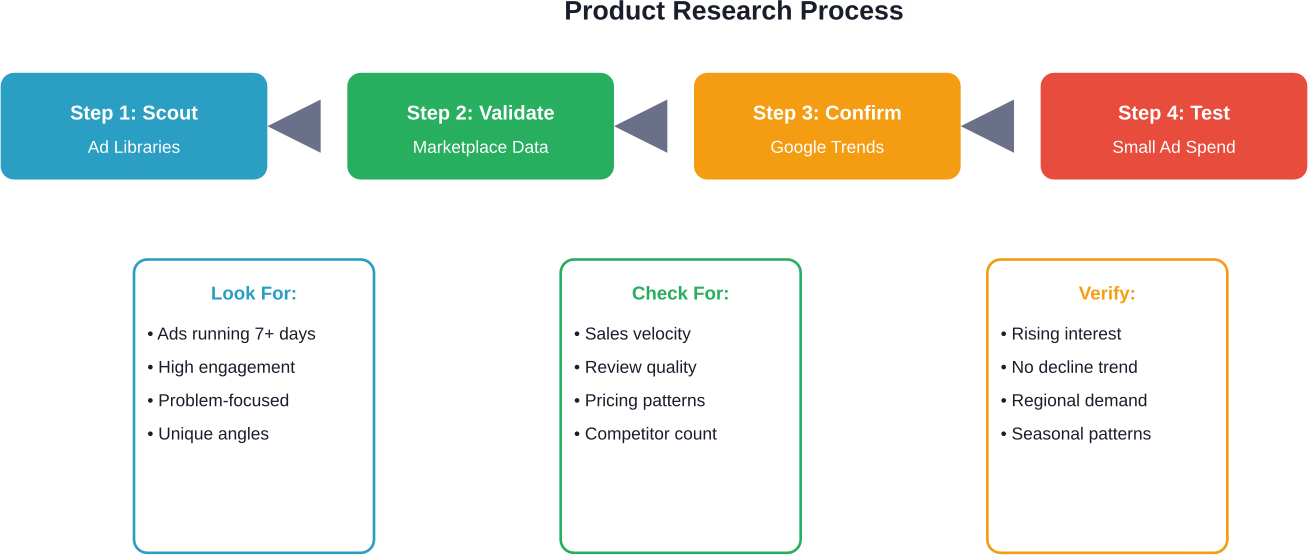
Product research separates profitable stores from failing ones. The process requires systematic approaches rather than hoping something works.
Facebook Ad Library, TikTok Creative Center, and Pinterest Trends provide goldmines for product discovery. Search for keywords like "get yours now," "limited stock," or "50% off today" to surface active dropshipping ads.
What separates winners from losers? Look for ads running for 7+ days (indicating profitability), high engagement relative to page size, and creative angles focused on specific problems rather than generic benefits.
The short answer: if someone keeps running an ad for weeks, it's making money. That validates demand.
Amazon, eBay, and AliExpress all publish best-seller lists. But here's where it gets interesting—don't just copy what's selling. Instead, identify the underlying need those products fulfill, then find variations with less competition.
Tools like ZIK Analytics specifically track dropshipping product performance across multiple marketplaces, showing real sales numbers and competition levels.
Google Trends reveals whether interest in a product is growing, stable, or declining. According to Shopify's analysis, this validation step prevents launching products that are already past their peak.
Search for the product name, related terms, and competing solutions. Compare interest over the past 12 months and check for seasonal patterns that might affect inventory timing.
Timing product launches around seasonal demand spikes maximizes profitability. Understanding these patterns prevents inventory issues and capitalizes on natural purchase cycles:
According to National Retail Federation trends for 2026, consumers increasingly prioritize comfort, relaxation, and practicality when making purchase decisions. This insight shapes which seasonal products resonate most strongly.
Even experienced dropshippers make predictable errors that tank profitability. Avoiding these mistakes saves both time and money.
That viral TikTok product everyone's talking about? The market's probably already saturated. By the time most sellers notice a trend, profit margins have compressed significantly.
Look for emerging patterns rather than established trends. Use tools that show search growth velocity rather than absolute search volume.
Heavy or bulky products destroy margins through shipping costs. Fragile items increase return rates and customer service headaches.
Stick with products under 2 pounds and compact enough for standard packaging. This constraint actually helps focus selection on higher-margin items.
Entering markets dominated by established players with massive ad budgets sets up failure. New stores can't outspend entrenched competitors on the same products.
Find sub-niches, unique angles, or underserved customer segments within larger categories. Differentiation matters more than raw market size.
According to Statista, in 2025, smartphones accounted for nearly 80 percent of all retail website visits worldwide. Products and marketing must optimize for mobile-first discovery and purchasing.
Test product pages on actual phones, not just desktop browsers. Ensure images load quickly, descriptions remain scannable, and checkout flows work smoothly on smaller screens.
Smart testing validates products before committing significant resources. This approach minimizes risk while gathering real market data.
Create three distinct ad creatives highlighting different product benefits or use cases. Send all traffic to one optimized product page.
Run each ad with a $20-30 daily budget for 3-5 days. This small spend generates enough data to identify which angle resonates without risking hundreds of dollars on unproven concepts.
What separates winning ads? Strong visual hooks in the first frame, clear problem-solution messaging, and authentic-looking creativity (not overly polished or stock-photo heavy).
Post product content organically on Instagram, TikTok, or Pinterest before running paid ads. Gauge genuine interest through saves, shares, and direct messages.
This zero-cost validation reveals whether the product concept resonates with target audiences. Strong organic engagement predicts paid ad performance.
Some dropshippers set up product pages with "coming soon" or "join waitlist" buttons. The signup rate indicates demand intensity without requiring inventory investment.
This approach works particularly well for higher-priced items where purchase decisions take more consideration.
Understanding real profit margins prevents disappointment and guides product selection toward actually profitable items.
A product that costs $10 and sells for $30 doesn't generate $20 profit. Factor in platform fees (2-3%), payment processing (2.5-3%), advertising costs (30-50% of revenue for new stores), returns and refunds (5-10%), and shipping discrepancies.
Realistic net margins for most dropshipping products range from 15-25% after all costs. This means a $30 product generates $4.50-7.50 actual profit.
That's why product volume matters—even great margins require sufficient sales velocity to build meaningful revenue.
Product quality only matters if suppliers deliver consistently. Vetting suppliers prevents customer service nightmares and protects store reputation.
Evaluate shipping times (aim for under 15 days to most markets), product quality (order samples personally), communication responsiveness (test with questions before partnering), return/defect rate (ask for historical data), and order accuracy (verify their quality control processes).
According to data from 2021 regarding dropshipping platforms, Shopify-based stores facilitated the dropshipping of over 1.85 million products (1,855,414) in the Americas.
Data-driven decisions about which products to scale and which to cut determine long-term profitability.
Track return on ad spend (ROAS), customer acquisition cost (CAC), repeat purchase rate, customer service ticket volume per product, and return/refund rate.
Products maintaining ROAS above 3.0 with low customer service overhead deserve increased ad spend. Items below 2.0 ROAS or generating excessive support tickets should be cut quickly.
The best dropshippers ruthlessly eliminate underperformers rather than hoping they'll improve. That freed-up attention and budget flows to proven winners.
Several trends shape the dropshipping landscape for 2026 and beyond.
Artificial intelligence integration accelerates across retail. According to Gartner (cited by NRF), 40% of enterprise applications will include task-specific AI agents by the end of 2026. Dropshippers can leverage AI for product research, ad creative generation, and customer service.
Gen Z represents a growing buyer segment with distinct preferences. According to NRF's reporting of Pinterest data, Gen Z comprises over 40% of Pinterest's audience and engages most actively with discovery content.
According to Statista Market Forecast, revenue in the eCommerce market is projected to reach US$3.88tn in 2026, growing to $5.05 trillion by 2030 at a 6.84% annual rate. This expansion creates ongoing opportunities for well-positioned dropshipping businesses.
Mobile commerce dominance continues, requiring mobile-first product selection and marketing strategies. Desktop optimization alone no longer suffices.
The best dropshipping products for 2026 combine validated demand, healthy profit margins, and manageable logistics. Success requires systematic research rather than guessing what might work.
Start with one niche where personal interest or expertise provides authentic marketing advantages. Test 3-5 products within that niche using the small-budget validation methods outlined above.
Cut underperformers quickly and scale winners aggressively. The dropshipping businesses that thrive in 2026 make data-driven decisions and adapt quickly to what actual market behavior reveals.
The eCommerce market continues expanding, creating ongoing opportunities for sellers who approach product selection strategically. Focus on solving real customer problems with quality products, test methodically, and scale what works.
Ready to start? Choose one category from this guide, research 10 potential products within that niche, and validate the top 3 through organic social posting or small paid tests. That action-oriented approach separates successful dropshippers from those who keep researching without ever launching.


