Best Shopify SEO Agencies That Actually Help Stores Get Found
A simple look at the best Shopify SEO agencies rely on to improve rankings, structure, and everyday search performance.
Mar 24, 2026



Quick Summary: Funeral home marketing requires a delicate balance of compassion, community presence, and strategic digital outreach. Effective strategies include maintaining transparent pricing in compliance with FTC regulations, building trust through educational content, leveraging digital tools like livestreaming and online planning, and staying rooted in local community engagement through sponsorships and genuine relationships.
Marketing a funeral home isn't like selling widgets. Families turn to funeral directors during moments of profound grief, seeking guidance through decisions they'd rather not face. The approach needs to reflect that reality—respectful, informative, and genuinely helpful rather than pushy.
But here's the thing: even the most compassionate funeral home won't serve families if those families don't know it exists. Modern funeral marketing walks a fine line between visibility and sensitivity, between business growth and community service.
The landscape has shifted dramatically. According to the National Funeral Directors Association's 2025 Consumer Awareness & Preferences Study, 44.4% of consumers would feel not very confident or not at all confident planning a funeral without a funeral director's help—up 7.1% since 2024. Trust remains the cornerstone, with 76% of consumers trusting their funeral director and 75% trusting their cemetery advisors.
Before implementing any marketing strategy, funeral homes must understand their legal obligations. The Federal Trade Commission's Funeral Rule, which went into effect in 1984 and underwent revisions that became effective in 1994, requires funeral providers to give consumers accurate, itemized price information.
This isn't just bureaucracy—it's foundational to ethical marketing. When consumers call with questions, funeral homes must provide accurate price information over the phone. The FTC has conducted undercover sweeps revealing compliance gaps in pricing disclosure requirements.
Violations carry weight. Violations of the Funeral Rule can result in significant financial penalties. But beyond penalties, transparency builds the trust that every successful funeral home marketing strategy depends on.
Smart marketing starts with making your General Price List easily accessible—both in-person and online. Families appreciate upfront pricing, and it positions the funeral home as honest and forthright from the first interaction.
Digital presence isn't optional anymore. Families research online even when grief strikes, often searching from different cities when arranging services for distant relatives.
The funeral home website serves as a digital front door. It should answer the questions families ask before they pick up the phone. A comprehensive FAQ page addressing common concerns about services, pricing structures, and what to expect during the arrangement process provides immediate value.
Online videos of facilities help families visualize the space where they'll gather. These don't need Hollywood production values—authenticity matters more. A simple walkthrough showing the chapel, arrangement rooms, and reception areas demystifies what can feel like an intimidating experience.
Clear service descriptions prevent confusion. Many families don't understand the difference between traditional burial, cremation, green burial, or memorial services. Educational content that explains options without pushing any particular choice demonstrates respect for family autonomy.
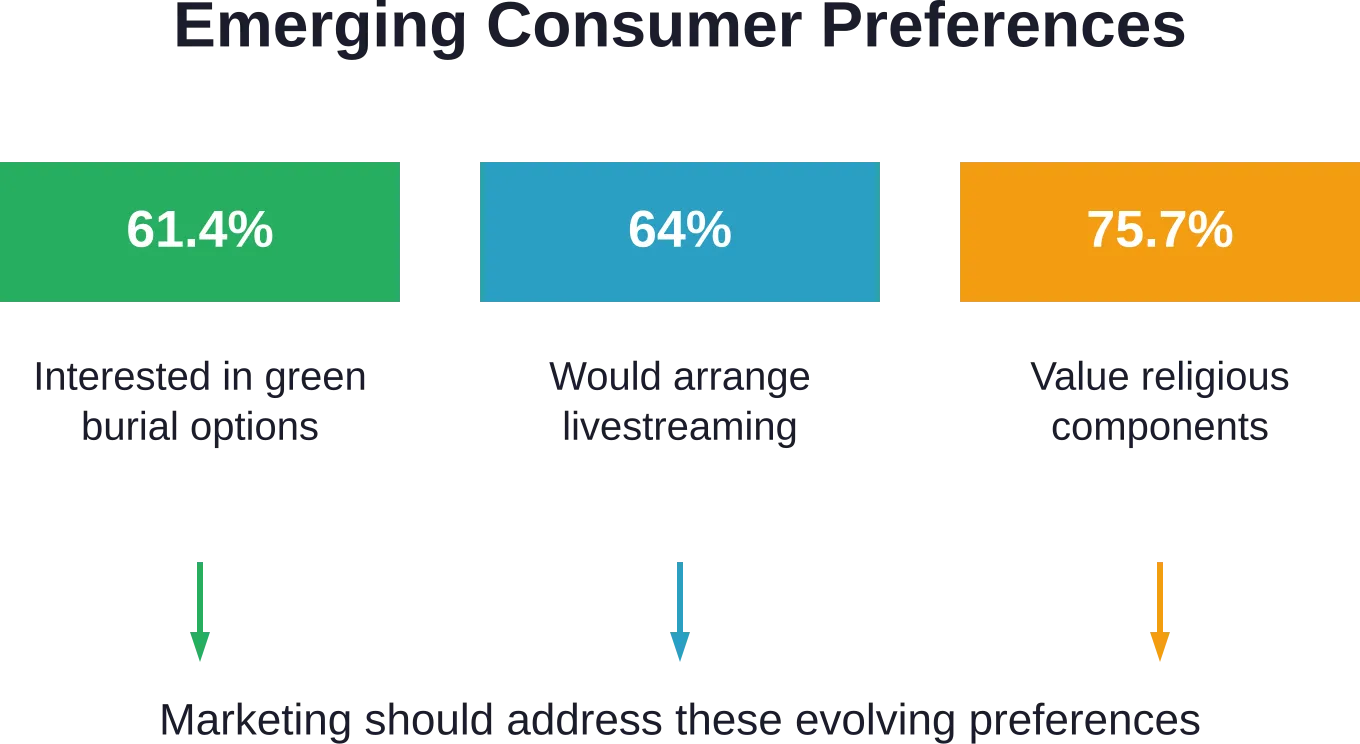
Consumer preferences have evolved rapidly. Consumer demand for livestreaming capabilities has grown significantly, with funeral homes increasingly offering this service for families with geographically dispersed loved ones.
Marketing this capability doesn't require aggressive promotion. A simple mention on the website and in initial family conversations positions the funeral home as understanding modern family dynamics. The technology has become straightforward enough that most funeral homes can implement it without specialized staff.

Educational content serves families before they need services. Blog posts or videos addressing topics like "Understanding Your Rights When Planning a Funeral" or "How to Honor Religious Traditions in Modern Services" provide genuine value.
Religious and cultural components remain important to many consumers in funeral service planning. Content that addresses cultural and religious funeral customs demonstrates cultural competency and respect.
Email newsletters keep the funeral home present in community consciousness without being intrusive. Monthly emails might feature grief resources, upcoming community events the funeral home sponsors, or simple acknowledgments of difficult seasons like the holidays.

Not every campaign connects well with people during sensitive moments, and testing the wrong messaging can become expensive fast. Extuitive analyzes ad creatives before launch to help businesses understand which ideas are more likely to perform based on campaign history and AI consumer modeling. For funeral homes, this can help narrow down messaging and visuals before the budget gets spent.
With Extuitive, teams can:
Book a demo with Extuitive and see what your next campaign is more likely to achieve before it goes live.
Funeral homes remain fundamentally local businesses. National chains exist, but families typically choose funeral homes based on community reputation and personal recommendations.
Strategic sponsorships build visibility while demonstrating community investment. Supporting local hospice organizations, senior centers, or grief support groups aligns naturally with funeral home services.
Youth sports teams, community theater, and local festivals provide visibility to families before crisis strikes. The goal isn't immediate conversion—it's building the familiarity that makes families think of the funeral home when needs arise.
Community discussions emphasize that becoming the local funeral home people know and would recommend requires showing customer service and appeal upfront. The sponsorship itself isn't advertising—it's evidence of values.
Hospitals, hospice programs, nursing homes, and senior living facilities interact with families during end-of-life transitions. Building genuine relationships with staff at these organizations—not through aggressive sales tactics but through reliability and professionalism—creates natural referral networks.
Regular check-ins with hospice social workers or hospital chaplains, offering to provide grief resources or educational materials for their clients, positions the funeral home as a partner in care rather than just a vendor.
Does direct mail still work for funeral homes? The short answer: it depends on execution.
Generic "Dear Resident" mailers get discarded. But personalized mail—actually using the recipient's name—can increase open rates by up to 135%. The content matters too. Pre-planning information, estate planning checklists, or grief resources feel more respectful than promotional offers.
Segmenting audiences helps. Mailing to specific age demographics or recent movers to the community allows for more targeted, relevant messaging. A piece about veteran funeral benefits sent to identified veterans carries more weight than scattershot advertising.
That said, direct mail works best as part of a broader strategy rather than the entire marketing budget. Combining mail with digital presence and community engagement creates multiple touchpoints.
Consumer preferences continue shifting. Consumer interest in green funeral and natural burial options has grown, reflecting evolving preferences for environmentally conscious end-of-life services. Funeral homes that offer these services—or can knowledgeably discuss them—position themselves for changing demand.
Online planning tools have gained traction, but with important nuances. According to NFDA research, of those consumers who planned a funeral online, nearly 48% still needed the assistance of a funeral director and more than 15% felt the online planning process was either impersonal or inadequate.
The lesson isn't to avoid digital tools—it's to use them as supplements to personal service rather than replacements. Online forms that allow families to submit initial information before an in-person meeting combine convenience with the human touch family value
Social media for funeral homes requires careful calibration. The tone needs to balance professionalism with approachability.
User-generated content—families sharing memories or thanking staff—provides the most trusted form of social proof. According to Stack LA, user-generated content influences purchasing decisions significantly, with studies showing it impacts consumer choices more than branded content.
Rather than creating constant promotional posts, funeral homes benefit from sharing grief resources, memorial ideas, and community events. A Facebook post about supporting a local charity walk or sharing an article about coping with anniversary grief during the holidays provides value without selling.
When families do share positive experiences, asking permission to share their testimonial (while being sensitive to privacy) builds credibility. Real stories from real families carry infinitely more weight than advertising copy.
Community discussions emphasize that funeral homes need to market through sites like Yelp and Google reviews to stay relevant. Reviews function as the modern word-of-mouth recommendation.
But here's where it gets delicate: asking grieving families for reviews feels uncomfortable. The timing matters enormously. A follow-up weeks or months after services, positioned as seeking feedback to improve service to future families, feels more appropriate than an immediate request.
Responding to reviews—both positive and negative—demonstrates attentiveness. A brief, gracious thank-you to positive reviews and a professional, empathetic response to concerns shows prospective families how the funeral home handles communication.
Marketing without measurement wastes resources. Funeral homes should track which channels bring in pre-planning inquiries versus at-need families.
Simple tracking mechanisms help: asking new families how they found the funeral home, using unique phone numbers for different marketing channels, or monitoring website traffic sources.
The trust gap deserves attention. While 76% of funeral service professionals perceive themselves as honest, only 54% of consumers share that perception of funeral service professionals overall. Marketing that emphasizes transparency, education, and community service rather than sales helps close that gap.
Pre-planning represents both a service to families and a business development strategy that helps families avoid rushed decisions during difficult times. Marketing pre-planning services allows funeral homes to connect with families before crisis strikes.
Educational seminars at senior centers, libraries, or community centers position pre-planning as responsible estate planning rather than morbid preparation. Topics like "Having the Conversation: Talking to Family About End-of-Life Wishes" or "Understanding Funeral Costs and Options" attract attendees without feeling salesy.
The most effective funeral home marketing doesn't feel like marketing at all. It feels like service, education, and genuine community presence.
Families remember funeral homes that provided helpful resources before services were needed, that sponsored the little league team, that offered transparent pricing without pressure, and that treated them with dignity during the hardest moments of their lives.
That's the paradox of funeral home marketing: the less it resembles traditional advertising, the more effective it becomes. Transparency builds trust. Education demonstrates expertise. Community involvement proves commitment beyond profit.
The funeral homes that thrive don't just market services—they earn trust from one family, one interaction, one act of genuine service at a time. Start by ensuring website pricing is clear and accessible, create one piece of truly helpful educational content, or sponsor one community organization aligned with funeral home values. Small, authentic actions compound into reputation.


