How to Find Shopify Stores Without Guesswork
Learn practical ways to find Shopify stores in any niche, from simple Google searches to smart tools used by real ecommerce teams.
Feb 3, 2026



Home builders in 2026 need marketing strategies that blend digital presence with personalized buyer experiences. This guide covers proven tactics from SEO and social media to video tours and community engagement, helping builders attract qualified leads, nurture relationships, and stand out in a competitive market where over 78% of buyers begin their search online.
The home building industry looks different than it did even two years ago. Mortgage rates hovered near 7% according to 2025 data, inventory patterns have shifted, and buyers have become more selective about where they spend their money.
According to Census Bureau data, privately-owned housing starts in March were at a seasonally adjusted annual rate of 1,502,000 units. Building permits in February were at 1,538,000 (revised), not 1,356,000. Single-family housing completions in March were at a rate of 896,000. The 941,000 figure refers to February housing completions, not starts.
But here's the thing: more construction activity means more competition for buyer attention.
The builders who thrive aren't just building better homes. They're marketing smarter, meeting buyers where they already spend time, and creating experiences that build trust before the first model home visit.
This guide walks through 25 marketing ideas that actually work in 2026, organized by where they fit in the buyer's journey. Some are digital, some are traditional, and all of them focus on one goal: connecting the right buyers with your homes.
The buyer behavior shift is real. Industry data shows that 78% of new-home buyers start their search online. They're researching builders, comparing communities, and forming opinions long before they contact a sales team.
Real talk: if your digital presence is weak, nothing else matters. The buyer never reaches you.
What makes 2026 different is the fragmentation. Buyers aren't just Googling "new homes near me" anymore. They're asking AI tools questions, scrolling Instagram Reels for home tours, reading reviews on third-party portals, and expecting personalized responses when they finally do reach out.
The housing industry itself presents unique challenges. According to research from Harvard Business School, the industry is dominated by very small employers, with approximately 40% of firms having fewer than five employees, compared to just 2% in the auto industry, and you see why marketing resources can be stretched thin.
Meanwhile, a seasonally-adjusted estimate of new houses for sale at the end of January 2026 was 476,000, representing a supply of 9.7 months at the current sales rate. The median sales price of new houses sold in January 2026 was $400,500.
Translation: buyers have options, they're taking their time, and they expect value at a price point that's become increasingly challenging for many households.

Extuitive helps businesses predict how ad creatives may perform before they go live. It compares copy, visuals, offers, and audience angles, then shows which ideas look stronger or weaker before campaign budget is spent.
For home builders, this can help when choosing between different project, service, or local ad concepts without turning every idea into a live test first.
Extuitive can help with:
👉 Book a demo with Extuitive to review your ad ideas.
Before diving into specific tactics, understanding the buyer's journey helps determine where to invest effort and budget.

Each stage requires different tactics and messaging. Attracting strangers requires broad visibility. Engaging interested prospects demands valuable content. Nurturing leads means staying relevant without being pushy. Closing the sale comes down to trust, timing, and a seamless buying experience.
Now, here are the 25 marketing ideas organized by funnel stage.
This stage is about visibility. Buyers can't choose a builder they've never heard of.
The website is the foundation. It doesn't need to be flashy, but it absolutely must load fast, work perfectly on mobile devices, and make it easy to find available homes, floor plans, and contact information.
Slow load times kill conversions. Confusing navigation sends buyers to competitors.
Buyers search for homes in specific locations: "new homes in [city name]", "home builders near [neighborhood]", "new construction [zip code]".
Optimize every page for location-specific keywords. Create neighborhood guides. Claim and optimize Google Business Profile listings for model home locations. Get listed in local business directories.
In 2026, visibility means being understood by both people and AI search tools. Buyers are asking AI assistants questions like "Who's building near Greenville, SC with homes under $600K?" Structured data on the website helps machines interpret and recommend builders.
Google Ads and Bing Ads put builders in front of high-intent searchers immediately. Target keywords like "new homes for sale [city]", "home builders [area]", and specific price ranges or home styles.
PPC works best when paired with strong landing pages designed for conversion, not just traffic.
Geofencing targets mobile users within a specific geographic radius. Set up geofences around competitor model home communities, apartment complexes, or rental neighborhoods where potential buyers live.
When someone enters that zone, they see ads for your communities. It's direct, location-based competition.
Display ads on real estate websites, local news sites, and relevant blogs keep the brand visible. They work best for awareness and remarketing, not immediate conversions.
Frequency matters more than reach. Better to show the same person your ad five times than five different people once.
Zillow, Realtor.com, Trulia, and other portals attract millions of home shoppers. Buyers comparison-shop across platforms, so being absent means losing opportunities.
Keep listings updated with high-quality photos, accurate availability, and competitive pricing.
Once buyers find a builder, they need reasons to stay interested. This stage is about proving value and building credibility.
Blog posts, guides, and resources that answer buyer questions position builders as experts. Topics might include financing tips, design trends, energy efficiency benefits, or what to expect during the building process.
Content marketing builds trust before buyers are ready to purchase.
Facebook, Instagram, and TikTok are discovery platforms. Share construction updates, design inspiration, customer stories, and behind-the-scenes content.
Consistency matters more than perfection. Posting three times a week beats posting once a month, even if the content isn't always polished.
Video brings homes to life in ways static photos can't. Walkthrough videos of model homes, lot tours, community overviews, and even construction progress videos humanize the builder and give buyers a real sense of what to expect.
Short-form video (60–90 seconds) performs best on social platforms. Longer virtual tours work well on websites and YouTube.
Virtual tours and interactive floor plans let buyers explore homes on their own schedule. Matterport tours, 3D renderings, and interactive design tools increase engagement and reduce the number of unqualified in-person visits.
Buyers appreciate the ability to explore before committing time to a model home visit.
In-person events still work. Grand openings, seasonal open houses, "meet the builder" nights, or community charity events create opportunities for face-to-face connection.
Events also generate social media content, local press coverage, and word-of-mouth buzz.
Social proof matters. Buyers trust other buyers more than they trust marketing copy. Feature testimonials prominently on the website, share customer stories on social media, and encourage satisfied buyers to leave Google reviews.
Real experiences from real people reduce purchase anxiety.
Buyers aren't just purchasing a house. They're choosing a lifestyle and community. Create content highlighting nearby schools, parks, restaurants, shopping, and community amenities.
Lifestyle marketing sells the vision of living there, not just the square footage.
YouTube is the second-largest search engine. A builder channel can host home tours, design tips, buyer education videos, construction updates, and Q&A sessions.
Videos rank in Google search results, extending reach beyond just YouTube viewers.
Most buyers aren't ready to purchase immediately. Nurturing keeps the builder top-of-mind during the decision process.
Email remains one of the highest-ROI marketing channels. Send regular newsletters with new listings, design tips, financing updates, and community news.
Segment the list by buyer stage, price range, and preferred community to keep messages relevant.
Retargeting shows ads to people who've already visited the website. It keeps the brand visible while they continue researching.
Retargeting works because it targets warm leads who've already expressed interest, not cold traffic.
Offer valuable resources in exchange for contact information: downloadable home buying guides, checklists, design lookbooks, or financing calculators.
This captures leads early in the research phase and provides value upfront.
Not all leads are equal. CRM systems track interactions, score leads based on engagement, and trigger timely follow-ups.
Automated workflows ensure hot leads get immediate attention while cooler prospects receive nurturing sequences.
SMS has higher open rates than email. Use text messages for appointment reminders, quick updates on new inventory, or responses to inquiries.
Keep messages short, personalized, and respectful of frequency. Nobody wants daily texts from a builder.
The final stage is about removing friction and making the buying decision easy.
Generic sales pitches don't cut it anymore. Use CRM data to understand what each buyer cares about, then tailor the conversation accordingly.
Show the specific floor plans they browsed. Address their budget concerns. Highlight the features they asked about.
Hidden costs and unclear pricing frustrate buyers. Be upfront about base prices, upgrade costs, lot premiums, and closing estimates.
Promotional incentives like closing cost assistance, rate buy-downs, or included upgrades can tip the decision in your favor.
Buyers expect a smooth digital experience: easy online appointment scheduling, digital document signing, online design selections, and real-time construction updates.
Friction at any point in the process sends buyers elsewhere.
Once a buyer commits, keep them engaged with regular construction progress updates via email, text, or a customer portal with photos.
This reduces buyer anxiety and keeps excitement high through the months-long build process.
Realtor marketing remains one of the highest-ROI strategies. Agents bring qualified buyers, handle much of the sales process, and expand reach beyond direct-to-consumer efforts.
Host broker events, offer competitive commissions, and make it easy for agents to show and sell homes.
Marketing without measurement is guesswork. Track website traffic, lead sources, conversion rates, cost per lead, and sales by marketing channel.
Double down on what works. Cut or adjust what doesn't.
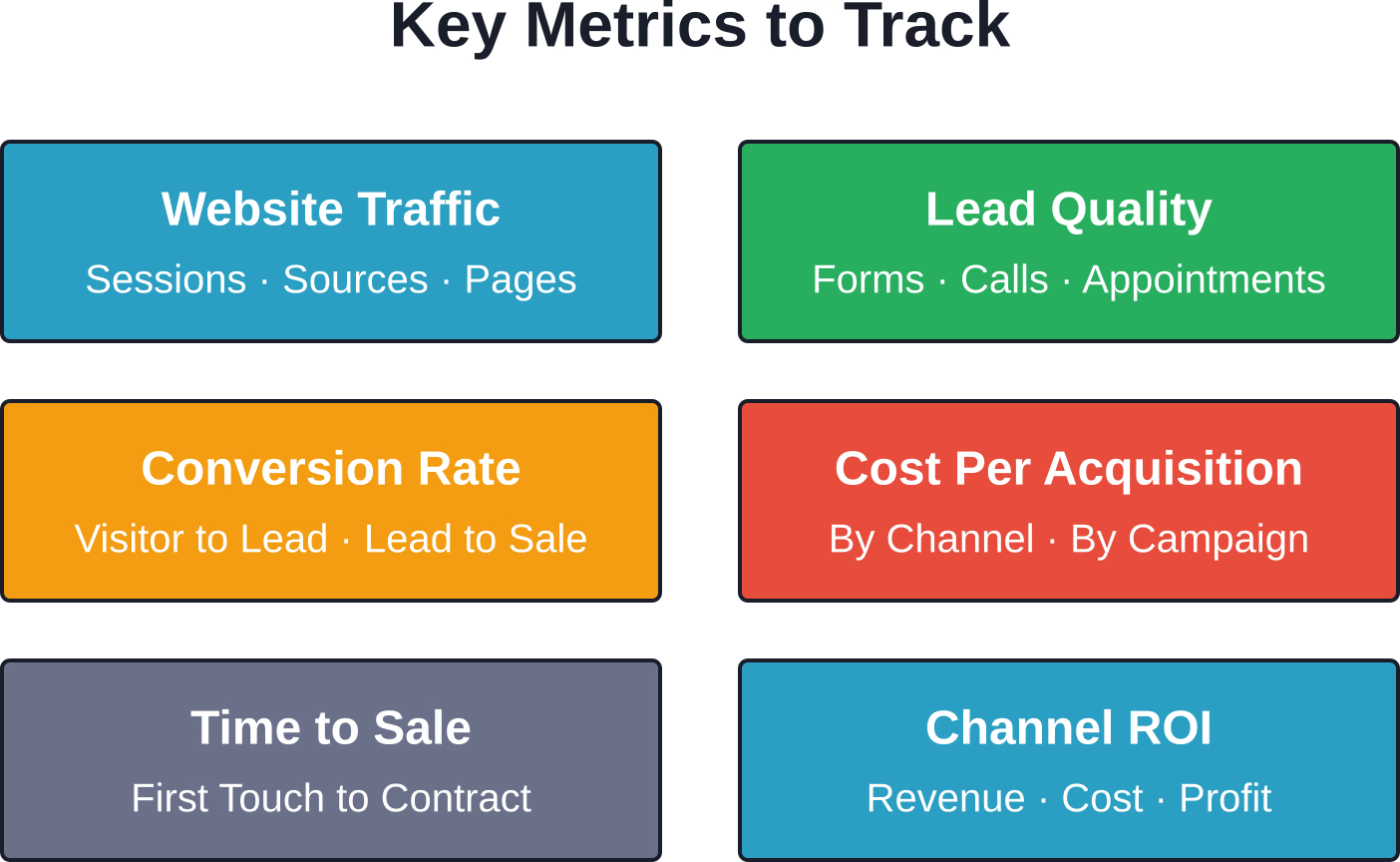
Not every builder needs to execute all 25 strategies. Budget, team size, market conditions, and business goals determine priorities.
Small custom builders might focus heavily on local SEO, realtor partnerships, and personalized follow-up. Large production builders might invest more in paid advertising, third-party portals, and marketing automation.
The key is building a cohesive strategy where tactics work together across the funnel, not as isolated activities.
Start with three to five high-impact tactics, execute them well, measure results, then expand.
Even with the right tactics, execution matters. Here are pitfalls to avoid:
The website, social media, signage, and sales materials should all reflect a consistent brand voice, visual identity, and value proposition. Inconsistency confuses buyers and dilutes brand recognition.
Responding to an inquiry three days later means losing that buyer to a competitor. Aim for first contact within one hour of lead submission.
More than half of website traffic comes from mobile devices. If the site doesn't work flawlessly on phones and tablets, conversion rates tank.
Buyers care about features, sure. But they care more about how those features improve their lives. Market benefits and lifestyle, not just specs.
What worked last year may not work this year. Continuously test ad copy, landing pages, email subject lines, and offers. Keep what performs, discard what doesn't.
Artificial intelligence and marketing automation are reshaping how builders operate in 2026.
Chatbots answer website questions 24/7. AI tools help write ad copy and social media posts faster. Predictive analytics identify which leads are most likely to convert. Automated email sequences nurture leads without manual effort.
But here's the thing: automation works best when it enhances the human experience, not replaces it. Buyers still want to talk to real people before making a purchase this significant.
Use automation for efficiency and scale. Use humans for connection and trust.
Digital dominates, but don't completely abandon traditional tactics if they work in a specific market.
Yard signs at model homes and sold lots generate local awareness. Direct mail to targeted neighborhoods can still drive traffic. Local radio or newspaper sponsorships build community presence. Billboard placements on high-traffic routes keep the brand visible.
The National Association of Home Builders supports initiatives like National Home Remodeling Month in May, creating opportunities for builders and remodelers to gain consumer attention through local events and media.
Measure traditional channels the same way as digital. If the ROI isn't there, reallocate budget.
How much should builders spend on marketing? Industry benchmarks typically range from 2% to 5% of gross revenue for established builders, with newer or growth-focused companies sometimes investing 8% to 10%.
Allocate budget based on funnel stage needs. If awareness is the problem, spend more on attraction tactics. If leads aren't converting, invest in nurturing and sales enablement.
Reserve 10% to 20% of the marketing budget for testing new channels and tactics. Some experiments will fail. That's expected. The ones that succeed often become high-ROI core strategies.
Builders face a common question: hire an agency or build an in-house team?
Agencies bring expertise, established processes, and access to specialized tools. They're faster to launch and easier to scale up or down. But they work with multiple clients and may not deeply understand the specific market or brand.
In-house teams offer dedicated focus, deeper brand knowledge, and tighter integration with sales. But they require recruiting, training, benefits, and ongoing management.
Many builders use a hybrid approach: in-house for strategy and brand management, agency support for execution in specialized areas like SEO, paid ads, or video production.
The home building market shifts constantly. Economic conditions, interest rates, buyer demographics, and technology all influence what works.
NAHB research shows growing interest in the 55+ active-adult market, with webinars exploring buyer preferences, community design, and marketing approaches for this demographic. With rising home prices and an aging housing stock, remodeling markets are also expanding as homeowners choose improvements over relocation.
Stay informed through industry associations, conferences like the International Builders' Show, and regular competitive analysis. What worked last year may need adjustment. What competitors are doing might reveal opportunities or threats.
Adaptability is a competitive advantage.
Marketing for home builders in 2026 isn't about choosing between digital and traditional, or big budgets versus small. It's about understanding buyer behavior, meeting people where they are, and creating experiences that build trust throughout the journey from awareness to contract signing.
The 25 tactics outlined here provide a comprehensive toolkit. Not every builder will use every tactic, and that's fine. Start with a clear understanding of business goals, choose strategies that align with those goals and available resources, execute consistently, and measure relentlessly.
The housing market will keep changing. Buyer expectations will keep rising. Competitors will keep adapting.
The builders who succeed are the ones who view marketing not as an expense to minimize but as an investment that drives growth, and who commit to continuous learning and improvement.
Pick three strategies from this guide, implement them this quarter, and build from there.


