AI Agents for Trend Analysis in Real Business Workflows
Explore how AI agents detect trends early, process data at scale, and support faster decisions across marketing, product, and strategy.
Apr 12, 2026



Choosing the right platform for your online store can feel like navigating a maze – there’s so much to consider. Wix and Shopify are two of the most popular options, each with its strengths. But is Wix a good fit for your business, or should you go with Shopify’s powerhouse features? Let’s break it down to help you decide which one makes the most sense for your needs.
Both Wix and Shopify have carved out their space as top choices for building eCommerce websites. However, they approach the process differently, which can significantly impact the experience depending on the scale of your business and your technical expertise.
Wix is a versatile website builder that has evolved to include eCommerce capabilities. It is widely praised for its drag-and-drop functionality and intuitive design tools. It's often seen as ideal for small businesses or personal projects due to its simplicity and affordability.
Shopify, on the other hand, is a specialized eCommerce platform. It’s built with serious online stores in mind, offering powerful tools for managing inventory, processing payments, and scaling your business. Shopify’s focus on eCommerce makes it the go-to platform for entrepreneurs who want to grow a larger, more complex business.
When deciding between Wix and Shopify, there are several key factors to consider that will influence the success of your online store. Both platforms offer great features, but each is suited for different types of businesses. In this section, we'll break down the main points you need to compare before making your choice.
.avif)
When it comes to building an online store, the user experience is crucial, especially if you’re new to the process. Both Wix and Shopify have their own approaches to making store setup as easy as possible, but which one is the most intuitive?
Wix shines when it comes to ease of use, especially for beginners or people with no technical experience. The drag-and-drop editor allows you to design your store quickly. You don’t need to worry about coding or technical intricacies – everything you see on screen can be directly manipulated.
Wix also gives you access to a wide variety of templates, so you can pick a design that fits your brand. While the platform is intuitive, it does have some limitations when it comes to customization. Once you choose a template, it can be difficult to change it without losing content, which could pose a problem as your business evolves.
Shopify, in contrast, has a more structured and professional setup. While it offers some easy-to-use templates, the platform is built with more advanced features for users who are serious about scaling their business. Shopify may feel overwhelming for someone without prior eCommerce experience, but once you learn how to navigate the system, it becomes a powerful tool for running an online store.
For beginners, Shopify might seem like a lot to handle, but its ease of use improves as your store grows, and its learning curve is worth it for the long-term flexibility and growth potential.
When choosing an eCommerce platform, cost is always a major consideration. While both Wix and Shopify offer pricing plans to suit different needs, the structure and value of these plans vary.
Pricing is one of the main advantages of Wix. It offers a range of pricing plans that cater to different budgets, with the most affordable starting at just $17 per month. This makes Wix a strong choice for small businesses or solo entrepreneurs who want to get started without a large initial investment.
Wix’s pricing plans:
However, keep in mind that while Wix is more affordable, it offers fewer advanced features compared to Shopify, especially when it comes to eCommerce tools.
Shopify, while more expensive, offers a broader range of eCommerce features that justify its price. Plans start at €27 per month, and for growing businesses, higher-tier plans provide access to more advanced features, such as professional reporting and better customer support.
Shopify’s pricing plans (if paid monthly):
While Shopify’s pricing can add up quickly, especially as your business scales, the features you get in return are extensive and designed to support long-term growth.
The features and tools available on a platform can make or break your online store. Whether it's inventory management, payment processing, or integrations, the right features will support your growth.
Wix’s eCommerce features are great for small businesses just starting out. It offers the basic tools you need, such as inventory management, product galleries, and online payments. However, it lacks some of the advanced functionalities that Shopify offers, such as:
For businesses that are growing or plan to scale, Wix’s eCommerce features may become limiting over time.
Shopify is built for scalability, with advanced features designed to help businesses of all sizes grow. Here are just a few features that set Shopify apart:
For businesses that need more than just basic eCommerce functionality, Shopify’s advanced tools will provide the flexibility you need.
A key to success in eCommerce is ensuring your store gets the visibility it deserves. Both Wix and Shopify offer marketing and SEO tools to help you reach your target audience, but their approaches vary.
Wix has made significant strides in SEO over the years. It provides basic SEO tools such as meta tag editing, mobile optimization, and automated sitemaps. Wix’s SEO Wiz can guide you through the setup process, offering recommendations to help improve your site’s search engine ranking.
However, Wix falls short in comparison to Shopify when it comes to more advanced SEO tools, especially for businesses looking to scale.
Shopify offers better built-in SEO features tailored for eCommerce websites. From clean code to built-in mobile optimization, Shopify ensures your site is easy to crawl for search engines. Shopify also supports advanced SEO apps that can give you more granular control over your SEO efforts.
For a business that needs more advanced SEO capabilities, Shopify is the better option due to its specialized tools and integrations.
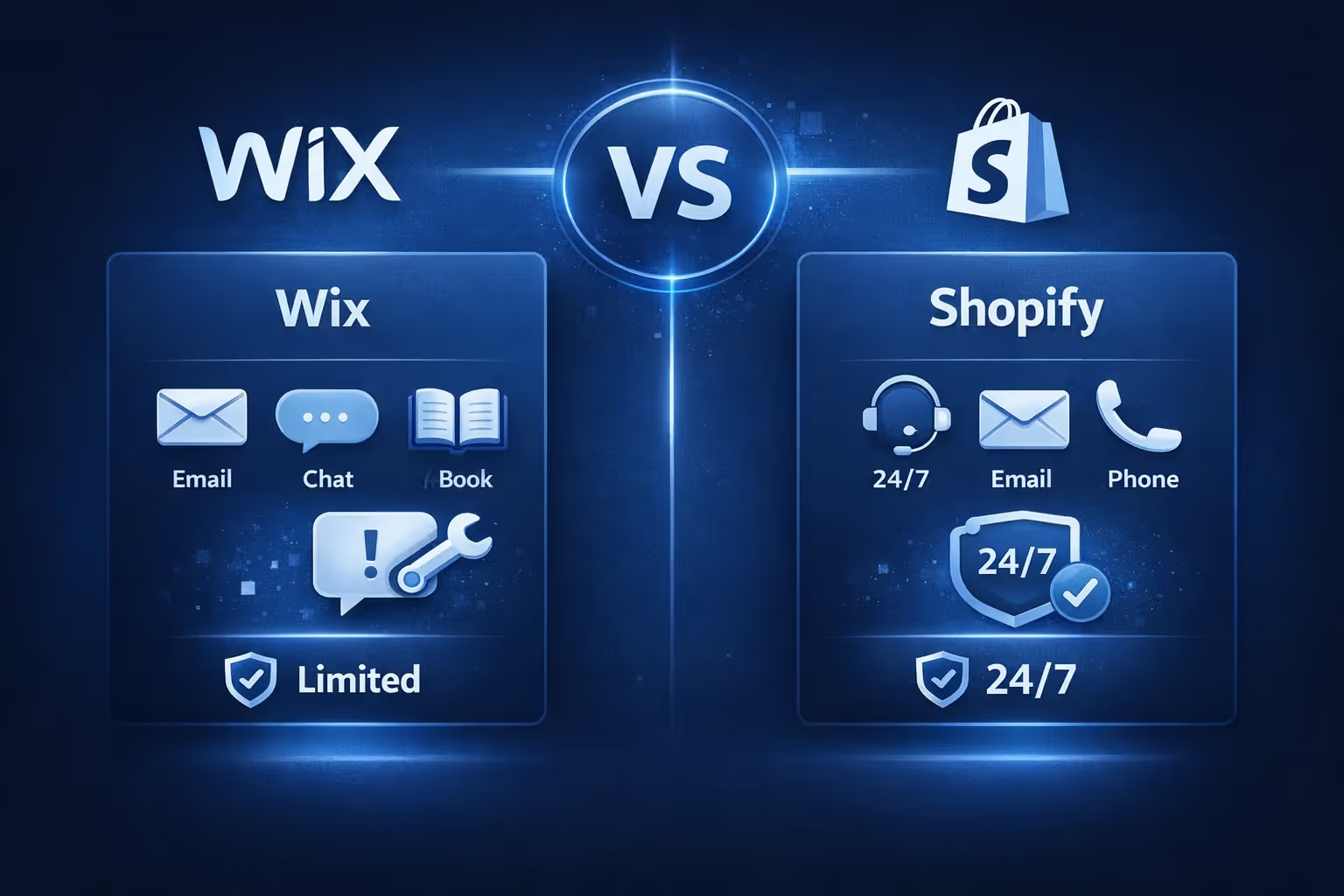
When running an online store, reliable customer support can be a game-changer, especially when you run into issues or need quick assistance. Both Wix and Shopify offer support, but how they handle customer inquiries can differ.
Wix offers decent customer support through email, chat, and its knowledge base. However, for eCommerce businesses, the support may not be as robust as Shopify’s. If you run into technical issues or need help scaling your business, Wix may not have the same level of dedicated support as Shopify.
Shopify takes customer support seriously and provides round-the-clock assistance. Whether it’s via live chat, email, or phone, Shopify’s customer support team is available 24/7 to help with any issues you encounter. Additionally, Shopify’s extensive community forums and Shopify Academy offer valuable resources to help you learn and grow.
For any eCommerce business that requires constant support, Shopify’s customer service is a standout feature.
As your business grows, your platform should be able to grow with you. The ability to scale up your operations smoothly is critical for long-term success.
Wix is perfect for small businesses or personal projects that don’t require much scalability. While it can handle up to 50,000 products, it’s not built to handle large inventories or complex product management. If your business is growing and you need more robust features, Wix’s limitations may hold you back.
Shopify’s biggest strength is its scalability. Whether you have a few products or thousands, Shopify can handle it all. With unlimited product pages and extensive integrations, Shopify is designed to grow with your business. From small businesses to enterprise-level companies, Shopify can meet the needs of any eCommerce store.

When it comes to running successful ads, one of the biggest challenges is predicting how well they’ll perform before going live. This is where Extuitive steps in. As a powerful AI-driven platform, we offer an innovative solution to forecast ad performance with precision, allowing businesses to make data-backed decisions and minimize the guesswork that typically accompanies launching new ads.
Our prediction engine leverages AI models that have been validated against real-world campaign results. This means you can predict the winners and losers in your ad creatives even before they hit the market, helping you fine-tune your approach and avoid costly mistakes. Whether you’re just starting out or scaling up, we at Extuitive help you reach the right audience with intelligent targeting, boosting click-through rates (CTR) and return on ad spend (ROAS).
With Extuitive, you can test and predict your ads at scale, analyzing large volumes of creatives instantly. This kind of advanced forecasting is essential for businesses that need fast, actionable insights to stay ahead of the competition. So, whether you’re using Shopify or another platform, our AI-powered insights can seamlessly integrate into your advertising strategy, ensuring you’re always optimizing for better performance and greater results.
So, which platform is better: Wix or Shopify? It all depends on your needs.
Choose Wix if you’re just starting out, have a small budget, and want a simple, easy-to-use platform for creating a basic online store.
Choose Shopify if you’re serious about eCommerce, need advanced features and integrations, and want to scale your business long-term.
Both platforms have their strengths, but for businesses that aim to grow, Shopify’s robust eCommerce features, scalability, and powerful integrations make it the clear winner.


