AI Agents for Small Businesses: A Practical List
A practical look at AI agents for small businesses, with real use cases, tools, and what to expect before getting started.
Apr 12, 2026



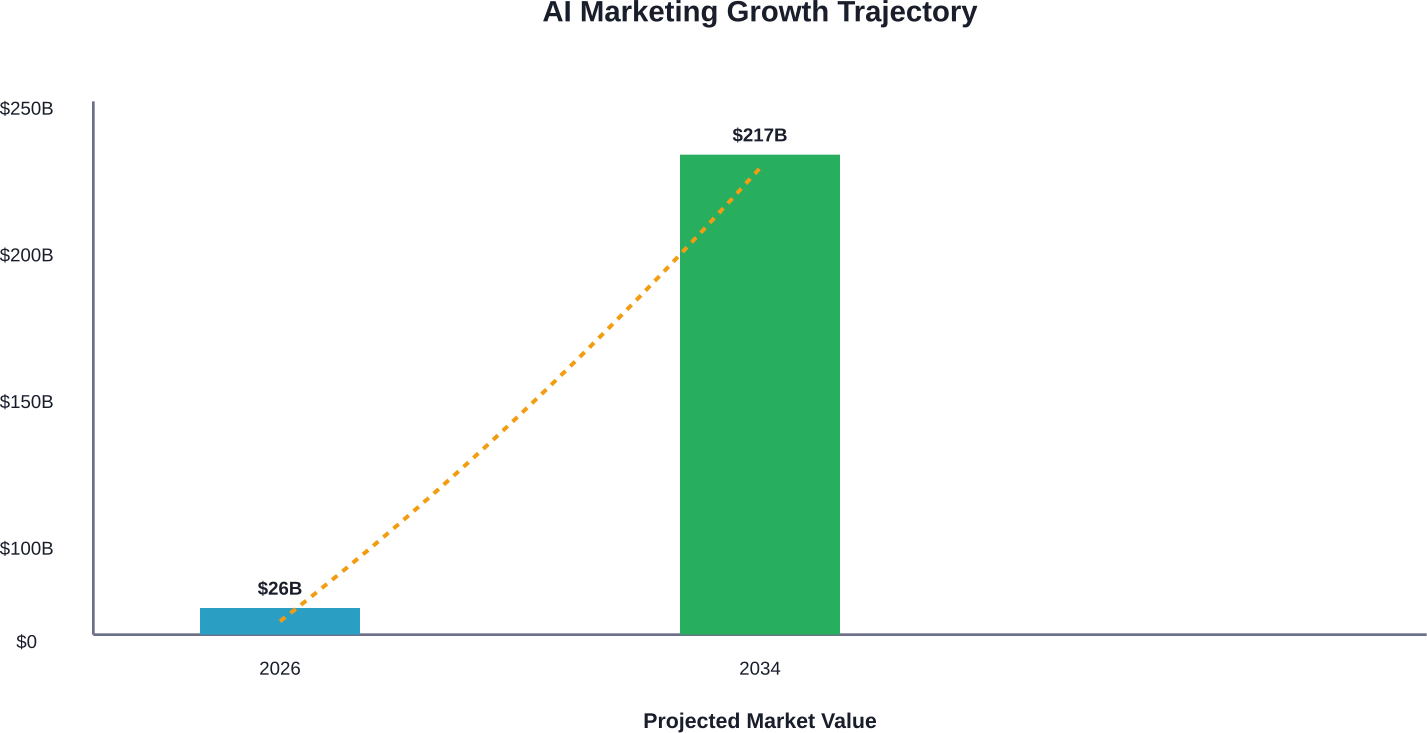
AI in digital marketing refers to the use of artificial intelligence technologies—including machine learning, natural language processing, and predictive analytics—to automate tasks, personalize customer experiences, and optimize marketing performance. According to William & Mary, the global market for AI in marketing is valued at nearly $26 billion and is expected to surpass $217 billion by 2034. AI helps marketers analyze data at scale, deliver tailored content, automate campaigns, and make smarter decisions faster.
Marketing used to be a game of gut instinct and broad strokes. Not anymore.
Artificial intelligence has shifted the playing field. It's not a future concept—it's here, running campaigns, scoring leads, and personalizing content at a scale no human team could match. According to research from William & Mary, the global AI marketing market is approaching $26 billion in value and projected to exceed $217 billion within the next decade.
But what does AI in digital marketing actually mean? And more importantly, how does it work in practice?
This guide breaks down the fundamentals, explores how marketers are using AI right now, examines real-world applications, and addresses the limitations worth knowing. Whether you're new to the concept or looking to sharpen your understanding, here's what AI brings to the marketing table.
At its core, AI in digital marketing is the application of machine learning, natural language processing, predictive analytics, and automation technologies to marketing tasks. It's software that learns from data, recognizes patterns, makes predictions, and executes actions—often without constant human oversight.
Northwestern University's Medill School defines it as a tool that enhances efficiency, improves targeting precision, and enables better decision-making across campaigns. Instead of manually segmenting audiences or A/B testing every variable, AI processes massive datasets to identify what works, who responds, and when to act.
Think of it as adding a layer of intelligence to marketing infrastructure. The software doesn't just store customer data—it interprets it, predicts behavior, and adjusts tactics in real time.
Several technologies power AI marketing tools:
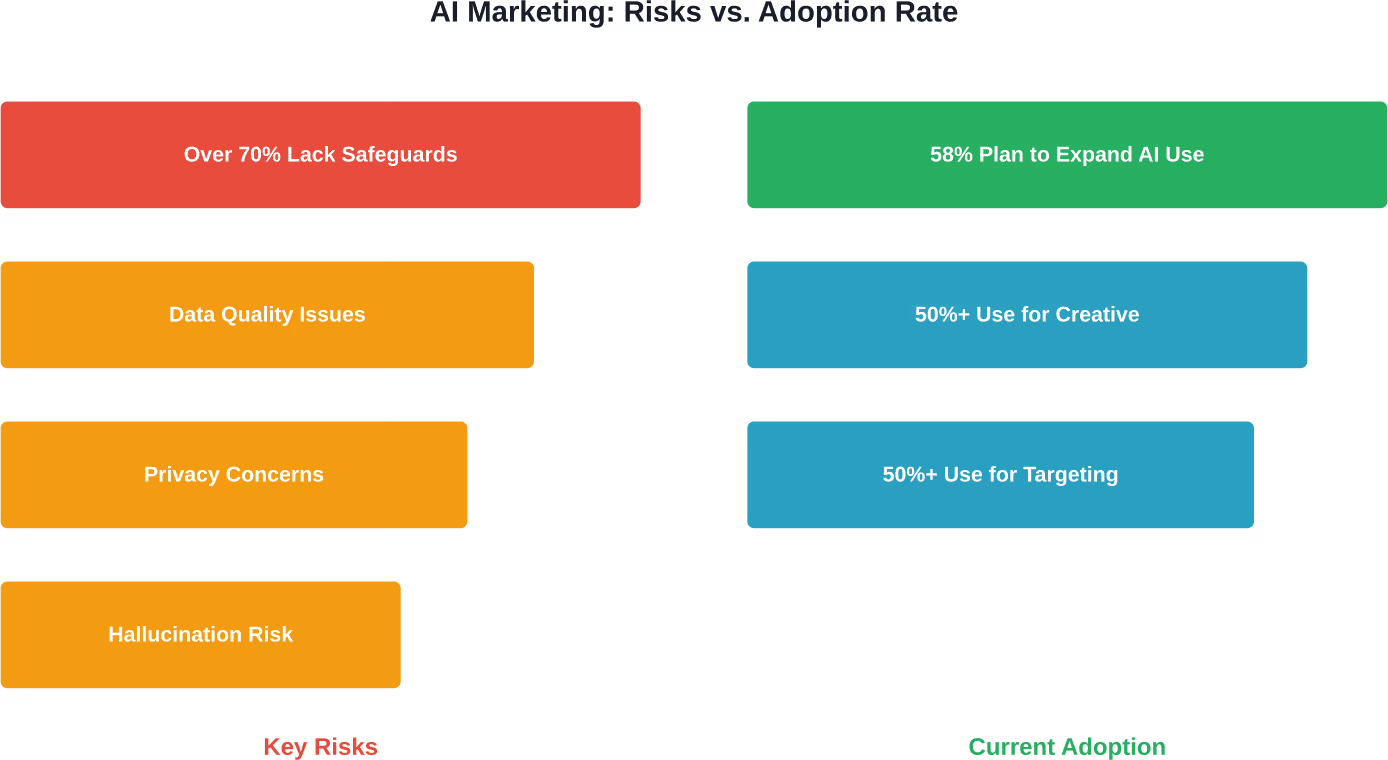
According to the Interactive Advertising Bureau (IAB), over half of marketers are already using AI for creative content and audience targeting as of 2025. That number continues climbing.
The marketing profession is hitting what William & Mary calls an "inflection point." The skills that worked five years ago won't carry teams forward. Customer expectations have shifted. Data volume has exploded. Competition for attention is brutal.
AI addresses three core challenges marketers face:
Manual processes can't keep up. Analyzing customer behavior across thousands of touchpoints, personalizing messages for different segments, optimizing bids in real time—these tasks demand automation. AI handles repetitive work at speeds that free human marketers to focus on strategy and creative direction.
Harvard's Professional Development research emphasizes that AI presents opportunities to personalize customer experiences in ways previously impossible. Generic mass marketing doesn't cut it anymore. Customers expect relevant content, product recommendations, and messaging that speaks to their specific needs.
AI makes that feasible across millions of interactions. Amazon Personalize helped the wellness app Calm achieve a 3.4% lift in daily mindfulness practice by personalizing content recommendations.
Wake Forest University notes that AI spots patterns and anomalies in site traffic and campaign data that humans miss. Google Analytics uses AI to surface insights automatically. HubSpot employs it for lead scoring. Salesforce embeds AI-driven recommendations directly into CRM workflows.
The result? Decisions grounded in evidence rather than assumptions.
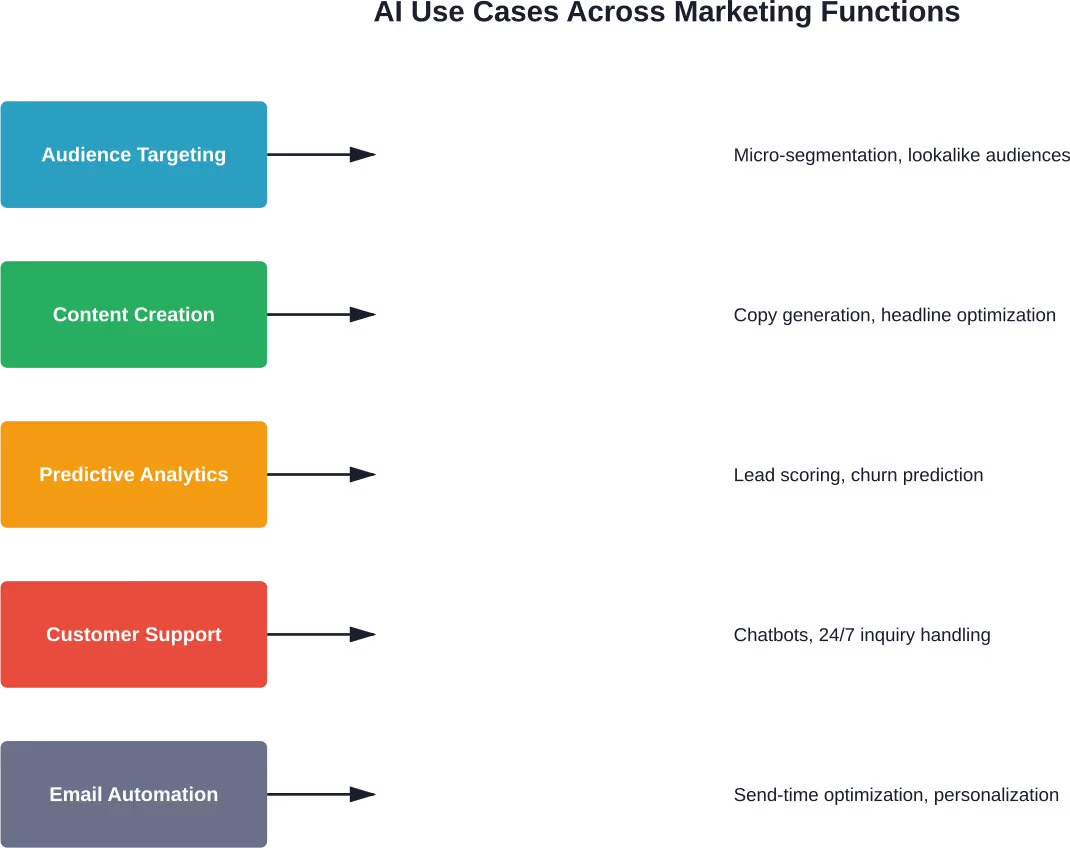
AI isn't one monolithic tool. It's woven into multiple marketing functions. Here's where it's making the biggest impact.
Traditional segmentation relies on demographic buckets. AI digs deeper, analyzing behavioral signals, browsing patterns, purchase history, and engagement data to create micro-segments.
Platforms like Facebook Ads and Google Ads use machine learning to identify lookalike audiences—people who share characteristics with existing high-value customers. The algorithms continuously refine targeting based on performance, shifting budget toward segments that convert.
According to IAB research, nearly 60% of marketers plan to expand AI use for audience engagement in the coming year.
Generative AI tools now produce blog posts, ad copy, email subject lines, and social media captions. Wake Forest University highlights content creation as one of the key areas where AI is reshaping marketing workflows.
But AI doesn't just create—it optimizes. Natural language processing analyzes which headlines get clicks, which email copy drives opens, and which product descriptions convert. Tools adjust phrasing, tone, and structure based on what the data shows works.
That said, human oversight remains critical. AI-generated content needs editing, fact-checking, and brand alignment. The technology accelerates production; it doesn't replace editorial judgment.
HubSpot's AI-powered lead scoring is a prime example. The platform analyzes user behavior—website visits, email engagement, content downloads—and assigns scores that predict conversion likelihood. Sales teams prioritize high-scoring leads, improving efficiency.
Salesforce does something similar, embedding predictive insights directly into customer relationship management workflows. Reps see which accounts are most likely to close, which customers risk churning, and which upsell opportunities to pursue.
Google Analytics uses AI to detect traffic anomalies and surface trends that warrant attention. Instead of sifting through dashboards, marketers get alerts when something shifts.

It is also changing how teams approach ad creatives, especially in the early stages. Instead of relying only on live A/B tests, marketers are starting to evaluate ideas before they ever reach an audience.
Tools like Extuitive focus on this pre-launch phase. They analyze past campaign data and compare new concepts against patterns that have already proven effective. This helps surface potential issues early – whether it’s weak messaging, unclear positioning, or visuals that are unlikely to engage.
The shift here is subtle but important. Campaigns no longer start from zero. Teams can move into testing with a clearer direction, spending less time on guesswork and more on refining ideas that already show signs of working.
Natural language processing powers conversational AI that handles customer inquiries 24/7. Chatbots answer FAQs, guide users through product selections, troubleshoot issues, and escalate complex cases to human agents.
The technology improves over time. Each interaction trains the model to understand intent better, recognize edge cases, and respond more naturally. According to IAB data, customer support is among the top AI applications marketers are deploying.
AI optimizes email campaigns in several ways. It predicts optimal send times based on when individual recipients are most likely to open messages. It personalizes subject lines and body content for different segments. It identifies which subscribers are disengaging and triggers re-engagement sequences automatically.
Some platforms use AI to A/B test dozens of variables simultaneously—subject lines, images, call-to-action buttons—and route traffic to winning variants in real time.
Programmatic advertising relies heavily on machine learning. AI adjusts bids across ad exchanges based on real-time performance, allocates budget to high-performing placements, and pauses underperforming campaigns automatically.
The algorithms learn which audiences, devices, times of day, and creative formats deliver the best return on ad spend. They optimize faster than any manual process could.
AI tracks how customers move through touchpoints—social media, website visits, email clicks, purchases—and identifies common paths to conversion. Marketers use these insights to optimize journeys, remove friction points, and guide prospects more effectively.
The technology also predicts next-best actions: which content to show, which offer to present, which channel to use for follow-up.
Theory is fine. But how does this actually play out?
Wellness app Calm used Amazon's AI recommendation engine to tailor content suggestions for users. The system analyzed listening habits, session duration, and user preferences to surface relevant meditation exercises and sleep stories. The result? A 3.4% lift in daily mindfulness practice—a measurable lift in engagement tied directly to AI-driven personalization.
HubSpot's platform automatically scores leads based on behavioral data and demographic fit. Sales teams get a ranked list of prospects most likely to convert. The AI model learns from closed deals, continuously refining what signals matter most. This reduces time spent chasing low-quality leads and improves conversion rates.
Salesforce embeds AI insights throughout its CRM. Einstein analyzes customer data to recommend next actions, predict deal closure probability, and identify upsell opportunities. Reps don't need to dig through reports—the system surfaces what matters when it matters.
Google Analytics uses machine learning to detect unusual traffic patterns, forecast future trends, and highlight segments driving growth. Marketers receive automated alerts when metrics shift, allowing faster response to problems or opportunities.
The advantages break down into a few core areas.
Automation handles repetitive tasks—data entry, report generation, campaign adjustments—freeing marketers to focus on strategy, creative development, and relationship building. Time saved on manual work compounds quickly across teams.
AI optimizes spending by shifting budget toward what performs. Predictive models reduce wasted ad spend. Personalization increases conversion rates. The net effect? Better return on marketing investment.
Delivering individualized experiences to thousands or millions of customers isn't feasible manually. AI makes it possible. Each user gets relevant content, product recommendations, and messaging tailored to their behavior and preferences.
Real-time data analysis and automated insights compress decision cycles. Instead of waiting days for reports, marketers see what's happening now and adjust tactics immediately.
According to the American Marketing Association's 2025 AI and Digital Trends report, 45% of consumers say visibility and control over their data is a top priority when engaging with brands. AI can improve customer experience when used transparently—providing relevant recommendations without crossing privacy lines.
AI isn't a cure-all. It comes with real constraints and risks.
AI models are only as good as the data they're trained on. Poor data quality—incomplete records, outdated information, biased samples—produces unreliable outputs. Garbage in, garbage out.
The American Marketing Association notes that consumers demand visibility into how their data is used. According to their 2025 report, 45% of consumers prioritize data control when engaging with brands. AI that operates as a black box erodes trust.
Regulations like GDPR and evolving privacy standards add compliance complexity. Marketers need governance frameworks to ensure AI use respects customer privacy and regulatory requirements.
IAB research reveals a troubling gap: over 70% of marketers lack adequate safeguards for responsible AI use. Adoption is accelerating faster than governance. This creates risk—biased targeting, discriminatory ad delivery, misinformation, and brand safety issues.
Generative AI sometimes produces plausible-sounding but factually incorrect content. In marketing, this can lead to false claims, damaged credibility, and legal exposure. Human review remains essential.
Automation doesn't replace strategic thinking. Over-reliance on AI can lead to cookie-cutter campaigns that lack creative spark or fail to account for nuanced context. The best results come from combining AI efficiency with human judgment.
Enterprise AI tools require investment—software licenses, data infrastructure, training, and ongoing maintenance. Smaller teams may struggle with upfront costs or lack the technical expertise to deploy AI effectively.
Where is this headed?
The American Marketing Association highlights the rise of agentic AI—systems that act as autonomous collaborators rather than passive tools. These agents can execute multi-step workflows, make decisions within defined parameters, and adapt strategies based on outcomes.
Think of an AI that doesn't just suggest which email subject line to test, but runs the test, analyzes results, and automatically deploys the winner—all without human intervention beyond initial goal-setting.
Personalization will move beyond product recommendations to fully individualized customer journeys. AI will orchestrate entire experiences—choosing channels, timing, messaging, offers—tailored to each person's context and behavior.
As regulations tighten and consumer expectations shift, privacy-preserving AI techniques will gain traction. Federated learning, differential privacy, and on-device processing allow personalization without centralized data collection. Marketers who adopt these approaches early will build trust and maintain access to insights.
AI will become embedded throughout marketing technology platforms—CRMs, analytics tools, ad networks, email systems, content management. Seamless integration means insights flow between systems, enabling coordinated strategies that optimize across channels rather than in silos.
Marketing roles are shifting. Technical skills—data analysis, prompt engineering, AI tool proficiency—are becoming baseline requirements. Creative and strategic capabilities remain critical, but the execution toolkit is changing fast. Teams that invest in upskilling will outpace those that don't.
So what's the practical path forward?
Don't try to implement AI everywhere at once. Identify bottlenecks—tasks that consume time, areas where performance lags, processes ripe for automation. Start there. Email personalization, lead scoring, and chatbots often deliver quick wins.
Clean, accurate, well-structured data is foundational. Invest in data hygiene before deploying AI. Audit sources, standardize formats, remove duplicates, and establish governance processes. AI amplifies what you feed it—make sure the input is solid.
IAB research shows that safeguards are lagging. Establish clear policies around data use, model transparency, bias testing, and compliance. Define who approves AI-generated content, how algorithms get audited, and what limits exist on automation.
AI handles execution; humans set strategy, define brand voice, and make judgment calls. Review AI outputs, fact-check claims, and ensure alignment with brand values. The most effective marketing combines machine efficiency with human creativity.
Track performance rigorously. Compare AI-driven campaigns against baselines. Identify what's working and what isn't. AI tools improve over time, but only if you feed results back into the system and adjust based on evidence.
The Federal Trade Commission has increased scrutiny of AI marketing practices. In March 2026, the FTC banned Air AI from marketing business opportunities after charges that the company misled entrepreneurs. Compliance isn't optional—stay current on rules governing data use, advertising claims, and automated decision-making.
AI in digital marketing is real, it's growing fast, and it's reshaping how teams operate. The global market is approaching $26 billion and projected to exceed $217 billion by 2034. Over half of marketers already use AI for creative work and targeting, with expansion plans accelerating.
But here's the thing—AI is a multiplier, not a replacement. It handles scale, speed, and data processing that humans can't match. It personalizes experiences, optimizes campaigns, and surfaces insights automatically. When implemented thoughtfully, it drives efficiency, improves ROI, and enhances customer experiences.
The challenges are real too. Data quality issues, privacy concerns, lack of safeguards, and over-reliance on automation can undermine results. The FTC is watching. Consumers demand transparency. Teams need new skills.
The marketers who succeed will combine AI's computational power with human creativity, strategic judgment, and ethical oversight. They'll start with focused use cases, prioritize data quality, build governance frameworks, and iterate based on evidence.
AI isn't the future of marketing—it's the present. The question isn't whether to use it, but how to use it responsibly and effectively. Start where the pain points are sharpest, measure relentlessly, and keep humans steering the ship. That's the path to smarter growth in the AI era.


