Top 12 International Facebook Ads Agencies for Cross-Border Growth
A look at international Facebook ads agencies that help brands manage campaigns, creative, targeting, and growth across different markets.
Mar 22, 2026



Effective nursing home marketing in 2026 combines digital strategies—local SEO, Google Maps optimization, social media engagement—with community outreach and technology integration. Successful campaigns prioritize building trust with families through transparent online content, virtual tours, and leveraging telehealth innovations to demonstrate quality care.
Marketing a nursing home isn't what it used to be. Families searching for long-term care facilities don't flip through phone books anymore—they start online, often stressed and searching for answers at 11 PM.
The challenge? Standing out in a crowded market while earning trust during one of the most emotional decisions a family will ever make. And with industry-wide shifts in reimbursement models and increasing scrutiny on quality metrics, marketing strategies need to work harder and smarter.
The good news is that modern marketing tools give nursing homes unprecedented ways to connect with families exactly when they're searching. The key is knowing which tactics actually move the needle.
Before launching any campaign, clarity around who's actually making the decision is critical. Spoiler: it's rarely the prospective resident alone.
Adult children—typically between 45 and 65—are the primary researchers and decision-makers for nursing home placement. They're balancing their parent's needs with work responsibilities, often feeling guilt, fear, and time pressure simultaneously.
These decision-makers want three things immediately: proof of quality care, transparency about costs, and reassurance that their loved one will be treated with dignity. Marketing messages that ignore this emotional context fall flat.
Not all nursing home prospects have identical needs. Post-acute care patients discharged from hospitals need short-term rehabilitation services. Long-stay residents require ongoing assistance with chronic conditions and daily living activities.
According to LeadingAge data, Medicaid finances a significant portion of nursing home stays, meaning financial accessibility messaging matters enormously. Meanwhile, private-pay families often prioritize amenities and location proximity differently.
Tailoring content to these segments—through targeted landing pages, specific social media campaigns, or community partnerships—increases conversion rates significantly compared to generic messaging.
Here's the thing: nearly 70% of families start their search for senior living options online. If a nursing home doesn't appear in those initial search results, it's essentially invisible to the majority of prospective families.
Local search engine optimization ensures that when someone types "nursing home near me" or "skilled nursing facility in [city name]" into Google, the facility appears prominently.
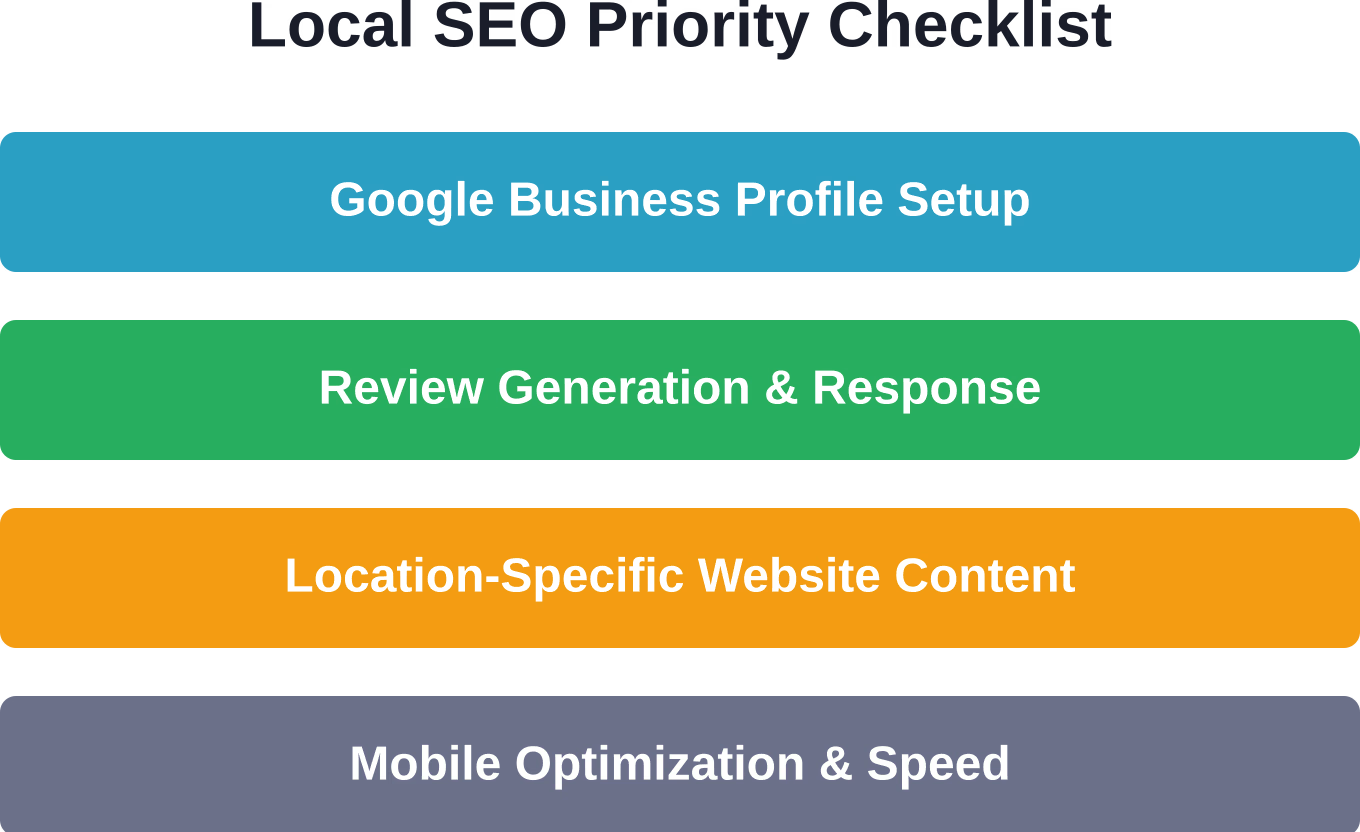
Creating and optimizing a Google Business Profile is non-negotiable. According to research from 2023, 86% of consumers use Google Maps when looking for local products and services—and healthcare facilities are no exception.
The profile needs accurate hours, an up-to-date phone number, the correct category (skilled nursing facility, not just "healthcare"), high-quality photos, and regular posts. Encouraging satisfied families to leave reviews builds social proof that influences other searchers.
But wait. Reviews aren't just nice-to-have. They're a deciding factor. Families read reviews to understand what consumers have seen and heard and lived through, as AARP research emphasizes.
The facility website must load quickly, work flawlessly on mobile devices, and clearly answer fundamental questions: What services are offered? What does care look like day-to-day? How much does it cost? How do families schedule a tour?
Including location-specific content—neighborhood names, nearby hospitals, local landmarks—helps search engines understand geographic relevance. Adding structured data markup (schema.org) for healthcare facilities improves how information appears in search results.
Social media management isn't about going viral. For nursing homes, it's about creating consistent touchpoints that humanize the facility and demonstrate genuine care.
According to AHCA/NCAL resources on social media for senior living, effective platforms for nursing homes include Facebook (where adult children spend time) and increasingly Instagram (for visual storytelling).
What should facilities post? Behind-the-scenes glimpses of activities (with proper consent), staff spotlights highlighting caregivers' dedication, educational content about managing chronic conditions, and community involvement stories.
Real talk: families want to see that residents aren't just warehoused. They want evidence of engagement, dignity, and joy. A photo of residents gardening or celebrating a birthday does more than a stock image ever could.
One innovative approach documented by LeadingAge involved residents sharing wisdom with high school graduates during pandemic isolation—creating intergenerational connection while showcasing the facility's creative programming.
Negative comments or reviews will happen. The response matters more than the complaint itself. Addressing concerns promptly, professionally, and empathetically demonstrates accountability.
AHCA/NCAL guidance on social media management emphasizes having clear protocols for responding to sensitive issues while protecting resident privacy and complying with HIPAA regulations.
Digital strategies matter, but local relationships still drive significant admissions. Hospitals, primary care physicians, rehabilitation specialists, and discharge planners are critical referral sources.
Building relationships with these partners requires consistent effort. Regular facility tours for hospital case managers, educational lunch-and-learns about post-acute care capabilities, and responsive communication when referrals come in all strengthen partnerships.
Participating in health fairs, senior expos, and community wellness events puts the facility in front of families before crisis moments hit. Offering free blood pressure screenings, fall prevention seminars, or caregiver support groups positions the facility as a community resource—not just a business.
These events also provide opportunities to collect contact information for email marketing follow-up, nurturing relationships over time.
Technology adoption in long-term care isn't just operational—it's a marketing differentiator. Families want reassurance that their loved ones will receive modern, evidence-based care.
According to LeadingAge research on telehealth, nearly 92 percent of older adults have at least one chronic condition. Telehealth and remote patient monitoring technologies can address these conditions effectively.
Telehealth and remote patient monitoring technologies can significantly reduce hospitalizations for chronic disease management. Promoting telehealth capabilities in marketing materials signals quality care and family convenience—they can participate in care planning via video without traveling.
During pandemic visitor restrictions, many facilities invested heavily in resident connectivity. One documented initiative involved deploying tablets to support resident connectivity to maintain communication.
A pilot program placed conversational AI devices with 21 residents for a 100-day test, resulting in 804 proactive conversations, 511 jokes, and 497 hours of music. These technology stories demonstrate innovation and resident-centered care.
Families researching nursing homes have dozens of questions. Creating content that answers those questions positions the facility as a helpful expert rather than just another vendor.
High-value blog topics include: "Understanding the difference between skilled nursing and assisted living," "How to talk to aging parents about long-term care," "What Medicare and Medicaid cover in nursing homes," and "Questions to ask during a nursing home tour."
These topics match search intent—what families are actually typing into Google—and provide opportunities to naturally incorporate local keywords and facility-specific information.
Virtual tours via video remove significant friction from the decision process. Research indicates that a significant percentage of moves to senior living communities occur after online search, and virtual tours play a major role in that journey.
Videos featuring staff introductions, day-in-the-life resident stories (with consent), and facility amenity walkthroughs build familiarity and trust before families ever visit in person.
Not every family is ready to make a decision immediately. Email nurture sequences keep the facility top-of-mind during the consideration process.
Segmented email campaigns work best: one sequence for families researching options generally, another for post-acute care needs following hospital discharge, and a different approach for families who toured but didn't commit.
Content might include educational articles, invitations to upcoming events, updates about facility improvements, and periodic check-ins offering assistance. The goal is staying helpful, not pushy.
Open rates, click-through rates, and conversion to tour requests are key metrics. Testing subject lines, send times, and content types helps optimize performance over time.
One critical insight: treat every lead as valuable. Whether acquisition cost is $10 or $5,500, there's real money invested in that contact, so responsive follow-up is essential.
Organic reach takes time to build. Paid advertising can generate immediate visibility and leads while longer-term strategies develop.
Search ads targeting phrases like "nursing home in [city]" or "skilled nursing near me" place the facility at the top of search results immediately. The key is sending clicks to highly relevant landing pages that match the ad's promise.
Geographic targeting ensures the budget focuses on the facility's service area. Negative keywords prevent wasted spend on irrelevant searches.
Social media advertising allows demographic targeting (age 45-65, specific geographic radius) and interest-based targeting (caregiving, senior health, Medicare). Carousel ads showcasing facility amenities or video ads featuring testimonials perform particularly well.
Retargeting campaigns reach people who visited the website but didn't convert, keeping the facility visible as they continue their research.

Nursing homes often spend heavily on local advertising without knowing which messages will actually connect with families making urgent care decisions. Extuitive helps businesses evaluate ad creatives before launch by analyzing messaging, audience response patterns, and historical campaign performance. Their platform is designed to help teams identify which campaigns are more likely to improve engagement and reduce wasted ad spend before ads go live.
With Extuitive, businesses can:
Book a demo with Extuitive to identify stronger-performing campaigns before launching them.
Online reputation is essentially the modern word-of-mouth. Consumer experience data is crucial, particularly for nursing homes where residents spend 24 hours a day in the facility, as AARP research emphasizes.
Asking satisfied families to leave reviews on Google, Facebook, and senior care directories like Caring.com creates a steady stream of positive feedback. Timing matters—asking shortly after a positive interaction or successful discharge yields better response rates.
Making the process easy matters too. Sending a direct link to the review platform in a follow-up email removes friction.
Thanking reviewers for positive feedback shows appreciation and signals active management. Addressing negative reviews professionally demonstrates accountability and willingness to improve.
Prospective families judge facilities not just on having perfect reviews (which seems suspicious) but on how thoughtfully the facility responds to criticism.
Here's something not immediately obvious: staff retention is a marketing asset. Facilities with stable, experienced teams provide better care, and families notice.
Chelsea Jewish Lifecare reports that 25% of their employees have been with the organization for at least 10 years—an impressive retention record worth highlighting in marketing materials.
Meanwhile, another facility implementing a growth mindset initiative reduced turnover to 17%—well below industry averages. These retention stories signal organizational health and care consistency.
Marketing materials that spotlight long-tenured staff members, low turnover rates, and employee satisfaction build confidence that the facility invests in its people—which directly impacts resident care quality.
Marketing can't ignore the financial realities of long-term care. Medicaid finances a substantial portion of total U.S. long-term services and supports spending, according to LeadingAge data, facilities need clear positioning around payment options.
Messaging should address Medicare coverage for post-acute care, Medicaid eligibility processes, private-pay options, and assistance navigating the financial complexity families face.
Recent policy changes add urgency. Recent policy changes have significantly impacted Medicaid funding for long-term care services—with significant implications for access to care. Facilities that proactively help families understand and navigate these challenges differentiate themselves.
Marketing without measurement is just spending. Tracking return on investment ensures resources focus on tactics that actually drive admissions.
Key metrics include: website traffic and source (organic search, paid ads, referrals), tour request conversion rates, tour-to-admission conversion rates, cost per acquisition by channel, and occupancy trends correlated with marketing activities.
Many facilities benefit from attribution tracking—understanding which marketing touchpoints contributed to each admission. Did they find the facility through Google search, see a Facebook ad, attend a community event, receive a physician referral, or some combination?

Even well-intentioned campaigns can stumble. Common pitfalls include inconsistent branding across platforms, neglecting mobile optimization (most searches happen on phones), ignoring negative reviews, making pricing information impossible to find, and using stock photos instead of authentic facility images.
Another mistake is treating all prospects identically. Post-acute rehabilitation patients have different needs and timelines than families seeking long-term placement. One-size-fits-all messaging dilutes effectiveness.
And perhaps the biggest error: not following up quickly with inquiries. Families researching nursing homes are often under time pressure. Responding within an hour versus a day can determine whether that lead converts or moves to a competitor.
The US long-term care market is projected to grow to $730 billion by 2030, reflecting a 7.7% compound annual growth rate. Demographic trends are undeniable—demand for quality nursing home care will only increase.
Facilities that invest in comprehensive marketing strategies now position themselves to capture that growth. The combination of strong local SEO, authentic social media presence, community partnerships, technology adoption, and reputation management creates sustainable competitive advantage.
But here's what matters most: marketing isn't about manipulation or empty promises. It's about connecting families in crisis with the care solutions their loved ones need. Done well, marketing serves both the facility's business goals and the community's very real needs.
The nursing homes that thrive will be those that build trust through transparency, demonstrate quality through outcomes, and make themselves genuinely easy to find when families are searching. Start with the fundamentals—Google Business Profile, responsive website, review generation—and build from there.
The families in your community are searching right now. Make sure they can find you.


