Marketing Ideas for Funeral Homes That Build Trust in 2026
Discover proven funeral home marketing strategies that build community trust while staying compliant. From digital tools to local engagement tactics.
May 28, 2026



Dropshipping is a retail fulfillment method where online sellers don't hold inventory—instead, products ship directly from the supplier to the customer after a purchase is made. This model lets entrepreneurs start an online store with minimal upfront costs since there's no need to invest in stock or warehouse space. According to academic sources, dropshipping eliminates traditional retail overhead, making it an accessible business model for new entrepreneurs.
Starting an online business used to mean warehouse leases, inventory investments, and serious upfront capital. Not anymore.
Dropshipping has changed the game for entrepreneurs looking to sell products online without the traditional retail headaches. But what exactly is dropshipping, and how does it actually work?
This guide breaks down everything about dropshipping—from the basic model to practical steps for launching a business in 2026. Whether the concept is completely new or there's already some familiarity with ecommerce, this comprehensive overview covers what matters.
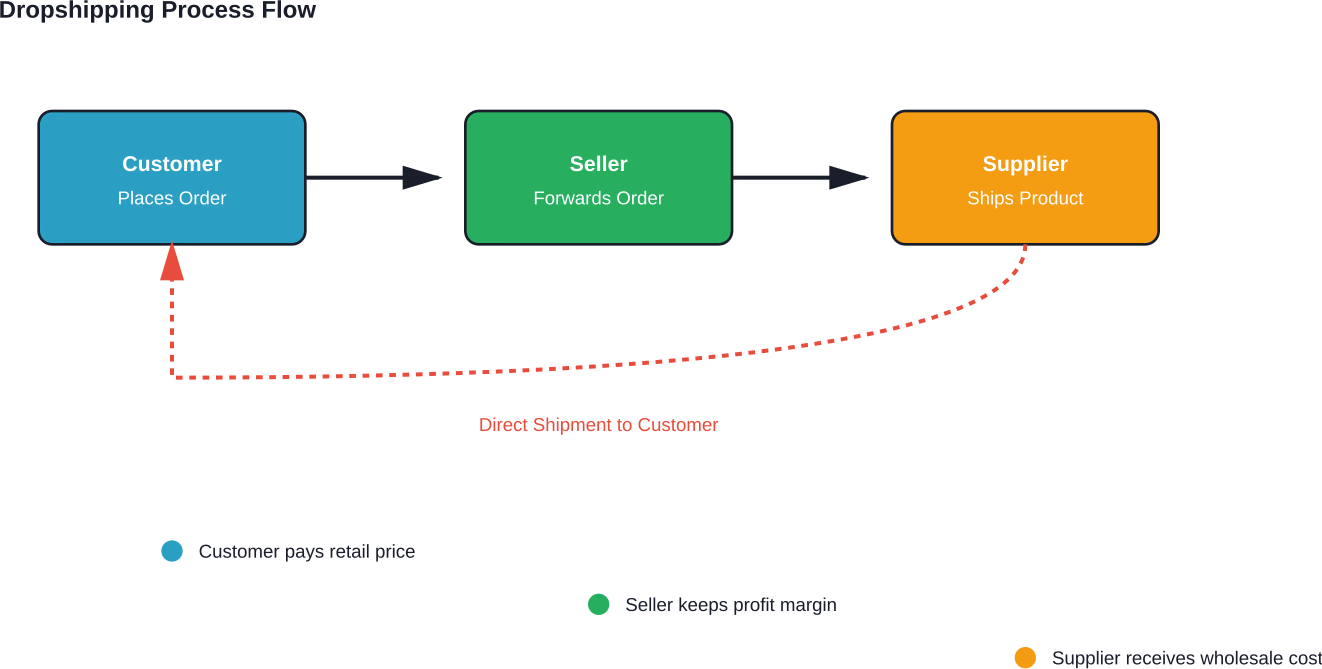
Dropshipping is a retail fulfillment method where the seller doesn't keep products in stock. Instead, when a customer places an order, the seller purchases the item from a third-party supplier who then ships it directly to the customer.
According to CSP Global's academic research, dropshipping differs from traditional retail models because "the owner only purchases products from a vendor when an order has been placed by a customer. This eliminates the need to own or store inventory."
Here's the thing though—the seller never actually sees or handles the product. The entire fulfillment process happens between the supplier and the end customer, with the seller acting as the middleman who facilitates the transaction.
The supplier handles warehousing, packaging, and shipping. The seller focuses on marketing, customer service, and building the brand.
The dropshipping process follows a straightforward pattern:
This supply chain approach minimizes risk for new business owners. There's no need to predict which products will sell or invest thousands in inventory that might sit unsold.

In dropshipping, most losses don’t come from bad suppliers – they come from picking products or angles that don’t convert. You launch a store, run ads, and only then see that the offer doesn’t land. That early guesswork is where a lot of budget goes.
Tools like Extuitive move that step earlier. Instead of testing after launch, it helps check which product angles and creatives are likely to work before you spend. You can filter weak ideas upfront and focus on what actually has a chance to sell.
If you’re just getting into dropshipping, this step can save time and money. Try validating your next idea with Extuitive before you invest in ads.
Understanding the mechanics matters when evaluating whether this model makes sense for a particular business idea.
The operational workflow looks different from traditional retail at every step.
From the customer's perspective, the shopping experience appears identical to any other online purchase. They visit a website, browse products, add items to their cart, and check out.
The customer typically has no idea that the product is coming from a third-party supplier rather than the seller's own warehouse. The package may arrive with the supplier's branding, or some suppliers offer white-label shipping with the seller's branding.
Sellers running dropshipping businesses handle several critical functions:
Suppliers in the dropshipping ecosystem handle the physical aspects:
The quality of the supplier relationship often determines the success or failure of a dropshipping business. Academic research from the University of Arkansas notes that dropshipping "puts great pressure on suppliers and retailers to coordinate effectively" because customers demand convenience without caring about the logistics behind it.
The dropshipping model offers several compelling advantages, particularly for entrepreneurs just starting out or testing new product markets.
Traditional retail requires significant capital investment. Inventory purchases, warehouse space, and logistics infrastructure all add up quickly.
Dropshipping eliminates most of these costs. There's no need to purchase inventory upfront or lease warehouse space. The barrier to entry is remarkably low—essentially just the cost of building a website and marketing products.
Square notes that dropshipping can appeal to entrepreneurs seeking efficiency and low overhead, though it involves trade-offs.
Managing inventory is complex and risky. Products can become obsolete, get damaged, or simply fail to sell.
With dropshipping, there's zero inventory risk. The supplier handles all storage, and sellers only pay for products after customers have already purchased them. This shifts the inventory risk entirely to the supplier.
A dropshipping business can operate from anywhere with an internet connection. There's no physical store or warehouse tying the business to a specific location.
This flexibility appeals to digital nomads and anyone seeking location independence. As noted by the Small Business Administration, modern businesses can even operate entirely from a smartphone, making dropshipping particularly accessible.
Without inventory constraints, sellers can offer an extensive product catalog. Testing new products is simple—just add them to the store. If they don't sell, remove them without any financial loss.
This flexibility allows for rapid market testing and pivoting based on what actually sells rather than what was predicted to sell.
Scaling a traditional retail business means more warehouse space, more staff, and more complexity. Dropshipping scales more easily because the supplier handles most of the additional work that comes with increased order volume.
More orders mean more work coordinating with suppliers and handling customer service, but it doesn't mean exponentially more operational complexity.
Real talk: dropshipping isn't a perfect business model. It comes with distinct challenges that can frustrate unprepared entrepreneurs.
The convenience of dropshipping comes at a cost—literally. Profit margins tend to be lower than traditional retail because suppliers charge more per unit than bulk wholesale prices.
According to a ZipRecruiter report cited by Square, the average hourly pay for professional dropshipping in the U.S. is $19.70 an hour. This reflects the competitive nature of the market and the margin pressures sellers face.
Competition is fierce, and many sellers compete primarily on price, which further compresses margins.
The seller depends entirely on the supplier to fulfill orders correctly and on time. If the supplier ships the wrong product, ships late, or ships damaged goods, the customer blames the seller—not the supplier.
This lack of control over the customer experience can be frustrating and damaging to brand reputation.
Suppliers may run out of stock without immediately notifying sellers. This can lead to selling products that aren't actually available, resulting in canceled orders and unhappy customers.
Managing inventory across multiple suppliers becomes even more complex, requiring constant vigilance or automated systems.
When products come from multiple suppliers, customers might receive multiple shipments with different arrival times and shipping costs. This creates a suboptimal customer experience and logistical headaches.
International shipping from overseas suppliers can mean long delivery times that frustrate customers accustomed to two-day shipping.
As Square notes in their 2026 guide, "There's also a lot of competition in the dropshipping niche." The low barriers to entry mean many entrepreneurs pursue the same opportunities, often selling identical products from the same suppliers.
Standing out requires exceptional marketing, branding, or finding unique product niches.
The business lives or dies by supplier reliability. A supplier who goes out of business, dramatically raises prices, or deteriorates in quality can devastate a dropshipping operation.
Building relationships with multiple suppliers provides some insurance but adds complexity.
Getting started with dropshipping requires methodical planning and execution across several key areas.
Product selection determines everything that follows. The best niches balance passion with profitability.
Look for products that solve specific problems or serve particular communities. Avoid oversaturated markets where competition has already driven margins to near zero.
Research what's actually selling rather than guessing. Tools like Google Trends, Amazon bestseller lists, and social media can reveal product demand.
Characteristics of good dropshipping products:
The supplier relationship is the foundation of a dropshipping business. Choosing poorly here creates endless problems down the line.
Where to find suppliers:
But finding suppliers is just the beginning. Vetting them thoroughly is critical.
Questions to ask potential suppliers:
Order sample products before committing. Evaluate packaging quality, shipping speed, and product condition upon arrival. This gives firsthand experience of what customers will receive.
The storefront is where customers interact with the brand. It needs to be professional, user-friendly, and trustworthy.
Several platforms specialize in ecommerce and integrate with dropshipping suppliers. Choose one that fits technical skill level and budget.
Essential store elements:
According to Amazon Seller data, more than 60% of online sellers find selling profitable when they optimize product selection, pricing, and marketing.
Legal and financial foundations matter, even for online businesses.
Operational considerations:
The Federal Trade Commission enforces regulations that may impact online sellers. The INFORM Consumers Act, which became effective June 27, 2023, requires online marketplaces to collect and verify information from high-volume third-party sellers.
According to FTC guidance, a "high-volume third party seller" is defined as a seller in an online marketplace who meets specific sales thresholds. Understanding these regulations matters for compliance.
Building a store means nothing if nobody visits it. Marketing drives traffic and converts visitors into customers.
Effective marketing channels for dropshipping:
Marketing budget and approach should align with product margins and target audience. Testing different channels helps identify what works best for specific products and niches.
Launch is just the beginning. Continuous optimization separates successful dropshipping businesses from failed attempts.
Monitor key metrics: conversion rate, average order value, customer acquisition cost, and profit margins. Use this data to make informed decisions about what to change.
Test different product offerings, pricing strategies, and marketing messages. Scale what works and cut what doesn't.
Dropshipping isn't the only way to fulfill online orders. Understanding alternatives provides context for when dropshipping makes sense.
With traditional retail, businesses purchase inventory in bulk, store it, and ship it themselves when orders come in.
Print-on-demand works similarly to dropshipping but specifically for customizable products like t-shirts, mugs, and books. Products are created only after orders are placed.
With 3PL fulfillment, businesses purchase inventory in bulk but outsource storage and shipping to a fulfillment company.
This model involves purchasing products at wholesale prices and handling all storage and shipping in-house.
According to Amazon data, sellers can succeed with various fulfillment methods. The key is choosing one that aligns with available capital, desired involvement level, and business goals.
Operating an online business comes with legal responsibilities that can't be ignored.
The Federal Trade Commission enforces the INFORM Consumers Act, which became effective June 27, 2023. This law requires online marketplaces to collect and verify information from high-volume third-party sellers.
According to FTC guidance, the law aims to increase transparency and help prevent the sale of stolen, counterfeit, or dangerous products. High-volume sellers must provide identification information that marketplaces verify.
The FTC defines a high-volume third-party seller as meeting specific sales thresholds in online marketplaces. Sellers operating at scale should understand these requirements.
The dropshipping space attracts scammers promising easy money. The FTC has taken action against multiple business opportunity schemes operating in the ecommerce space.
In March 2025, the FTC took action against the Click Profit online business opportunity scam. In August 2025, the court entered a stipulated order for a permanent injunction, banning the operators from the industry and requiring them to turn over personal and business assets.
These enforcement actions highlight the importance of due diligence. Courses or programs promising guaranteed dropshipping success should be approached with extreme skepticism.
Online sellers have tax obligations that vary by location. Sales tax collection, income tax reporting, and international tax considerations all apply.
According to the Small Business Administration, more than a third of small businesses currently outsource operations like accounting and tax preparation. This can be a wise investment for ensuring compliance.
Sellers remain responsible for customer satisfaction even when suppliers handle fulfillment. Consumer protection laws apply regardless of the fulfillment method used.
Clear return policies, accurate product descriptions, and responsive customer service aren't just good business practices—they're often legal requirements.
So after all this—does dropshipping actually make sense as a business model?
The answer depends entirely on expectations, skills, and circumstances.
Dropshipping works well for entrepreneurs who:
Other fulfillment methods may be better for those who:
Community discussions on platforms like Reddit reveal mixed experiences. Some entrepreneurs build sustainable dropshipping businesses, while others struggle with razor-thin margins and supplier issues.
The model is accessible, not easy. Low barriers to entry mean high competition. Success requires strong marketing, excellent customer service, and constant optimization.
Dropshipping won't create passive income or overnight success. It's a legitimate business model that demands real work, but it does offer a lower-risk entry point into ecommerce than traditional retail.
Learning from others' mistakes saves time and money.
Just because something seems interesting doesn't mean it will sell. Market research should drive product selection, not personal taste.
Rushing into partnerships with unreliable suppliers creates endless headaches. Order samples, check reviews, and start small before committing fully.
Automated responses and delayed replies damage reputation. Even with dropshipping, customer service remains the seller's responsibility.
Racing to the bottom on pricing erodes already thin margins. Compete on value, service, or branding instead.
Ignoring business registration, tax obligations, or consumer protection laws creates serious risks. Compliance matters from day one.
Dropshipping requires active management. Suppliers need monitoring, customers need support, and marketing demands constant attention.
Launching with hundreds of random products dilutes marketing efforts. Start focused, then expand based on what actually sells.
The right tools make operations more efficient and professional.
Online store builders provide templates and integrations specifically designed for dropshipping operations. Choose platforms with strong supplier integration options.
Wholesale directories connect sellers with verified suppliers across numerous product categories. These platforms often include ratings and reviews from other dropshippers.
Software solutions help identify trending products, analyze competition, and estimate demand before committing to a niche.
Email marketing platforms, social media schedulers, and advertising tools help maintain consistent marketing without constant manual effort.
Understanding what's working requires data. Analytics tools track traffic sources, conversion rates, and customer behavior.
Help desk and live chat solutions centralize customer communications and ensure timely responses.
According to Statista and industry reports, the global IT outsourcing market revenue reached over $500 billion in 2024, with expectations to exceed $600 billion by 2026, reflecting how businesses increasingly rely on specialized tools and services rather than building everything in-house.
Dropshipping democratizes access to ecommerce by removing traditional barriers around inventory investment and logistics infrastructure.
The model works. Businesses of all sizes use dropshipping as part of their fulfillment strategy. But it's not a shortcut to easy money or passive income.
Success requires selecting the right products, finding reliable suppliers, marketing effectively, and providing excellent customer service—just like any retail business. The fulfillment method doesn't change these fundamentals.
What dropshipping does offer is a lower-risk way to test business ideas, enter ecommerce without significant capital, and operate with location flexibility. For entrepreneurs with strong marketing skills and limited startup funds, these advantages can be decisive.
The trade-offs—lower margins, less control, intense competition—mean dropshipping isn't ideal for everyone. Entrepreneurs with capital to invest in inventory might achieve better results with traditional fulfillment. Those seeking unique product differentiation might prefer manufacturing or print-on-demand.
The key is entering dropshipping with realistic expectations. Understand both the opportunities and the limitations. Invest time in finding quality suppliers. Focus on building a genuine brand rather than just reselling generic products.
Done right, dropshipping can launch an ecommerce business and generate real income. Done poorly, it becomes a frustrating exercise in razor-thin margins and supplier headaches.
The model provides the opportunity. What happens next depends on execution.
Ready to explore ecommerce opportunities? Start by researching specific product niches, vetting potential suppliers, and understanding the legal requirements in your jurisdiction. The lower barrier to entry doesn't mean no work—it just means getting started is more accessible than ever before.


