The Best Shopify Popup Apps in 2026
Tired of annoying popups? These are the highest-converting Shopify popup apps now—tested on real stores and ranked by ROI, speed, and ease of use today.
Mar 24, 2026



Successful event marketing combines pre-event promotion strategies like email campaigns and social media hashtags, during-event engagement through live updates and user-generated content, and post-event nurturing to build lasting relationships. Events represent a significant portion of marketing budgets, with organizations allocating 19% of their overall marketing spend to event programs, and email marketing delivers strong returns on investment. Strategic event promotion drives attendance, brand awareness, and measurable business results across both virtual and in-person experiences.
Planning an event takes serious effort. The venue, speakers, agenda, catering—all those details demand attention. But here's the thing: even the most carefully planned event falls flat without people actually showing up.
That's where event marketing comes in. It's not just about sending a few emails and hoping for the best. Event marketing has evolved into a strategic discipline that leverages multiple channels, data-driven insights, and audience psychology to drive attendance and engagement.
According to the American Marketing Association, event marketing now represents a core component of the marketing stack rather than just promotional activity. Events represent a significant portion of marketing budgets, with organizations allocating 19% of their overall marketing spend to event programs. With stakes that high, getting the promotion strategy right isn't optional.
The good news? Effective event promotion doesn't require massive teams or endless budgets. What it does require is a thoughtful approach that meets potential attendees where they are, speaks to their needs, and builds genuine excitement.
Event marketing has shifted dramatically from its traditional roots. The old model focused purely on getting people through the door. Modern event marketing serves broader organizational goals—lead generation, brand positioning, community building, and revenue growth.
This evolution reflects changing consumer behavior. Billions of online buyers exist worldwide, representing a substantial portion of the global population. Digital channels now dominate discovery and decision-making. Potential attendees research events online, check social proof, and evaluate value propositions before committing.
Event marketing operates across three critical phases: pre-event promotion that drives registrations, during-event engagement that maximizes participation, and post-event nurturing that extends value and builds loyalty. Each phase requires distinct tactics and messaging.
Smart event marketers track performance metrics throughout the event journey. Key performance indicators include registration conversion rates, email open and click-through rates, social media engagement, website traffic, and ultimately attendance numbers.
According to Meeting Professionals International research, email is an effective channel for event promotion, with organizations recommending data-driven email strategies. According to MPI research, emails with CTA buttons can yield significantly higher click-throughs compared to those without.
These findings matter because they guide budget allocation decisions. Testing different channels and tactics reveals what actually works for specific audiences rather than relying on assumptions.

Extuitive helps teams review ad concepts before launching campaigns. The platform uses AI models to forecast likely performance, compare creative options, and support better decisions around messaging and targeting.
For event campaigns, this can be useful when several creative directions are ready, but only a few should go live first.
Extuitive can help with:
👉 Book a demo with Extuitive to review your ad ideas.
The pre-event phase sets the foundation for success. Building awareness and driving registrations requires consistent effort across multiple touchpoints. Here's what actually moves the needle.
Email remains one of the most effective event promotion channels. The return on investment speaks for itself: email marketing delivers strong returns on investment according to American Marketing Association data.
But not all event emails perform equally. Successful email campaigns segment audiences based on interests, past behavior, and demographic factors. Personalized subject lines, clear value propositions, and prominent registration buttons drive conversions.
Timing matters too. Start promoting major events 8-12 weeks in advance with a save-the-date announcement. Follow up with detailed information 6-8 weeks out, share speaker announcements and agenda highlights 3-4 weeks before, and send reminder sequences in the final week.
Monitoring key performance indicators throughout the campaign allows for real-time optimization. If open rates drop, test new subject lines. If click-through rates lag, adjust the call-to-action placement or messaging.
Social platforms offer powerful tools for event promotion, though effectiveness varies across generations.
Create a unique event hashtag early in the promotion cycle. Use it consistently across all platforms—Twitter, Instagram, LinkedIn, Facebook. Encourage speakers, sponsors, and early registrants to use the hashtag when sharing event-related content.
A unified hashtag strategy across multiple platforms resulted in increased user-generated content through the hashtag. That social proof becomes promotional fuel as potential attendees see their peers engaging with the event.
Platform-specific strategies yield better results than generic posting. LinkedIn works well for professional conferences and B2B events. Instagram and TikTok reach younger audiences through visual storytelling. Facebook groups build community among niche audiences.
Share behind-the-scenes content during event planning—speaker prep sessions, venue setup, team meetings. This transparency builds anticipation and makes followers feel invested in the event's success.
Content marketing supports event promotion by providing value before attendees ever register. Research indicates that a significant majority of organizations utilize content marketing strategies, with most consumers preferring personalized content that addresses their specific needs.
Publish blog posts addressing topics the event will cover. Interview confirmed speakers and share their insights. Create downloadable resources—checklists, templates, research reports—that demonstrate the event's educational value.
Video content particularly resonates. Short speaker introduction videos, event preview clips, and testimonials from past attendees build credibility and excitement. These assets work across multiple channels—embedded in emails, shared on social media, featured on the event website.
Partnering with complementary organizations expands reach without expanding budgets. Identify associations, media outlets, influencers, and brands that share the target audience but don't compete directly.
Many marketers allocate budget to influencer marketing as an effective promotional channel. For events, micro-influencers with highly engaged niche audiences often outperform celebrity partnerships.
Cross-promotion agreements work because they're mutually beneficial. An industry publication gains content for its readers while the event gains exposure to a qualified audience. Structure these partnerships early—the best partners book their editorial calendars months in advance.
Effective event marketing starts with specific, measurable objectives. Vague goals like "increase awareness" don't provide actionable direction. SMART goals—Specific, Measurable, Achievable, Relevant, and Time-bound—guide strategy and enable performance tracking.
Common event marketing goals include hitting specific registration numbers, achieving target attendance rates, generating qualified leads, driving post-event conversions, or building community engagement. Each goal requires different tactics and metrics.
Meeting Professionals International research emphasizes setting goals that are data-driven rather than based on assumptions or guesswork. For example, rather than vaguely hoping for "more attendees," set a specific target like increasing attendance by 50% year-over-year based on registration trends and market analysis.
Track these metrics throughout the event lifecycle. Pre-event data reveals which promotional channels drive registrations. During-event metrics show engagement levels and session popularity. Post-event analysis measures overall success and informs future strategy.
Event marketing doesn't stop once attendees arrive. In-event promotion amplifies reach, boosts engagement, and creates momentum that extends beyond the event dates.
Real-time social updates transform attendees into brand ambassadors. When attendees share insights, photos, and reactions using the event hashtag, they expose the event to their networks.
Create shareable moments intentionally. Photo opportunities, quotable speaker insights, interactive installations, and surprise elements give attendees content worth sharing. A nonprofit conference using a unified hashtag strategy across multiple platforms resulted in increased user-generated content through the hashtag.
Consider deploying a social media wall that displays live posts using the event hashtag. This visible recognition encourages more sharing while demonstrating the event's buzz to attendees and virtual followers.
Encourage attendees to create and share content throughout the event. Run photo contests, offer prizes for the best insights shared, or feature attendee posts on official event channels.
User-generated content campaigns can drive significant engagement and reach when participants authentically share content with their networks. While few campaigns achieve massive scale, the principle applies: authentic content from real participants outperforms polished corporate messaging.
Make sharing easy. Provide clear hashtags, create Instagram-worthy backdrops, offer compelling reasons to post. Recognition, prizes, and the chance to connect with peers all motivate social sharing.
Interactive elements during the event deepen engagement and create memorable experiences. Live polls, Q&A sessions, gamification, and networking activities keep energy high and attention focused.
Technology platforms enable sophisticated engagement tracking. Event apps record session attendance, measure networking activity, and capture interaction data that feeds into post-event analysis and lead scoring.
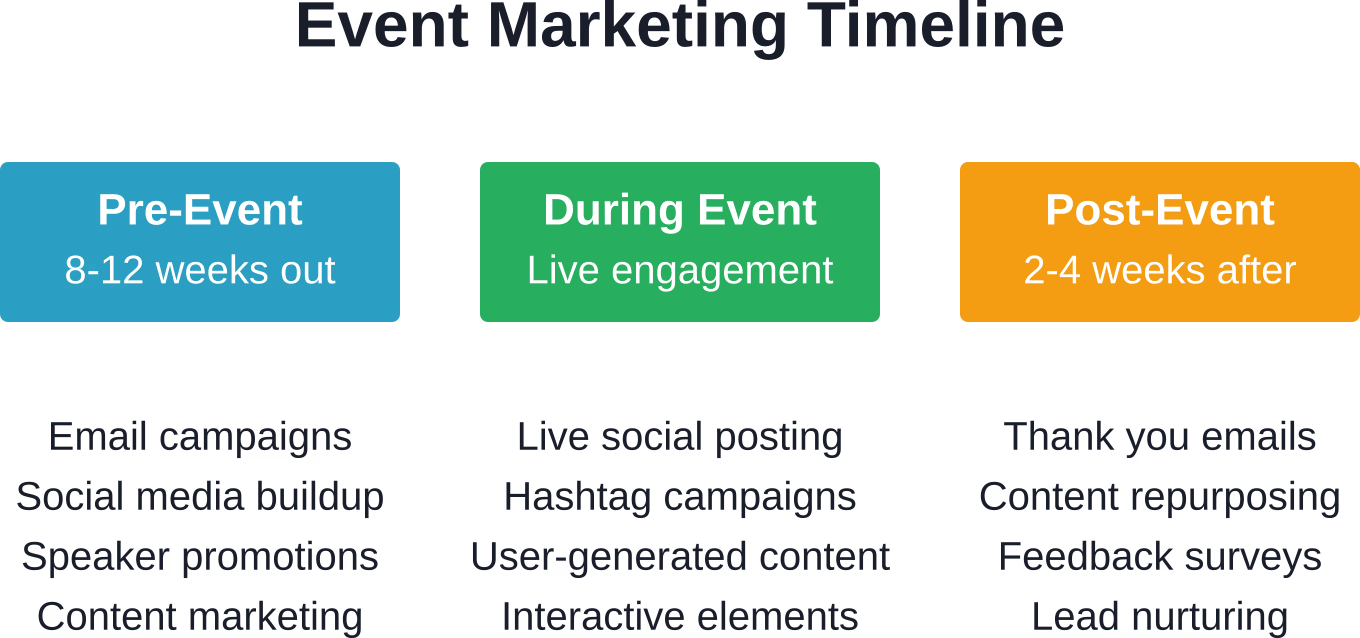
The event doesn't end when attendees leave. Post-event marketing extends value, nurtures relationships, and sets the stage for future events.
Send thank-you emails within 24-48 hours while the event remains fresh in attendees' minds. Include session recordings, presentation slides, or exclusive content that adds value beyond the live experience.
Segment these communications based on attendance patterns. Someone who attended every session receives different messaging than someone who only participated in the opening keynote. Personalization shows that organizers value individual engagement rather than treating all attendees identically.
Event content represents a goldmine for ongoing marketing. Record sessions, capture speaker insights, photograph key moments. This raw material fuels content calendars for months.
Transform keynote presentations into blog posts. Edit panel discussions into podcast episodes. Create social media quote graphics from speaker insights. Compile attendee testimonials into video montages.
This repurposed content serves multiple purposes. It demonstrates value to potential attendees for future events. It keeps the conversation alive among past attendees. It provides search-optimized content that attracts organic traffic.
Post-event surveys gather insights that inform future strategy. What sessions resonated most? What elements fell flat? What would attendees change?
Keep surveys concise—no more than 10 questions. Mix quantitative ratings with open-ended questions. Offer an incentive for completion, such as access to exclusive content or entry into a prize drawing.
Actually analyze the feedback. Patterns in the data reveal opportunities for improvement. Testimonials and success stories become promotional assets for future events.
Transform one-time attendees into an ongoing community. Create a LinkedIn group, Slack channel, or dedicated forum where attendees connect between events.
Regular engagement keeps the community active. Share industry news, pose discussion questions, highlight member achievements. This sustained connection makes future event promotion easier—the community already exists and trusts the brand.
Different marketing channels require distinct approaches. What works on LinkedIn flops on Instagram. Email tactics differ from paid advertising strategies.
Organic search drives qualified traffic to event landing pages. Optimize event pages for relevant keywords—the event name, topic categories, location, and industry terms potential attendees search.
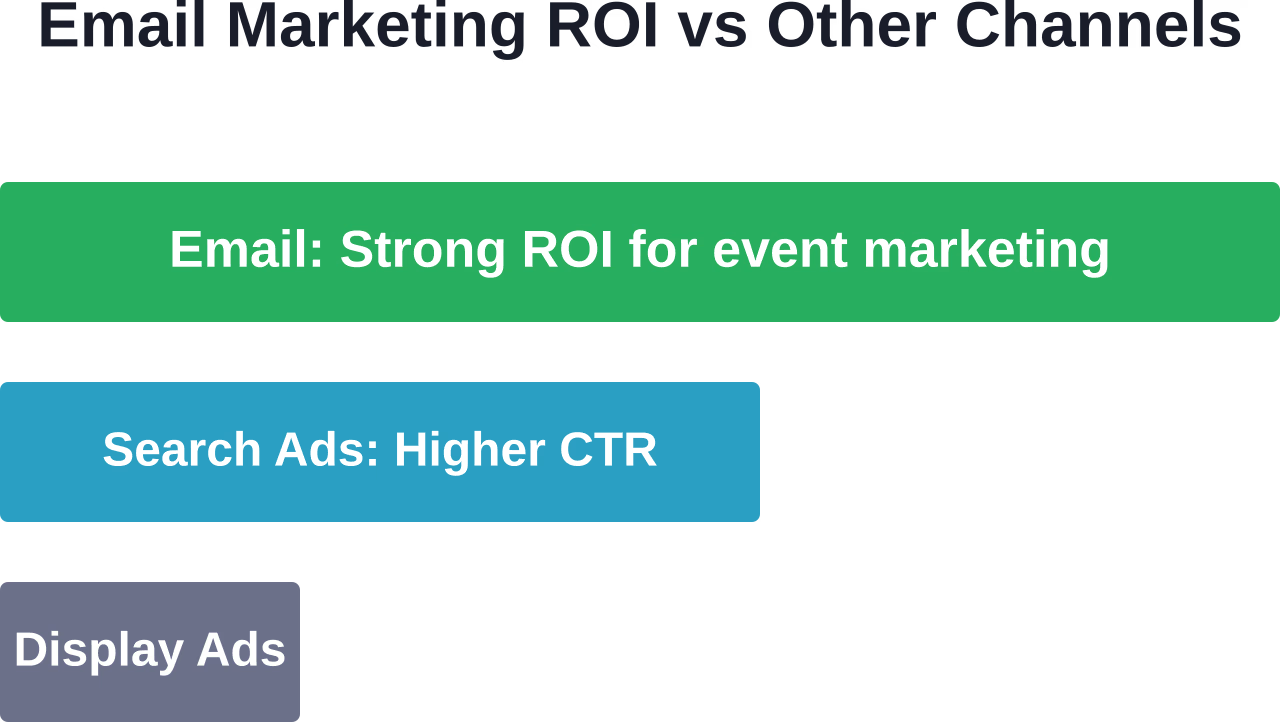
Search advertising typically achieves higher click-through rates compared to display advertising formats. For time-sensitive events, paid search campaigns target high-intent keywords as the event date approaches.
Local search matters for in-person events. Optimize for location-based keywords and claim the event listing on Google Business Profile to appear in local search results and maps.
Organic social reach continues declining across platforms. Paid promotion ensures content reaches target audiences despite algorithm changes.
Platform targeting capabilities enable precise audience selection. Target by job title, industry, interests, geographic location, and behaviors. Retarget website visitors who viewed the event page but didn't register.
Test different ad formats—single image, carousel, video. A/B test messaging, imagery, and calls-to-action. Start with small budgets, identify what performs, then scale spending behind winners.
Basic email blasts underperform compared to segmented, automated sequences. Divide the email list by factors like past attendance history, industry, job role, or engagement level.
Create automated workflows triggered by specific actions. When someone registers, they enter a nurture sequence with event details, speaker introductions, and preparation tips. When someone abandons the registration page, they receive a reminder email highlighting the event's value.
Email marketing delivers strong returns on investment, making sophisticated email marketing one of the highest-return event promotion channels available.
Event marketing evolves as technology advances and attendee expectations shift. Several trends are reshaping how organizations promote and execute events.
The pandemic accelerated hybrid event adoption—combining in-person and virtual attendance options. This format expands reach while accommodating different preferences and constraints.
Marketing hybrid events requires promoting two distinct experiences. Virtual attendees need different messaging than in-person participants. Technology requirements, networking opportunities, and engagement mechanisms differ between formats.
Companies like L'Oréal adapted their marketing budget allocation during COVID-19, increasing digital spending to respond to changing consumer behaviors and market conditions.
Generic event promotion gives way to personalized experiences. Data analytics identify attendee preferences, predict interests, and enable customized communications.
Event platforms track registration behavior, content engagement, and networking patterns. This data powers personalized recommendations—suggesting relevant sessions, connecting attendees with similar interests, and customizing the event experience.
According to revised 2026 industry data, the global voice commerce market was valued at approximately $150.34 billion in 2025 and is projected to increase to $194.03 billion in 2026.
AI tools automate routine tasks, generate content variations, and optimize campaign performance. Chatbots answer attendee questions instantly. Predictive analytics forecast registration trends. Natural language processing analyzes feedback at scale.
Harvard Business School Professor Sunil Gupta notes that AI accelerates campaign creation and enables sophisticated personalization. For event marketers, these capabilities mean doing more with existing resources.
But AI complements rather than replaces human creativity. The technology handles data processing and optimization while marketers focus on strategy, messaging, and building authentic connections.
With events consuming 19% of overall marketing budgets, allocating those resources effectively determines success. Different promotion channels require different investment levels and deliver varying returns.
Email marketing delivers strong returns, making it a priority investment. The channel requires relatively low financial investment—mainly platform fees—but demands time for strategy, content creation, and list management.
Organic social media requires time rather than money. Paid social demands budget but offers precise targeting. Content marketing needs creation resources but provides long-term value through search traffic and thought leadership.
Test small, scale what works. Start with modest budgets across multiple channels, measure performance rigorously, then shift resources toward the highest-performing tactics.
Organic reach provides credibility and long-term value but takes time to build. Paid promotion delivers immediate visibility and precise targeting but requires ongoing investment.
The optimal mix depends on timeline, budget, and audience. Events promoted far in advance can rely more heavily on organic tactics—SEO, content marketing, community building. Events with short timelines need paid promotion to drive quick awareness.
Harvard Business School research on measuring marketing effectiveness emphasizes understanding which efforts succeed and which fail. Budget allocation decisions must be data-driven rather than based on assumptions.
Even experienced marketers fall into predictable traps. Awareness of common mistakes prevents wasted effort and resources.
Rushing event promotion rarely works. Potential attendees need time to learn about the event, evaluate whether it fits their needs, get approval from managers, arrange travel, and register.
Major conferences benefit from 3-4 month promotion cycles. Smaller events need at least 6-8 weeks. Webinars can operate on shorter timelines—2-3 weeks—but still require sufficient runway for awareness building.
Mobile devices drive significant event discovery and registration activity. Event websites, registration forms, and email templates must render perfectly on smartphones and tablets.
Test every element on multiple devices and screen sizes. Slow-loading pages, difficult navigation, and broken forms on mobile devices directly reduce registration rates.
Event marketing shouldn't end when the event does. Organizations that treat events as isolated occurrences miss opportunities to build lasting relationships and demonstrate ongoing value.
Post-event communications, content repurposing, and community building extend event impact far beyond the dates on the calendar. These activities also lay groundwork for future event promotion—satisfied attendees become reliable promotional partners.
Treating all potential attendees identically wastes promotional resources. Past attendees, first-time prospects, speakers, sponsors, and media contacts all require different messaging and cadences.
Segmentation enables personalization. Personalization improves engagement. Better engagement drives registrations and attendance.
Data collection throughout the event marketing lifecycle enables performance measurement and continuous improvement.
Track registration sources to understand which channels drive sign-ups. Monitor website traffic, email performance, social engagement, and paid campaign metrics.
Conversion rates reveal promotion effectiveness. If 10,000 people visit the event landing page but only 100 register, that 1% conversion rate signals messaging problems, value proposition issues, or registration friction.
During the event, measure attendance rates, session participation, app downloads, networking activity, and social media engagement. These metrics show whether the event delivers on promotional promises.
Gap analysis between registrations and actual attendance reveals no-show rates and helps predict future attendance based on registration numbers.
Survey responses, content engagement, community participation, and lead conversion rates demonstrate long-term event impact. These metrics justify event investment and guide future strategy.
One-off event promotion creates unnecessary work. Building repeatable systems and processes makes each event easier to market than the last.
Create email templates, social media post frameworks, and content calendars that work across multiple events. Customize for specific events while maintaining core structure and messaging approaches.
Document what works. When a particular email subject line generates high open rates, save it as a template. When a social media post format drives engagement, replicate the approach.
Some promotional content applies across multiple events. Brand positioning, value propositions, testimonial libraries, and speaker bios often remain relevant beyond single events.
Invest in high-quality evergreen assets—professional photography, brand videos, case studies—that serve multiple promotional purposes over time.
Event marketing succeeds when different teams work together. Marketing handles promotion. Sales follows up on leads. Product teams gather feedback. Executive leadership provides strategic direction.
Regular cross-functional meetings ensure alignment. Clear roles and responsibilities prevent duplicated effort and missed opportunities.
Conference promotion differs from trade show marketing. Webinar tactics don't match gala fundraiser strategies. Effective event marketing acknowledges these differences.
Large-scale conferences require extended promotion timelines and multi-channel approaches. Speaker lineup announcements, agenda reveals, and early-bird pricing all serve as promotional milestones.
Content marketing plays a major role—publishing thought leadership that positions the conference as the definitive industry gathering. Partner promotion through sponsors and exhibitors extends reach.
Virtual events lower attendance barriers—no travel required, no time away from the office. But they also face attention competition from countless other online options.
Promotion emphasizes convenience, accessibility, and specific learning outcomes. Clear agendas, compelling speakers, and interactive elements differentiate quality virtual events from generic webinars.
Shorter promotion cycles work for webinars—2-3 weeks typically suffices. Registration should require minimal friction—name and email rather than lengthy forms.
Events focused on networking and community building emphasize who's attending rather than formal programming. Promotion highlights the opportunity to connect with peers, share experiences, and build relationships.
Social proof drives these promotions. Showcase attendee testimonials, highlight notable participants, and create FOMO around missing valuable connections.
Event marketing has evolved from simple promotion into a strategic discipline that drives organizational goals. Events represent a significant portion of marketing budgets, with organizations allocating 19% of their overall marketing spend to event programs. Getting the strategy right directly impacts business results.
The most effective approach combines data-driven channel selection, audience segmentation, compelling messaging, and measurement throughout the event lifecycle. Email marketing delivers strong returns. Social media builds community and amplifies reach. Content marketing demonstrates value before attendees register. Paid promotion provides targeted visibility.
But tactics matter less than strategy. Understanding the target audience, setting clear objectives, measuring performance, and continuously optimizing based on results—these fundamentals separate successful event marketing from wasted effort.
Start by defining specific goals. Build promotion plans that align with those objectives. Test different approaches, measure what works, and scale successful tactics. Treat each event as a learning opportunity that informs future strategy.
The organizations that master event marketing don't necessarily spend the most money. They invest strategically, promote consistently, engage authentically, and build lasting relationships that extend far beyond individual event dates.
Ready to transform event promotion from a last-minute scramble into a strategic advantage? Start by implementing one new tactic from this guide. Test it, measure results, refine the approach. Then add another. Sustainable improvement comes from consistent effort, not overnight transformation.


