Ecommerce Website Name Ideas: 200+ Examples for 2026
Discover 200+ creative ecommerce website name ideas across categories. Get proven tips, real examples, and strategies to find the perfect name for your store.
Mar 20, 2026



HVAC marketing success depends on local SEO dominance, responsive follow-up systems, and strategic budget allocation. With 83% of HVAC searches including local phrases and 78% of homeowners choosing contractors who respond first, companies must prioritize Google Business Profile optimization, mobile-friendly websites, rapid lead response, and consistent review generation to capture their market share effectively.
The HVAC industry has transformed into a battlefield where technical skill alone doesn't guarantee business success. Homeowners searching for "AC repair near me" or "furnace installation" expect instant answers, transparent pricing, and proof that your company delivers results.
According to industry data from ACCA, approximately 83% of HVAC-related web searches in 2025 include a local phrase like "AC repair near me." That single statistic changes everything about how HVAC companies should allocate marketing resources.
But here's the thing though—most HVAC contractors still treat marketing as an afterthought. They pour thousands into truck wraps and refrigerator magnets while their competitors dominate Google search results and collect five-star reviews that convert browsers into buyers.
This guide breaks down marketing ideas that actually generate leads and revenue for HVAC businesses. No fluff. No outdated tactics from 2015 that stopped working years ago.
Before diving into specific tactics, HVAC business owners need to understand the financial commitment required for meaningful results. Marketing isn't a light switch—it's a dimmer that brightens gradually with consistent investment.
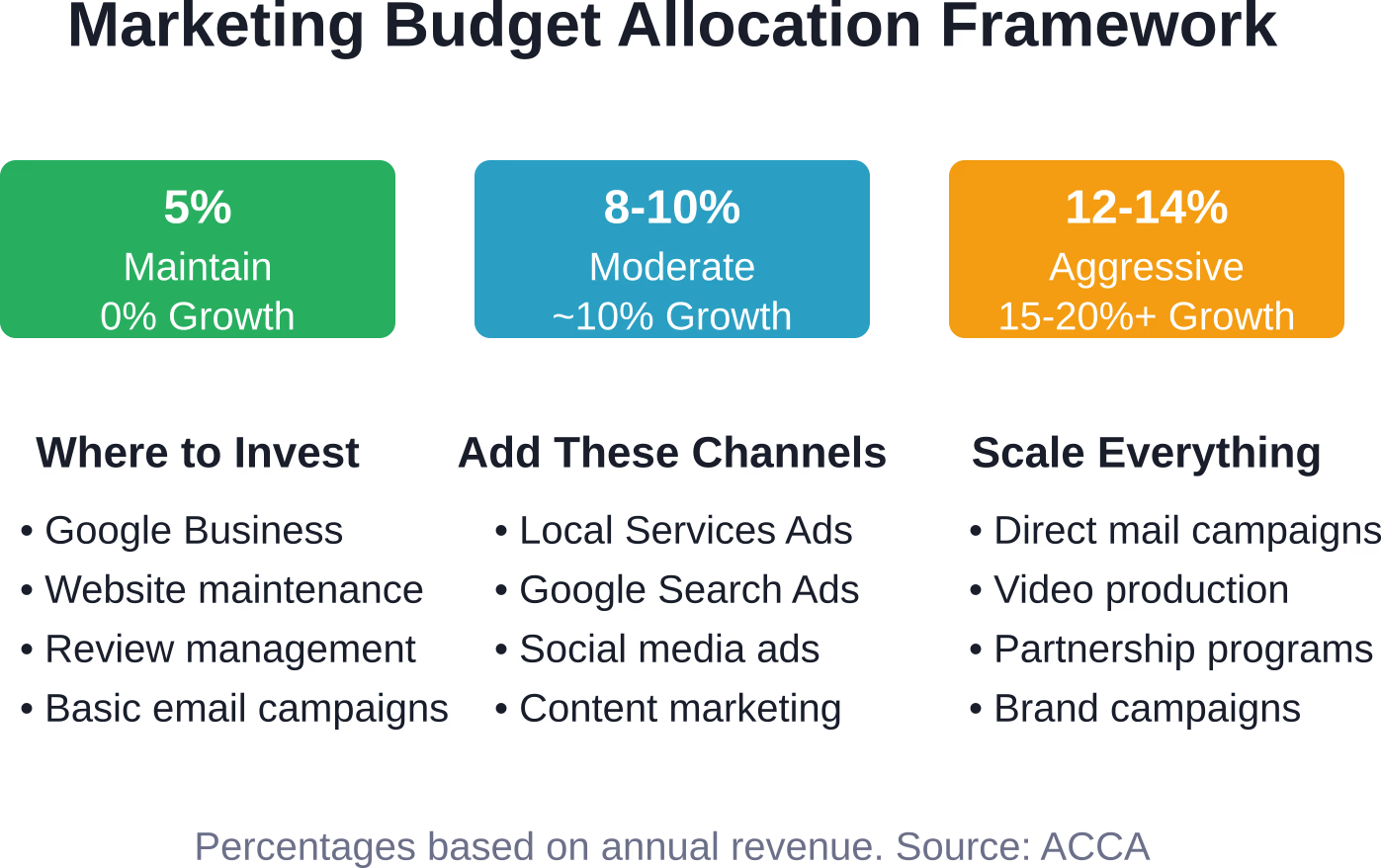
According to ACCA industry research cited in their November 2025 blog post, budget allocation for marketing investment breaks down like this:
These percentages represent total marketing spend across all channels—digital advertising, website maintenance, email platforms, direct mail, review management tools, and staff time dedicated to content creation.
The data reveals a critical truth: companies investing 5% annually are essentially running to stay in place. They're replacing customers lost to attrition, competitor poaching, and people moving out of the service area.
Real growth requires pushing past that maintenance threshold into the 8-14% range. That's where customer acquisition outpaces natural churn.

Extuitive helps businesses predict which ads are more likely to get clicks and conversions before launch. It can test ad creatives at scale, compare them against performance signals, and help teams avoid putting budget behind ideas that are unlikely to work.
This can be useful for service businesses running seasonal, local, or offer-based campaigns.
Extuitive can help with:
👉 Book a demo with Extuitive to review your ad ideas.
When homeowners search for HVAC services, Google Business Profile results appear before traditional search results. That prime real estate generates calls, direction requests, and website clicks—but only for businesses that optimize their profiles correctly.
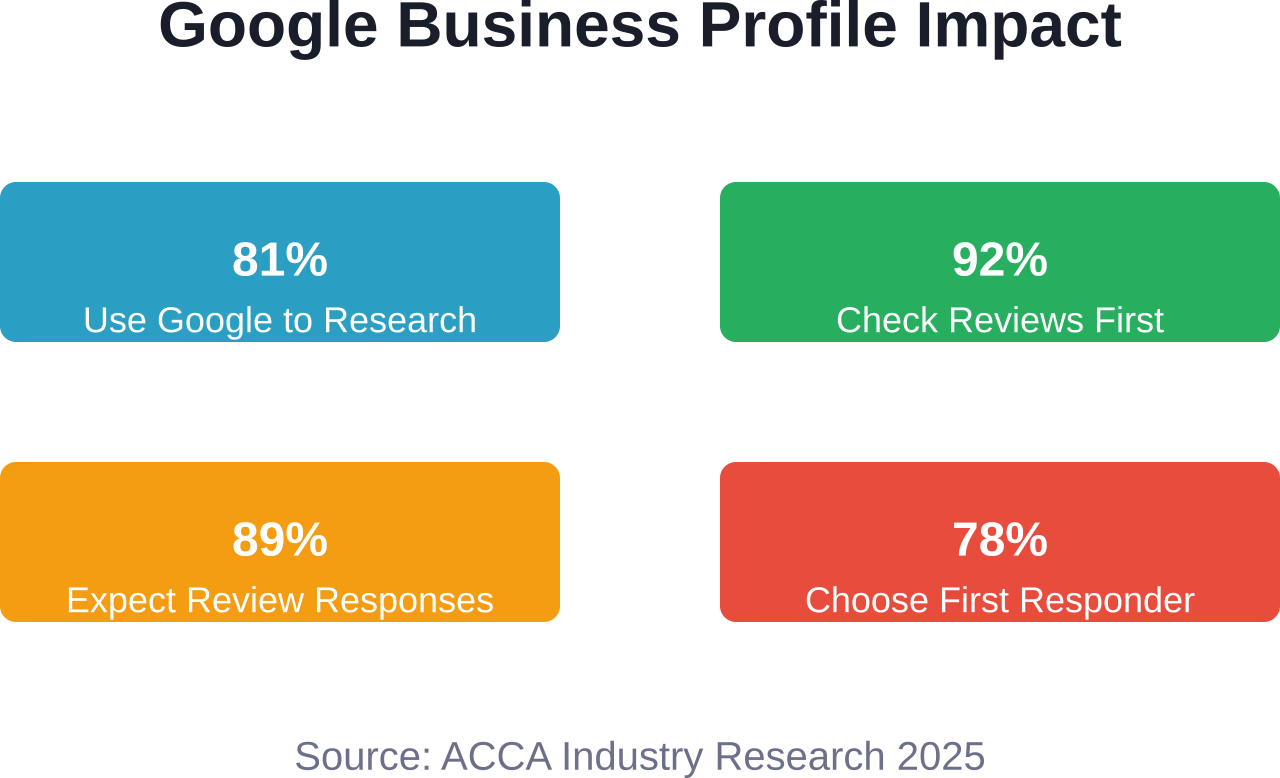
According to ACCA research, 81% of homeowners use Google to research HVAC services. Missing from that top local pack means losing eight out of ten potential customers before they even know your company exists.
Complete every field Google provides. Business name, address, phone number, website, hours, service areas, business description, and categories all factor into local ranking algorithms.
Upload high-quality photos to Google Business Profile improves engagement metrics compared to profiles without photos.
Select precise business categories. "HVAC contractor" serves as the primary category, but add secondary categories like "air conditioning repair service," "furnace repair service," "heating contractor," and "ventilation contractor" to capture more specific searches.
Reviews drive local search rankings and conversion rates simultaneously. According to ACCA research, 92% of homeowners consult reviews before choosing an HVAC contractor, and 89% expect businesses to respond to reviews.
Build a systematic review request process:
Requesting reviews immediately after service completion while customer satisfaction peaks maximizes response rates.
Industry analyses indicate smartphones account for 63% of organic search engine visits in the United States. HVAC websites designed for desktop first and mobile second lose more than half their potential customers to poor user experience.
Mobile-first design means the smartphone experience drives every layout, navigation, and content decision. Desktop becomes the expanded version, not the primary version.
Phone numbers must appear at the top of every page as clickable call buttons. Homeowners with broken air conditioning at 9 PM won't scroll hunting for contact information—they'll hit the back button and call your competitor.
Service area pages targeting specific cities and neighborhoods capture local search traffic. Create dedicated pages for "AC Repair in [City Name]" and "Furnace Installation in [Neighborhood]" rather than generic service descriptions.
Loading speed determines bounce rates. Slow website loading times negatively impact visitor retention and bounce rates. Compress images, minimize code, and use reliable hosting to keep load times under three seconds on mobile connections.
According to current 2026 industry standards, HTTPS is a mandatory security requirement, and over 99.5% of page-one search results are secure. Secure websites (those with the padlock icon in the browser) rank higher and convert better because customers trust them more.
Every page needs clear calls to action. "Schedule Service," "Request Emergency Repair," and "Get Free Estimate" buttons should appear above the fold and repeat throughout longer pages.
Online booking forms reduce friction in the customer journey. Homeowners can schedule appointments at 11 PM when they remember, rather than waiting until business hours and forgetting.
Testimonial placement matters. Position customer reviews and before-after photos near pricing information and service descriptions where purchase anxiety peaks.
Email marketing has been cited as delivering strong ROI for HVAC businesses focused on customer lifetime value. That emphasis on customer retention makes email among the highest-performing marketing channels for sustainable growth.
The key lies in understanding that customer acquisition costs far exceed retention costs. Selling a maintenance plan to an existing customer requires a fraction of the effort needed to win a new customer.
Divide email lists by customer type and service history:
Segmented email campaigns targeting specific customer groups typically outperform generic mass email campaigns.
Seasonal maintenance reminders automate the appointment-setting process. Send furnace checkup emails in September, AC tune-up messages in March.
Educational content builds trust and positions HVAC companies as experts. Monthly newsletters covering topics like "How to Reduce Summer Cooling Costs" or "Warning Signs Your Furnace Needs Repair" keep companies top-of-mind without aggressive selling.
Emergency service availability announcements during extreme weather generate immediate response. When temperatures hit record highs or lows, email campaigns offering same-day service capture distressed customers searching for immediate help.
Here's where most HVAC companies throw away money. They invest in marketing that generates leads, then lose those leads through slow follow-up.
According to ACCA research on HVACR estimate campaigns, 78% of homeowners choose the contractor who responds first. The average industry response time to leads? 4.2 hours.
That disconnect explains why companies complain about "low-quality leads" when the real problem is slow response destroying conversion rates.
Automated text and email sequences keep leads warm during the consideration phase. According to ACCA data, 45% of revenue books at least one week after the initial lead, and 15% of total sales close more than 30 days after initial contact.
Companies using systematic follow-up campaigns achieve 90%+ response rates versus the 20-30% typical of manual follow-up efforts.
The sequence should include:
Persistence wins. Most competitors give up after one or two attempts, creating opportunities for companies that maintain consistent contact.
Google Local Services Ads appear at the very top of search results, above even traditional pay-per-click ads. These ads display with Google's green checkmark indicating Google Guaranteed status, significantly boosting trust and click-through rates.
Google Local Services Ads typically operate on a cost-per-lead model where companies pay per phone call or message. That pricing model differs from traditional Google Ads because companies pay per lead rather than per click.
The economics work when customer lifetime value exceeds acquisition cost by healthy margins. A lead that converts to a $6,000 HVAC replacement with 35% margins generates $2,100 in gross profit—a 24:1 return on the lead cost.
Google requires license verification, insurance documentation, and background checks on all technicians before granting Google Guaranteed status. The vetting process takes 5-10 business days.
Companies must maintain a minimum 3.5-star average review rating to remain eligible. That requirement creates additional incentive to systematize review generation and address negative feedback promptly.
Social media marketing for HVAC companies differs fundamentally from B2C retail businesses. Homeowners don't scroll Instagram shopping for air conditioners the way they browse for clothing or restaurants.
Instead, social media serves three specific functions for HVAC businesses:
Brand awareness and trust-building through consistent presence. When customers eventually need HVAC service, companies they've seen regularly on Facebook feel familiar and trustworthy.
Customer service and reputation management. Responding quickly to questions and complaints on social platforms demonstrates responsiveness that influences buying decisions.
Targeted advertising to specific demographics and geographic areas. Facebook and Instagram ads allow precise targeting of homeowners by age, location, and homeownership status.
Behind-the-scenes content showing technicians at work humanizes the business and builds trust. Before-and-after photos of installations, equipment replacements, and duct cleaning demonstrate expertise visually.
Educational posts explaining seasonal maintenance, efficiency tips, and troubleshooting basics position companies as helpful experts rather than aggressive salespeople.
Employee spotlights and team photos create personal connections. Customers prefer buying from people they feel they know rather than faceless corporations.
Customer testimonials and review highlights leverage social proof. Sharing positive reviews on social platforms extends their reach beyond Google and strengthens brand reputation.
Digital marketing dominates conversations, but direct mail delivers measurable results for HVAC companies targeting specific demographics and neighborhoods.
Direct mail campaigns for HVAC businesses have historically shown strong engagement rates, higher than typical email open rates.
The physical nature of mail creates higher perceived value. Homeowners sort mail actively, looking at each piece, while digital ads blur together in feeds and inboxes.
Seasonal maintenance reminders mailed to existing customers drive appointment bookings. Postcards offering spring AC tune-up specials mailed in March convert consistently year after year.
New mover campaigns target recent home buyers when HVAC needs peak. Homeowners moving into new properties frequently discover deferred maintenance or incompatible systems requiring immediate attention.
Geographic farming focuses marketing dollars on specific neighborhoods where the company wants to build density. Higher job density in concentrated areas reduces drive time and increases daily revenue per technician.
Equipment replacement campaigns target homes with systems approaching 15+ years of age. Property records and previous service history data allow precision targeting of households most likely to need replacements soon.
Content marketing builds authority gradually through helpful information that answers customer questions and solves problems. Unlike paid advertising that stops generating leads the moment spending stops, content continues attracting organic traffic indefinitely.
Blog posts targeting specific search queries capture customers early in the buying journey. Someone searching "how to know if I need a new furnace" hasn't chosen a contractor yet—they're researching options and gathering information.
Companies that appear in those research-phase searches build awareness and trust long before purchase decisions happen.
Focus content on questions customers actually ask. Review recorded service calls, compile frequently asked questions from technicians, and check Google's "People Also Ask" sections for topic ideas.
Local content targeting city and neighborhood names captures geographic search traffic. "Best Time to Replace AC in [City]" or "[City] Furnace Repair Costs" pages rank for location-specific searches competitors miss.
Seasonal topics published months in advance allow time for Google to index and rank content before peak seasons. Publish furnace content in July and August, AC articles in December and January.
Video builds trust faster than text. Watching a technician explain furnace maintenance creates stronger connection than reading about it.
YouTube ranks as the second-largest search engine globally. Videos optimized for search queries like "how to change HVAC filter" or "signs you need AC repair" capture traffic Google search misses.
Video content repurposes easily across platforms. One well-produced explainer video generates YouTube content, Instagram reels, Facebook posts, website embeds, and email newsletter content.
Customer referrals convert at higher rates and stick longer than any other lead source. Referred customers come pre-sold by trusted recommendations, reducing sales cycle length and price resistance.
But referrals don't happen automatically—they require systematic encouragement and reward.
Dual-sided rewards work best. Give both the referring customer and the new customer something valuable—$50 off for the referrer, $50 off for the new customer, for example.
Make claiming rewards effortless. Unique referral codes or links tracked automatically prevent confusion and ensure proper credit.
Promote referral programs consistently. Include information in email signatures, invoice thank-you notes, service completion messages, and newsletter content.
Time requests strategically. Ask for referrals immediately after successful service when satisfaction peaks, not months later when memory fades.
Marketing spending without measurement wastes money. Companies need clear visibility into which channels generate leads, which leads convert to revenue, and what ROI each channel delivers.
Call tracking software assigns unique phone numbers to different marketing channels—one number for Google Ads, another for direct mail, another for the website. When customers call, the system tracks which marketing source generated the call.
That data reveals which channels deserve increased investment and which waste budget.
Cost per lead measures efficiency across channels. Divide total channel spending by number of leads generated to calculate.
Lead-to-customer conversion rate reveals sales effectiveness. Low conversion rates indicate either poor lead quality or sales process problems.
Customer acquisition cost combines marketing and sales costs. Add all marketing spending plus sales team time and overhead, then divide by new customers acquired.
Customer lifetime value determines how much acquisition cost makes economic sense. Calculate average revenue per customer multiplied by average customer lifespan and profit margin.
When customer lifetime value exceeds acquisition cost by 3:1 or greater, the marketing investment generates sustainable growth.
Strategic partnerships with complementary businesses create referral streams that cost nothing beyond relationship maintenance.
HVAC demand fluctuates dramatically by season, creating marketing opportunities and challenges that require strategic planning.
Pre-season campaigns maximize scheduling during shoulder seasons. Promote spring AC tune-ups in February and March before weather turns hot and emergency calls consume all technician availability.
Similarly, market furnace maintenance in August and September before heating season begins.
Emergency service positioning during extreme weather captures distressed customers. When heat waves or cold snaps hit, email campaigns and social media ads promoting same-day emergency service generate immediate calls.
Off-season promotions keep revenue flowing during slow periods. Offer installation discounts during traditionally slow months—AC replacements in January, furnace replacements in July.
The reduced demand creates negotiating leverage with suppliers and provides installation flexibility that busy seasons don't allow.
Community presence builds brand awareness and trust that marketing dollars can't buy. Sponsoring youth sports teams, participating in local charity events, and supporting community organizations creates visibility and goodwill.
The ROI doesn't appear in direct attribution reports, but community involvement influences the "know, like, trust" factor that determines which company homeowners call when HVAC needs arise.
Vehicle wraps and company uniforms extend community visibility. Every service call becomes a mobile billboard when trucks display professional branding and technicians wear clean, branded uniforms.
HVAC marketing success in 2026 requires systematic execution across multiple channels, with emphasis on local search dominance, rapid lead response, and customer retention strategies that maximize lifetime value.
The data tells a clear story: 83% of searches are local, 78% choose the first responder, and 92% check reviews before calling. Companies that optimize Google Business Profile, respond within minutes, and systematically generate reviews capture the majority of available market share.
But marketing isn't a one-time project—it's an ongoing investment that compounds over time. Email marketing delivers strong ROI. Content builds authority that generates traffic indefinitely. Review systems create assets that influence buying decisions for years.
Start with the foundation: Google Business Profile optimization, mobile-friendly website, and review generation system. Add channels systematically as budget allows and performance data guides resource allocation.
The HVAC companies that thrive over the next decade won't necessarily be the ones with the best technicians—they'll be the ones that combine technical expertise with marketing systems that consistently fill the schedule with profitable work.
What's your next step? Choose one strategy from this guide, implement it systematically this month, measure results, and refine. Marketing momentum builds through consistent action, not perfect planning.


