How to Close Your Shopify Store Without Missing a Step
Step-by-step guide to shutting down your Shopify store, plus what to do before you deactivate.
Jan 7, 2026



Etsy dropshipping via AliExpress or similar platforms violates Etsy's handmade and production partner policies as of 2026. However, print-on-demand (POD) with partners like Printful or Printify is fully Etsy-compliant, allowing sellers to create custom designs on made-to-order products without holding inventory. POD lets you run a legitimate Etsy business while meeting the platform's strict authenticity requirements.
Etsy has always positioned itself as a marketplace for handmade, vintage, and craft supply items. That brand identity sets it apart from Amazon, eBay, and other e-commerce giants.
But here's where things get messy.
Over the past few years, traditional dropshipping operations have flooded the platform—sellers listing generic products sourced from AliExpress or other wholesale suppliers, with zero creative input or customization. This practice directly contradicts Etsy's seller policies and has sparked frustration among genuine artisans and buyers alike.
So what's actually allowed? Can dropshipping work on Etsy in 2026? And if traditional dropshipping is banned, what's the alternative?
The short answer: Etsy prohibits standard dropshipping but fully supports print-on-demand (POD). Let's break down the rules, explore why POD is the compliant path forward, and walk through how to launch a successful Etsy POD business.

Etsy dropshipping still depends on ads that can get clicks and sales. Extuitive helps brands predict ad performance before launch, so teams can review ad concepts early, compare options, and avoid spending money just to find out which ads do not work.
Talk with Extuitive to:
👉 Book a demo with Extuitive to review ad concepts before launch.
Dropshipping is a business model where the seller lists products for sale without holding inventory. When a customer places an order, the seller forwards that order to a third-party supplier—often a manufacturer or wholesaler—who then ships the product directly to the customer.
It's a low-barrier entry model. No upfront inventory costs, no warehouse, no packing boxes at midnight.
But Etsy's entire value proposition hinges on authenticity and creativity. The platform's policies require that sellers either make items themselves or work with approved production partners to create products designed or customized by the seller.
Traditional dropshipping violates these rules because:
Community discussions on platforms like Reddit highlight widespread frustration. After 11 years of Etsy's policies, enforcement has intensified, with more shops suspended for dropshipping violations in 2024 and 2025.
Real talk: Etsy wants handmade or uniquely designed products, not generic reselling. That's non-negotiable.
Etsy's seller policies are clear. Here's what matters:
Sellers must either make items by hand or work with a production partner. If a production partner is involved, the seller must disclose that partner in their shop's About section and must still be the designer or creator of the product.
This means listing a generic phone case from AliExpress? Banned.
But creating a custom design, uploading it to a POD platform, and having that platform print and ship it to customers? Totally allowed.
The distinction is design ownership and made-to-order production.
Etsy allows this because each product is made individually for each customer, and the seller contributes original creative work—the design itself.
Print-on-demand is the Etsy-compliant answer to dropshipping. It's how thousands of sellers run legitimate, profitable Etsy businesses without holding inventory.
Here's how POD works:
The seller never touches the physical product. But because the seller designed it, and it's made-to-order, it fits Etsy's rules perfectly.
According to available data from Printful, this model is 100% Etsy-compliant because it involves your design and the product is made-to-order for each individual customer.
POD solves the inventory problem while staying fully compliant with Etsy's policies. Here's why it's become the go-to model:
Traditional product-based businesses require buying inventory upfront. POD eliminates that risk entirely. Products are only made after a customer orders them.
This means no boxes of unsold t-shirts sitting in a garage. No capital tied up in stock.
The seller owns the design. Whether it's hand-drawn illustrations, typography, digital art, or photography, the creative work is original.
That's what Etsy values. That's what buyers come to Etsy for.
Once the POD integration is set up, fulfillment is automated. Orders flow from Etsy to the POD platform, which handles printing, packing, and shipping.
Sellers can scale from 10 orders a month to 1,000 without hiring staff or renting warehouse space.
POD platforms offer hundreds of products: apparel, home decor, accessories, stationery, wall art, and more. Sellers can test different niches and products without financial risk.
Two platforms dominate the Etsy POD space: Printful and Printify. Both integrate directly with Etsy and automate order fulfillment.
Both platforms handle production and shipping. The seller's job is design, marketing, and customer service.
Launching an Etsy POD shop isn't complicated, but doing it right requires following a clear process. Here's the step-by-step breakdown.
If the shop isn't set up yet, visit Etsy.com and create a seller account. Choose a shop name that reflects the niche or brand identity.
Complete the basic setup: shop policies, payment methods, billing information. Etsy requires this before listings go live.
Decide between Printful, Printify, or another POD provider. Both offer free accounts—costs only apply when products sell.
Sign up, explore the product catalogs, and note which items align with the intended niche.
This is where originality matters. Use design tools like Adobe Illustrator, Canva, Photoshop, or Procreate to create artwork.
Design tips:
Upload designs to the POD platform and apply them to selected products.
Both Printful and Printify offer direct Etsy integrations. Connect the accounts and sync product listings.
Once integrated, product details, pricing, and images automatically populate in the Etsy shop. Orders placed on Etsy are automatically sent to the POD platform for fulfillment.
This is critical for compliance. In the Etsy shop's About section, disclose the POD partner used for production.
Example: "Products are designed by [Shop Name] and printed by our production partner, Printful."
Transparency keeps the shop in good standing and builds buyer trust.
Etsy is a search-driven marketplace. Listings need strong SEO to rank and get discovered.
SEO best practices:
Tools like EverBee help identify high-traffic keywords and analyze competitor listings.
Once listings are live, promotion drives traffic. Etsy Ads can boost visibility within the platform. Social media marketing—especially on Instagram, Pinterest, and TikTok—helps reach audiences outside Etsy.
Consistent content creation, engaging product photography, and community interaction build brand awareness over time.
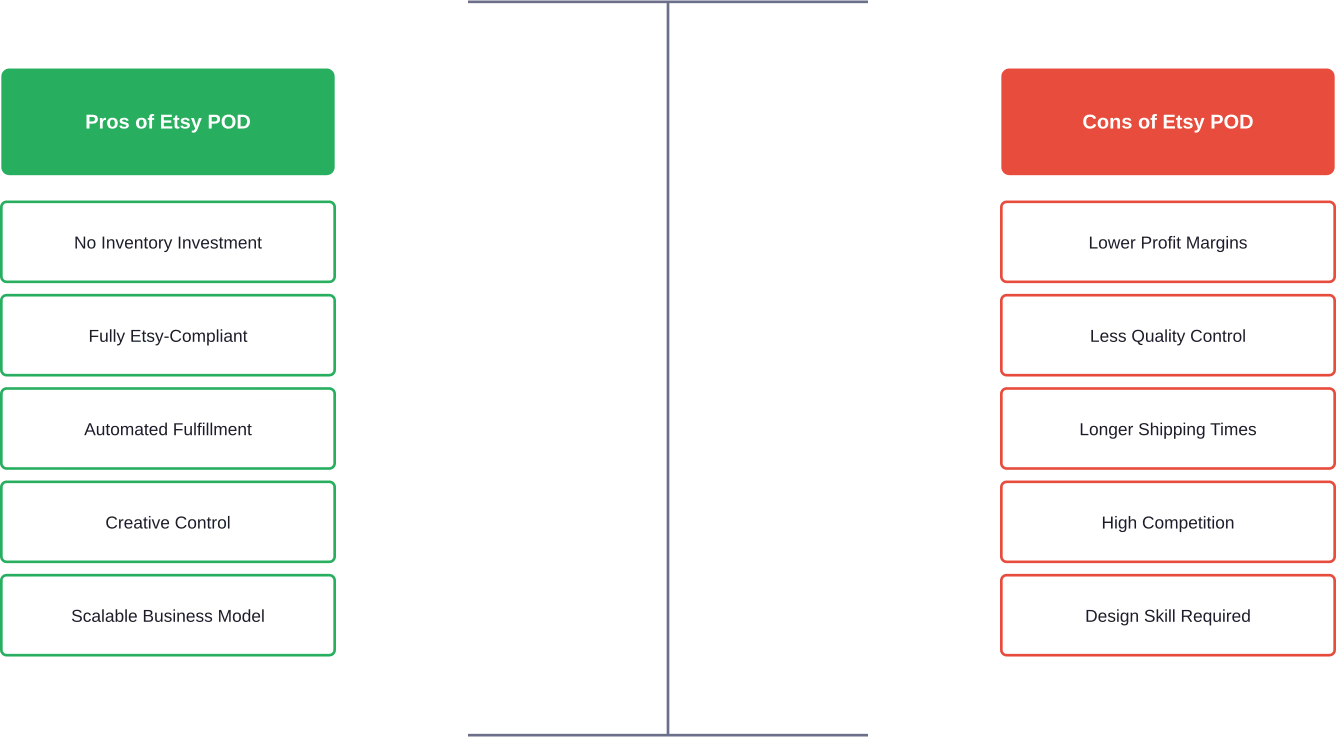
POD has clear advantages, but it's not without challenges. Here's an honest assessment.
Even with POD, sellers can still violate Etsy's policies if they're not careful. Here are the most common pitfalls:
Etsy requires transparency. If a POD platform is used, it must be disclosed in the shop's About section. Failing to do this can result in suspension.
Downloading clipart from Google Images or copying another seller's design is copyright infringement. Etsy takes intellectual property violations seriously.
Original design work is non-negotiable. Use licensed resources, create custom artwork, or hire designers.
Listing a plain white t-shirt with no design? That's not allowed. Every product must have original creative input.
Claiming products are handmade when they're POD can trigger policy violations. Be honest in listings. Phrases like "custom-designed and printed to order" accurately describe POD products.
Building a profitable Etsy POD shop takes more than just uploading designs. Here's how to stand out.
Broad, generic designs get lost in the noise. Niche targeting—whether it's dog lovers, yoga enthusiasts, or vintage car fans—creates a more loyal audience and clearer brand identity.
Mediocre designs don't sell. If design isn't a strong skill, consider hiring freelance designers on platforms like Fiverr or Upwork.
Strong typography, clean layouts, and cohesive color palettes make products look professional.
Don't rely on one product type. Test t-shirts, hoodies, mugs, tote bags, and posters. Different products appeal to different buyers.
Etsy listings need compelling visuals. Use high-quality mockups showing products in real-life settings. Lifestyle images perform better than plain product shots.
Underpricing kills margins. Overpricing kills sales. Research competitor pricing and factor in all costs: POD base cost, Etsy fees, payment processing fees, and desired profit margin.
Relying solely on Etsy's internal search is limiting. Build a presence on Instagram, Pinterest, TikTok, or even a standalone website. Drive external traffic to Etsy listings.
Running an online business—even a POD shop—comes with legal responsibilities.
Depending on location, sellers may need a business license or seller's permit. The U.S. Small Business Administration provides resources for understanding federal and state requirements.
Check local regulations to ensure compliance. Some states require sales tax collection even for online sales.
Income from Etsy sales is taxable. Sellers should track expenses, maintain records, and consult with a tax professional.
The INFORM Consumers Act, effective as of June 27, 2023, requires online marketplaces to collect information from high-volume third-party sellers. According to the Federal Trade Commission, the law defines a 'high-volume third party seller' with specific thresholds (200 or more discrete sales in a 12-month period and $5,000 or more in gross revenues).
Etsy handles compliance with this law on the platform level, but sellers should be aware of transparency requirements.
Using copyrighted images, trademarked logos, or celebrity likenesses without permission is illegal. Etsy will remove listings and may suspend shops for IP violations.
Design original work or use licensed resources from sites like Creative Market or Design Bundles.
Etsy isn't the only option for POD sellers. Here's how it compares to other platforms.
Etsy offers built-in traffic and a buyer base actively searching for creative products. That's a massive advantage for new sellers who don't have an existing audience.
Etsy has ramped up enforcement of its dropshipping policies. Community discussions reflect this shift—sellers report account suspensions even for minor policy ambiguities.
The Federal Trade Commission has also taken action against deceptive online business opportunity schemes. In October 2024, the Federal Trade Commission took action against an online business opportunity scheme that had misled consumers, a reminder that online business models must operate transparently and ethically.
For Etsy sellers, this means playing by the rules isn't optional. POD is the safe, compliant path. Traditional dropshipping from AliExpress or similar suppliers is a fast track to suspension.
The dropshipping mess on Etsy is real. Generic reselling undermines the platform's handmade ethos and frustrates both buyers and genuine sellers.
But the solution is clear: print-on-demand.
POD allows creative entrepreneurs to build scalable, compliant businesses without inventory risk. It's not a get-rich-quick scheme. Success requires design skill, marketing effort, and consistent iteration.
The Etsy marketplace rewards originality. Sellers who invest in unique designs, understand their niche, and build strong brand identities will thrive.
Traditional dropshipping? That's a dead end on Etsy. But POD? That's the legitimate path forward. Start designing, disclose production partners, and build a business that aligns with Etsy's values.
The opportunity is there. The question is whether the effort is worth it. For those willing to put in the work, Etsy POD offers a proven, low-risk way to turn creativity into profit.


