Marketing Ideas for Mortgage Lenders That Drive Results
Discover proven marketing ideas for mortgage lenders including compliant social media tactics, video content, local partnerships, and lead generation strategies.
May 27, 2026



Quick Summary: Event planners can drive registrations and build lasting client relationships through tiered early-bird pricing, strategic social media engagement, personalized email sequences, and creative experiential tactics. The most effective marketing combines pre-event buzz-building (3-6 months out), multi-channel promotion, and post-event nurturing to maximize ROI and prove value to stakeholders.
Picture this scenario: the venue is booked, speakers confirmed, agenda polished to perfection. Registration opens and silence follows. Not a trickle of sign-ups, not even a handful of inquiries.
Sound familiar? The gap between planning a remarkable experience and actually filling seats is where most event planners stumble. Even meticulously organized conferences, product launches, and fundraisers fail when marketing falls short.
But here's the thing—event marketing doesn't require massive budgets or complex technical skills. What it demands is strategy, timing, and a clear understanding of what actually moves people from awareness to registration. The difference between an empty room and a packed venue often comes down to how well planners communicate value before, during, and after the experience.
This guide walks through marketing ideas organized by timeline, budget, and channel. These aren't theoretical frameworks—they're actionable tactics built around what converts browsers into attendees and attendees into advocates.
Before diving into specific tactics, it helps to understand why people register for events in the first place. Attendees don't buy tickets because of clever taglines or flashy graphics. They register when the perceived value clearly outweighs the investment of time, money, and attention.
According to event planning guidance from Les Roches, successful event organization starts with defining clear goals and understanding target audiences. This foundation directly impacts marketing effectiveness—knowing who should attend shapes every message, channel, and timing decision.
The framework of Product, Price, Place, Promotion, and People (the 5 Ps) provides structure for building marketing strategies that actually work. Product defines the event experience itself. Price determines accessibility and perceived value. Place covers both the venue and where promotion happens. Promotion encompasses all communication tactics. People focuses on the target audience and their specific needs.
Every marketing decision should trace back to these five elements. When one element misaligns with the others, conversion rates suffer regardless of how much effort goes into promotion.
Timing determines which tactics work and which waste resources. Marketing too early burns through budget before momentum builds. Starting too late leaves insufficient time for word-of-mouth and organic discovery to compound.
The ideal timeline spans three to six months for most professional events, with activity intensifying as the date approaches. Smaller local gatherings might compress this to six to eight weeks, while major conferences often extend planning to a full year.
This early window focuses on infrastructure and initial awareness. Launch the event registration page with compelling copy that clearly articulates who should attend and what specific outcomes they'll gain. Generic benefit statements like "great networking" or "industry insights" fail to differentiate.
Set up tiered pricing structures during this phase. Structure pricing in clear tiers: super early bird (4-6 months out), early bird (2-3 months), regular pricing, and late registration. Each tier should offer meaningful savings, typically 10-30% off the regular price for the earliest registrants.
Begin building the content calendar that will fuel promotion through launch. This includes blog posts, speaker interviews, behind-the-scenes content, and educational material that positions the event as a solution to specific problems the target audience faces.
With foundations in place, this middle phase focuses on visibility and social proof. Activate owned channels—email lists, social media accounts, website traffic—with consistent messaging that reinforces value and urgency.
Launch email sequences targeting past attendees first, then expanding to broader prospect lists. Personalization based on attendee type, industry, or past behavior dramatically improves open and click-through rates compared to generic blasts.
Partner and sponsor outreach intensifies during this window. Strategic partners can extend reach into relevant audiences that might not follow the planner's owned channels directly.
The closing sprint focuses on converting fence-sitters and ensuring registered attendees actually show up. Reminder campaigns become more frequent, highlighting specific sessions, speakers, or experiences that create fear of missing out.
Last-minute discount codes or flash sales can convert price-sensitive prospects who were waiting for a deal. Social proof—testimonials, registration numbers, speaker announcements—reinforces that this event delivers value worth the investment.
Logistics communications become critical here too. Attendees need clear information about location, parking, schedule, what to bring, and how to prepare. Reducing friction and uncertainty increases actual attendance rates.

Extuitive helps businesses predict which ads are more likely to get clicks and conversions before launch. It can test creative options at scale, compare them against performance signals, and help teams avoid putting budget behind weak ideas.
For event planners, this can support service, package, or local campaign ideas without making every concept a paid test.
Extuitive can help with:
👉 Book a demo with Extuitive to review your ad ideas.
Social platforms offer event planners direct access to target audiences at minimal cost, but effectiveness varies dramatically based on approach. Broadcasting event details repeatedly generates minimal engagement. Creating conversations around the problems the event solves builds momentum.
The key shift: stop treating social media as a promotional megaphone. Instead, use it to demonstrate expertise, preview value, and build community before the event even happens.
Not every platform deserves equal attention. LinkedIn dominates for B2B events, professional conferences, and industry gatherings. Instagram and TikTok work better for consumer-facing experiences, creative workshops, and lifestyle events. Facebook still drives results for local community events and broad demographic targeting.
Rather than spreading thin across every network, concentrate effort where the target audience already spends attention. Two platforms executed well outperform five managed poorly.
Educational content consistently outperforms promotional posts. Share insights from speakers, preview key takeaways, or address common questions the target audience asks. This positions the event as a solution rather than a sales pitch.
Behind-the-scenes content humanizes the planning process. Show venue walkthroughs, introduce speakers in informal settings, or share planning challenges and how they're being solved. This builds anticipation and connection.
User-generated content from past events provides authentic social proof. Repurpose attendee testimonials, photos, and experiences into promotional content that shows rather than tells what makes the event valuable.
Organic reach continues declining across all major platforms. Paid promotion becomes essential for breaking through noise and reaching new audiences beyond existing followers.
Start with small test budgets across different audience segments and creative approaches. Track which combinations drive registrations at acceptable cost-per-acquisition, then scale what works and cut what doesn't.
Retargeting campaigns keep the event top-of-mind for people who visited the registration page but didn't complete sign-up. These warm audiences convert at significantly higher rates than cold traffic.
Email remains the highest-ROI channel for event promotion when executed strategically. The difference between effective and ignored email campaigns comes down to segmentation, timing, and value delivery.
Generic mass emails to entire lists generate poor results. Segmented sequences targeting specific audience types with tailored messaging drive substantially higher conversion rates.
Past attendees deserve different messaging than first-time prospects. They already understand the event format and quality—focus on what's new or different this year rather than explaining basics.
Industry or role-based segmentation allows highlighting relevant sessions, speakers, or networking opportunities specific to each audience segment. A developer-focused track deserves different emphasis in emails to technical audiences versus business executives.
Engagement-based segmentation targets highly engaged prospects differently than those showing minimal interest. Someone who clicked multiple links and visited the agenda page multiple times is closer to conversion than someone who opened one email.
Specificity outperforms vagueness. "3 pricing strategies you'll learn at RevCon" generates more opens than "You're invited to RevCon." Numbers, curiosity gaps, and benefit-focused language consistently improve open rates.
Personalization extends beyond inserting first names. Reference past attendance, industry, location, or expressed interests to create relevance that generic subject lines lack.
Test different approaches with small segments before sending to full lists. A/B testing subject lines, send times, and preview text identifies what resonates with specific audiences.
Standing out in crowded event markets requires creativity that extends beyond standard promotional tactics. Experiential approaches create memorable touchpoints that generate word-of-mouth and organic sharing.
These tactics work particularly well for events where the experience itself is a key differentiator—conferences focusing on innovation, creative workshops, or brand activations.
Host small preview sessions in target cities or venues where the audience congregates. A 60-minute sample workshop or speaker session gives prospects a taste of the full event value.
These mini-experiences convert skeptical prospects who need proof before committing to larger investments. They also generate content—photos, testimonials, social media posts—that fuels broader promotional campaigns.
Webinars, Q&A sessions with speakers, or virtual workshops related to event themes build engagement with geographically distributed audiences. Recording these sessions creates evergreen content that continues driving awareness and registrations.
Live social media events—Instagram Lives, LinkedIn audio events, X Conferences (formerly Spaces)—create real-time interaction opportunities that build community and anticipation. The informal format makes speakers and organizers more accessible.
Pre-event challenges or contests engage audiences before they even arrive. A learning challenge where participants complete modules to unlock event discounts combines education with incentive.
Scavenger hunts, prediction contests, or creative competitions generate user participation and content. The social sharing that results extends organic reach beyond paid promotion.
Strategic partnerships multiply reach without proportionally increasing budget. The right collaboration gives both parties access to relevant new audiences.
Effective partnerships require clear mutual benefit. One-sided requests where only the event planner gains value rarely generate enthusiastic promotion from partners.
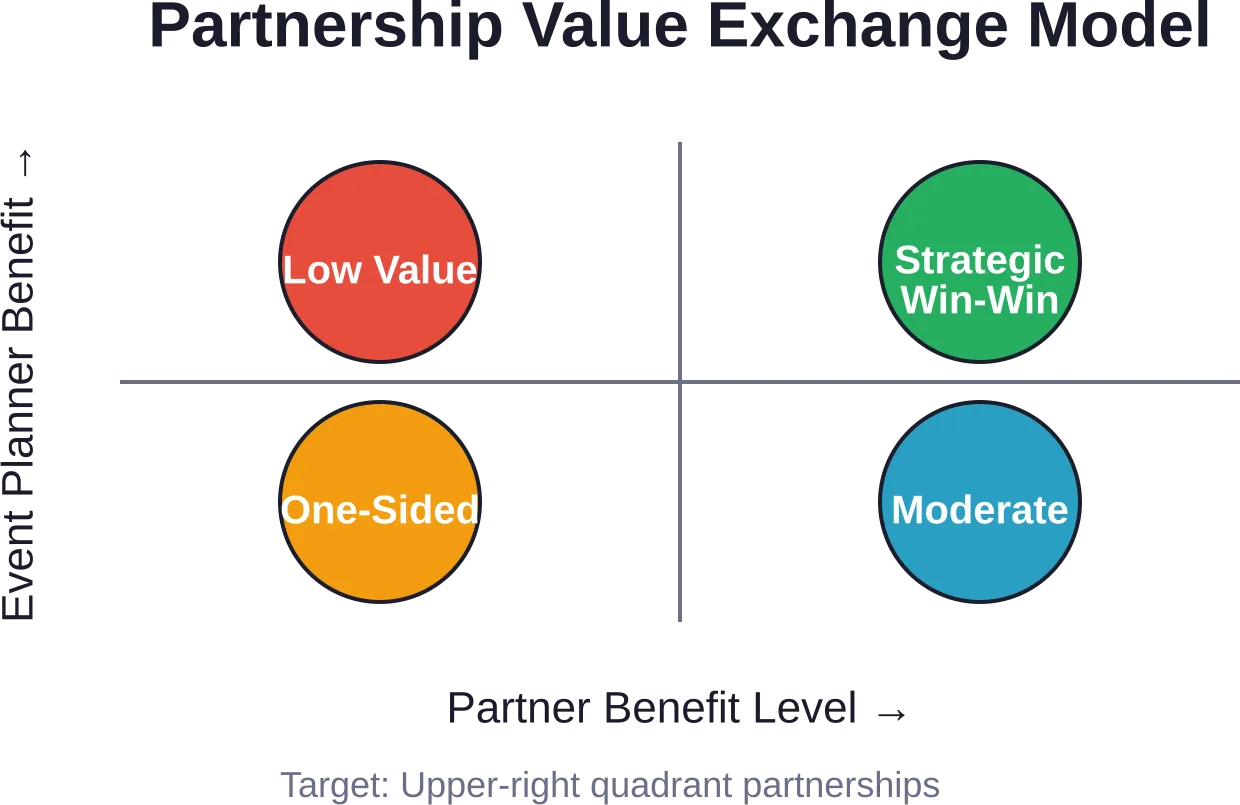
Industry publications, blogs, and media outlets reach audiences already interested in the event's topic area. Media partnerships can include content collaboration, advertising trades, or promotional support in exchange for exclusive access or branding opportunities.
Offer media partners unique angles—exclusive speaker interviews, early access to research or findings, behind-the-scenes content. This gives them valuable content while promoting the event to their established audience.
Traditional sponsorships often limit partners to passive logo placement. Activating sponsors as promotional partners multiplies reach. Give sponsors promotional materials, social media content, and clear incentives to promote to their audiences.
Co-created content with sponsors—webinars, guides, research reports—provides value to their audiences while building awareness for the event. This approach transforms sponsors from passive funders into active marketing partners.
Professional associations, community organizations, and alumni groups offer direct access to highly relevant audiences. Partnering with these groups for promotion, discounted group rates, or exclusive benefits drives registrations from qualified prospects.
Make it easy for partners to promote by providing ready-made email copy, social media posts, and graphics. The lower the friction, the more likely partners actively promote rather than just giving passive permission.
Content marketing builds long-term awareness and authority while directly supporting event promotion. Rather than one-off promotional pushes, strategic content creates ongoing discovery and engagement.
The most effective content addresses the problems, questions, and challenges that drive people to attend events in the first place. Educational content that delivers genuine value builds trust and positions the event as the next logical step.
Publishing content optimized for topics the target audience searches for drives organic discovery months or even years after publication. A well-optimized article about challenges the event addresses can generate consistent registration traffic.
Focus on bottom-of-funnel keywords that indicate purchase intent. Someone searching "best pricing conference for SaaS founders" shows stronger intent than someone researching "what is SaaS pricing." Both have value, but the former converts faster.
Embed clear calls-to-action and event information naturally within educational content. The goal isn't aggressive selling but making the connection between the problem discussed and the solution the event provides.
Interview content featuring speakers generates authentic insight into what attendees will learn. Video interviews, podcast episodes, or written Q&As can be repurposed across multiple channels—social media clips, email content, blog posts.
Past attendee success stories demonstrate tangible outcomes. Case studies showing how previous participants applied learnings to achieve specific results provide powerful social proof that the event delivers value beyond the experience itself.
Creating valuable resources—templates, frameworks, checklists, calculators—related to event themes builds audience and demonstrates expertise. Gate these resources behind email signup to build promotional lists.
These tools serve double duty: they provide immediate value while nurturing prospects toward event registration. Someone who downloads a resource and finds it useful becomes more receptive to paid offerings from the same source.
Not every event has substantial marketing budget. According to event planning guidelines from Les Roches, budget allocation should include 8 key categories—venue hire, catering, speakers/performers, AV/technology, marketing/social media, staffing/volunteers, insurance, and sustainability measures—with a 10-15% contingency allocation for unexpected costs.
Within constrained budgets, certain tactics deliver disproportionate returns relative to investment.
Email lists, website traffic, and social media followers represent owned assets that cost nothing to activate. Maximizing these channels before investing in paid promotion ensures efficient budget use.
Many event planners underutilize existing customer or attendee lists. Past participants are the highest-likelihood registrants for future events, yet often receive the same generic promotion as cold prospects.
Online communities—Reddit, Facebook groups, Slack channels, Discord servers, professional forums—gather target audiences around specific interests. Thoughtful participation (not spam) in these spaces builds awareness.
The key is providing value first. Answer questions, share insights, contribute to discussions. When relevant, mention the event as a resource without aggressive selling. Community managers and members quickly reject pure self-promotion but welcome valuable contributions.
Incentivizing attendees, partners, or affiliates to promote the event multiplies reach without upfront cost. Referral discounts (both parties get a discount when someone registers using a friend's code) encourage word-of-mouth.
Affiliate programs with commission structures work well for events with higher ticket prices. Industry influencers, bloggers, or community leaders can earn commissions by promoting to their audiences using tracked links.
Marketing doesn't end when the event concludes. Post-event strategies determine whether attendees become advocates, return for future events, and generate word-of-mouth that fuels the next cycle.
Most event planners invest heavily in pre-event promotion and neglect post-event nurturing. This leaves significant value on the table.
Send a thank-you email within 24 hours while the experience remains fresh. Include links to resources mentioned, speaker contact information, and photos or highlights from the event.
Request feedback through surveys while impressions are recent. Specific questions about what worked, what didn't, and what attendees would change provide valuable data for improving future events and marketing messaging.
Collect testimonials and permission to use feedback in future promotional materials. The most powerful marketing for the next event comes from people who attended the last one.
Record sessions, keynotes, and panels with permission. These recordings serve multiple purposes—value delivery to attendees, promotional content for future events, and lead magnets for list building.
Repurpose event content into blog posts, social media content, podcast episodes, or guides. A single keynote can generate weeks of promotional content when strategically broken into smaller pieces.
Create highlight reels, photo galleries, and recap articles that showcase the event experience. This content serves as social proof for future promotion while keeping past attendees engaged.
Events should spark ongoing relationships, not one-time transactions. Create mechanisms for attendees to stay connected between events—online communities, regular virtual meetups, exclusive content, or networking groups.
Year-round engagement keeps the event top-of-mind and creates compounding value. Attendees who benefit from community connections between events are far more likely to return and recommend to others.
Newsletter strategies that provide ongoing value rather than just event promotion maintain relationships. Share relevant industry insights, job opportunities, or resources that serve audience needs beyond event attendance.
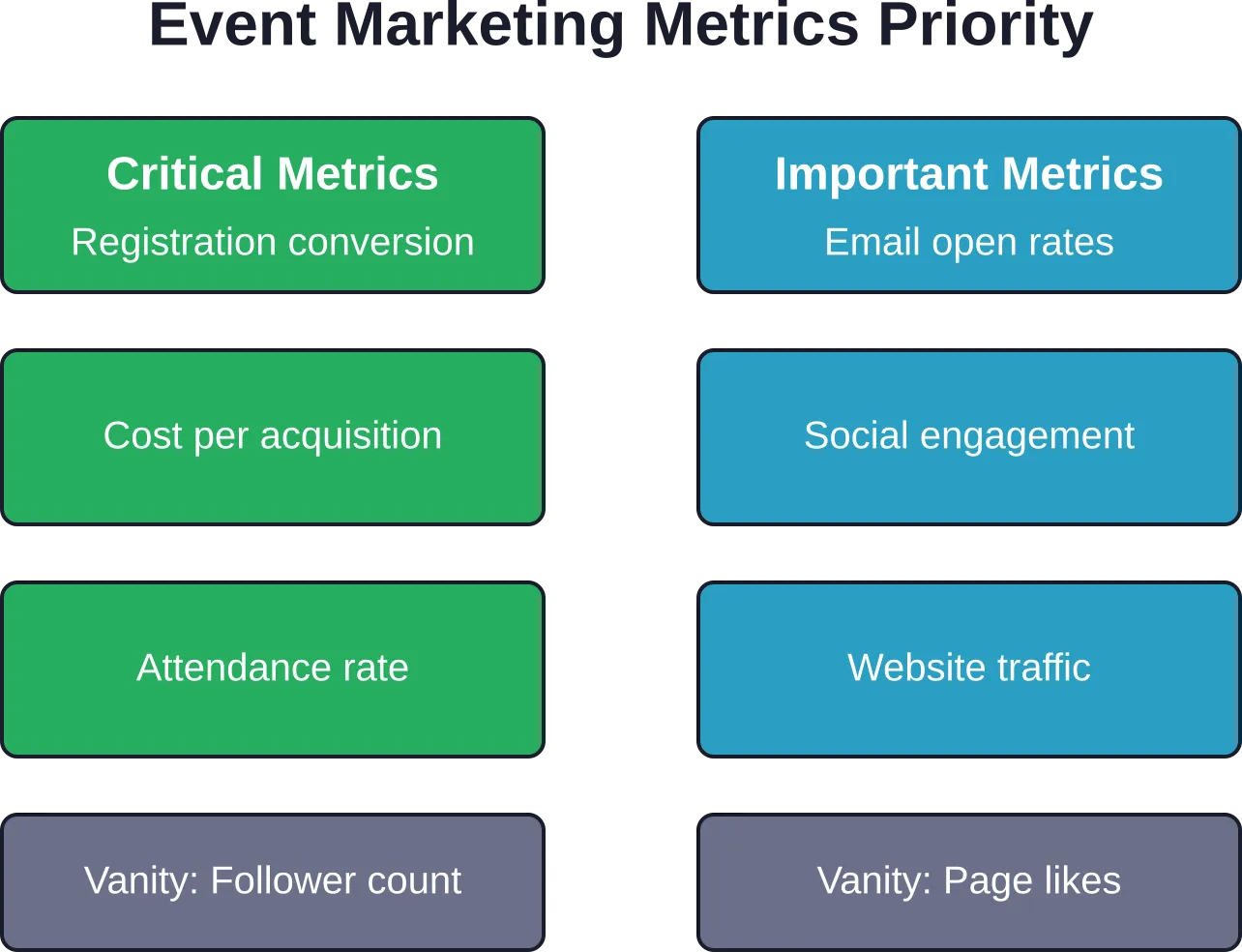
Tracking metrics provides clarity on what's working and what's wasting resources. But not all metrics deserve equal attention. Vanity metrics—social media followers, email list size, website traffic—feel good but don't directly correlate with event success.
Focus measurement on metrics that connect to actual outcomes: registrations, attendance rates, attendee satisfaction, return rates, and ultimately revenue or mission achievement.
Track where people enter the registration funnel and where they drop off. High traffic to the registration page with low conversion suggests messaging misalignment or friction in the signup process.
Source attribution shows which channels drive the highest-quality registrations. Email might generate more volume while social media drives higher-intent attendees who are more likely to actually show up.
Time-to-conversion data reveals how long prospects take to decide. Some events see impulse registrations while others require weeks of consideration. This informs nurture sequence timing.
Calculate actual cost per registration for each marketing channel. Divide total channel spend (including time at hourly value) by registrations generated from that source.
This reveals which channels deserve increased investment and which underperform. A channel with lower reach but higher conversion efficiency might deliver better ROI than high-reach, low-conversion alternatives.
Track not just registrations but actual attendance from each source. Some channels drive registrations that don't convert to attendance, inflating apparent ROI while delivering poor actual results.
Attendee satisfaction scores predict likelihood of return and referral. Track net promoter score or similar satisfaction metrics to gauge experience quality.
Return attendee rates for recurring events show whether the experience delivers enough value to bring people back. High first-time attendance with low return rates signals execution problems regardless of marketing effectiveness.
Referral and word-of-mouth tracking identifies advocates. Ask new registrants how they heard about the event. High unprompted awareness suggests strong organic momentum.
Certain mistakes appear repeatedly across event marketing campaigns, undermining otherwise solid strategies.
Not every tactic suits every event type. Corporate conferences require different approaches than community workshops or consumer experiences.
Decision-making involves multiple stakeholders and longer consideration cycles. Content marketing demonstrating ROI and specific learning outcomes addresses business justification requirements.
LinkedIn dominates as a promotional channel. Thought leadership content from speakers and organizers builds credibility and awareness within professional networks.
Early engagement with potential attendees' organizations—getting events on approved conference lists, working with professional development budgets—reduces individual registration friction.
Emotional connection and experience previews drive decisions more than rational ROI calculations. Visual content showing past event atmosphere and attendee experiences creates desire.
Instagram and TikTok offer stronger reach for consumer audiences than LinkedIn. Short-form video content showcasing energy, fun, or unique experiences generates engagement and sharing.
Influencer partnerships and user-generated content provide authentic social proof that resonates with consumer audiences more than corporate testimonials.
Lower barriers to entry (no travel required, often lower prices) increase potential audience size but also increase competition for attention.
Focus marketing on specific outcomes and unique formats rather than convenience alone. Many virtual events exist—differentiation comes from distinctive value propositions.
Combat registration inflation (people who sign up but don't attend) through engagement tactics leading up to the event. Pre-event community building and content delivery increases commitment.
The gap between planning remarkable experiences and filling seats comes down to strategic, consistent marketing that communicates value clearly across multiple channels over time.
No single tactic fills an event alone. Email sequences, social media engagement, content marketing, strategic partnerships, and creative experiential approaches work together, each reinforcing the others. The timeline matters—starting early allows organic momentum to build while tiered pricing creates natural urgency points throughout the promotional cycle.
What separates events that exceed registration goals from those that struggle? Clear audience understanding, consistent value communication, and measurement that reveals what's working so resources flow toward highest-impact activities.
The event planners who master marketing don't necessarily have the biggest budgets. They understand their audiences deeply, communicate specific outcomes clearly, and build systems that turn one-time attendees into long-term community members and advocates.
Start by implementing one or two strategies from this guide for the next event. Test, measure, learn what resonates with the specific audience, then expand from there. Marketing effectiveness compounds over time as data accumulates, relationships deepen, and reputation builds.
The perfect event planned in isolation reaches no one. But solid execution paired with strategic marketing fills rooms, builds brands, and creates experiences that attendees remember and return to year after year.


