Best Facebook Ads Agencies in London Right Now - Who’s Actually Delivering Results
Discover leading Facebook ads agencies in London that deliver real results. From eCommerce scaling to lead generation, find the best partners for 2026.
Mar 24, 2026



Quick Summary: Mortgage lenders can grow their business through diverse marketing tactics including compliant social media campaigns, local event sponsorships, educational video content, strategic email nurturing, and referral partnerships with real estate agents. The most effective approaches combine digital strategies with community engagement while strictly adhering to RESPA and Regulation Z advertising requirements.
The mortgage industry keeps getting more competitive. Lenders who rely solely on purchase referrals or old-school networking are missing enormous opportunities.
But here's the thing—mortgage marketing isn't about plastering rate quotes everywhere. The Consumer Financial Protection Bureau makes that crystal clear through Regulation Z advertising rules. Any advertisement stating specific credit terms must only state those terms that actually are or will be arranged or offered by the creditor.
So what works? A mix of educational content, community presence, strategic partnerships, and smart digital tactics. The best mortgage marketing ideas build trust first and generate leads second.
Before diving into creative campaigns, mortgage lenders need the basics locked down.
A professional website isn't optional anymore. Homebuyers research lenders online before making contact, and a dated or missing website sends them straight to competitors.
The site should clearly explain loan products, showcase testimonials, and make contact easy. Include mortgage calculators and educational resources that answer common questions. Keep navigation simple—potential borrowers shouldn't hunt for information.
Real talk: the website doesn't need fancy animations or bleeding-edge design. It needs to load fast, work perfectly on mobile, and communicate trustworthiness immediately.
This free tool puts lenders on Google Maps and local search results. An incomplete profile means missed opportunities every single day.
Fill out every section: business hours, service areas, loan types offered, photos of the office or team, and regular posts about market updates or homebuying tips. Encourage satisfied clients to leave reviews—they influence both rankings and decision-making.
Local searches like "mortgage lender near me" drive serious leads. Being visible there matters.
Every email sent is a marketing opportunity. A professional signature should include name, title, company, phone number, email, website link, and relevant licenses or NMLS numbers.
Add a call-to-action line like "Ask me about current rates" or "Free mortgage pre-qualification" with a linked calendar scheduling tool. Small touches convert casual conversations into consultations.
Video content dominates digital engagement. Industry reports suggest that the vast majority of marketers use video as a core marketing tool, and analyses indicate it generates strong lead conversion.
Facebook, Instagram, and LinkedIn all support live video. Use this format for Q&A sessions about mortgage processes, market updates, or homebuying tips for first-timers.
Live video feels authentic and immediate. It doesn't require professional production—just decent lighting, clear audio, and valuable information. Announce the session a day or two ahead to build attendance.
Short educational videos answer questions borrowers actually have: "What credit score do I need?" "How much should I save for a down payment?" "What's the difference between pre-qualification and pre-approval?"
Keep videos under three minutes. Use natural language instead of industry jargon. Upload to YouTube, embed on the website, and share across social media.
Tools like Canva (with subscriptions starting around $12.99 for expanded features) make it easy to customize video templates with brand colors and fonts, maintaining consistent visual identity.
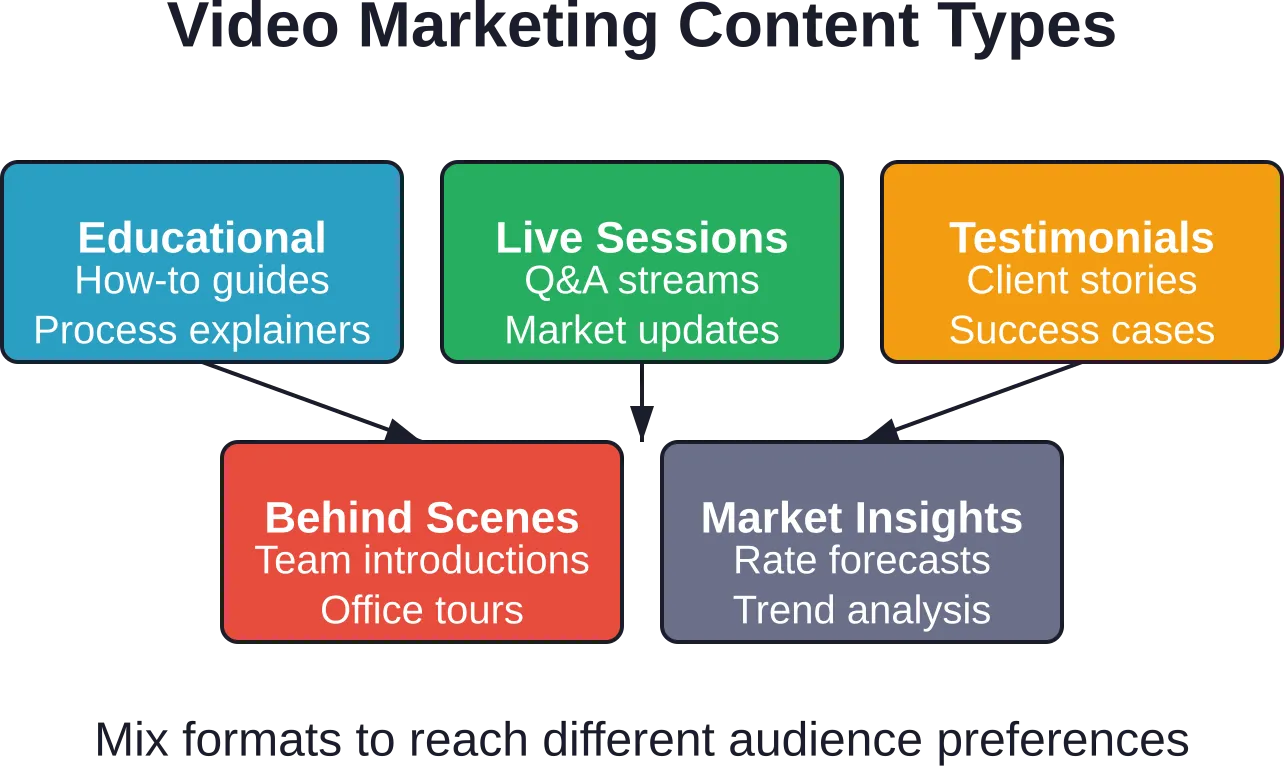
Social platforms aren't just for consumer brands. Mortgage lenders can build visibility, generate referrals, and establish authority through strategic social media use.
Consistency matters more than frequency. Posting three times per week beats sporadic daily bursts that fade after two weeks.
Share a mix of content: homebuying tips, local market statistics, mortgage myth-busting, client success stories (with permission), and team highlights. Avoid making every post a sales pitch—educational content builds trust and keeps followers engaged.
For added reach, consider running small paid boosts (between $50 and $100) targeting local audiences. This extends organic posts beyond existing followers to potential borrowers in the service area.
Local Facebook groups, neighborhood forums, and real estate communities welcome helpful experts. Join discussions about homebuying, answer questions genuinely, and provide value without aggressive selling.
When someone asks about mortgages or financing, a thoughtful response positions lenders as approachable resources. Include a professional signature with contact information, but let the helpful answer do the selling.
LinkedIn reaches a different audience—professionals, relocating employees, and real estate agents looking for lender partners.
Build a complete profile highlighting experience, specialties, and client outcomes. Share articles about mortgage trends, comment thoughtfully on industry news, and connect with local real estate professionals.
LinkedIn works best for B2B relationships and referral partnerships rather than direct consumer lead generation.

Mortgage campaigns often burn through budget before teams understand which messaging or offers people actually respond to. Extuitive helps businesses review ad creatives before launch using predictive campaign analysis and AI consumer simulations. For mortgage lenders, this can help compare campaign direction and audience messaging before ads go live.
Extuitive gives teams a way to:
👉Book a demo with Extuitive and evaluate your next mortgage campaign before launch.
Quality content establishes expertise and drives organic search traffic over time.
A blog section on the website should address questions borrowers actually search for: refinancing strategies, first-time homebuyer programs, credit repair tips, or local market conditions.
Write in clear, accessible language. Break up text with subheadings, bullet points, and short paragraphs. Target specific search queries rather than writing generic content.
Publishing one solid blog post every two weeks beats rushing out thin daily content. Search engines reward depth and usefulness.
Contributing articles to local news sites, real estate blogs, or community publications builds backlinks and exposes the brand to new audiences.
Pitch topics that serve the publication's readers: "Five mortgage mistakes first-time buyers make" or "How rising rates affect local homebuyers." Include a brief author bio with a website link.
Guest posts work when they genuinely help readers, not when they're thinly veiled ads.
Comprehensive guides on specific topics—FHA loans, VA benefits, jumbo financing, refinancing decisions—become valuable lead magnets.
Offer these as downloadable PDFs in exchange for email addresses. This builds an email list of interested prospects while providing immediate value.
Mortgage lending thrives on referral relationships.
Real estate agents control the majority of purchase mortgage referrals. Building strong agent relationships is essential.
However, the Consumer Financial Protection Bureau issued guidance clarifying that marketing services agreements must comply with RESPA Section 8 prohibitions on mortgage kickbacks and referral fees. Legitimate partnerships involve genuine marketing services—co-hosted homebuyer seminars, educational materials, or market reports—not payments disguised as fees.
Provide real value: quick pre-qualification responses, smooth communication during transactions, and client education that makes the agent's job easier. Reliability and responsiveness build referral relationships more effectively than expensive lunches.
Local libraries, community centers, and nonprofits welcome experts willing to teach financial literacy or homebuying workshops.
Teaching positions lenders as community resources rather than salespeople. Attendees remember the person who helped them understand mortgages, and they return when ready to borrow.
Some lenders teach established programs or develop custom presentations on budgeting, credit management, or navigating the mortgage process.
CPAs, financial planners, and wealth advisors work with clients who need mortgages for purchases, investment properties, or portfolio strategies.
Educate these professionals about mortgage products—they often understand investments better than lending. When they trust a lender's expertise and service, referrals flow naturally.
Email remains one of the most effective marketing channels when done right.
Monthly or bi-weekly newsletters keep the brand visible without being pushy. Include a mix of market updates, homeownership tips, local real estate news, and seasonal maintenance advice.
Segment lists by customer type: past clients, current leads, real estate agent partners. Tailor content to each group's interests and needs.
Keep newsletters concise—three to four short sections with clear headlines. Always include a simple call-to-action: schedule a consultation, read a blog post, or forward to someone who might benefit.
Sending seasonal home maintenance checklists to past clients keeps relationships warm long after closing.
These emails provide genuine value: reminders to clean gutters, service HVAC systems, or winterize outdoor faucets. They position lenders as helpful resources, not just transaction facilitators.
When recipients need refinancing or know someone buying a home, that helpful lender gets the call.
Lead nurture campaigns guide prospects from initial inquiry to application. Automated sequences can send educational content, answer common objections, and gently move leads toward decisions.
A typical sequence might include: introductory email with credentials, educational content about the loan process, pre-qualification benefits, timeline expectations, and a final consultation invitation.
Automation saves time while maintaining consistent communication.
Community presence generates brand recognition and trust.
Youth sports teams, charity runs, school fundraisers, and community festivals all need sponsors. Logo placement on banners, programs, or team jerseys keeps the brand visible.
Choose events that align with brand values and reach the target demographic. Sponsoring a youth baseball team connects with young families—prime first-time homebuyer territory.
Show up to sponsored events when possible. Face-to-face interaction at a charity walk means more than a logo on a banner.
Educational seminars position lenders as community resources. Partner with real estate agents or title companies to co-host events covering the homebuying process from search to closing.
Promote through social media, local news calendars, and partner networks. Serve refreshments, keep presentations accessible, and allow plenty of time for questions.
Collect contact information from attendees for follow-up nurturing. Many won't be ready to buy immediately, but they'll remember who educated them.
Joining the local chamber of commerce, Rotary club, or professional associations creates networking opportunities and demonstrates community commitment.
Active participation matters more than membership alone. Volunteer for committees, sponsor events, or speak at meetings. Genuine community involvement builds reputation over time.
Mortgage advertising is heavily regulated, and violations carry serious consequences.
According to the Consumer Financial Protection Bureau's Regulation Z, advertisements stating specific credit terms must include certain disclosures. Trigger terms like "5% down payment," "$100 down payment," or "$500,000 loan for $1,650 per month" require additional information.
When ads include these specific terms, they must also disclose the amount or percentage of down payment, repayment terms, and the annual percentage rate using that term.
The regulation is clear: only advertise terms actually available. A creditor cannot advertise a very low rate that won't actually be offered.
The Real Estate Settlement Procedures Act prohibits giving or receiving kickbacks or referral fees related to mortgage transactions. The Consumer Financial Protection Bureau has issued guidance clarifying that marketing services agreements can violate RESPA when they disguise referral payments.
Legitimate marketing partnerships involve actual services rendered at fair market value. Payments to real estate agents or others solely for referrals violate federal law regardless of how they're structured.
When uncertain about compliance, consult legal counsel before implementing referral or partnership arrangements.
Organic marketing takes time. Paid strategies can supplement organic efforts.
Various companies sell mortgage leads generated through online advertising and data aggregation. Lead quality varies significantly by provider and price point.
Fresh leads cost more but convert better. Aged leads—contacts generated weeks or months earlier—cost less but require more nurturing and lower conversion expectations.
Test providers in small batches before committing to large purchases. Track cost per closed loan, not just cost per lead.
Google Ads, Facebook Ads, and display advertising can drive targeted traffic. Success requires careful audience targeting, compelling ad copy, and optimized landing pages.
Start with modest budgets and test different approaches: geographic targeting, interest-based audiences, or remarketing to website visitors. Monitor cost per lead closely and pause underperforming campaigns quickly.
Digital advertising works best when integrated with strong organic presence and follow-up systems.
Generalist lenders compete on rate. Specialists compete on expertise.
Focusing on specific borrower types or loan products makes marketing more effective. Possible niches include: veterans and VA loans, self-employed borrowers, physicians and high-income professionals, investment property financing, or first-time buyers.
Specialization allows targeted marketing messages, deeper expertise, and stronger word-of-mouth within specific communities. A lender known as "the VA loan expert" attracts veteran referrals naturally.
Choose niches based on genuine interest, existing expertise, or underserved local markets.
What makes a lender different from competitors? Fast closing timelines, evening availability for consultations, multilingual service, or specialized programs?
Identify unique strengths and build marketing messages around them. "We close in 15 days or less" or "Serving Spanish-speaking homebuyers" differentiates more effectively than "Great rates and service."
Distinctive positioning cuts through generic mortgage marketing clutter.
Marketing without measurement wastes resources.
Track where every lead originates: agent referral, website form, social media, event, advertisement, or past client. This reveals which channels generate the best return on investment.
Simple spreadsheet tracking works initially. As volume grows, CRM systems automate source tracking and reporting.
Double down on high-performing channels. Cut or refine underperforming ones.
Lead volume means nothing without conversion tracking. Monitor conversion rates at each funnel stage: inquiry to consultation, consultation to application, application to approval, approval to closing.
Identify bottlenecks. If consultations convert poorly to applications, improve the consultation process. If applications stall at approval, refine borrower qualification criteria.
Small conversion improvements compound into significant business growth.
Past clients represent ongoing marketing assets. They refinance, buy additional properties, and refer friends and family.
Calculate average lifetime value: initial loan revenue plus expected future transactions and referrals. This informs how much investing in client relationships and marketing makes financial sense.
High lifetime value justifies higher customer acquisition costs and more generous client appreciation efforts.
Reputation takes years to build and moments to destroy.
Follow all advertising regulations strictly. The Consumer Financial Protection Bureau and state regulators actively enforce mortgage marketing rules. Violations lead to fines, license issues, and damaged reputation.
Beyond legal compliance, ethical marketing builds sustainable businesses. Transparent communication, realistic expectations, and genuine client advocacy create word-of-mouth that no advertising budget can buy.
In an industry where trust determines success, doing right by borrowers is the ultimate marketing strategy.
Effective mortgage marketing combines multiple channels rather than relying on any single tactic. Digital strategies—social media, video content, email campaigns, and SEO-optimized websites—build visibility and generate inbound leads. Community engagement through event sponsorships, educational seminars, and professional networking establishes local reputation. Strategic partnerships with real estate agents and other professionals create referral engines.
The foundation of sustainable mortgage marketing remains regulatory compliance and ethical practices. Follow Regulation Z advertising requirements strictly, avoid RESPA violations, and build marketing on transparency and genuine client service.
Start with marketing channels that match existing strengths and available resources. Track performance rigorously, optimize what works, and cut what doesn't. Consistency over months and years builds brand recognition and referral networks that generate leads with decreasing acquisition costs.
The mortgage lenders who thrive long-term don't just market aggressively—they provide exceptional service worth talking about, educate rather than pitch, and build genuine community connections. Those qualities turn marketing tactics into sustainable competitive advantages.
Ready to grow your mortgage business? Pick three strategies from this guide, implement them consistently for 90 days, and measure results. Then refine, expand, and build the marketing system that turns your lending expertise into steady business growth.


