How to Turn Off Meta AI on Instagram: 2026 Guide
Learn how to disable Meta AI on Instagram, mute the chatbot, and protect your privacy. Step-by-step instructions for mobile and desktop users.
Apr 16, 2026



Photographers can grow their businesses through a mix of digital marketing strategies, community engagement, and consistent brand building. Effective tactics include optimizing your website for search, creating engaging video content, leveraging email marketing, collaborating with local businesses, and maintaining an active social media presence. The key is choosing strategies that align with your target clients and committing to consistent execution rather than trying every tactic at once.
Running a photography business means wearing multiple hats. One moment, the focus is capturing perfect shots. The next, it's marketing those services to potential clients.
Many photographers excel at the creative side but struggle with consistent marketing. That's understandable — marketing requires time, strategy, and patience. But without it, even the most talented photographers struggle to fill their calendars.
The good news? Marketing doesn't have to be overwhelming. With the right strategies and consistent effort, photographers can build sustainable businesses that attract dream clients year-round.
Talent alone doesn't build a thriving photography business. The market is competitive, and potential clients need to discover your work before they can book you.
According to HubSpot data, 50% of marketers leverage video in their marketing strategy, while 47% use images. For photographers, this creates both opportunity and competition — visual content dominates marketing, but standing out requires strategic thinking.
The Small Business Administration emphasizes that photography can grab attention and invoke emotional responses when used strategically. As photographers, this is already the core skillset. The challenge is directing that visual storytelling toward business growth.
Marketing creates visibility. It positions photographers as the go-to choice for specific client needs. And it builds trust before the first consultation ever happens.

Extuitive helps businesses predict how ad creatives may perform before they go live. It compares copy, visuals, offers, and audience angles, then shows which ideas look stronger or weaker before campaign budget is spent.
For photographers, this can help review portfolio, booking, or local campaign ideas before running ads.
Extuitive can help with:
👉 Book a demo with Extuitive to review your ad ideas.
A website serves as the digital storefront for any photography business. Potential clients research photographers online before making contact, and a professional website builds credibility instantly.
The website should showcase the best portfolio work, clearly communicate services offered, and make booking straightforward. Include an about page that humanizes the business and helps clients connect emotionally with the photographer's story.
Navigation should be intuitive. Visitors should find what they need within two clicks maximum. Portfolio galleries should load quickly — slow websites drive potential clients away.
Contact information needs to be visible on every page. Many photographers lose inquiries simply because potential clients couldn't easily find how to reach them.
When couples search for "wedding photographer near me" or parents look for "family photographer in [city]," those searches represent high-intent potential clients. Local SEO ensures photographers appear in those critical searches.
Claim and optimize Google Business Profile listings. Fill out every section completely. Upload high-quality images regularly. Collect and respond to reviews — both positive and negative.
Include location-specific keywords throughout the website naturally. A Denver wedding photographer should mention Denver, specific Denver neighborhoods, and nearby cities throughout their content.
Build local citations by getting listed in wedding directories, local business associations, and chamber of commerce websites. Consistency matters — ensure the business name, address, and phone number match exactly across all platforms.
Video marketing has seen explosive growth, with long-form videos above 30 minutes, like webinars and live events, saw over 11,000% growth over the past decade. But photographers don't need to create hour-long webinars to benefit from video.
Short behind-the-scenes clips showing photo sessions work beautifully. Time-lapse videos of editing processes fascinate audiences. Client testimonials on video carry more weight than text reviews.
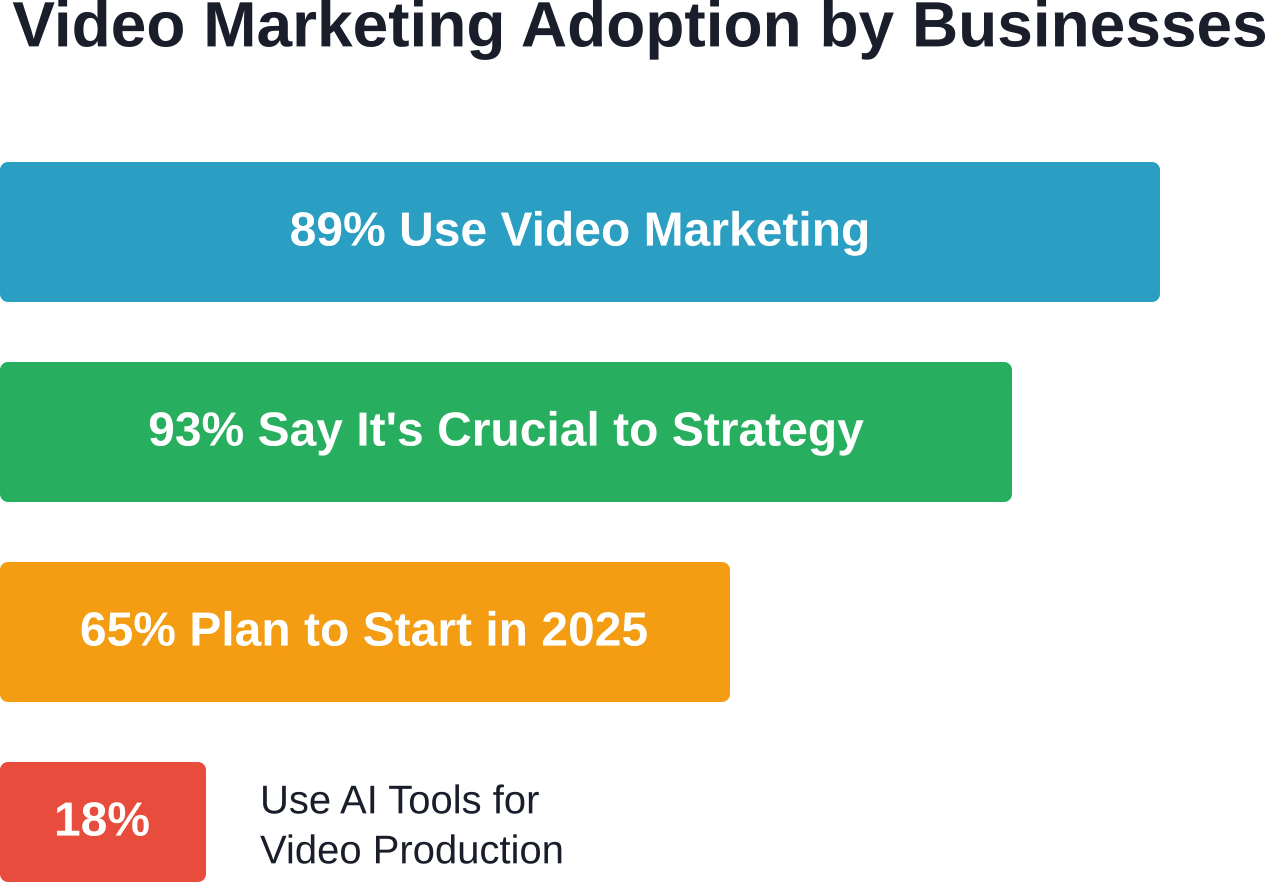
According to recent data, 89% of businesses use video marketing. For photographers specifically, video provides a way to showcase personality, demonstrate expertise, and build connection before potential clients ever reach out.
The barrier to entry continues dropping. Smartphones capture quality footage. Free editing apps make production manageable. And platforms like Instagram Reels and TikTok reward video content with organic reach.
Not every photographer needs to be on every platform. Instagram naturally suits photographers because it's visual-first. Pinterest drives significant traffic for wedding, family, and newborn photographers. TikTok reaches younger demographics effectively.
The strategy should match where target clients spend time. Corporate headshot photographers might find more success on LinkedIn than TikTok. Newborn photographers often thrive on Pinterest and Facebook where new parents research extensively.
Better to maintain consistent, quality presence on two platforms than sporadic, mediocre presence on five.
Social media rewards genuine engagement. Posting portfolio images without interaction doesn't build community or trust.
Respond to comments thoughtfully. Ask questions in captions that encourage conversation. Share behind-the-scenes moments that humanize the business. Engage with other local businesses and potential referral partners.
The photographers who succeed on social media treat it as relationship building, not billboard advertising. They show up consistently, provide value beyond selling services, and genuinely connect with their audience.
Facebook groups for engaged couples, new parents, or local business networking provide direct access to potential clients. But aggressive self-promotion gets photographers banned quickly.
The approach should be contribution-focused. Answer questions genuinely. Provide helpful tips. Share expertise without always linking back to services. When photographers establish themselves as knowledgeable and helpful community members, inquiries follow naturally.
Respect group rules. Some communities prohibit all promotional content. That's fine — the goal is building reputation and relationships, not immediate sales.
Social media platforms come and go. Algorithms change. Accounts get hacked. An email list represents owned marketing assets that remain accessible regardless of platform changes.
According to marketing research, email marketing delivers strong conversion performance compared to other channels. That strength makes it a valuable asset compared to social media organic reach.
Offer a valuable freebie to encourage sign-ups. A wedding photography planning checklist, posing guide, or location recommendation PDF provides immediate value in exchange for email addresses.
The photographers who succeed with email marketing send regular newsletters — monthly at minimum. These emails mix helpful content with subtle promotion.
Share recent sessions (with client permission). Announce mini-session dates early to email subscribers. Provide seasonal photography tips. Feature client stories and testimonials.
The key is maintaining consistency. Sending sporadically trains subscribers to ignore emails. Regular, valuable communication keeps photographers top-of-mind when recipients need photography services or know someone who does.
According to HubSpot's 2026 State of Marketing Report, audience segmentation refinement is used by marketers as a key optimization technique. Not every email subscriber needs the same message.
Wedding clients need different communication than corporate clients. Past clients should receive different messages than prospects. Segmenting email lists allows tailored messaging that resonates more effectively.
A past client email might focus on anniversary session offers and referral incentives. A prospect email nurtures trust and showcases expertise. Segmentation increases relevance, which improves open rates and conversions.
Wedding photographers should build relationships with wedding planners, florists, venues, caterers, and bridal boutiques. Family photographers benefit from connections with pediatricians, children's boutiques, and family activity centers.
These businesses serve the same target clients but aren't competitors. Referral partnerships create win-win situations where businesses recommend each other.
The approach matters. Show genuine interest in their businesses first. Attend their events. Promote their services. Reciprocity follows naturally.
Create a vendor recommendation list to share with clients. This adds value for clients while strengthening relationships with recommended businesses who will likely return the favor.
Local events provide visibility within the community. Sponsoring a charity 5K, school fundraiser, or community festival puts photographer branding in front of local audiences.
The return isn't always immediate, but consistent community presence builds brand recognition. When someone needs a photographer months later, familiar names get considered first.
Offer to photograph the event as part of sponsorship. This provides valuable content for marketing while delivering high value to event organizers.
The SBA promotes Small Business Saturday annually, encouraging consumers to support local businesses. Photographers can leverage this existing campaign rather than creating buzz from scratch.
Offer special mini-sessions or booking incentives specifically for Small Business Saturday. Promote participation on social media leading up to the event. Collaborate with other local businesses for joint promotions.
According to SBA marketing strategies, tiered gift incentives work well — offering a small gift for purchases over a certain threshold and larger gifts for higher spending levels encourages clients to invest more.
Blogging serves multiple purposes. It improves website SEO by providing fresh, keyword-rich content. It demonstrates expertise to potential clients. And it creates shareable content for social media.
Blog topics should address questions potential clients actually ask. Wedding photographers might write about timeline planning, choosing ceremony locations, or what to wear for engagement photos. Family photographers could cover preparing kids for photo sessions or choosing coordinating outfits.
Each blog post targeting specific search queries creates another entry point to the website. Over time, this builds significant organic traffic from search engines.
Pinterest functions as a visual search engine, making it particularly powerful for photographers. Wedding, family, newborn, and lifestyle photographers especially benefit from Pinterest marketing.
Users plan weddings, nurseries, and family activities on Pinterest months in advance. Photographers whose work appears in those searches reach high-intent potential clients early in the planning process.
Create vertical images optimized for Pinterest dimensions. Write keyword-rich descriptions. Organize boards by topic and client interest. Consistency matters more than volume — regular pinning beats sporadic bursts.
Starting a podcast requires significant commitment. But appearing as a guest on existing podcasts provides exposure without the ongoing production burden.
Look for local business podcasts, industry-specific shows, or podcasts serving target client demographics. Wedding photographers might guest on wedding planning podcasts. Corporate photographers could appear on business and entrepreneurship shows.
Podcast appearances position photographers as experts while introducing them to new audiences. Many podcast listeners develop parasocial relationships with shows and trust guest recommendations.
Photographers often neglect professional photos of themselves. Yet personal branding photos humanize the business and build connection with potential clients.
Trade services with another photographer or hire someone to create a collection of professional images showing the photographer at work, headshots for the website, and lifestyle images that convey personality.
These images should appear throughout the website, social media, and marketing materials. Clients hire photographers they connect with personally, and quality branding photos facilitate that connection.
Brand consistency builds recognition and trust. Color palettes, logo usage, image editing style, and overall aesthetic should remain consistent across the website, social media, print materials, and email communications.
Inconsistent branding looks unprofessional and confuses potential clients. When someone visits the website after seeing Instagram content, they should immediately recognize the same brand.
Create brand guidelines documenting colors, fonts, logo specifications, and image style. Reference these guidelines when creating any marketing materials.
Generalist photographers struggle to compete against specialists. A photographer who shoots "everything" rarely beats the photographer known specifically for newborns or specifically for corporate headshots.
The portfolio should reflect the ideal client and desired work. Wedding photographers shouldn't showcase random portrait sessions if weddings are the focus. Corporate photographers should feature business imagery prominently.
Narrow focus feels risky but actually attracts more ideal clients. Couples searching for wedding photographers want specialists, not generalists.
Mini sessions — shorter, themed photo sessions at reduced rates — serve multiple purposes. They introduce new clients to the photography experience at lower risk. They fill scheduling gaps. And they create urgency with limited availability.
Successful mini-session strategies include seasonal themes (holiday photos, spring flowers, fall leaves), specific demographics (mother-daughter sessions, pet photography), or charitable components (proceeds benefit local causes).
Mini sessions should be positioned as gateways to full sessions, not replacements. Many clients who book mini sessions return for full packages once they experience the photographer's work firsthand.
Happy clients represent the best marketing channel. They provide testimonials, share images on social media, and recommend photographers to friends and family.
Formalize referrals with incentive programs. Offer credit toward future sessions, print credits, or small gifts when existing clients refer new bookings.
Make the referral process easy. Provide shareable links, referral cards clients can hand to friends, or simple email templates clients can forward. Remove friction from the referral process.
Package offerings that bundle multiple services or products increase perceived value while boosting average transaction amounts. Instead of selling individual sessions, create packages that include the session plus prints, albums, or digital files.
According to SBA marketing guidance, tiered offerings work effectively. A basic package meets budget-conscious clients, while premium packages appeal to clients wanting comprehensive coverage and products.
Bundling simplifies decision-making for clients while ensuring photographers achieve desired revenue per booking.
Organic reach on social platforms continues declining. Paid advertising ensures content reaches target audiences reliably.
Facebook and Instagram advertising allows precise targeting by location, age, interests, and behaviors. Wedding photographers can target recently engaged women in their area. Family photographers can target parents with young children.
Start with small budgets to test messaging and targeting. Track which ads generate inquiries and bookings, then increase spend on proven performers.
The key is tracking return on investment. Advertising should generate more revenue than it costs, or it's not sustainable.
Google Local Services Ads appear above traditional search results for local service businesses, including photographers. These ads operate on a pay-per-lead model rather than pay-per-click.
The Google Screened or Google Guaranteed badges build trust with potential clients. The prominent placement captures high-intent searches when people actively seek photographers.
Local Services Ads work particularly well for photographers serving specific geographic areas who can respond quickly to inquiries. Fast response times improve ad performance and conversion rates.
Any paid advertising requires clear budgets and diligent tracking. Know exactly how much each platform costs and how many bookings it generates.
Calculate customer acquisition cost — total advertising spend divided by new clients acquired. Compare that against average client value to ensure profitability.
Many photographers waste advertising budgets because they don't track performance. The platforms that feel productive might not actually generate bookings, while overlooked channels might deliver strong returns.
The best marketing isn't marketing at all — it's exceptional client experience that generates word-of-mouth referrals and glowing testimonials.
Respond to inquiries quickly. Communicate clearly throughout the booking process. Deliver images on time or early. Exceed expectations whenever possible.
Clients remember how photographers made them feel more than specific technical details about the photos. Prioritizing client experience creates advocates who promote the business organically.
When clients receive their images, make social sharing effortless. Provide web-optimized files perfect for posting. Include suggested captions or hashtags. Ask permission to share their images on photographer social accounts.
Client shares expose photographer work to new audiences — specifically audiences who trust the client's recommendation. That trust transfers partially to the photographer.
Consider small incentives for social sharing, like print discounts when clients tag the photographer's account. Make sharing mutually beneficial.
Social proof influences purchasing decisions significantly. Potential clients want assurance that photographers deliver quality work and positive experiences.
Request testimonials from every satisfied client. Make the process simple by providing guiding questions or sentence starters. Video testimonials carry even more weight than written reviews.
Display testimonials prominently on the website, share them on social media, and include them in email marketing. Potential clients researching photographers read reviews extensively — make those reviews easy to find and compelling.
Marketing without measurement wastes effort. Photographers should track website traffic, social media engagement, email open rates, inquiry volume, booking conversion rates, and revenue per client.
Analytics reveal what works and what doesn't. A strategy that generates lots of website traffic but no inquiries needs adjustment. Social content with high engagement but no business impact might be entertaining but not effective marketing.
According to HubSpot research, conversion rate optimization remains a key focus for marketers. Better tracking and analytics tools enable photographers to optimize marketing efforts more effectively than ever before.
Every marketing activity consumes either time or money, usually both. Understanding return on investment helps photographers focus on high-performing strategies.
If a Facebook ad costs $200 and generates one wedding booking worth $3,000, that's excellent ROI. If attending a networking event costs $50 plus four hours and generates no bookings over six months, that ROI is poor.
Not every marketing activity shows immediate returns. Brand awareness and relationship building take time. But tracking helps identify which investments pay off and which drain resources.
Marketing isn't set-and-forget. Regular review and adjustment based on performance data ensures continuous improvement.
Double down on strategies delivering results. Pause or eliminate tactics that consistently underperform. Test new approaches regularly to discover fresh opportunities.
The photographers who succeed long-term treat marketing as an evolving practice, not a static checklist. Markets change, algorithms shift, and client preferences evolve. Adaptability matters.
The biggest mistake photographers make is attempting every marketing strategy simultaneously. This spreads effort too thin and prevents any single tactic from receiving adequate attention to succeed.
Better to master two or three marketing channels than dabble ineffectively in ten. Choose strategies that align with business goals and target clients, then commit fully before adding more.
Marketing requires consistency. Posting on Instagram daily for two weeks then disappearing for a month trains the algorithm and audience to ignore the account. Sending one newsletter then nothing for six months wastes the effort building that email list.
Sustainable, consistent effort beats sporadic bursts every time. Even modest but regular activity outperforms inconsistent peaks.
Many photographers focus entirely on attracting new clients while ignoring past clients. But past clients already trust the photographer and are more likely to book again or refer others.
Stay connected with past clients through occasional emails, special returning client offers, or simple check-ins. This relationship maintenance often generates more revenue than constantly chasing new leads.
Most people research photographers on mobile devices. A website that looks beautiful on desktop but functions poorly on mobile drives potential clients away.
Test the website, portfolio galleries, and booking process on multiple mobile devices. Loading speed matters enormously on mobile connections. Navigation should be thumb-friendly. Forms should be easy to complete on small screens.
Marketing to "everyone" wastes resources. Different clients need different messaging, respond to different platforms, and make decisions based on different factors.
Define specific target client profiles. Understand their challenges, where they spend time online, what influences their decisions, and what they value in photographers. This clarity focuses marketing efforts effectively.
Marketing gets neglected when it's not scheduled. Block specific time each week dedicated to marketing activities — nothing else.
During this time, create social content, write blog posts, respond to comments, update the website, send emails, or reach out to referral partners. Treating marketing as a non-negotiable appointment ensures it happens consistently.
Creating content one piece at a time is inefficient. Batch creation — producing multiple pieces in one focused session — improves efficiency and consistency.
Dedicate time to write several blog posts at once, create a month's worth of social content, or design multiple email newsletters. Batching reduces the mental load of constantly switching tasks and ensures content ready to publish consistently.
Automation tools handle repetitive marketing tasks, freeing time for creative work and client service. Email sequences can nurture new subscribers automatically. Social media schedulers publish content at optimal times without manual posting.
According to HubSpot's 2026 State of Marketing Report, 80% of marketers use AI for content creation, and 75% use it for media production. Photographers can leverage these tools for scheduling, basic content creation, and workflow optimization.
Automation shouldn't replace genuine interaction. But it can handle repetitive tasks efficiently, allowing photographers to focus on high-value activities.
Every quarter, review marketing performance comprehensively. Which strategies generated the most bookings? What content resonated most with audiences? Where did time investment not match results?
Use these insights to refine strategy for the next quarter. Eliminate underperforming tactics. Increase effort on proven strategies. Test one or two new approaches.
Quarterly reviews prevent years of wasted effort on ineffective marketing while ensuring continuous improvement and adaptation.
The strategies outlined here represent proven approaches that work for photographers across specialties and markets. But reading about marketing doesn't grow businesses — implementation does.
Start by choosing three strategies that align with business goals and target clients. Focus on those three for the next 90 days with consistent, dedicated effort. Track results honestly. Adjust based on what the data reveals.
Marketing feels overwhelming when viewed as an enormous, undefined task. But broken into specific, scheduled activities repeated consistently, it becomes manageable.
The photographers who succeed aren't necessarily the most talented. They're the ones who combine solid skills with consistent, strategic marketing. Talent attracts some clients, but marketing attracts enough clients to build sustainable businesses.
Most photography businesses fail not because of inadequate photography skills, but because of inconsistent marketing. The solution is commitment to marketing with the same dedication applied to mastering camera technique.
Choose strategies that feel authentic to the brand and sustainable long-term. Then execute consistently, measure honestly, and adjust continuously. That combination builds photography businesses that thrive year after year, regardless of market conditions or competition.
The best time to start was yesterday. The second-best time is now. Pick three strategies from this guide and schedule the first marketing session this week. Small, consistent actions compound into significant business growth over time.


