How to Block a Customer on Shopify the Right Way
Learn how to block a customer on Shopify using safe workarounds, apps, and tags, without hurting real buyers or your store.
Jan 27, 2026



Effective marketing for restoration companies combines local SEO (Google Business Profile optimization), targeted digital advertising (PPC and local service ads), relationship-building with insurance agents and property managers, social media engagement, and strategic content marketing. Most successful restoration businesses allocate budgets across multiple channels while tracking which sources generate the highest-quality leads and referrals.
Marketing a restoration company presents unique challenges. Property owners typically need restoration services during emergencies, insurance adjusters maintain established vendor lists, and commercial property managers rely on trusted relationships built over years.
The restoration industry operates differently than most service businesses. Customers don't casually browse for water damage restoration or fire cleanup services. When disaster strikes, they need help immediately—and they'll choose whoever appears most trustworthy and available at that moment.
That reality shapes everything about restoration marketing. Building visibility before emergencies happen determines which companies get called first. And maintaining strong relationships with referral sources—insurance agents, property managers, plumbers—often matters more than any advertising campaign.
Google Business Profile (formerly Google My Business) serves as the foundation for restoration marketing. When someone searches "water damage restoration near me" at 2 AM with a flooded basement, the businesses appearing in that local map pack get the calls.
Setting up a complete profile matters more than most restoration companies realize. That means accurate NAP information (Name, Address, Phone) matching exactly what appears on the website and all directories. Inconsistent information confuses Google's algorithms and damages local rankings.
Categories deserve careful selection. Choose "Water Damage Restoration Service" as the primary category, then add relevant secondary categories like "Fire Damage Restoration Service," "Mold Removal Service," and "Emergency Restoration Service." Each category helps Google understand when to show the business.
Photos make profiles convert better. Upload images showing teams at work, equipment, before-and-after transformations, and the office location. Photos in business profiles can improve visibility and engagement metrics.
Reviews drive both rankings and conversions. Implementing a systematic process for requesting reviews from satisfied customers builds social proof. The approach doesn't need complexity—a simple follow-up email after job completion asking for feedback works consistently.
Bing Places deserves attention too. While Bing captures less search traffic than Google, it still represents potential customers. Setting up Bing Places takes minimal time and follows similar principles to Google Business Profile.

Extuitive helps teams review ad concepts before running campaigns. The platform uses AI models to forecast likely performance, compare creative options, and support better decisions around messaging and targeting.
For restoration companies, this can be useful when there are several local, emergency, or service-based ad ideas to choose from.
Extuitive can help with:
👉 Book a demo with Extuitive to review your ad ideas.
Local SEO extends beyond just the business profile. According to the U.S. Small Business Administration, if you operate a local business (one that gets most of its customers from within a 75-mile radius), you need special marketing techniques called "local marketing."
Pay-per-click advertising delivers immediate visibility, but restoration keywords cost significantly more than most industries. The competitiveness drives up prices—for example, the keyword "water damage restoration near me" would cost approximately$80-$150.00 per click.
That high cost demands strategic campaign management. Broad targeting wastes budgets quickly. Successful restoration PPC focuses on high-intent keywords indicating immediate need: "emergency water removal," "fire damage cleanup now," "mold remediation near me."
Geographic targeting prevents wasted spend. Setting campaigns to show only within actual service areas avoids paying for clicks from locations too far away. Radius targeting around the business location or specific zip codes works well.
Ad scheduling matters for emergency services. Running ads 24/7 makes sense when offering emergency response, but adjusting bids based on call volume patterns optimizes budgets. If most conversions happen between 6 AM and midnight, increasing bids during those hours and decreasing overnight captures leads efficiently.
Google Local Service Ads (LSA) provide another PPC option worth testing. These ads appear above traditional search ads and operate on pay-per-lead rather than pay-per-click pricing. Google screens businesses before allowing LSA participation, which builds consumer trust.
The U.S. Small Business Administration recommends starting PPC testing with modest budgets around $100 to evaluate performance before scaling.
Referrals from insurance agents, property managers, plumbers, and other professionals generate the highest-quality restoration leads. These sources already have trust established with property owners and can recommend restoration companies during crisis moments.
Insurance agents represent particularly valuable referral partners. According to restoration industry data, 75% of insurance agents who attended a social event gave work within 12 months. That statistic highlights how relationship-building translates directly to revenue.
Creating a systematic referral program requires consistent touchpoints. Successful approaches include monthly lunches with different insurance offices, quarterly educational events teaching agents about restoration processes, and providing agents with emergency contact cards they can give clients.
Property managers need different relationship strategies. They prioritize fast response times, transparent pricing, and minimal tenant disruption. Demonstrating reliability through smaller jobs builds trust that leads to emergency callouts for larger properties.
Plumbers, HVAC technicians, and electricians frequently arrive at properties before restoration needs become obvious. Establishing reciprocal referral arrangements creates steady lead flow. Offering finder's fees or reciprocal referrals incentivizes these partnerships.
According to the U.S. Small Business Administration, actively soliciting referrals produces better results than passive waiting. Implementing a system for requesting referrals from satisfied customers—perhaps offering small incentives—keeps new business flowing.
Social media serves different purposes for restoration companies than consumer brands. Homeowners rarely follow restoration companies on Facebook hoping for entertaining content. The platform's value lies elsewhere.
Creating helpful content attracts prospects during research phases and establishes expertise. When property managers search for information about commercial water damage protocols or homeowners research mold remediation, finding educational content from a local restoration company builds familiarity.
Blog posts targeting common questions prospects ask generate organic search traffic. Topics like "How long does water damage restoration take?" or "What to do immediately after a fire" capture searches from people needing services soon.
Educational guides provide value while generating leads. Offering downloadable PDFs covering emergency response checklists or insurance claim documentation in exchange for email addresses builds marketing lists of interested prospects.
Case studies demonstrate capabilities more convincingly than generic service descriptions. Detailed write-ups explaining specific challenges faced on commercial projects—how the team minimized business interruption during a restaurant flood, for example—show expertise to property managers evaluating vendors.
Email newsletters keep the restoration company top-of-mind with past customers and referral sources. Monthly emails sharing seasonal tips (preventing frozen pipes in winter, preparing for storm season) maintain relationships without being salesy.
Restoration company websites serve one primary purpose: converting distressed property owners into callers. Everything about site design should facilitate that goal.
Marketing strategies only work when measured. Restoration companies operate in competitive markets where understanding which channels generate profitable leads determines success or failure.
Call tracking reveals which marketing sources produce phone calls. Using different tracking numbers for different campaigns—one for Google Ads, another for social media, a third for direct mail—shows exactly where leads originate.
Lead quality matters as much as quantity. Tracking conversion rates from initial call to booked job to completed project for each marketing channel identifies which sources generate the most valuable customers. Some channels produce high call volume but low conversion rates, while others deliver fewer but better-qualified leads.
Cost per acquisition determines profitability. Calculating total marketing spend divided by jobs acquired for each channel shows true performance. A marketing source generating expensive leads that convert at high rates may outperform cheaper leads with poor conversion.
Customer lifetime value influences marketing budget allocation. Residential water damage customers might represent one-time revenue, while commercial property management relationships can generate recurring business for years. Channels that attract commercial clients justify higher acquisition costs.
Many restoration businesses waste marketing budgets on ineffective tactics. Understanding common mistakes helps avoid them.
Restoration demand fluctuates seasonally. Winter brings frozen pipes and ice dams. Spring brings flooding. Summer brings storm damage. Fall brings hurricane and wildfire season in affected regions.
Anticipating seasonal patterns allows proactive marketing. Content marketing about winterizing plumbing published in autumn positions the company helpfully before problems occur. Storm preparation guides distributed before hurricane season build awareness when property owners are most receptive.
Off-season marketing maintains visibility during slower periods. The U.S. Small Business Administration recommends seasonal businesses offer off-season specials to keep customers engaged year-round. For restoration companies, this might mean discounted mold inspections or HVAC cleaning during slower months.
Weather-triggered advertising captures demand spikes. Setting up PPC campaigns to increase bids automatically when local weather forecasts show heavy rain, freezing temperatures, or severe storms puts ads in front of property owners when they're most likely to need services.
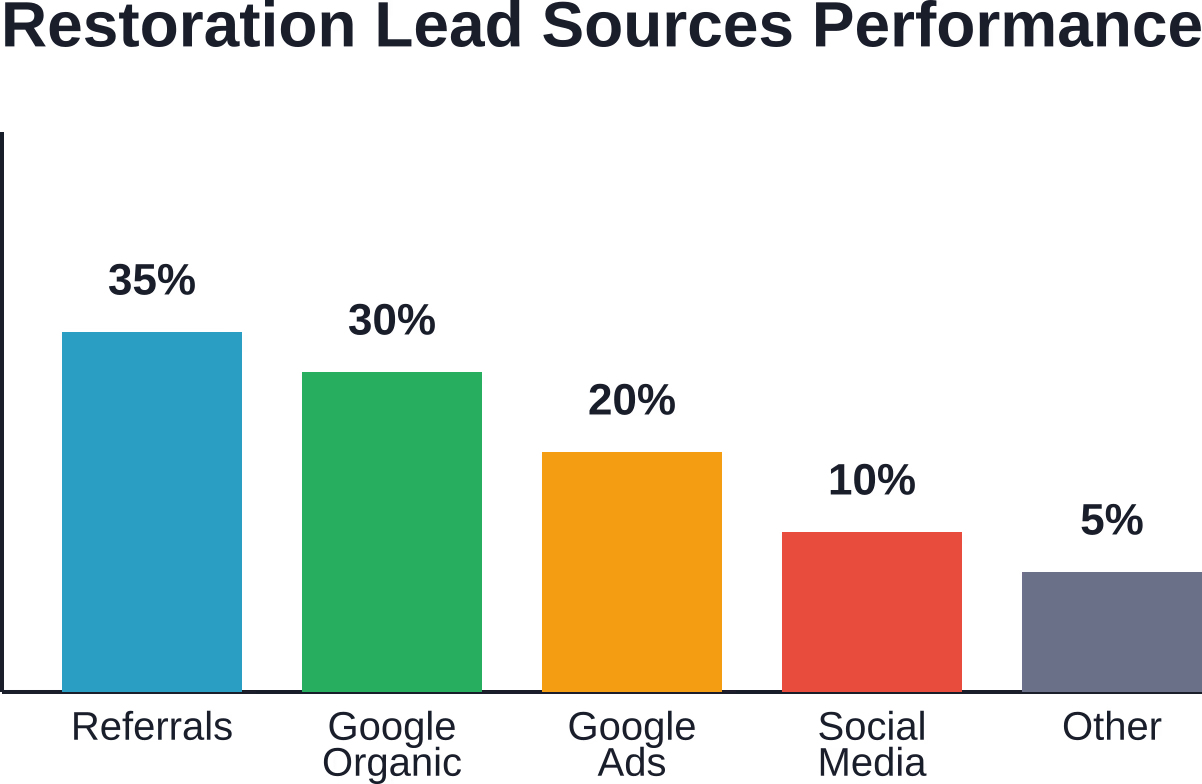
Effective restoration marketing combines multiple strategies working together rather than relying on any single tactic. Companies that build sustainable competitive advantages invest consistently across digital visibility, relationship development, and reputation management.
The most successful restoration businesses treat marketing as an ongoing system rather than occasional campaigns. They optimize Google Business Profiles continuously, nurture referral relationships systematically, publish helpful content regularly, and track performance metrics constantly.
That systematic approach matters more than any individual tactic. Research on small construction businesses—closely related to restoration—found that companies maintaining competitive advantages implement consistent strategies, measure effectiveness rigorously, adapt to overcome barriers, and modify approaches based on results.
Marketing restoration services requires understanding prospect psychology during crisis moments. Property owners facing water damage, fire loss, or mold contamination feel stressed, uncertain, and vulnerable. Marketing that builds trust before emergencies happen—through educational content, visible expertise, and demonstrated reliability—positions companies to earn business when disasters strike.
Start with the fundamentals: claim and optimize the Google Business Profile, implement review generation, ensure website mobile-friendliness, and establish measurement systems. Then layer in paid advertising, content creation, social media, and referral programs as budget and capacity allow.
The restoration companies that thrive combine these marketing ideas into integrated strategies aligned with business goals, local market conditions, and competitive positioning. Testing, measuring, and continuously improving marketing approaches separates successful companies from those struggling to generate consistent leads.


