OpenClaw Cost 2026: Real Monthly Pricing Breakdown
OpenClaw costs $0-$200+/month to run. Explore hosting, API, and hidden costs with real examples from users running 1-19 agents. Updated April 2026.
Apr 8, 2026



Dropshipping remains a viable business model in 2026 with the market projected to reach $594 billion by 2028. While it offers low startup costs and minimal inventory risk, success requires strategic product selection, reliable suppliers, and effective marketing. The FTC has cracked down on e-commerce opportunity scams, making it crucial to approach dropshipping as a legitimate business requiring real effort rather than a get-rich-quick scheme.
Every week, thousands of aspiring entrepreneurs search for low-risk ways to start an online business. Dropshipping consistently appears as a top contender. But the internet's full of contradictory claims—some call it a goldmine, others dismiss it as oversaturated.
So what's the truth?
The dropshipping model has evolved significantly since its early days. Competition has intensified, consumer expectations have risen, and platforms like Amazon and Shopify have changed their algorithms. Yet the market continues to grow at an impressive rate.
This guide cuts through the hype and examines whether dropshipping is genuinely worth pursuing in 2026. The answer isn't a simple yes or no—it depends on approach, commitment, and realistic expectations.
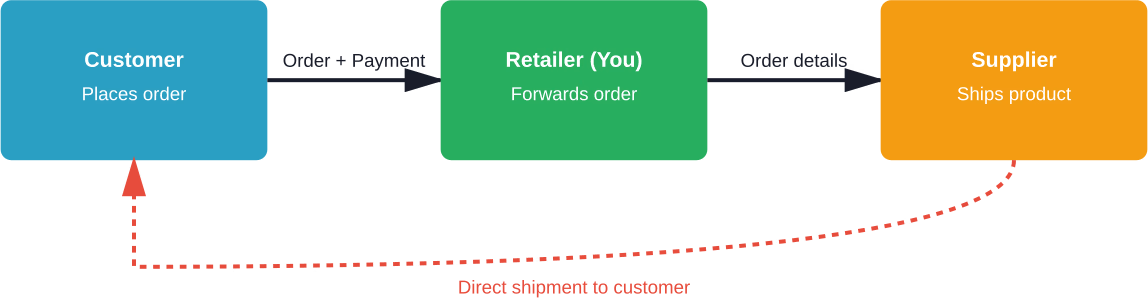
Dropshipping is a supply chain management method where retailers don't keep products in stock. Instead, when a store sells a product, it purchases the item from a third party—usually a wholesaler or manufacturer—who ships it directly to the customer.
The retailer never sees or handles the product.
Here's how the process works: A customer places an order on the retailer's online store. The retailer forwards the order details to the supplier. The supplier packages and ships the product directly to the customer under the retailer's branding (or their own, depending on the arrangement).
This model eliminates several traditional retail headaches. No warehouse costs. No inventory management. No upfront investment in stock that might not sell.
But it also transfers certain controls to suppliers—shipping times, product quality, and stock availability all depend on third parties.

One of the biggest hidden costs in dropshipping isn’t the product or the platform – it’s the testing. You end up spending money just to find out what doesn’t work. That’s where something like Extuitive fits in. Instead of launching ads and hoping for signals later, it lets you check different creatives for your ads before you commit a budget. The idea is simple – filter out weak ideas early, so you’re not paying to learn the same lesson over and over.
In practice, this can change how you look at profitability. Margins don’t just depend on product cost or ad CPMs – they depend on how much you waste getting to a winner. If you can narrow down what actually has a chance before launch, the whole model becomes less risky. It won’t remove testing completely, but it makes it more controlled. If you’re trying to make dropshipping work in 2026, it’s worth checking your ideas upfront with Extuitive.
Numbers tell a compelling story. In 2024, the dropshipping market was valued at $366 billion. Despite inflation and global economic disruptions, industry projections expect the market to reach $594 billion by 2028.
That's substantial growth.
But market size alone doesn't determine whether individual entrepreneurs can profit. A growing market also attracts more competition, which can squeeze margins and make differentiation harder.
The model continues to appeal to beginners because barriers to entry remain low. Anyone with a laptop and internet connection can theoretically launch a dropshipping store within days. Platforms like Shopify, WooCommerce, and BigCommerce have streamlined the technical setup.
However, low barriers to entry create crowded niches. Popular product categories see hundreds of sellers offering nearly identical items from the same suppliers. Standing out requires more than just setting up a store.
Several trends influence whether dropshipping remains viable:
Got it - keeping your original text and just fixing the heading:
Here's the thing—dropshipping isn't inherently good or bad. It's a business model, and like any model, success depends on execution.
The short answer? Dropshipping can be worth it for certain entrepreneurs with realistic expectations and solid strategies.
It won't work for those expecting passive income from day one or overnight success. Community discussions across platforms reveal a common pattern: those who treat dropshipping as a real business see results. Those who view it as easy money typically fail.
The Federal Trade Commission has actively pursued e-commerce business opportunity schemes. In August 2025, the FTC took action against e-commerce business opportunity scheme operators, with defendants required to surrender cash and property worth millions of dollars. In April 2020, the FTC sent more than $1 million in refunds to victims of an online selling scam.
These enforcement actions highlight an important reality: dropshipping itself is legitimate, but get-rich-quick promises surrounding it often aren't.
Dropshipping tends to work best for:
Dropshipping likely won't work for:
Despite challenges, dropshipping offers genuine advantages that keep entrepreneurs interested.
Traditional retail requires significant upfront investment. Inventory, warehouse space, employees—these costs add up quickly. Dropshipping eliminates most of them.
Starting a dropshipping business typically requires:
Total startup costs can range from $300 to $1,000, depending on choices. That's dramatically less than traditional retail or even holding inventory for an ecommerce store.
Inventory creates headaches. Products sit unsold. Storage costs accumulate. Items become outdated or damaged. Cash gets tied up in stock that might not move.
Dropshipping sidesteps all of this. Suppliers handle storage, and retailers only pay for products after customers purchase them. This eliminates inventory risk almost entirely.
Running a dropshipping business requires only a laptop and internet connection. Work from home, a coffee shop, or while traveling. The business operates wherever the owner happens to be.
This flexibility appeals particularly to digital nomads and those seeking location-independent income streams.
Without inventory constraints, dropshippers can offer extensive product catalogs. Want to test a new product category? Add it to the store without buying stock first. If it doesn't sell, remove it without loss.
This flexibility enables rapid testing and pivoting based on market response.
Scaling traditional retail means more inventory, larger warehouses, additional staff. Scaling dropshipping primarily means more orders—suppliers handle fulfillment growth.
Processing 100 orders per day doesn't require significantly more work than processing 10, since suppliers manage the increased shipping volume.
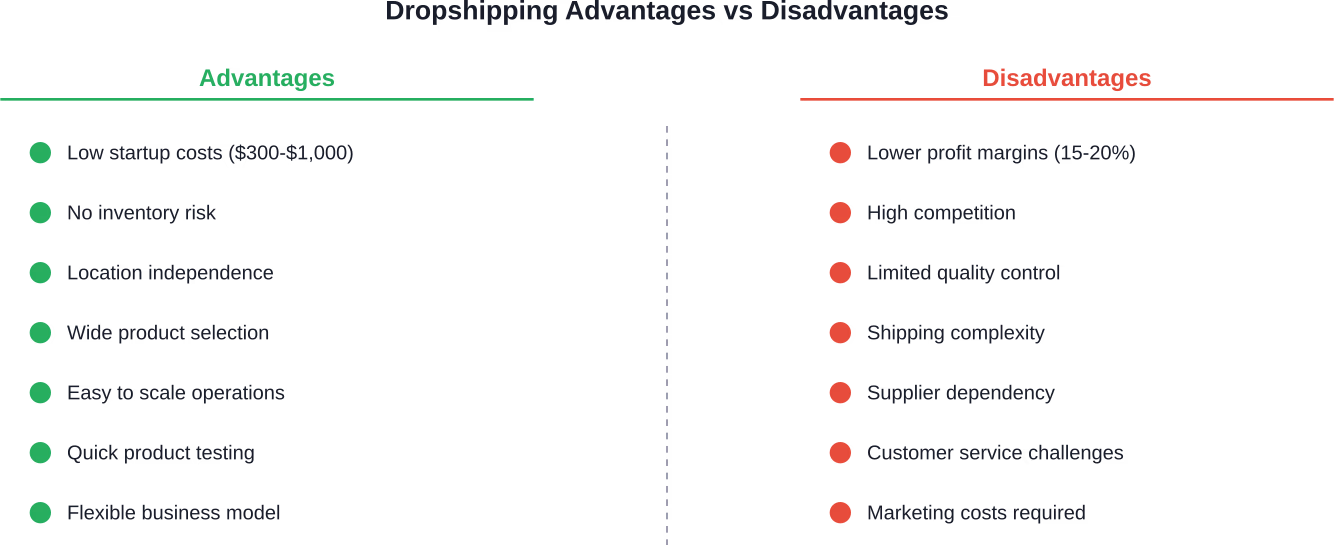
Now for the less glamorous reality. Dropshipping comes with significant challenges that sink many beginners.
Profit margins in dropshipping typically range from 15-20%, sometimes lower in competitive niches. That's considerably less than traditional retail's 50% or higher margins.
Low margins mean higher volume requirements to reach meaningful revenue. Selling 10 products at $5 profit each generates only $50. Building a sustainable income requires consistent sales volume.
Low barriers to entry attract massive competition. Dozens or hundreds of stores might sell identical products from the same suppliers.
Standing out requires strong branding, superior customer service, or unique marketing angles. Generic stores with generic marketing rarely succeed anymore.
Suppliers control product quality and shipping. When suppliers send defective items or miss shipping deadlines, customers blame the retailer, not the supplier.
This creates customer service challenges. Handling complaints about issues outside direct control frustrates both retailers and customers.
What happens when customers order multiple products from different suppliers? Each supplier ships separately, resulting in multiple packages, different arrival times, and higher shipping costs.
Explaining this to customers expecting consolidated shipping can be difficult. Some customers abandon carts when they see shipping costs or timelines.
Not all suppliers maintain consistent quality or stock levels. A supplier might run out of a popular product without notice, leaving retailers unable to fulfill orders.
Finding reliable suppliers requires research, testing, and sometimes trial and error. The cheapest supplier often isn't the best choice.
Building traffic requires investment. Organic reach on social media has declined. Search engine optimization takes time. Paid advertising—Facebook Ads, Google Ads, TikTok Ads—requires budget and testing.
Many beginners underestimate marketing costs and run out of budget before finding profitable campaigns.
This is where things get tricky. Income varies wildly based on niche, marketing effectiveness, and operational efficiency.
Community discussions reveal diverse experiences. Some dropshippers report losing money initially while learning. Others achieve modest supplemental income of $500-2,000 monthly. A smaller percentage build substantial businesses generating $10,000+ monthly.
But what do the numbers actually look like?
Here's a realistic scenario for a moderately successful dropshipping store:
This represents a realistic outcome after several months of testing and optimization. Early months often show losses or minimal profits while finding winning products and refining advertising.
Several factors determine whether dropshippers earn meaningful income:
Not all dropshipping approaches are identical. Different models suit different goals and resources.
This involves partnering with wholesalers or manufacturers who ship products directly to customers. Retailers source products from platforms like AliExpress, Alibaba, or specialized supplier directories.
Best for: Those wanting wide product variety and low per-unit costs.
Challenges: Often involves longer shipping times, especially with overseas suppliers.
Print-on-demand combines dropshipping with product customization. Retailers design custom apparel, accessories, or home goods. When customers order, suppliers print and ship the customized products.
Services like Printful handle production and shipping, allowing retailers to focus on design and marketing.
Best for: Creative entrepreneurs wanting unique products without inventory.
Challenges: Typically higher per-unit costs than traditional dropshipping, requiring higher retail prices.
Some suppliers offer custom packaging and branding, allowing retailers to create more cohesive brand experiences. Products arrive in packaging featuring the retailer's branding rather than generic boxes.
Best for: Building long-term brand equity and customer loyalty.
Challenges: Usually requires higher order volumes or fees for custom packaging.
Successful dropshippers often combine approaches. They might stock top-selling items locally for faster shipping while dropshipping slower-moving products. Or they might use print-on-demand for custom items while dropshipping complementary accessories.
Best for: Experienced operators optimizing for both speed and variety.
Challenges: More complexity in operations and inventory management.
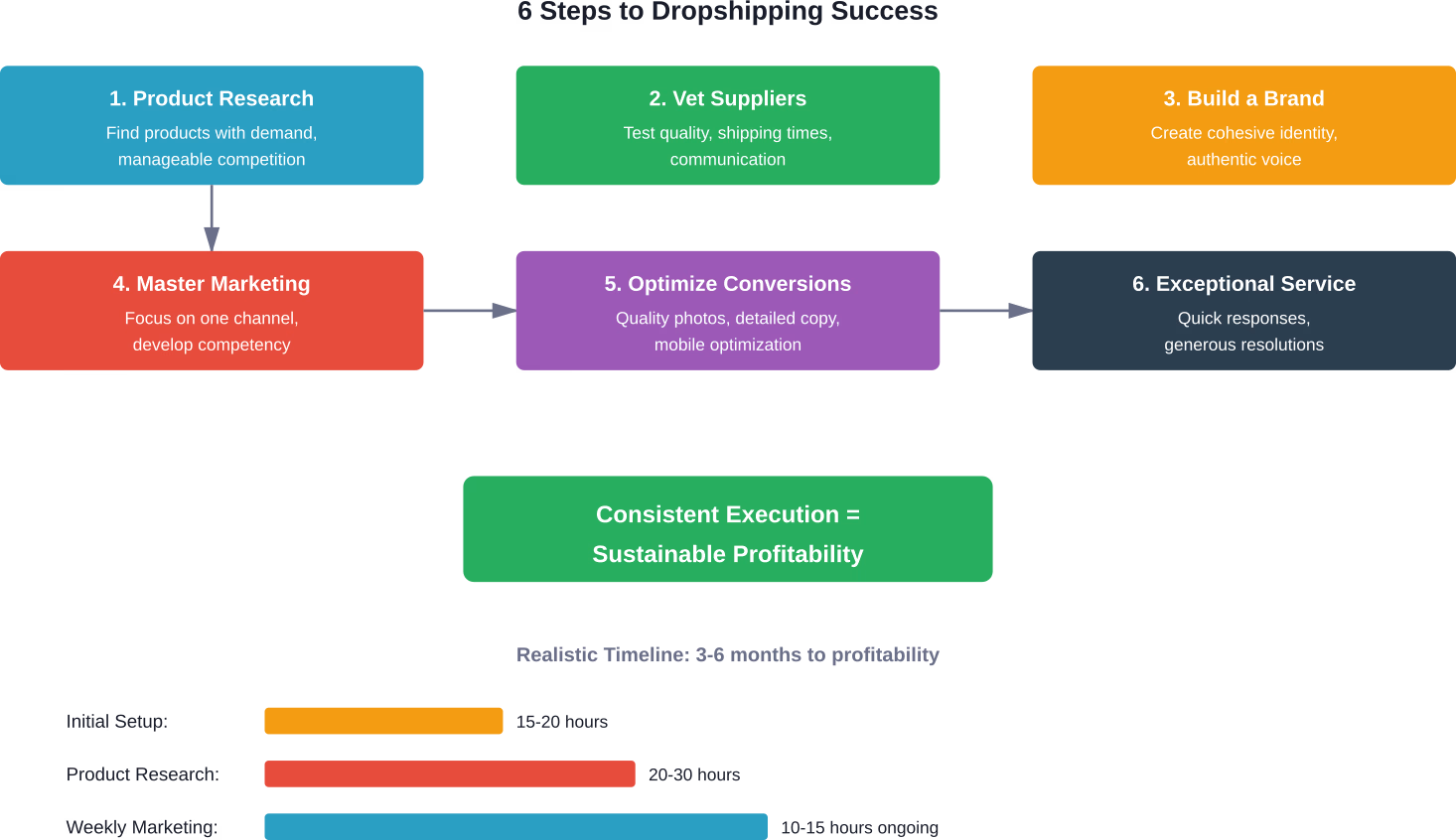
So what separates successful dropshippers from failures? Based on community discussions and industry patterns, several practices correlate with better outcomes.
Don't sell products just because they're trendy or cheap. Research demand, competition, and profitability before committing.
Look for products with:
Order samples before listing products. Test shipping times. Evaluate packaging quality. Assess communication responsiveness.
A supplier offering rock-bottom prices but inconsistent quality will destroy the business through returns and negative reviews.
Key supplier evaluation criteria:
Generic stores named "Best Products Shop" with stock photos and minimal content rarely succeed. Building a recognizable brand creates differentiation.
Brand building includes:
Trying to advertise everywhere simultaneously spreads resources too thin. Focus on one channel initially—Facebook Ads, TikTok, Instagram, Pinterest, Google Ads—and develop competency before expanding.
Each platform requires different strategies, ad formats, and audience approaches. Mastering one creates a reliable traffic source before diversifying.
Traffic means nothing without conversions. A store converting at 3% needs far less traffic than one converting at 1% to achieve the same sales.
Conversion optimization includes:
In a model with limited control over fulfillment, customer service becomes a key differentiator. Respond quickly. Resolve issues generously. Turn problems into opportunities to exceed expectations.
Good customer service creates repeat buyers and positive reviews that reduce acquisition costs over time.
Learning from others' mistakes saves time and money. These errors repeatedly appear in community discussions about failed dropshipping attempts.
Listing products based solely on supplier descriptions creates problems. Product quality, actual appearance, and shipping packaging might differ significantly from expectations.
Always order samples before selling to customers.
Seeing lots of stores sell a product might indicate high demand—or market saturation. New sellers entering saturated markets face uphill battles against established competitors.
Look for products with demand but room for differentiation.
Most ecommerce traffic comes from mobile devices. Stores that look great on desktop but terrible on mobile lose massive numbers of potential sales.
Test extensively on multiple mobile devices before launching advertising.
Expecting profits within the first week leads to disappointment and premature quitting. Building a profitable dropshipping business typically takes 3-6 months of consistent effort.
Plan for an initial learning period with minimal returns.
Negative reviews and customer complaints contain valuable information about product quality, shipping issues, or unclear policies. Ignoring feedback means repeating mistakes.
Use criticism to improve operations continuously.
Testing 20 products with $50 each provides less useful data than testing 5 products with $200 each. Insufficient testing budget per product prevents gathering meaningful performance data.
Focus resources on thorough testing of fewer products rather than superficial testing of many.
The FTC's enforcement actions against e-commerce opportunity schemes highlight an important issue: the dropshipping industry attracts scammers promising unrealistic results.
In July 2025, the FTC took action against an e-commerce business opportunity scam, resulting in permanent bans and defendants surrendering millions in assets. In August 2025, another case resulted in operators being permanently banned from the industry.
These schemes typically promise:
Real talk: if someone promises guaranteed income from dropshipping, they're selling a dream, not a business opportunity.
Legitimate dropshipping requires real work. Product research. Supplier vetting. Marketing testing. Customer service. Anyone claiming otherwise is misleading potential entrepreneurs.
Approach with skepticism when encountering:
Quality educational resources exist at reasonable prices. But extraordinary claims require extraordinary evidence—and in business opportunities, such evidence rarely materializes.
Dropshipping isn't the only low-barrier ecommerce approach. Depending on goals and resources, alternatives might better suit certain entrepreneurs.
Purchasing inventory upfront requires more capital but offers better margins, quality control, and shipping times. For those with some startup capital and confidence in product selection, this model provides more control.
Creating original products eliminates competition and supplier dependency. Platforms like Etsy support handmade goods, though scaling becomes more challenging without transitioning to manufacturing.
Buying products wholesale and selling under a private label combines better margins with brand building. Requires more upfront investment but creates differentiation.
Promoting others' products for commissions eliminates all fulfillment responsibility. Lower income per transaction but zero operational overhead.
Selling digital products (courses, templates, ebooks, software) offers 100% margins and instant delivery. Requires creating valuable intellectual property but scales infinitely without inventory.
After examining market data, challenges, opportunities, and real experiences, what's the final verdict?
Dropshipping is worth it for entrepreneurs who:
Dropshipping probably isn't worth it for those who:
The model itself is neutral—it's a tool. Success depends on how entrepreneurs use that tool.
With the dropshipping market projected to reach $594 billion by 2028, opportunities clearly exist. But that same growth attracts competition. Succeeding requires more than simply setting up a store and running ads.
Product selection matters. Supplier relationships matter. Marketing efficiency matters. Brand building matters. Customer service matters.
Do all of these things well, and dropshipping can generate meaningful income. Neglect any of them, and the business will likely struggle.
The question isn't really whether dropshipping is worth it—it's whether it's worth it for the specific circumstances, skills, and goals of individual entrepreneurs.
For those with realistic expectations and willingness to invest genuine effort, dropshipping offers a legitimate path to building an online business with minimal upfront capital. The low barrier to entry provides opportunities for testing entrepreneurial instincts without risking thousands on inventory.
But success won't happen accidentally.
It requires learning marketing fundamentals, developing product research skills, building supplier relationships, and continuously optimizing based on data. Those willing to embrace this learning process while maintaining patience through initial challenges can build sustainable dropshipping businesses.
Start small. Test thoroughly. Learn continuously. Scale what works.
The dropshipping market continues growing, suggesting room for new entrants who approach it strategically. But that same growth means increased sophistication in both competitors and consumers.
Standing out requires more than mimicking what worked in 2020 or following cookie-cutter formulas from outdated courses. It means understanding target audiences deeply, curating products that solve real problems, and building brands that resonate authentically.
Is dropshipping worth it in 2026? For the right person with the right approach—absolutely. For someone expecting easy money with minimal effort—definitely not.
The opportunity exists. Whether it's worth pursuing depends entirely on what each entrepreneur brings to the table and what they're willing to invest in learning and execution.


