How to Use AI in Ecommerce: 2026 Guide + Use Cases
Learn how to implement AI in ecommerce with 10 proven use cases. Boost conversions, automate operations, and personalize shopping experiences in 2026.
Apr 13, 2026



Contractors can grow their business through a mix of local strategies like referrals and yard signs, digital tactics including Google Business Profile optimization and social media, and federal contracting opportunities. The most cost-effective approaches focus on existing customer relationships, community visibility, and consistent online presence—with proven results often coming from just $100 test budgets for digital ads.
Marketing a contracting business feels different than promoting other services. Homeowners aren't shopping for contractors every week—they're looking when something breaks, when they're ready to remodel, or when a neighbor recommends someone trustworthy.
That's the challenge. How does a contractor stay visible during those critical decision moments?
The construction industry historically dedicates minimal resources to marketing. According to industry data, marketing expenditure in the construction sector is relatively modest compared to other industries. But here's the thing—contractors who implement even basic marketing strategies consistently report higher lead quality and better project pipelines.
This guide covers 25 actionable marketing ideas for contractors, organized by approach: local visibility tactics, digital strategies, relationship-building methods, and specialized opportunities like federal contracting.
Referrals still matter. Always will. But relying exclusively on word-of-mouth leaves money on the table.
Consider this: when someone needs a contractor, they often start with a Google search, even if a neighbor mentioned a name. That search becomes the validation step. If a contractor doesn't appear in local search results or lacks reviews, the lead evaporates.
Research on small construction businesses indicates that many small and medium enterprises face significant survival challenges, often due to inconsistent lead generation. Contractors need multiple marketing channels working simultaneously—referrals plus online presence plus community visibility.
The good news? Most contracting businesses underinvest in marketing, which means modest efforts can yield outsized results.
Local visibility remains the foundation of contractor marketing. Most clients live within a 75-mile radius of the business, making hyper-local tactics incredibly effective.
Claiming and fully completing a Google Business Profile is the single highest-ROI marketing move contractors can make. When homeowners search "plumber near me" or "general contractor [city name]", Google displays local businesses first.
Complete every profile section: business hours, service areas, photos of completed projects, and especially the business description with relevant keywords. Then actively collect reviews from satisfied clients.
Simple, but powerful. Neighbors notice construction activity. A professional yard sign with company name, phone number, and services captures attention at the exact moment someone's thinking "I should get my deck redone too."
Make signs large enough to read from across the street. Include a basic call-to-action like "Free Estimates" or "Licensed & Insured."
Instead of hoping clients refer business, create a structured program. Offer a discount on future services, a gift card, or a charitable donation in the client's name for every qualified referral.
Marketers typically spend about 15% of their budgets on customer retention, despite existing customers often accounting for a significant portion of revenue.
Electricians partner with plumbers. Roofers partner with gutter installers. HVAC companies partner with general contractors. These partnerships create mutual referral streams.
Formalize arrangements: keep business cards at each other's offices, mention partners in consultations, and consider bundled service offerings.
Membership provides networking opportunities, community credibility, and often discounted advertising in local directories or event sponsorships.
According to SBA guidance on local marketing, community involvement builds trust that translates directly to business opportunities.
Sponsoring a local Little League team for $500–$1,500 places your company name on players’ jerseys, field banners, and — most importantly — in the minds of parents and community members.
Local customers naturally prefer to support businesses that give back to their community.

Local tactics bring the foundation. Digital strategies scale it.
The website doesn't need fancy animations. It needs clarity: services offered, service areas, contact information, and social proof through photos or testimonials.
Many local searches happen on mobile devices. If the site doesn't load fast and display properly on phones, leads disappear.
Writing articles like "How to Choose a Roofing Contractor in [City Name]" or "Kitchen Remodeling Costs in [County]" helps rank for searches homeowners actually make.
Publish consistently—even one quality post per month builds authority over time. Include local keywords naturally throughout the content.
Reviews influence purchase decisions more than almost any other factor. After completing projects, send a follow-up email thanking clients and including direct links to review profiles on Google, Yelp, or industry-specific platforms.
Respond to every review, positive or negative. It shows engagement and professionalism.
Visual platforms work perfectly for contractors. Post before-and-after photos, short job site videos, and client testimonials. Tag the project location to increase local visibility.
The SBA suggests that small businesses can start with a modest $100 budget for Facebook test campaigns. Track which ads generate calls or form submissions, then scale what works.
Google Local Service Ads appear above regular search results for contractor-related queries. These pay-per-lead ads include Google's verification badge, building immediate trust.
The background check and license verification requirements filter out less-serious competitors, making the investment worthwhile for established contractors.
Short videos explaining common problems ("Why Your Deck Is Rotting" or "Signs You Need Electrical Panel Replacement") position contractors as experts while providing valuable information homeowners search for.
Post videos on YouTube with local keywords in titles and descriptions. Embed them on the website too.
An email list of previous customers represents warm leads for future services. Send seasonal maintenance reminders, special offers on new services, or educational content.
Research indicates that existing customers account for the majority of revenues, yet marketers typically spend only 21% of budgets retaining them, suggesting untapped opportunity in customer retention.

Digital doesn't replace everything. Some old-school tactics remain surprisingly effective.
When working in a neighborhood, send postcards to surrounding homes showcasing the nearby project. Homeowners notice construction activity on their street and are more receptive to marketing from contractors already working in the area.
Include a time-limited offer to encourage immediate response.
Work trucks drive through communities daily. A professionally wrapped vehicle becomes a mobile billboard, generating impressions without ongoing ad spend.
At minimum, add magnetic door signs with company name, phone number, and primary service. Make text large enough to read from a distance.
While print circulation has declined, local community newspapers and neighborhood newsletters maintain loyal readerships—often homeowners aged 50+ with higher discretionary income for renovation projects.
Advertise consistently in the same publication rather than one-off ads in multiple places. Frequency builds recognition.
Home improvement expos concentrate motivated prospects in one location. A booth provides face-to-face interaction, project portfolio displays, and direct lead capture.
Collect contact information through contest entries or free consultation signups, then follow up within 48 hours while interest remains high.
Some of the best leads come from relationships built over time.
Real estate agents constantly need reliable contractors for pre-listing repairs, post-inspection fixes, and client referrals. Property managers need ongoing maintenance services for rental portfolios.
Build relationships by responding quickly, providing accurate estimates, and delivering quality work. These professionals become repeat referral sources.
Staff at lumber yards and building supply stores interact with DIYers who quickly realize they're in over their heads. Being the contractor they recommend when homeowners ask "Do you know someone who can do this?" generates qualified leads.
Visit regularly, get to know the staff, and leave business cards at the counter.
After project completion, mail a handwritten thank-you note. A year later, send an anniversary card: "It's been one year since we completed your kitchen remodel. How's everything holding up?"
These touches maintain relationships and often trigger additional project discussions or referrals.
Annual maintenance contracts (HVAC tune-ups, gutter cleaning, deck sealing) create recurring revenue and keep the business top-of-mind when clients need larger projects.
Package services at a slight discount compared to one-time pricing. The steady cash flow and client retention justify the discount.
The federal government purchases over $700 billion in goods and services annually, including substantial construction and maintenance contracts. For contractors willing to navigate the system, federal contracting represents a massive market.
Getting started requires obtaining a UEI (Unique Entity Identifier) and registering in the System for Award Management (SAM.gov). The Small Business Administration offers workshops specifically for contractors on moving from "Registered" to "Revenue."
According to SBA guidance, new contractors should consider starting with subcontracts under established prime contractors rather than bidding directly on large federal projects. This "foot-in-the-door" strategy builds experience with federal requirements and past performance credentials.
Beyond SAM.gov, the SBA's Small Business Search portal allows government agencies to find contractors by location, certifications, and capabilities. Maintaining a complete, updated profile increases visibility to federal buyers.
Federal procurement officers evaluate contractors based on capability statements—one-page documents outlining core competencies, past performance, certifications, and differentiators.
The SBA emphasizes crafting these statements to prove the business represents a "low-risk" choice even without extensive federal contracting history. Include private sector experience that demonstrates relevant capabilities.
Educational content builds authority. Write guides addressing common homeowner questions, create comparison resources for material choices, or explain complex processes in simple terms.
This content serves multiple purposes: improves search rankings, provides value that builds trust, gives sales teams resources to share with prospects, and differentiates the business from competitors who only push sales messages.
Construction and contracting businesses that adopt comprehensive marketing strategies report improved organizational performance and client satisfaction, according to research on marketing in construction firms. The key is consistency—selecting appropriate channels and executing regularly rather than sporadic campaigns.
Marketing without measurement wastes money. Track which activities generate leads and which leads convert to projects.
Ask every new client how they found the business. Record answers in a simple spreadsheet or CRM. After six months, patterns emerge showing which marketing channels deliver the best return.
Track these metrics by channel:
Digital channels offer built-in analytics. Google Business Profile shows search impressions and clicks. Facebook Ads Manager reports ad performance. Call tracking numbers identify which marketing pieces drive phone calls.
But wait—don't get paralyzed by analysis. Start with basic tracking, then refine over time. Perfect measurement isn't the goal. Knowing generally what works allows smart budget allocation.

Contractors often spend too much money figuring out which ads do not work. Extuitive helps businesses review ad creatives before launch so teams can compare ideas earlier and avoid wasting budget on weak campaigns. The platform uses predictive advertising models built around historical ad performance and audience response patterns.
Extuitive helps businesses:
Book a demo with Extuitive and review your contractor ads before they go live.
Knowing what not to do saves as much money as knowing what works:
How much should contractors invest in marketing? While the construction industry average sits around 2% of revenue, businesses in growth mode often allocate 5-10%.
For a contractor generating $500,000 in annual revenue, a 5% marketing budget equals $25,000 per year, or roughly $2,000 monthly.
Here's a sample allocation:
Adjust based on what works. If Google Local Service Ads generate three quality leads weekly, shift more budget there and reduce spending on underperforming channels.
Marketing a contracting business doesn't require massive budgets or complex strategies. It requires consistency.
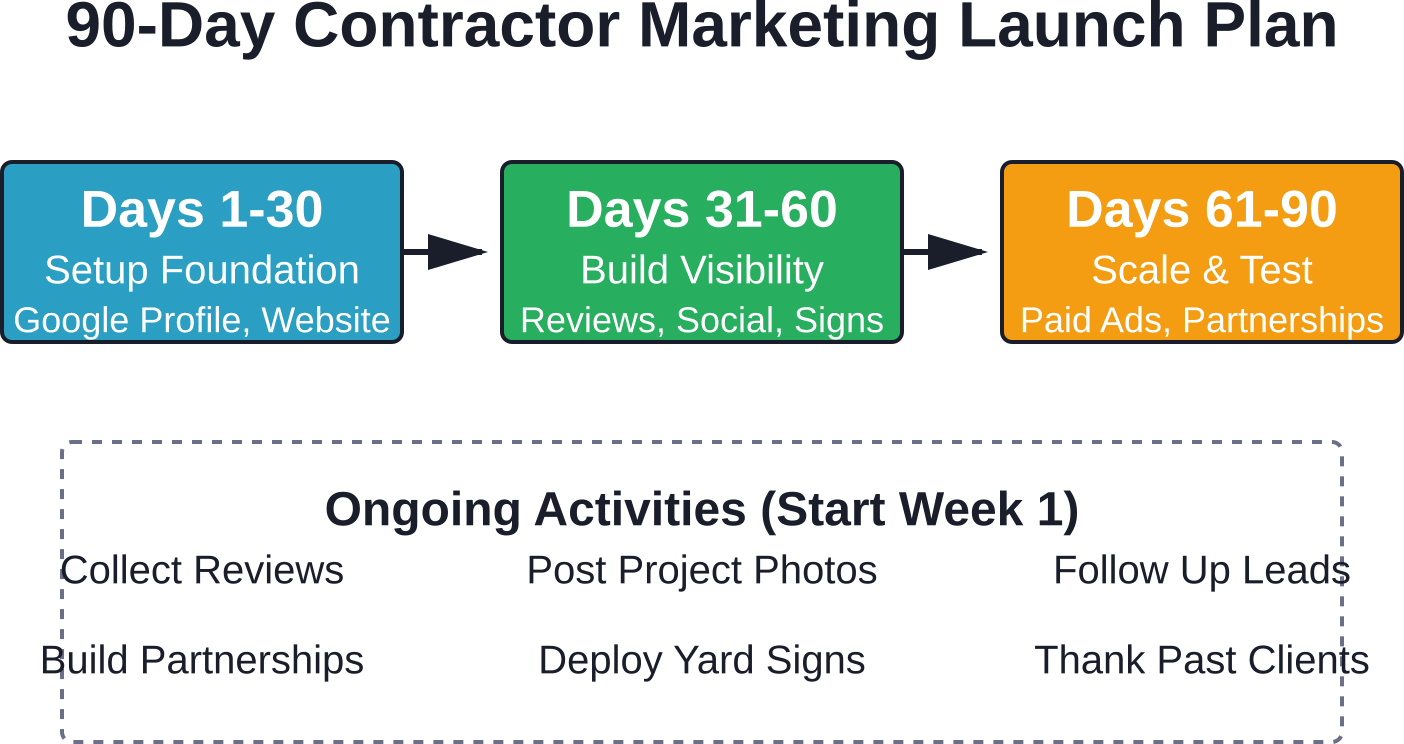
Start with foundation elements: claim and optimize the Google Business Profile, deploy yard signs at every job, systematically collect reviews, and build a basic website. These low-cost tactics generate immediate visibility.
Then layer in relationship-building: referral programs, partnerships with complementary businesses, networking in the community. These compound over time, creating steady lead flow.
Finally, test paid strategies with small budgets. Run a $100 Facebook campaign. Try Local Service Ads for one month. Send postcards to one neighborhood. Measure results, scale what works, and cut what doesn't.
The construction industry includes many successful small and medium-sized contractors. The industry remains a major contributor to the economy. But survival and growth require moving beyond word-of-mouth alone.
Pick three marketing strategies from this list. Implement them consistently for 90 days. Track which generates leads and which leads convert to profitable projects. Adjust based on results, not assumptions.
The contractors who thrive aren't necessarily the most talented builders—they're the ones who ensure qualified prospects know they exist when renovation decisions happen. That's what marketing does.
Ready to grow? Start with the foundation tactics this week. Your future projects are out there—make sure they find you.


