How to Set Up SMS Marketing on Shopify Effortlessly and Stress-Free
A step-by-step guide to launching SMS marketing campaigns in Shopify using built-in tools and best practices.
Feb 11, 2026



Dropshipping remains profitable in 2026, but success depends heavily on niche selection, supplier quality, and marketing execution. Beginners can realistically expect 20-30% profit margins once established, with monthly revenues ranging from $10K-$30K within 3-6 months. However, the Federal Trade Commission has recently cracked down on fraudulent e-commerce business opportunity schemes, making it crucial to approach dropshipping with realistic expectations rather than get-rich-quick promises.
The dropshipping question keeps popping up in 2026: is it actually profitable, or has the market become too saturated? With the rise of AI marketing tools, faster shipping expectations, and increased competition, the business model has definitely evolved from what it was a few years ago.
Here's the thing though—profitability in dropshipping isn't a simple yes or no answer. Some stores never make a single sale. Others hit six figures within their first year. The difference comes down to execution, niche selection, and understanding the real economics of the model.
This article breaks down what profitability actually looks like in 2026, backed by real data from community discussions and authoritative sources rather than inflated promises.
Profitability in dropshipping isn't just about making sales. It's about what remains after covering all expenses: product costs, advertising spend, platform fees, payment processing, and the time invested in running operations.
According to available community discussions, typical profit margins for established dropshipping stores range between 20-30%. But that's after optimizing pricing, finding reliable suppliers, and building consistent traffic. Beginners often start with lower margins as they learn the ropes.
The model works because overhead is minimal compared to traditional retail. There's no inventory to purchase upfront, no warehouse to rent, and no staff required initially. This capital-light approach makes entry accessible, but it also means competition is fierce.
Many beginners confuse revenue with profit. A store generating $50,000 in monthly sales might only pocket $10,000-$15,000 after expenses. That's still solid income, but it's not the full picture some promotional content suggests.
Advertising typically consumes the largest chunk of revenue—often around up to 30% of total sales, though this varies widely by niche and marketing channel. Product costs from suppliers usually account for 40-50% of the selling price, leaving room for other expenses and profit margin.
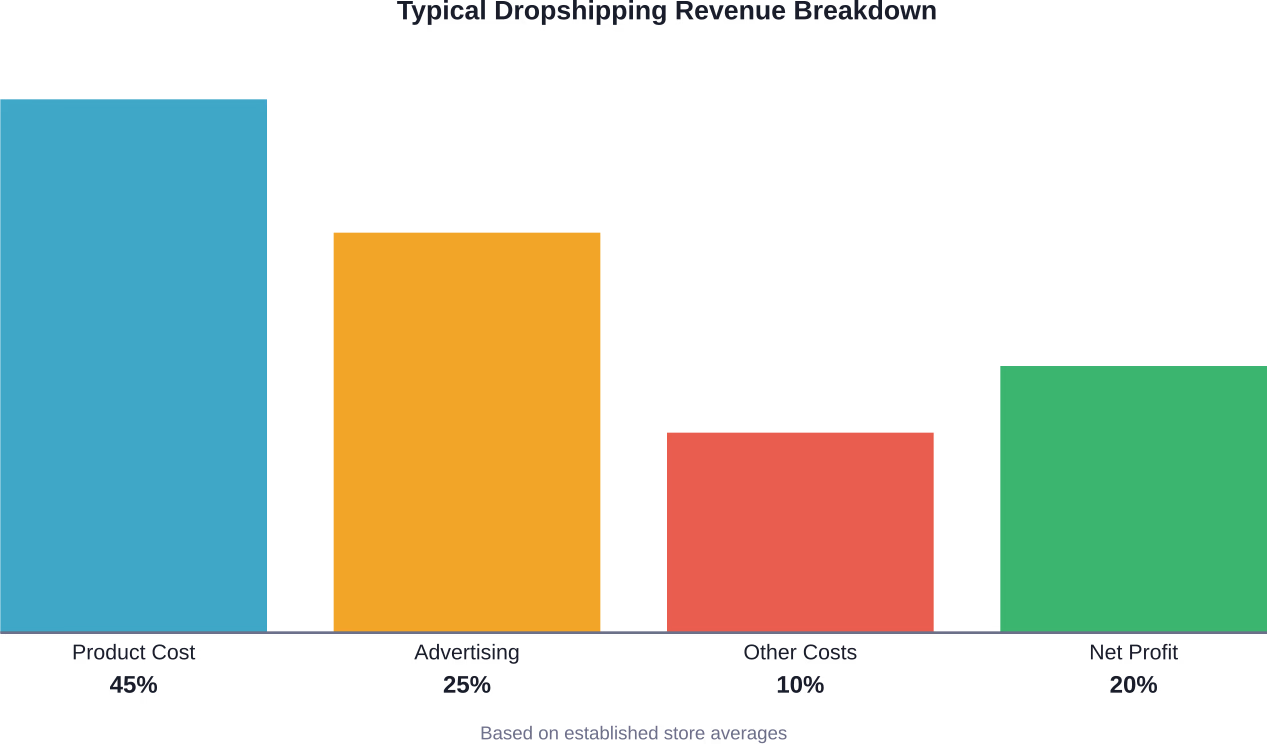

Profit in dropshipping often comes down to how much you lose while testing. Even with solid suppliers and pricing, ad spend can eat into margins fast if you’re guessing what will work. Most of the risk sits in that early testing phase where you’re paying to find a direction.
Tools like Extuitive help reduce that guesswork. Instead of launching every idea, you can check different creatives in advance and see which ones are more likely to perform. That means fewer failed tests and a clearer path to something that converts. If you’re trying to protect your margins in 2026, it makes sense to run your ideas through Extuitive before putting the real budget behind them.
Setting realistic expectations is critical. Most beginners don't hit profitability immediately, and the learning curve can be steep.
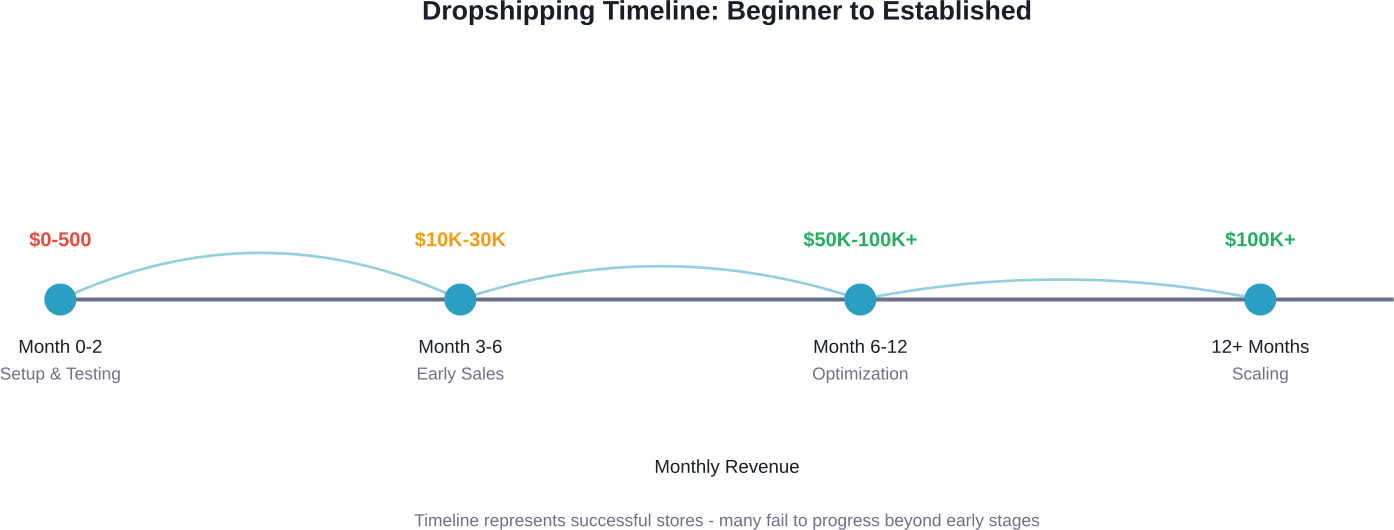
Based on community discussions and available data, here's what typical beginner timelines look like. The first 1-2 months often involve setup, testing products, and learning advertising platforms. Revenue is usually low or nonexistent during this phase—that's completely normal.
Between months 3-6, once traffic starts flowing and consistent sales materialize, monthly revenue might reach $10K-$30K with those 20-30% margins mentioned earlier. This translates to roughly $2,000-$9,000 in actual profit per month.
For stores that optimize and scale effectively between months 6-12, reaching $50K-$100K+ in monthly revenue becomes achievable. At that scale, with refined operations and better supplier relationships, profit margins can improve slightly.
But wait. These numbers represent successful stores. Many beginners struggle to gain traction, especially if they choose oversaturated niches or work with unreliable suppliers.
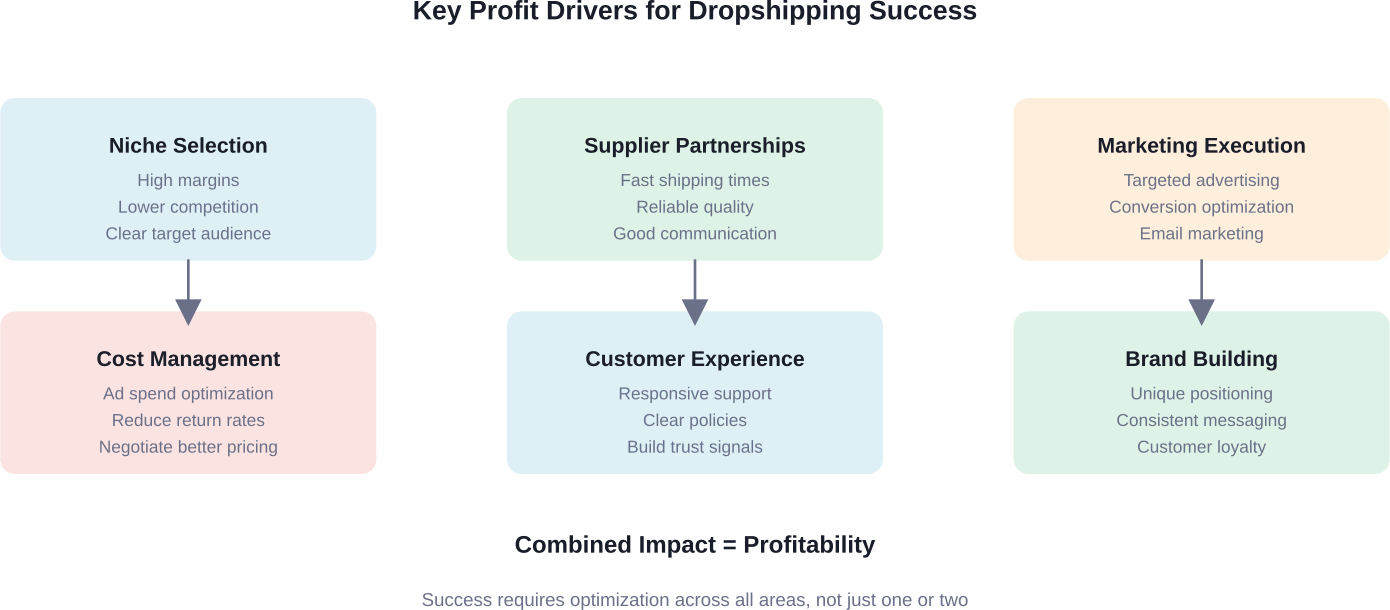
The difference between profitable dropshipping stores and failed attempts usually comes down to three factors: niche selection, supplier quality, and marketing execution.
Stores selling generic products available everywhere face brutal competition and razor-thin margins. Those focusing on specific niches with less competition and higher perceived value tend to perform better. It's not about finding some secret untapped market—it's about positioning and execution.
Supplier relationships matter enormously. Fast shipping times, consistent product quality, and reliable communication separate sustainable businesses from ones constantly fighting refund requests and negative reviews.
Understanding expenses is just as important as understanding revenue potential. Dropshipping has lower overhead than traditional retail, but costs still add up quickly.
Advertising represents the biggest variable expense. Beginners often underestimate how much testing is required to find profitable ad campaigns. It's common to spend $500-$2,000 before finding a winning formula, and that's money that won't generate immediate returns.
Payment processing fees might seem small, but they accumulate. On $10,000 in monthly sales, expect around $290 just in processing fees. Platform subscriptions, email marketing tools, and other software add another few hundred monthly.
Returns and refunds impact profitability more than many anticipate. Depending on the product category, return rates can range from 5-15%. Each return means lost shipping costs, lost product costs, and often lost customer acquisition costs if the buyer doesn't repurchase.
Customer service takes time, and time has value. Responding to inquiries, handling complaints, and managing supplier communication can easily consume 10-20 hours weekly as the business grows.
The dropshipping model in 2026 looks different from even two years ago. Consumer expectations have shifted, platform algorithms have evolved, and regulatory scrutiny has increased.
Shipping speed matters more than ever. The days of 3-4 week delivery times from overseas suppliers are essentially over for most niches. Customers expect Amazon-like fulfillment, which means working with suppliers who can deliver within 5-10 days or facing significant customer dissatisfaction.
The Federal Trade Commission has cracked down hard on fraudulent e-commerce business opportunity schemes throughout 2025. In August 2025, the FTC obtained a permanent ban against Click Profit operators under a proposed settlement, requiring them to turn over personal and business assets. Similar actions followed in July 2025 and continued into 2026.
This regulatory environment means the "get rich quick" promotions that once flooded the space are facing legal consequences. That's actually good for legitimate businesses—it weeds out scammers and sets more realistic expectations.
According to Statista data, third-party sellers continue to dominate platforms like Amazon. In the fourth quarter of 2025, the majority of paid units on Amazon came from third-party sellers, many using dropshipping or hybrid fulfillment models.
This demonstrates that the model remains viable at scale, but competition on major marketplaces is intense. Many successful dropshippers in 2026 built their own Shopify stores rather than relying solely on Amazon or eBay, giving them more control over branding and customer relationships.
Profitability isn't just about choosing the right niche—it's about execution across multiple areas of the business.
Focus on niches with higher price points. Selling $100-500 products generates better profit margins than $10-20 items, even if conversion rates are slightly lower. The advertising cost to acquire a customer remains similar, but the profit per transaction increases significantly.
Build relationships with multiple suppliers for the same products. This provides backup options if one supplier runs out of stock and creates negotiating leverage for better pricing or shipping terms.
Invest in quality product photography and descriptions. Generic supplier photos don't convert well in 2026. Stores that create unique visual content and compelling copy see measurably better conversion rates.
Organic social media remains viable but requires consistent effort. Building a following on Instagram, TikTok, or YouTube takes months but can provide essentially free traffic once established. The challenge is maintaining content production while managing store operations.
Paid advertising still drives most dropshipping revenue, but the approach has shifted. Broad targeting rarely works anymore—successful campaigns use detailed audience segmentation and extensive creative testing. Expect to test 10-20 different ad variations before finding winners.
Email marketing often gets overlooked by beginners but represents one of the highest-ROI channels. Building an email list from day one and implementing abandoned cart sequences, post-purchase follow-ups, and promotional campaigns can add 15-25% to overall revenue.
So here's the real question: should someone start a dropshipping business in 2026?
The model is still profitable, but it's not the low-effort passive income some promotions suggest. Success requires treating it like a real business: consistent effort, financial investment in advertising and tools, and willingness to learn marketing, customer service, and basic operations.
For people willing to invest 15-20 hours weekly initially and $1,000-3,000 in startup capital for advertising testing and initial expenses, dropshipping offers a legitimate path to building income. The barrier to entry remains lower than traditional retail or most other business models.
Real talk: most beginners will struggle initially. The first few months typically involve more learning than earning. But for those who persist through the testing phase, find a decent niche, and execute competent marketing, reaching $5,000-10,000 in monthly profit within 6-12 months is achievable.
Some of the most profitable e-commerce operations in 2026 use hybrid approaches rather than pure dropshipping. This might mean dropshipping initially to test products, then stocking inventory for bestsellers to improve margins and shipping times.
Print-on-demand represents another variation that works well for certain niches. The model is similar to dropshipping but with custom-designed products, which can command higher margins and face less direct competition.
Dropshipping faces legitimate criticisms that anyone considering the model should understand.
Quality control is harder when products ship directly from suppliers. This can lead to customer dissatisfaction if products don't match descriptions or arrive damaged. Successful dropshippers mitigate this by ordering samples before listing products and maintaining strong supplier communication.
Shipping times remain a challenge, especially for international suppliers. Working with domestic suppliers or those offering faster shipping typically means lower margins but better customer experiences and fewer refund requests.
The market is competitive. Whatever niche seems appealing, dozens or hundreds of other sellers are likely targeting it. This doesn't make success impossible, but it means differentiation through branding, customer service, or unique product selection becomes critical.
The FTC's recent enforcement actions against deceptive e-commerce opportunity schemes highlight the importance of operating ethically and setting realistic expectations.
In August 2025, the FTC obtained a permanent ban against Click Profit operators under a proposed settlement, requiring them to turn over personal and business assets. Similar actions in July 2025 and July 30, 2025 resulted in permanent bans for scheme operators, with defendants required to surrender financial accounts and proceeds.
These cases typically involved programs charging large upfront fees with promises of easy riches—not legitimate dropshipping businesses. But they underscore the importance of honest marketing and realistic expectations both when starting a store and if ever teaching others the model.
The most profitable dropshipping operations don't stay pure dropshipping operations forever. They evolve.
Building a brand matters more than transaction volume. Stores that create recognizable brands with loyal customers can command higher prices, generate repeat purchases, and become valuable assets. Generic stores competing solely on price rarely achieve significant long-term value.
Data becomes increasingly valuable as stores mature. Understanding which products convert best, which traffic sources provide the highest lifetime value customers, and which email sequences drive the most revenue allows for continuous optimization.
Eventually, successful dropshippers often transition at least partially to holding inventory. This improves margins by 10-15%, enables faster shipping, and provides better quality control. The initial capital requirement becomes manageable once the business generates consistent profit.
Dropshipping remains profitable in 2026, but the landscape has matured significantly. The model works best for people willing to treat it as a legitimate business requiring real marketing skills, customer service commitment, and financial investment rather than a passive income shortcut.
The economics are straightforward: 20-30% margins are achievable with proper execution, translating to meaningful income once revenue scales above $20,000-30,000 monthly. Getting to that point requires navigating a learning curve, testing advertising approaches, and finding niches with sufficient demand and acceptable competition levels.
Recent FTC enforcement actions against fraudulent e-commerce opportunity schemes have cleaned up some of the worst actors making impossible income promises. This creates a healthier environment for legitimate businesses built on sustainable practices rather than hype.
For beginners evaluating whether to start in 2026, the question isn't whether dropshipping can be profitable—it demonstrably can be. The question is whether the time commitment, learning curve, and financial investment align with personal goals and resources. Those willing to invest 15-20 hours weekly initially and $1,000-3,000 in startup capital have a realistic path to building profitable operations over 6-12 months.
The model isn't dead, but it's evolved beyond the simplified narratives of a few years ago. Success requires combining niche selection, supplier relationships, marketing execution, customer service, and financial management—treating it like the real business it is rather than a get-rich-quick scheme.


