Marketing Ideas for Manufacturing Companies in 2026
Manufacturing companies can boost growth through digital marketing strategies like SEO-optimized websites, content marketing, and social media engagement. Authoritative data shows B2B product manufacturers typically allocate around 6.4% of revenues to marketing, while successful campaigns focus on lead generation, brand positioning, and customer education through case studies and technical content.
Marketing for manufacturing companies looks different today than it did even five years ago. The shift toward digital channels has accelerated, and buyers now conduct extensive online research before ever contacting a supplier.
But here's the thing—many manufacturers still struggle to keep up. According to industry research, 43% of manufacturers struggle to keep up with new marketing techniques, creating a significant roadblock to growth.
This isn't about abandoning traditional relationship-building. It's about expanding reach and meeting potential customers where they already spend their time: online, searching for solutions, reading technical content, and evaluating suppliers through their digital presence.
Understanding the Manufacturing Marketing Landscape
Manufacturing marketing operates in a unique space. The sales cycles stretch longer, decision-making involves multiple stakeholders, and products often carry significant complexity and price tags.
According to recent data, average marketing spending varies considerably by business type. B2B product companies spend approximately 6.4% of revenues on marketing. For comparison, B2C companies invested more—product companies at roughly 9.6% and services at about 11.8% of revenues.
These figures provide useful benchmarks, though individual needs vary based on growth stage, competitive intensity, and market conditions.
The B2B Buyer Journey Has Changed
Close to 50% of people read three to five pieces of content from a business before reaching out for more information or a quote. This means manufacturers need a robust content library that educates, informs, and demonstrates expertise.
Buyers research independently first. They compare specifications, read case studies, watch demonstration videos, and check reviews—all before initiating contact. A manufacturing company without a strong digital presence simply doesn't make the shortlist.
Complex Products Require Different Approaches
Manufacturing businesses that sell complex products aren't likely to see great success in marketing direct online sales to B2B buyers. If a product costs $5,000 and has a variety of features to customize, someone's unlikely to click on a "buy now" button and enter business credit card information immediately.
The goal shifts from immediate transactions to lead generation and relationship building. Marketing serves to attract qualified prospects, demonstrate capabilities, and facilitate the conversation that eventually leads to a sale.
Check Ads Before Spending More With Extuitive
Extuitive helps businesses predict which ads are more likely to get clicks and conversions before launch. It can test creative options at scale, compare them against performance signals, and help teams avoid putting budget behind weak ideas.
For manufacturing companies, this can support product, service, or B2B campaign ideas before live testing starts.
Need a Clearer Way to Review Ads?
Extuitive can help with:
predicting ad performance before launch
comparing ad creative options
checking copy and visual combinations
improving campaign decisions before spend
👉 Book a demo with Extuitive to review your ad ideas.
Building Your Digital Foundation
Everything starts with the website. It's the hub where prospects land after finding you through search, social media, or referrals. A poorly designed or outdated site undermines every other marketing effort.
Website Optimization Essentials
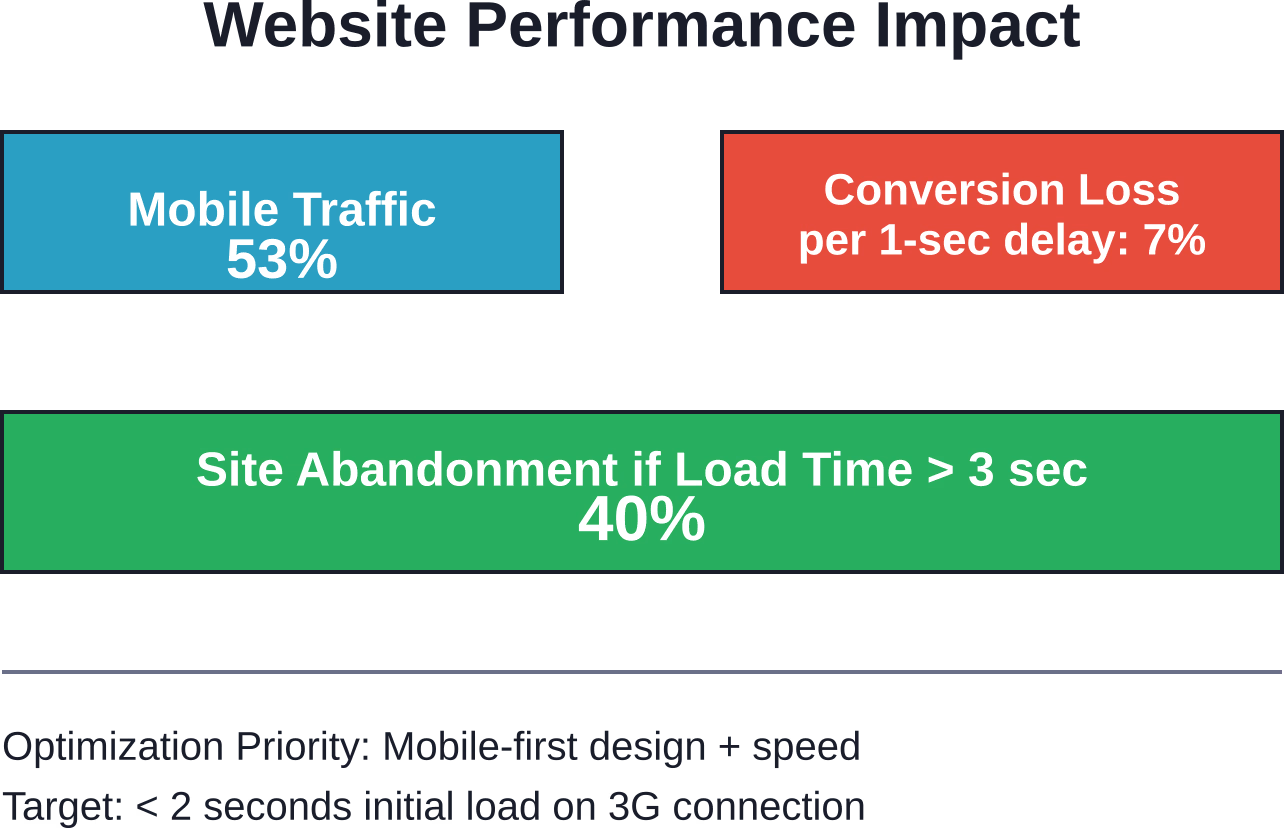
Mobile responsiveness isn't optional anymore. Over 53% of global internet traffic comes from mobile devices, and that includes engineers, procurement managers, and other B2B buyers researching on tablets or phones during their commute or between meetings.
Page loading speed directly impacts conversions. Research indicates that a one-second delay in page load time can lead to a 7% reduction in conversions.
Fast load times aren't just about user experience—they affect search engine rankings too. Google prioritizes sites that deliver quick, smooth experiences.
Clear Value Proposition and Navigation
Visitors should understand what the company does within seconds of landing on the homepage. Technical jargon and vague descriptions create confusion, not credibility.
Navigation needs to be intuitive. Prospects looking for specific product categories, case studies, or technical resources shouldn't have to hunt. Clear menu structures, prominent search functionality, and logical information architecture keep people engaged.
A resource center with white papers, guides, and technical articles serves multiple purposes: it educates prospects, improves search engine visibility, and positions the company as an industry authority.
Content Marketing That Generates Leads
Content marketing isn't about churning out blog posts for the sake of activity. It's about creating resources that answer real questions, solve actual problems, and demonstrate expertise in ways that build trust.
Types of Content That Work for Manufacturers
Case studies prove capabilities better than any sales pitch. They show real applications, actual results, and specific challenges overcome. Prospects see themselves in these stories and gain confidence that the manufacturer can handle their requirements.
Technical guides and how-to content attract people actively researching solutions. A detailed guide on selecting the right materials for a specific application, for instance, pulls in engineers and designers at the early research stage.
Video content has become increasingly important. Analysis shows that 91% of businesses consider video an effective marketing technique. Demonstration videos, facility tours, process explanations—these formats communicate complex information more effectively than text alone.
SEO for Manufacturing Companies
Search engine optimization ensures content reaches people searching for relevant solutions. This means identifying the keywords and phrases prospects actually use, then creating content that ranks for those terms.
Manufacturing SEO often focuses on technical long-tail keywords: specific materials, processes, applications, or industry standards. These terms have lower search volume but higher intent—exactly the kind of traffic that converts into qualified leads.
Local SEO matters too, especially for manufacturers serving regional markets. Google Business Profile optimization, local citations, and location-specific content help capture nearby prospects.
Content Distribution Channels
Creating content is only half the equation. Distribution determines who actually sees it.
Email newsletters keep the company top-of-mind with prospects who aren't ready to buy yet. Regular updates about new capabilities, industry insights, or helpful resources maintain the relationship until the timing's right.
Industry publications and trade journals often accept contributed articles. Getting featured in respected publications builds credibility and exposes the company to a targeted audience already interested in the sector.
LinkedIn functions as the primary social platform for B2B manufacturing marketing. Sharing content, engaging in relevant groups, and building a company page creates visibility among decision-makers and industry professionals.
Digital Advertising for Targeted Reach
Organic reach builds over time, but paid advertising accelerates visibility and allows precise targeting of specific audiences.
Pay-Per-Click Advertising
Google Ads places the company at the top of search results for chosen keywords. For high-intent searches—someone looking for a specific manufacturing capability or solution—this visibility captures prospects at exactly the right moment.
Budget control is straightforward. The U.S. Small Business Administration suggests small businesses start with a modest $100 budget and run a test campaign on platforms like Facebook. The same principle applies to Google Ads: start small, test different keywords and ad copy, then scale what works.
LinkedIn Advertising
LinkedIn's targeting capabilities allow manufacturers to reach specific job titles, industries, company sizes, and even individual companies. This precision makes it effective for B2B lead generation despite higher per-click costs compared to other platforms.
Sponsored content appears directly in the feeds of target audiences. InMail campaigns deliver messages to prospects' LinkedIn inboxes. Both formats work well for promoting high-value content like white papers or webinar registrations.
Retargeting Campaigns
Most website visitors leave without converting. Retargeting displays ads to these people as they browse other sites, keeping the company visible and encouraging return visits.
Retargeting works particularly well for long B2B sales cycles. It provides multiple touchpoints over weeks or months, gradually building familiarity and trust.
Social Media Strategy for Manufacturing
Social media for manufacturers isn't about going viral or racking up likes. It's about building professional relationships, demonstrating expertise, and creating a human connection to what can otherwise seem like faceless corporations.
Platform Selection
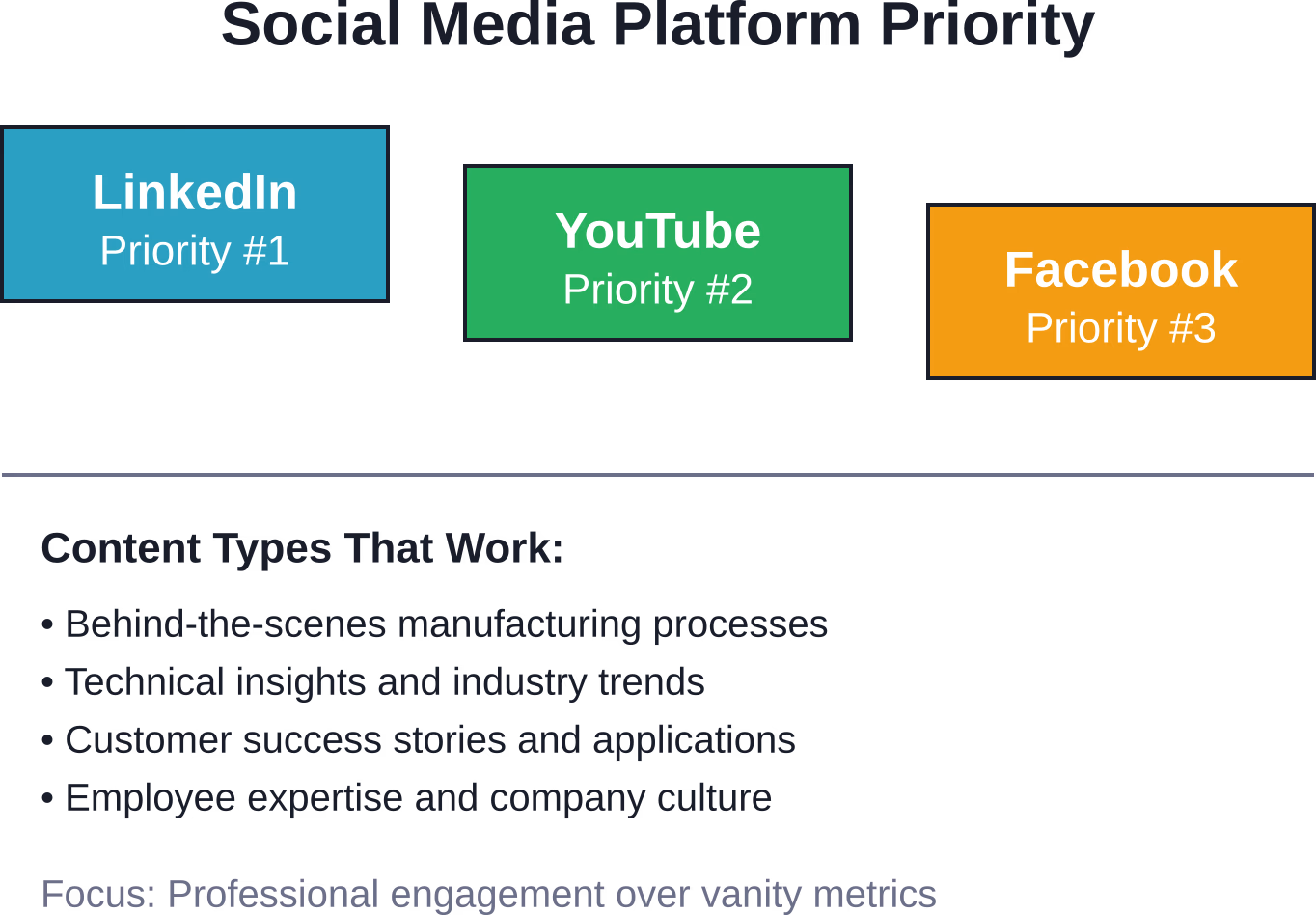
LinkedIn deserves the most attention for B2B manufacturing. It's where buyers, engineers, and procurement professionals spend their professional social media time.
Facebook can work for manufacturers with consumer-facing products or those targeting smaller businesses. Local marketing on Facebook reaches nearby prospects effectively, with targeting options specifically designed for local businesses within a defined radius.
YouTube serves as the second-largest search engine. Product demonstrations, facility tours, customer testimonials, and educational content perform well and have long-term value as they continue attracting views for years.
Content That Engages Industrial Audiences
Behind-the-scenes content humanizes the manufacturing process. Showing skilled workers, complex machinery, or intricate assembly processes fascinates people and demonstrates capabilities.
Industry insights and commentary on trends, regulations, or technological developments position the company as a knowledgeable industry participant, not just a supplier.
Employee spotlights and company culture content help attract talent while also showing prospects the quality and expertise of the team they'd work with.
Email Marketing and Lead Nurturing
Email remains one of the highest-ROI marketing channels available. For manufacturers, it excels at nurturing relationships over the extended sales cycles typical in industrial B2B transactions.
Building an Email List
Email lists grow through multiple touchpoints: website newsletter signups, content download forms, trade show contact collection, and webinar registrations.
The key is offering something valuable in exchange for contact information. Technical guides, industry reports, or exclusive content justify the ask and ensure list quality—people genuinely interested in the company's domain.
Segmentation and Personalization
Not all prospects have the same needs or sit at the same stage in their buying journey. Segmenting the email list allows for targeted messaging that resonates more effectively.
Segments might include industry verticals, company size, job function, or engagement level. A procurement manager needs different information than an engineer, and a prospect who downloaded three white papers merits different messaging than someone who just signed up.
Effective Email Content
Educational content performs better than promotional messages. Newsletters sharing industry insights, technical tips, or application ideas keep subscribers engaged without triggering sales resistance.
Product updates and new capability announcements keep existing customers informed and can re-engage dormant prospects who weren't ready previously but now face a need the company can address.
Customer success stories showcase real-world applications and outcomes, often prompting prospects to imagine similar results for their own operations.
Trade Shows and Industry Events
Digital marketing hasn't rendered trade shows obsolete. These events still provide concentrated access to qualified prospects and enable face-to-face relationship building that digital channels can't replicate.
Maximizing Trade Show ROI
Success at trade shows requires preparation beyond just showing up with a booth. Pre-show marketing to announce attendance and schedule meetings ensures a busy booth rather than awkward stretches of inactivity.
Booth design should prioritize conversation and engagement over flashy displays. Clear signage about capabilities, demonstrations of products or processes, and comfortable spaces for discussions create productive interactions.
Post-show follow-up determines whether the investment pays off. Immediate outreach to contacts made, personalized messaging referencing specific conversations, and systematic lead nurturing convert trade show conversations into actual opportunities.
Speaking Opportunities
Presenting at industry conferences positions company representatives as experts and thought leaders. This credibility extends beyond the immediate audience as presentations often get shared or referenced.
Panel discussions, workshops, or educational sessions attract attendees specifically interested in the topic, pre-qualifying them as prospects with relevant needs or challenges.
Referral and Partnership Programs
The U.S. Small Business Administration emphasizes that referrals are one of the best ways to get new customers. Yet many businesses wait passively rather than actively soliciting referrals.
Creating a Referral System
Satisfied customers often willingly refer others—if asked. Implementing a formal process for requesting referrals at natural points (after successful project completion, positive feedback, or repeat orders) increases referral volume significantly.
Incentives can encourage referrals, though in manufacturing B2B contexts, recognition and mutual benefit often motivate more than discounts. Highlighting referring customers in case studies or offering preferred customer status provides value without commoditizing the relationship.
Strategic Partnerships
Complementary businesses serve the same customers but don't compete directly. Partnerships with these companies create mutual referral opportunities and can lead to joint marketing efforts that benefit both parties.
Examples include manufacturers partnering with distributors, complementary product manufacturers, or service providers who work with the same customer base.
Marketing Tactic
Primary Goal
Time to Results
Best For
SEO & Content Marketing
Organic traffic & lead generation
3-6 months
Long-term sustainable growth
Google Ads
Immediate qualified traffic
Immediate
High-intent keyword targeting
LinkedIn Marketing
B2B relationship building
1-3 months
Professional audience engagement
Email Campaigns
Lead nurturing
Ongoing
Long sales cycle support
Trade Shows
Face-to-face relationship building
Immediate to 6 months
Industry-specific targeting
Referral Programs
Qualified lead generation
1-2 months
Leveraging existing customers
Measuring Marketing Effectiveness
Marketing without measurement is guesswork. Manufacturers need to track specific metrics that indicate whether investments generate returns.
Key Performance Indicators
Website traffic volume and sources show whether marketing efforts are increasing visibility. But traffic alone doesn't tell the full story.
Conversion rate—the percentage of visitors who take desired actions like filling out contact forms or downloading resources—reveals how effectively the site turns traffic into leads.
Lead quality matters more than quantity. Tracking how many marketing-generated leads convert to sales opportunities and eventually to customers determines true marketing contribution to revenue.
Cost per lead and customer acquisition cost provide financial context for evaluating different marketing channels and tactics.
Analytics Tools and Tracking
Google Analytics tracks website behavior: which pages attract traffic, how visitors navigate the site, where they exit, and what content resonates.
CRM systems connect marketing activities to sales outcomes. Proper attribution shows which marketing touches influenced each deal, revealing what actually works versus what seems like it should work.
Marketing automation platforms track email engagement, content downloads, and prospect behavior across multiple touchpoints, enabling sophisticated lead scoring and nurturing.
Regular Review and Optimization
Marketing isn't set-it-and-forget-it. Regular analysis of performance data identifies what's working, what's not, and where adjustments could improve results.
A/B testing different approaches—email subject lines, landing page layouts, ad copy variations—provides empirical evidence about what resonates with the target audience rather than relying on assumptions.
Budget Allocation and Resource Planning
How much should a manufacturing company invest in marketing, and where should those resources go?
Industry Benchmarks
Current 2026 benchmarks show that manufacturing firms spend an average of 6.4% of revenue on marketing.
These figures provide starting points, though actual needs vary based on growth objectives, competitive intensity, and current market position.
For comparison, retailers spend more on average (about 4%) while restaurants spend 1.93%. Manufacturing companies typically fall somewhere between these extremes depending on their specific circumstances.
Balancing Different Tactics
A balanced approach typically allocates budget across multiple channels rather than betting everything on one tactic.
Digital foundation (website, SEO, content creation) deserves significant investment as it supports all other marketing activities and builds long-term value.
Paid advertising provides faster results but requires ongoing spending. A common approach dedicates 20-30% of marketing budget to paid channels while the majority goes toward owned and earned media that compound over time.
Trade shows and events represent concentrated expenses but deliver concentrated access to qualified audiences. These typically work best as supplements to ongoing digital efforts rather than the sole marketing approach.
Common Manufacturing Marketing Challenges
Understanding obstacles helps manufacturers anticipate and address them proactively.
Long Sales Cycles
Manufacturing purchases often involve months of evaluation, multiple stakeholders, and significant investment. Marketing must support this extended journey rather than expecting quick conversions.
The solution lies in comprehensive content that addresses each stage: awareness-stage educational content, consideration-stage comparison resources, and decision-stage proof points like case studies and ROI documentation.
Technical Complexity
Explaining complex technical capabilities to diverse audiences—from engineers who want detailed specs to executives who care about business outcomes—requires content at multiple levels.
Layered content approaches work well: overview pages for general audiences with links to detailed technical documentation for specialists. Video demonstrations can communicate complexity more effectively than text descriptions.
Limited Marketing Resources
Many manufacturers operate with small marketing teams or no dedicated marketing staff at all. This constraint requires prioritization and focus.
Starting with foundational elements (professional website, basic SEO, and one or two content types done well) creates more value than spreading thin across numerous tactics executed poorly.
Outsourcing specialized needs—like technical writing, video production, or paid advertising management—can extend capabilities without requiring full-time hires.
Measuring ROI
Attribution challenges in complex B2B sales make it difficult to definitively connect specific marketing activities to closed deals.
Multi-touch attribution models that give partial credit to various touchpoints provide better insight than last-touch models. CRM discipline—recording how leads entered the system and what influenced them—improves measurement over time.
Emerging Trends in Manufacturing Marketing
Staying current with evolving practices helps manufacturers maintain competitive advantage.
Digital Transformation
Manufacturing digital transformation extends beyond production into marketing and sales. Digital tools, data analytics, and automation are reshaping how manufacturers attract and serve customers.
According to NAM's Chief Operating Officer Todd Boppell, artificial intelligence isn't affecting all of manufacturing in a single way. Every manufacturer has business operations to run, including marketing systems, and AI applications are emerging to enhance efficiency and effectiveness.
Predictive analytics can identify which prospects are most likely to convert. Chatbots provide immediate responses to common questions. Marketing automation personalizes communication at scale.
Account-Based Marketing
For manufacturers targeting large accounts with high contract values, account-based marketing (ABM) focuses resources on specific high-value prospects rather than broad lead generation.
ABM involves researching target accounts deeply, creating customized content addressing their specific challenges, and coordinating sales and marketing efforts around winning those accounts.
Interactive Content
Static content still works, but interactive experiences—configurators, ROI calculators, assessment tools—engage prospects more deeply and provide valuable data about their needs and interests.
A product configurator that lets prospects select options and see pricing provides utility while capturing detailed information about their requirements.
Building a Marketing Plan
Random marketing activities produce random results. According to the U.S. Small Business Administration, making a marketing plan is one of the best ways to stay on schedule and on budget. It describes the actions needed to persuade potential customers and should contain the central elements of overall business strategy.
Situation Analysis
Understanding the current state provides context for planning. This includes assessing current marketing efforts, competitive positioning, target audience characteristics, and available resources.
Customer research reveals what prospects actually care about, where they look for information, and what factors influence their decisions. Assumptions about these things are often wrong; direct research provides clarity.
Defining Objectives
Specific, measurable goals give marketing direction and enable performance evaluation. "Increase brand awareness" is too vague; "generate 50 qualified leads per month" or "achieve first-page Google rankings for five target keywords" provides clarity.
Objectives should align with broader business goals. If the company aims to enter a new market segment, marketing objectives should reflect activities that support that expansion.
Strategy and Tactics
Strategy defines the overall approach: which audiences to target, how to position the company, and what core messages to communicate.
Tactics are the specific activities that execute the strategy: which content to create, which platforms to use, which events to attend, which keywords to target.
Timeline and Budget
Realistic timelines account for how long different tactics take to produce results. SEO improvements take months; paid advertising works immediately but requires ongoing spending.
Budget allocation should reflect priorities and realistic cost expectations. The U.S. Small Business Administration recommends starting with modest budgets for testing—$100 for initial social media ad campaigns, for example—then scaling what proves effective.
Measurement Framework
Establishing upfront how success will be measured prevents moving goalposts and enables objective assessment. Define specific metrics, data sources, and review frequency.
Planning Element
Key Questions
Common Pitfalls to Avoid
Situation Analysis
Where are we now? What's working? What's not?
Relying on assumptions instead of data
Target Audience
Who are ideal customers? What do they need?
Defining audience too broadly
Objectives
What specific outcomes do we need?
Setting vague or unmeasurable goals
Strategy
How will we position and differentiate?
Copying competitors without adaptation
Tactics
Which specific activities will we execute?
Spreading resources too thin
Budget
How much can we invest? Where?
Underfunding or expecting instant ROI
Measurement
How will we track progress and results?
Tracking vanity metrics instead of business impact
Getting Started With Limited Resources
Not every manufacturer has large marketing budgets or dedicated teams. The U.S. Small Business Administration emphasizes that businesses can implement effective marketing strategies even with constraints.
Prioritize Foundational Elements
Start with a professional, mobile-optimized website that clearly explains capabilities and includes basic SEO. This foundation supports all other marketing activities.
Create one high-quality piece of content per month rather than rushing to produce mediocre content daily. Depth and quality outperform volume and superficiality.
Leverage Existing Customers
Customer referrals, testimonials, and case studies cost little to obtain but carry significant credibility. The U.S. Small Business Administration notes that actively soliciting referrals dramatically increases their frequency compared to passive waiting.
Interview satisfied customers about their experience and results. Most will gladly participate, and the resulting content serves multiple purposes: case studies, testimonials, social proof, and sales enablement material.
Focus on One or Two Channels
Excellence on one platform produces better results than mediocrity across five. Choose channels where the target audience actually spends time and commit to consistent, quality presence there.
For most B2B manufacturers, this means LinkedIn for social engagement and content distribution, plus SEO-focused website content. Add other channels only after mastering these fundamentals.
Learn and Iterate
Marketing effectiveness improves through testing and refinement. Track what works, double down on successful approaches, and eliminate what doesn't produce results.
Small test budgets—the U.S. Small Business Administration suggests $100 for initial ad campaigns—provide learning without significant risk. Scale successful tests; discontinue unsuccessful ones.
Conclusion
Marketing for manufacturing companies has evolved far beyond trade shows and sales calls. The digital transformation reshaping production floors is equally transforming how manufacturers attract and convert customers.
Success doesn't require massive budgets or large teams. It requires strategic thinking about audience needs, consistent execution of fundamentals, and willingness to adapt based on results.
The manufacturers who win in today's market combine technical excellence with marketing sophistication. They understand that buyers conduct extensive research before making contact, so they create the content those buyers seek. They measure what matters and allocate resources based on evidence rather than assumptions.
Starting points vary based on current capabilities and resources. Some manufacturers need foundational work on website and basic SEO. Others have those elements covered but need content depth or paid advertising to accelerate growth. Still others require systematic approaches to nurturing the leads they generate.
The common thread across successful manufacturing marketing is commitment to providing genuine value to prospects. Educational content that solves real problems, transparent communication about capabilities and fit, and consistent follow-through on promises—these fundamentals never go out of style.
What specific marketing challenge is holding your manufacturing company back? Identify that constraint, address it with focused effort, and watch how removing bottlenecks unlocks growth. The manufacturers who treat marketing as strategically as they treat production will capture disproportionate advantage in markets where many competitors still overlook this critical function.
Marketing isn't about tricks or hacks. It's about understanding customer needs, communicating how your company addresses those needs, and making it easy for qualified prospects to take the next step. Get those fundamentals right, measure results honestly, and refine continuously. That's the formula for manufacturing marketing success.
Frequently Asked Questions
What marketing strategies work best for complex manufacturing products?
Complex products require educational content that builds understanding and trust over time. Effective approaches include detailed case studies showing real applications, technical white papers explaining capabilities and specifications, video demonstrations that make complexity tangible, and multi-stage content addressing different stakeholders in the buying process. Since complex products rarely convert through immediate online sales, the marketing goal shifts to lead generation and relationship building rather than e-commerce transactions. Multi-touch nurturing campaigns that provide value at each stage of the extended buying journey work better than aggressive sales pitches.
How long does it take to see results from manufacturing marketing efforts?
Timeline varies significantly by tactic. Paid advertising generates immediate traffic and leads, though optimization takes several weeks of testing. SEO and content marketing typically require 3-6 months before producing significant organic traffic, but results compound over time and build long-term value. Email nurturing and social media engagement show gradual improvement over 1-3 months as consistency builds audience and trust. Trade shows provide immediate contact opportunities, though converting those contacts to customers often takes months. Most successful manufacturing marketing programs combine quick-win tactics with long-term strategies that build sustainable advantage.
Can small manufacturers compete with larger competitors in marketing?
Absolutely. Digital marketing levels the playing field significantly because success depends more on strategy, content quality, and consistency than budget size. Small manufacturers often have advantages: greater agility, more authentic relationships with customers, specialized expertise in niche areas, and ability to create genuinely helpful content without layers of corporate approval. Focus beats breadth—dominating one niche with excellent content and clear positioning often succeeds where spreading thin across multiple areas fails. Starting with modest budgets to test approaches, then scaling what works, allows small manufacturers to build effective programs without massive upfront investment.
Should manufacturing companies hire an agency or build in-house marketing?
This decision depends on budget, internal capabilities, and strategic priorities. Many manufacturers benefit from hybrid approaches: in-house leadership that understands the business and industry, supplemented by agency or freelance specialists for specific needs like technical writing, video production, or paid advertising management. Pure in-house teams provide deep product knowledge and brand consistency but may lack specialized digital expertise. Pure agency relationships bring specialized skills but sometimes struggle with technical complexity and industry nuance. Starting with one strong internal marketing person who can coordinate external specialists often works well for mid-size manufacturers.
How do you measure manufacturing marketing ROI?
Measuring ROI requires connecting marketing activities to business outcomes through multiple metrics. Track leading indicators like website traffic, conversion rates, and lead generation to gauge activity effectiveness. Connect those leads to sales pipeline through CRM systems that attribute opportunities to their marketing sources. Calculate cost per lead and customer acquisition cost to understand efficiency. For long sales cycles, track influence metrics—how many closed deals involved prospects who engaged with marketing content—rather than expecting last-touch attribution. Establish baseline metrics before starting new initiatives, then measure improvement over time. Regular reviews of what's working and what's not enable continuous optimization and better resource allocation.
What role does social media play in manufacturing marketing?
Social media for manufacturers focuses primarily on LinkedIn for B2B relationship building and thought leadership. It's not about viral content or mass consumer engagement, but rather about building professional connections, sharing industry insights, demonstrating expertise, and humanizing the company. YouTube serves as a valuable platform for product demonstrations, facility tours, and educational content that has long-term search value. Facebook can work for local marketing or companies serving smaller businesses. The key is consistent, value-driven content that positions the company as knowledgeable and trustworthy, not aggressive selling. Social media works best as part of an integrated strategy that drives traffic to owned content and captures leads through the company website.
How much are you wasting on Meta ads? Connect your ad account. See your ad efficiency.