Marketing Ideas for Restoration Company: Top Strategies in 2026
Discover proven marketing strategies for restoration companies: local SEO, Google Ads, referral programs, and digital tactics that generate quality leads.
May 15, 2026



Improving SEO on Shopify is less about hacks and more about doing the basics properly, then sticking with them. Most stores don’t struggle because Shopify is bad for SEO. They struggle because key details are skipped, rushed, or never revisited after launch.
Shopify already handles a large part of the technical groundwork. That’s the good news. The rest comes down to how you structure your pages, how clearly you explain your products, and whether your content matches what people are actually searching for. This guide focuses on the parts you can control and shows how to improve Shopify SEO in a way that makes sense for real stores, not theoretical checklists.
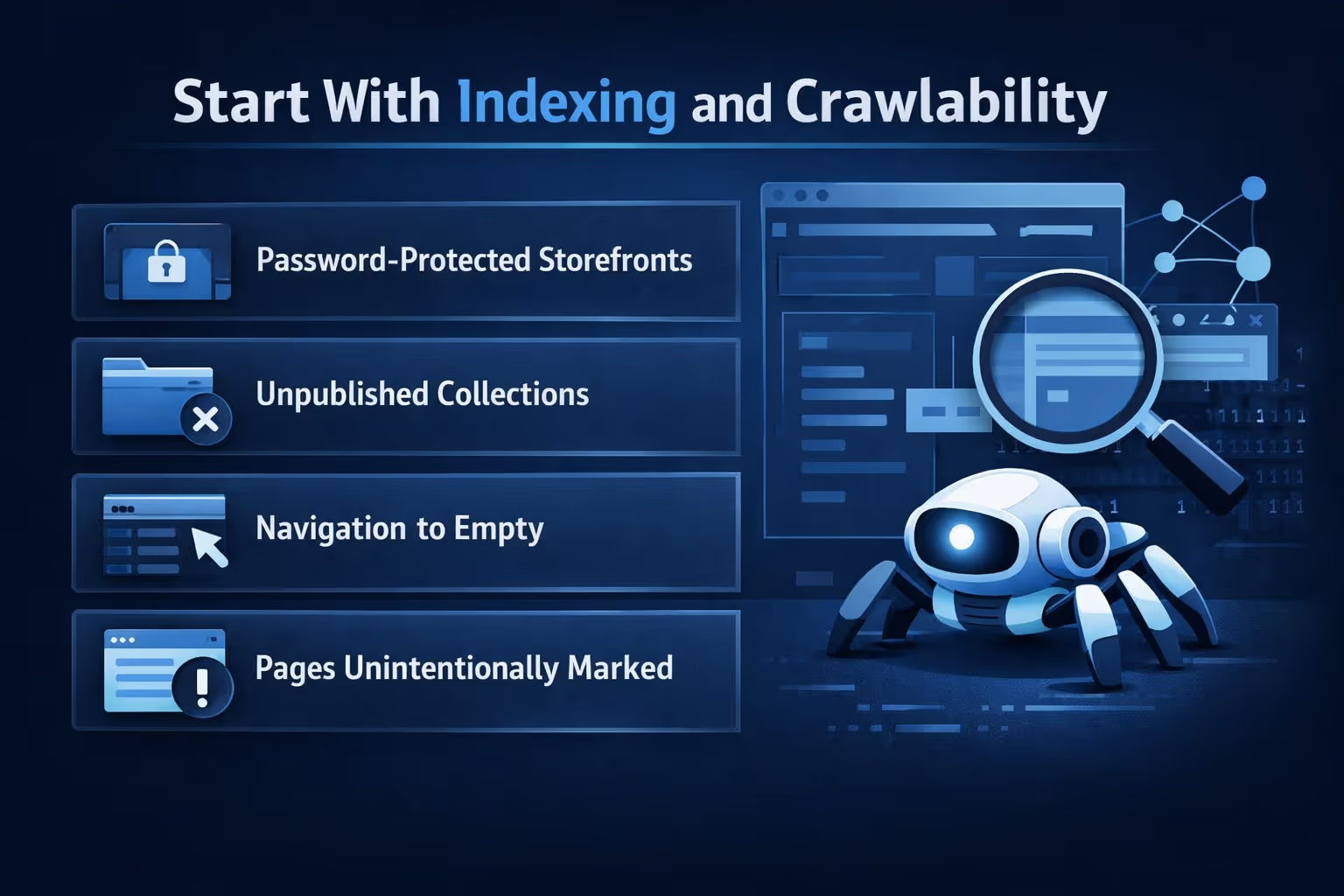
Before worrying about rankings, keywords, or content depth, you need to answer a simpler question: can search engines properly access your store?
It is surprisingly common to see Shopify stores investing time into SEO while the site is still partially blocked, poorly indexed, or sending mixed signals to crawlers. Small setup issues can quietly stall progress, especially early on.
Common blockers include:
Once your store is visible and crawlable, the focus shifts from access to decision-making. Search engines can now see your pages, but visibility alone does not guarantee results. What matters next is whether the content, messaging, and offers on those pages actually align with what visitors expect to see when they arrive. This is where many Shopify SEO efforts slow down, not because of technical limits, but because teams are forced to guess what will resonate before traffic starts to scale.

At Extuitive, we see Shopify brands invest heavily in SEO and traffic, only to find that conversions lag behind. The problem is rarely traffic quality. It is uncertainty around messaging, visuals, and whether what users land on actually resonates. That gap between visibility and conversion is where we focus.
We built Extuitive to remove guesswork from your ad planning. By connecting directly to your Shopify store, we use a proprietary network of more than 150,000 AI consumer agents trained on real behavioral data to test ads, copy, visuals, and product concepts in minutes. Instead of learning what works after traffic arrives, we help validate it upfront so SEO traffic lands on pages that are already proven to perform.
Our process is intentionally simple:
SEO brings people to your store. Extuitive helps make sure what they see is worth engaging with and buying from.
Keyword research is often treated as a numbers game. Search volume, difficulty scores, and competitive metrics dominate the conversation. Those numbers matter, but they only tell part of the story.
Search intent explains why someone is typing a query in the first place. Two searches can look similar but represent very different goals. One person might be comparing options. Another might be ready to buy. Treating both the same usually leads to weak results.
A practical way to approach intent on Shopify is to align it with page type. Product pages, collection pages, and informational content naturally serve different purposes. Problems start when those roles blur.
Here is how intent typically maps to Shopify content:
When each page has a clear role, optimization becomes easier. Titles make more sense. Descriptions feel natural. Internal links become logical instead of forced.
Site structure is one of the most underrated SEO factors on Shopify. A well-structured store often performs better even before content is heavily optimized. That is because structure helps search engines understand relationships between pages.
Your main navigation is a signal. It tells both users and crawlers what matters most. Overcrowded menus, vague category names, or overly clever labels usually weaken that signal.
Collections deserve special attention. They act as bridges between broad searches and individual products. A strong collection groups related products, explains what connects them, and links naturally to deeper pages.
Good structure does not feel impressive. It feels obvious. That is exactly the point.
Many Shopify collections exist purely for organization. From an SEO perspective, that is a missed opportunity.
A well-built collection page does three things at once. It helps users explore a category, helps search engines understand relevance, and reduces competition between similar products.
Instead of leaving collection descriptions empty or generic, use them to explain what defines that category. Focus on characteristics, use cases, or buying considerations rather than promotional language.
A good collection description does not need to be long. It needs to be specific enough that someone landing on the page immediately understands where they are and what to expect.
One of the fastest ways to weaken SEO is to overload a page with competing goals. Pages that try to sell, explain, compare, and educate at the same time often fail at all of them.
Every page should answer one main question.
A product page answers whether this product is right for the buyer. A collection page answers what belongs in this category. An article answers a specific question or problem.
When pages stay focused, optimization becomes simpler. Keywords fit naturally. Internal links make sense. Users stay longer because the page delivers what they expected.
Meta titles and descriptions still matter, not because of keyword density, but because they shape user behavior. They set expectations before a visitor even reaches your site.
Shopify auto-generates these fields, which is helpful but rarely optimal. Default titles and descriptions often repeat page names without context or persuasion.
A good title is clear and specific. A good description adds a reason to click. Together, they act as a preview of your page. Editing them is one of the lowest-effort, highest-impact SEO tasks available.
Keep them honest. Overpromising might earn clicks, but it also increases bounce rates, which sends the wrong signal back to search engines.
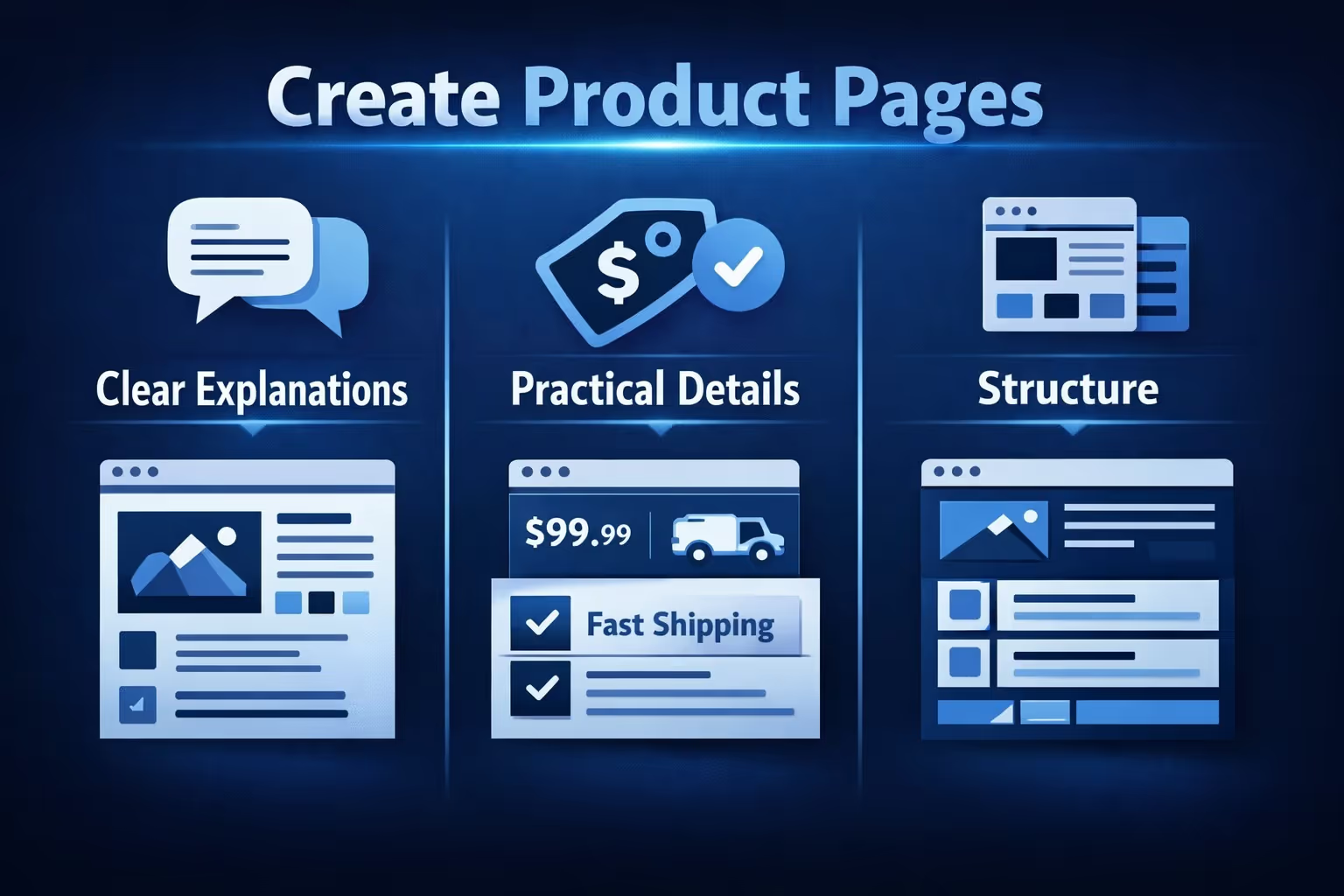
Product pages sit at the intersection of SEO and conversion. Search engines want clarity. Shoppers want reassurance. When both are missing, traffic might arrive, but sales usually do not follow.
The biggest mistake on Shopify product pages is relying on manufacturer descriptions. Those texts appear on dozens of other stores and rarely answer the questions real buyers have. Writing your own descriptions does more than improve SEO. It shows that you understand what you are selling and who it is for.
Think like someone helping a customer in person. What usually comes up before a purchase? What details matter once the product arrives? What causes hesitation if it is not explained clearly? Addressing those points directly builds confidence and reduces friction.
Strong product pages often include:
You do not need long copy or dramatic language. You need relevant information, presented clearly, so shoppers can decide without second-guessing themselves.
Images contribute to SEO when they add context. Shopify already optimizes image delivery through its CDN, which covers performance concerns. What remains is meaning.
While descriptive file names are a good habit, Shopify's primary tool for image SEO is Alt Text. You must ensure every image has descriptive Alt Text, as Shopify’s CDN often alters file paths and names. This helps with image search, accessibility, and page understanding.
Avoid uploading oversized images or excessive media that slows down pages. Speed still matters, especially on mobile.
Images should support the content, not compete with it.
Shopify takes care of a large portion of technical SEO by default. That is one of its biggest strengths. Many problems that other platforms struggle with are handled quietly in the background.
Canonical tags, mobile responsiveness, sitemap generation, and structured product data are built in. This means search engines receive clean signals about which pages matter, how content should be interpreted, and how products should appear in search results. For most stores, this removes the need for heavy technical setup or custom development.
Because so much is automated, it is easy to assume technical SEO no longer needs attention. That assumption usually causes problems later.
Technical SEO rarely breaks all at once. It degrades slowly. Products are removed, collections change, URLs get edited, and apps are added to solve short-term needs. Each of these changes introduces small risks.
Common issues include broken internal links, unnecessary redirect chains, and slower page speeds caused by unused apps. None of these problems feel urgent in isolation, but together they can weaken performance.
A simple maintenance routine goes a long way. You do not need constant audits or complex tools. Periodic checks in Google Search Console, occasional speed reviews, and cleaning up unused apps are usually enough.
The goal is not perfection. It is consistency. Catching small issues early prevents long-term damage and keeps Shopify’s built-in advantages working in your favor.
SEO does not end on your website. External mentions and links help search engines evaluate trust and relevance.
Aggressive link building is rarely necessary for Shopify stores. In many cases, it does more harm than good. Instead, focus on realistic sources.
These might include:
Authority grows slowly. Consistency matters more than volume.
SEO improves fastest when content and data work together instead of pulling attention in different directions. Publishing more pages or checking numbers more often does not automatically lead to better results. Purpose and perspective matter more.
Blog content can be a strong SEO asset, but only when it serves a clear role. Articles written just to target keywords often attract visitors who never buy and never return. That kind of traffic looks good in reports but rarely helps the business.
Useful Shopify content supports the store itself. It answers common questions, explains how products are used, or helps shoppers compare options. When done well, it naturally links to relevant collections or products without feeling like a sales pitch.
Content should earn its place on the site. If a page does not help users understand your products or make better decisions, it usually does not help SEO either.
SEO data is rarely calm. Rankings move. Impressions fluctuate. Checking metrics too often creates stress without clarity.
Google Search Console is most useful when viewed over time. Instead of reacting to daily changes, look for patterns. Which pages steadily gain impressions? Which search queries appear again and again? Which pages slowly lose visibility?
Those signals point to where updates matter most. Responding to trends leads to better decisions than reacting to every movement in the data.
Most Shopify SEO problems are not caused by lack of effort. They happen because small decisions add up over time. Avoiding these mistakes often has more impact than adding new tactics.
Keeping these mistakes in mind helps maintain a clean, understandable store structure and prevents SEO from becoming harder than it needs to be.
Improving SEO on Shopify does not require complexity or constant experimentation. Shopify already provides a strong technical base. The rest comes down to clarity, structure, and relevance.
When your store is easy to crawl, easy to navigate, and clear about what each page is meant to do, search engines usually respond. Focus on intent, keep structure clean, and let progress build naturally over time.


