Does Shopify Really Work for Your Business in 2026?
Discover whether Shopify is the right eCommerce platform for you. We break down its pros, cons, and real-world performance.
Mar 16, 2026



Getting into dropshipping requires choosing a profitable niche, finding reliable suppliers, setting up an online store, and marketing products you never physically handle. The business model allows entrepreneurs to start with minimal upfront investment since suppliers handle inventory and shipping. Success depends on selecting the right products, building trust with customers, and understanding legal requirements like the INFORM Consumers Act for high-volume sellers.
Dropshipping has become one of the most accessible ways to start an online business. The model eliminates traditional retail headaches—no warehouse rental, no inventory purchases, no shipping logistics.
But here's the reality: getting into dropshipping isn't about quick riches. It's about building a legitimate business with real customers and reliable systems.
According to Custom Market Insights, the global dropshipping market will be valued at approximately $1.6 trillion by 2033, with a compound annual growth rate of around 24.7% during the forecast period. That growth signals opportunity, but also increasing competition.
This guide walks through the practical steps to get started, from understanding the business model to launching your first store and making those initial sales.

Getting into dropshipping usually starts with products and setup, but ad spend becomes part of the equation fast. Extuitive helps teams predict ad performance before launch, so ad concepts can be reviewed earlier instead of waiting for live results. That gives brands a clearer way to compare ideas and avoid putting budget behind weaker creative too soon.
Talk with Extuitive to:
👉 Book a demo with Extuitive to review ad concepts before launch.
Dropshipping is a retail fulfillment method where store owners sell products without keeping them in stock. When a customer places an order, the store purchases the item from a third-party supplier who ships it directly to the customer.
The seller never sees or handles the product.
Academic research from An-Najah Repository describes dropshipping as a business model that allows entrepreneurs to sell products worldwide without actually handling inventory. The supplier takes care of manufacturing, packaging, and shipping products directly to customers.
Here's how the process flows in practice:
A customer browses your online store and orders a product. You forward that order to your supplier along with payment (at wholesale price). The supplier packages and ships the product directly to your customer. You keep the difference between what the customer paid and what you paid the supplier.
This model fundamentally changes the economics of starting a retail business. Traditional retail requires significant capital for inventory. Dropshipping shifts that burden to suppliers.
Low startup costs stand out as the primary benefit. There's no need to purchase inventory upfront or rent warehouse space. Ecommerce platforms like Shopify offer trial periods—Shopify provides testing for 3 months at just $1/month, according to data from Printful.
Location flexibility matters too. Dropshipping businesses can operate from anywhere with internet access. The supplier handles fulfillment regardless of where the business owner lives.
Product variety becomes easier to manage. Testing new products doesn't require buying bulk inventory. Add items to the store catalog, and if they don't sell, remove them without financial loss.
Lower profit margins are standard in dropshipping. Since suppliers handle fulfillment, they take a larger cut. Typical margins range from 15-30%, compared to 50%+ for traditional retail.
Inventory control sits outside your hands. If a supplier runs out of stock or discontinues a product, your store faces immediate issues. Customer complaints land on you, even when the supplier caused the problem.
Shipping complexity increases with multiple suppliers. If a customer orders three products from three different suppliers, they'll receive three separate shipments—often at different times. That creates confusion and potential dissatisfaction.
Competition intensifies because barriers to entry are low. Many sellers source from the same suppliers and sell identical products. Differentiation becomes critical.
Before diving into product selection, understanding the legal landscape matters more than many beginners realize.
The Federal Trade Commission enforces the INFORM Consumers Act, which became effective June 27, 2023. This law requires online marketplaces to collect information from high-volume third-party sellers and disclose that information to consumers.
The law defines a "high-volume third party seller" as a seller in an online marketplace that, in any continuous 12-month period, meets certain thresholds (specific definitions should be verified in the INFORM Consumers Act statute).
If your dropshipping business meets these thresholds on platforms like Amazon or eBay, you'll need to provide verification information including bank account details, tax identification numbers, and contact information.
The IRS provides guidance for digital platforms and businesses in the gig economy. Dropshippers typically operate as sole proprietors initially, though some choose LLC structures for liability protection.
According to IRS documentation, sole proprietors must file Schedule C (Form 1040) to report income and expenses. If net earnings from self-employment exceed $400, filing Schedule SE for self-employment tax becomes necessary.
Sales tax requirements vary by state. Many states require online sellers to collect sales tax from customers in states where the business has nexus (a significant presence). Check state-specific requirements or consult with a tax professional.
The IRS emphasizes correct worker classification. If hiring help for the business—whether for customer service, marketing, or other tasks—properly distinguishing between employees and independent contractors is critical.
Misclassification can result in penalties, back taxes, and legal issues. Generally, if you control what work is done and how it's done, the worker is likely an employee. If you control only the result of the work, they're likely an independent contractor.
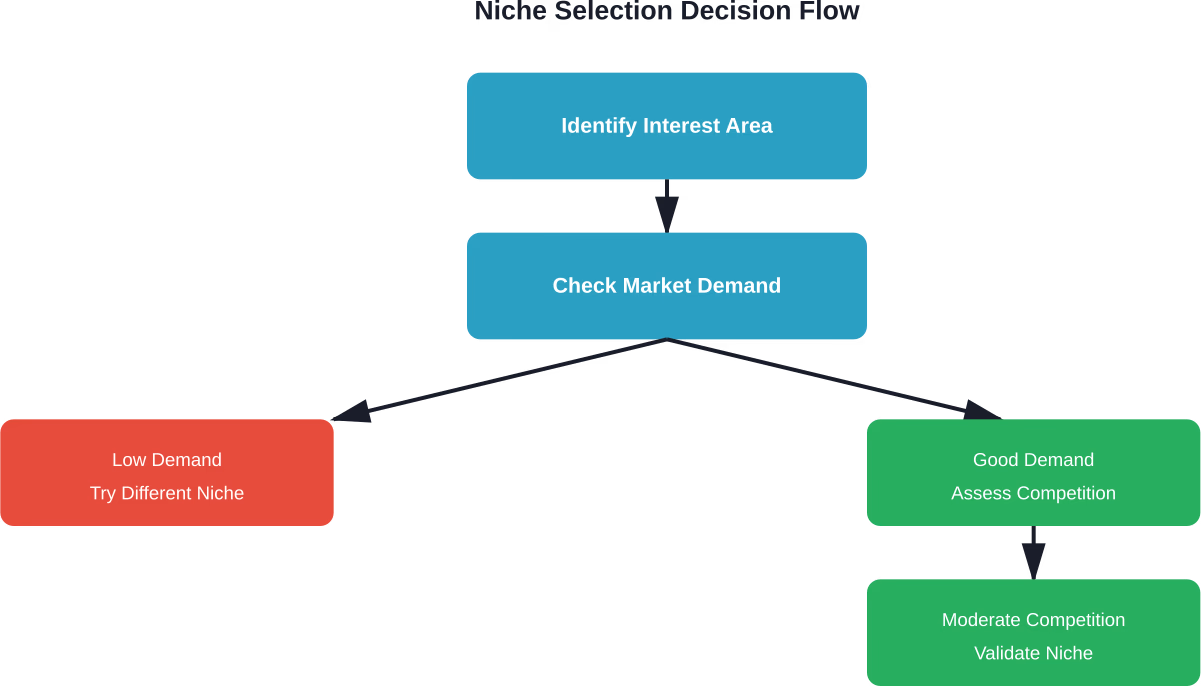
Niche selection determines much of your success in dropshipping. Selling everything to everyone rarely works. Focused stores with clear target audiences consistently outperform general stores.
The pet supplies market demonstrates strong niche potential. In 2025, the pet supplies market was estimated at $248.71 billion, according to data from Printful. People consistently spend on their pets regardless of economic conditions.
But wait—a huge market doesn't automatically mean easy success. Large markets attract heavy competition. The key is finding specific segments within larger markets.
Passion and knowledge help, but aren't required. What matters more is market demand, competition level, and profit potential.
Look for niches with these characteristics:
Research tools help identify opportunities. Google Trends shows search volume over time. Rising trends indicate growing interest. Declining trends signal markets to avoid.
Social media platforms reveal what people are talking about. Search relevant hashtags on Instagram or TikTok. Active, engaged communities around product categories suggest viable niches.
Extremely cheap products create problems. Selling items for $5-10 means thin margins after advertising costs. Each sale needs to generate enough profit to justify the customer acquisition cost.
Generally speaking, targeting products in the $30-200 range provides better margins while remaining accessible to most customers.
Fragile or complex products increase return rates and customer service headaches. Electronics with many components, glass items, or products requiring assembly often generate complaints.
Heavily branded or trademarked products bring legal risks. Selling counterfeit goods or unauthorized branded merchandise can result in account suspension and legal action.
Supplier quality directly impacts customer satisfaction. Fast shipping, accurate orders, and good product quality keep customers happy. Poor suppliers create endless problems.
Research from An-Najah Repository on dropshipping implementation highlights CG Dropshipping as a valuable resource for entrepreneurs. This platform offers a wide range of products from numerous categories and cooperates with hundreds of factories and suppliers.
Several supplier types exist in the dropshipping ecosystem.
Aggregator platforms connect sellers with multiple suppliers through a single interface. These platforms typically handle the technical integration and provide centralized order management.
Common platforms include AliExpress, Spocket, Modalyst, and SaleHoo. Each has different supplier networks, shipping times, and pricing structures.
Print-on-demand services like Printful specialize in custom products. These suppliers print designs on apparel, accessories, and home goods only after receiving orders. This model works well for unique branded merchandise.
Contacting manufacturers or wholesalers directly often yields better pricing and service. Once a dropshipping business reaches consistent sales volume, negotiating direct relationships makes sense.
Finding direct suppliers requires more work. Trade shows, industry directories, and direct outreach to manufacturers are common approaches.
When evaluating potential suppliers, consider these factors:
Real talk: ordering samples is non-negotiable. Never list products you haven't personally examined. Quality issues discovered after customer complaints are expensive and damage reputation.
Extremely low prices often indicate quality problems. If a supplier's pricing seems impossibly cheap compared to competitors, investigate thoroughly.
Poor communication during the vetting process predicts worse communication during operations. If a supplier takes days to respond to simple questions, that pattern will continue.
Lack of transparency about shipping times or product sources suggests problems. Legitimate suppliers provide clear information about their operations.
Store setup involves choosing a platform, designing the storefront, and configuring essential settings. Several platforms dominate the dropshipping space.
Shopify leads in popularity for dropshipping businesses. The platform offers built-in dropshipping integrations, straightforward setup, and extensive app marketplace. According to Printful, Shopify doesn't have a free version, but you can test it for 3 months at just $1/month.
WooCommerce provides more control for those comfortable with WordPress. It's technically free software, but requires web hosting, which costs money. WooCommerce offers flexibility but steeper learning curves.
Wix includes ecommerce capabilities with visual design tools. The platform works well for beginners who prioritize easy website building over advanced ecommerce features.
BigCommerce and Squarespace represent other solid options, each with different strengths in pricing, features, and scalability.
Clean, professional design builds trust. Customers hesitate to buy from stores that look unprofessional or suspicious.
Product pages need clear, detailed information. Include multiple high-quality photos, comprehensive descriptions, specifications, and sizing information where relevant.
Trust signals matter significantly. Display security badges, customer reviews, clear return policies, and contact information prominently. According to National Retail Federation data, 82% of consumers cite free returns as a major consideration when making a purchase.
Mobile optimization is non-negotiable. The majority of ecommerce traffic comes from mobile devices. Test the store thoroughly on phones and tablets.
Beyond product pages, several pages are legally and practically necessary:
Privacy policies and terms of service should be drafted by legal professionals or using reputable templates specific to your jurisdiction. Generic copied policies create legal vulnerabilities.
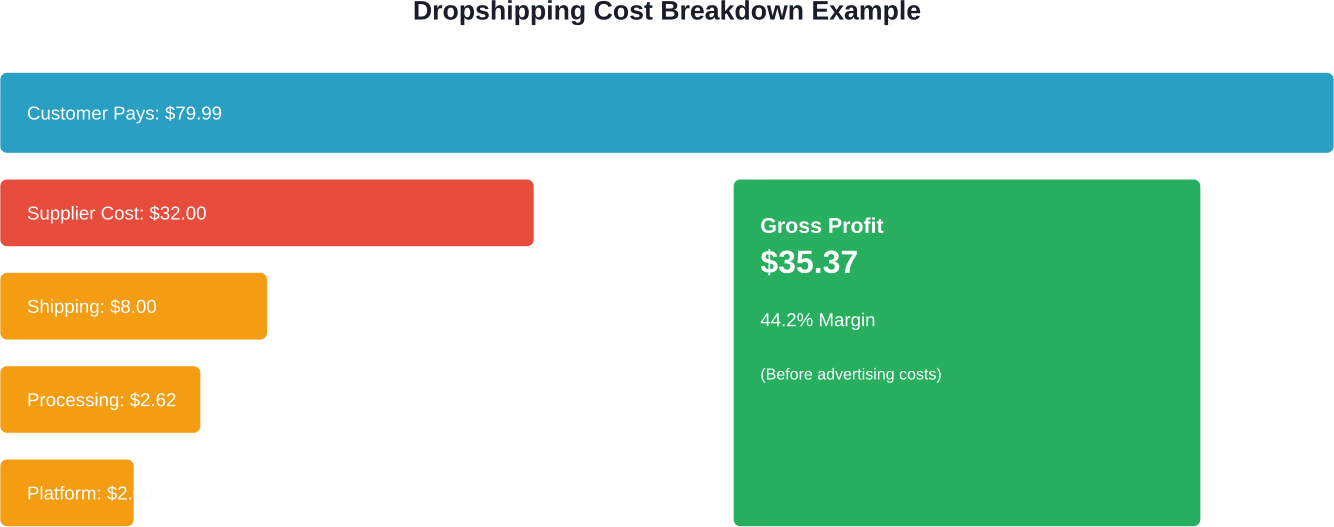
Pricing strategy determines profitability. Too low, and advertising costs eat all margin. Too high, and conversion rates plummet.
The basic formula starts with supplier cost, adds shipping, and applies a markup. But several factors complicate this simple approach.
Product cost from the supplier is just the starting point. Additional costs include:
Advertising costs deserve special attention. If Facebook ads cost $30 to acquire a customer, and the product profit margin is only $20, the business loses money on every sale.
Many experts suggest aiming for at least 30-40% margin after all costs. Higher margins provide cushion for advertising, returns, and unexpected expenses.
Check competitor pricing for similar products. Being slightly higher than competitors is acceptable if you provide better service, faster shipping, or superior product information.
Psychological pricing tactics still work. Prices ending in .99 or .97 generally convert better than round numbers, though this varies by market and product type.
Bundling products increases average order value. Offering related products together at a slight discount encourages customers to buy more.
Building a store is just the beginning. Without traffic, even the best store generates zero sales. Marketing drives visibility and attracts potential customers.
Facebook and Instagram ads dominate dropshipping marketing. These platforms offer sophisticated targeting options based on demographics, interests, and behaviors.
Starting small is wise. Test with $10-20 daily budgets initially. Monitor which ads, audiences, and products perform best. Scale spending on winners, cut losers quickly.
Google Shopping ads work well for products people actively search for. These ads appear when users search for specific product types, capturing high-intent traffic.
TikTok advertising has grown significantly. The platform's algorithm can deliver strong results for products that work well in short video formats.
Search engine optimization builds long-term traffic. According to research from An-Najah Repository, utilizing SEO tools to discover valuable keywords for product pages and website content improves organic visibility.
Content marketing through blogs, guides, and how-to articles attracts visitors searching for information related to your products. This traffic often converts well because it arrives with existing interest.
Social media presence creates community and brand awareness. Regular posting, engagement with followers, and user-generated content build relationships beyond transactions.
Email marketing generates high ROI. Building an email list through popups, exit-intent offers, or content downloads creates a channel you control. Unlike social media algorithms, email lands directly in customer inboxes.
Working with influencers who reach your target audience can drive sales quickly. Micro-influencers (10,000-100,000 followers) often provide better ROI than major influencers.
Compensation structures vary. Some influencers work for free products, others charge flat fees, and many prefer commission-based arrangements tied to actual sales.
Vet influencers carefully. Check engagement rates, not just follower counts. Accounts with many followers but few comments or likes often have fake audiences.
Operational excellence separates successful dropshipping businesses from failures. Managing orders, handling customer inquiries, and resolving problems efficiently maintains reputation and customer satisfaction.
Most dropshipping platforms automate order forwarding to suppliers. When customers place orders, the system automatically sends details to the appropriate supplier.
But automation isn't perfect. Monitor orders daily. Check for processing delays, out-of-stock situations, or shipping issues. Catching problems early allows proactive customer communication.
Tracking numbers should be uploaded to customer accounts promptly. Customers appreciate knowing when orders ship and being able to track packages.
Response time matters significantly. Community discussions suggest responding to customer inquiries within 24 hours maintains satisfaction. Faster is better.
Setting expectations prevents disappointment. If shipping takes 10-15 days, state that clearly on product pages and in order confirmation emails. Customers accept longer shipping when expectations are set upfront.
Proactive communication about delays or problems prevents negative reviews. If a supplier notifies you of a delay, immediately inform affected customers and offer solutions—discounts on future orders, expedited shipping, or cancellation options.
Returns are inevitable in ecommerce.
Clear return policies reduce disputes. Specify time frames (typically 30 days), condition requirements, and who pays return shipping.
Processing returns quickly maintains customer trust. Even when customers return products, positive return experiences can preserve relationships and lead to future purchases.
Working with suppliers on return logistics is crucial. Understand their return policies and procedures before issues arise. Some suppliers accept returns directly, others require returns to route through you.
Data-driven decisions outperform guesswork. Tracking key metrics reveals what's working and what needs adjustment.
Conversion rate measures the percentage of visitors who purchase. According to Wix, several estimates note that 3% is a good benchmark conversion rate, though this varies by niche and industry.
Average order value (AOV) indicates how much customers spend per transaction. Increasing AOV through upsells, cross-sells, or bundles improves profitability without acquiring more traffic.
Customer acquisition cost (CAC) divides total marketing spend by number of customers acquired. If CAC exceeds profit per customer, the business loses money.
Return on ad spend (ROAS) measures revenue generated per dollar spent on advertising. Generally speaking, a 3:1 ROAS ($3 revenue per $1 ad spend) is considered the minimum for profitability after accounting for other costs.
Testing different approaches reveals what resonates with your audience. Test one variable at a time—product images, headlines, button colors, or pricing.
Run tests long enough to gather statistically significant data. A few dozen visitors isn't sufficient. Aim for at least several hundred visitors per variation before drawing conclusions.
Product page optimization deserves particular attention. Testing different photo arrangements, description lengths, and calls-to-action can significantly impact conversion rates.
Once profitable products and marketing channels are identified, scaling means increasing investment in those areas. If Facebook ads are generating 4:1 ROAS on certain products, gradually increase budgets while monitoring performance.
Adding complementary products to successful stores broadens appeal without starting over. If yoga mats sell well, yoga blocks, straps, and apparel are logical additions.
Diversifying traffic sources reduces risk. Relying entirely on Facebook ads creates vulnerability to algorithm changes or ad account issues. Building email lists, SEO traffic, and alternative ad channels provides stability.
Most dropshipping businesses fail. Understanding common mistakes helps avoid repeating them.
The FTC has taken action against business opportunity scams that promise unrealistic dropshipping income. According to FTC announcements from October 28, 2024, a federal court temporarily shut down a scheme that has operated for years under various names, costing consumers millions.
Dropshipping is a real business model, but it's not a get-rich-quick scheme. Building a profitable store typically takes months of consistent effort, testing, and optimization.
Initial investment, while lower than traditional retail, still exists. Expect to spend money on the platform subscription, sample products, initial advertising tests, and possibly professional design or content help.
Treating suppliers as disposable vendors creates problems. Building good relationships—communicating clearly, paying promptly, and being reasonable with requests—pays dividends when issues arise.
Having backup suppliers for key products protects against stock outages. If your primary supplier runs out of a popular item, a backup supplier lets you continue selling without disruption.
Automation helps, but can't replace human attention entirely. Customers with problems need real help, not just automated responses.
Building a business reputation takes time but destroys quickly. One wave of negative reviews from poor service can sink a store. Prioritizing customer satisfaction, even when it's costly in the short term, builds long-term sustainability.
Operating without proper business registration, tax compliance, or understanding of consumer protection laws creates serious risk. The INFORM Consumers Act, enforced by the FTC, imposes requirements on high-volume sellers.
According to FTC guidance, online marketplaces that fail to comply with the INFORM Consumers Act could face steep financial penalties of $53,088 per violation. Sellers who meet the high-volume threshold must provide verification information.
Consulting with legal and tax professionals familiar with ecommerce avoids costly mistakes. The investment in proper setup and compliance is tiny compared to penalties and legal issues down the road.
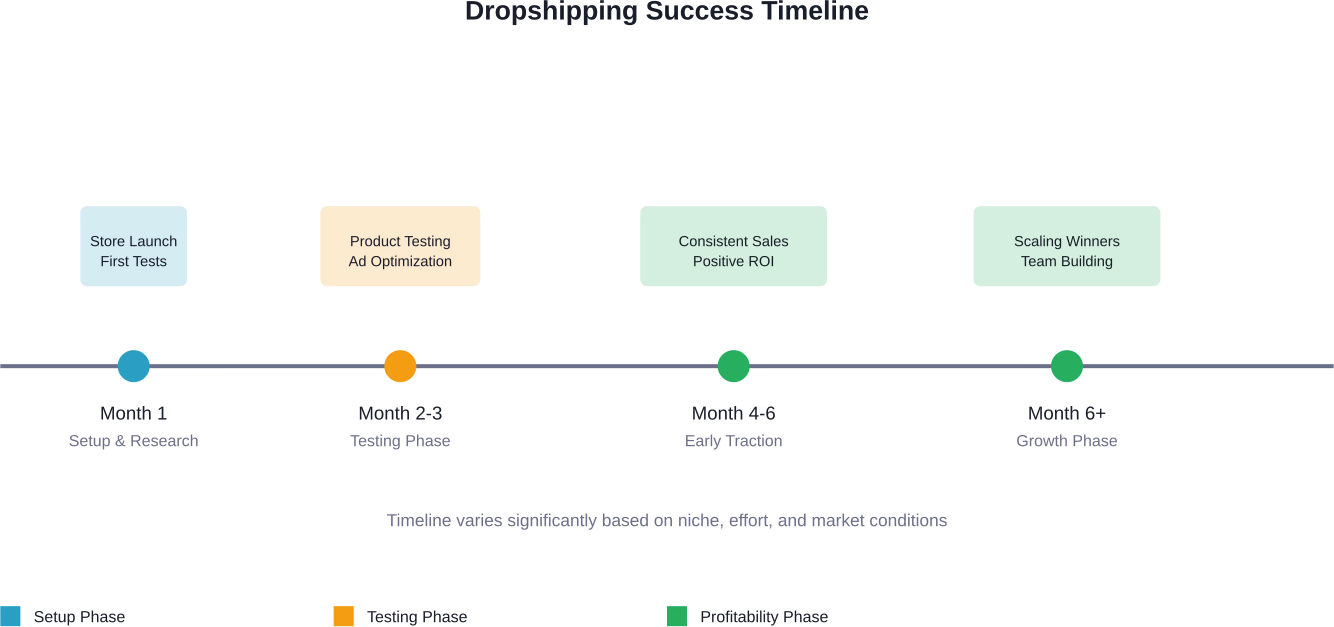
Once a dropshipping store achieves consistent profitability, advanced strategies accelerate growth and build defensibility.
Transitioning from generic dropshipping to branded ecommerce creates competitive moats. Custom packaging, branded inserts, and unique product variations differentiate your store from others selling identical items.
Some suppliers, like CG Dropshipping according to academic research, allow brand customization. This gives businesses a unique advantage by creating proprietary products.
Brand building extends beyond products. Consistent visual identity, voice, and customer experience create recognition and loyalty. Customers begin choosing your store not just for products, but for the overall brand experience.
Adding complementary products to successful stores increases customer lifetime value. If someone buys one product, what else might they need?
Bundles and kits create perceived value while increasing average order value. Offering starter kits or complete solutions at slight discounts encourages larger purchases.
Seasonal products capitalize on trends and holidays. Planning product launches around major shopping periods—holidays, back-to-school, summer seasons—aligns with natural buying cycles.
Loyalty programs encourage repeat purchases. Points systems, VIP tiers, or membership programs create reasons to return to your store rather than shopping elsewhere.
Post-purchase email sequences build relationships. Asking for feedback, providing product care tips, or suggesting complementary products keeps your brand top-of-mind.
Community building through social media groups or forums creates connections beyond transactions. Customers who feel part of a community become advocates, referring friends and defending your brand.
Dropshipping constantly evolves. Platforms change features, suppliers emerge, and marketing tactics shift effectiveness. Continuous learning separates long-term successes from short-lived ventures.
The Small Business Administration provides counseling and training through Small Business Development Centers (SBDCs). According to SBA information, Small Business Development Centers provide professional, high-quality, individualized business advising and technical assistance to existing small businesses and pre-venture entrepreneurs.
SBDCs can help with business planning, financial management, marketing strategies, and operational challenges. Services are often free or low-cost for small business owners.
Online communities provide peer learning. Community discussions on platforms like Reddit's dropshipping forums offer real-world experiences, problem-solving, and strategy discussions.
Ecommerce blogs and podcasts from platform providers (Shopify, BigCommerce, etc.) share case studies, tactical guides, and industry trends. These sources stay current with platform changes and new features.
Analytics platforms beyond basic store metrics provide deeper insights. Google Analytics tracks traffic sources, user behavior, and conversion funnels. Facebook Pixel data informs advertising optimization.
Product research tools help identify trending products and estimate competition. While specifics change rapidly, categories of tools include trend spotting, competitor analysis, and keyword research platforms.
Customer service tools streamline communication. Help desk software, chatbots, and email management systems improve efficiency as order volume grows.
Getting into dropshipping doesn't require perfect conditions or extensive business experience. It requires taking action on the fundamentals: choosing a niche with demand, finding reliable suppliers, building a functional store, and driving targeted traffic.
The businesses that succeed focus on providing value to customers rather than chasing quick profits. They test systematically, learn from data, and adjust based on results.
Start small. Pick one niche. Find 5-10 products. Build a basic store. Run modest advertising tests. Learn what works for your specific market and audience.
The global dropshipping market's projected growth to $1.6 trillion by 2033 indicates opportunity, but that opportunity rewards execution, not just participation.
So here's the thing—reading guides and watching videos only goes so far. At some point, the learning needs to transition into doing. Set up that store. Order those samples. Launch those first ads.
The dropshipping businesses generating real income in 2026 are the ones that started with imperfect action, not those waiting for perfect knowledge.


