How to Connect Shopify to TikTok Shop Without the Headache
Learn how to connect Shopify to TikTok Shop, meet the requirements, avoid common sync issues, and start selling directly on TikTok.
Jan 29, 2026



Marketing a medical practice in 2026 requires a multi-channel approach combining digital presence (SEO, social media, online reviews), traditional outreach (direct mail, community events), and patient retention strategies. The most effective practices focus on building trust through content marketing, optimizing patient experience to address factors like logistics and customer service that influence retention, and leveraging local search optimization. HIPAA compliance remains critical—all marketing communications must protect patient health information and avoid unauthorized disclosures.
Marketing a medical practice has become more complex and competitive than ever. Patients now research providers online, read dozens of reviews before booking, and expect seamless digital experiences. Yet many doctors still rely on outdated strategies or avoid marketing altogether.
The challenge? Standing out in a crowded healthcare market while maintaining trust and HIPAA compliance. According to MGMA research, patient experience factors including logistics and customer service significantly influence retention rates. That's a marketing problem, not a clinical one.
Here's what actually works in 2026.
The healthcare landscape has shifted dramatically. Patients don't flip through phone books or rely solely on physician referrals anymore. They google symptoms, compare practices online, and make decisions based on digital presence.
But here's the thing—digital marketing alone isn't enough either. The practices that win combine online visibility with real-world trust-building and exceptional patient experience. It's not either-or. It's both.
According to MGMA research, small practices often achieve higher patient referral rates than larger consolidated practices. Size isn't necessarily an advantage when patient experience suffers.
Before implementing any marketing strategy, understand the legal boundaries. According to the U.S. Department of Health and Human Services, HIPAA defines marketing as "a communication about a product or service that encourages recipients of the communication to purchase or use the product or service."
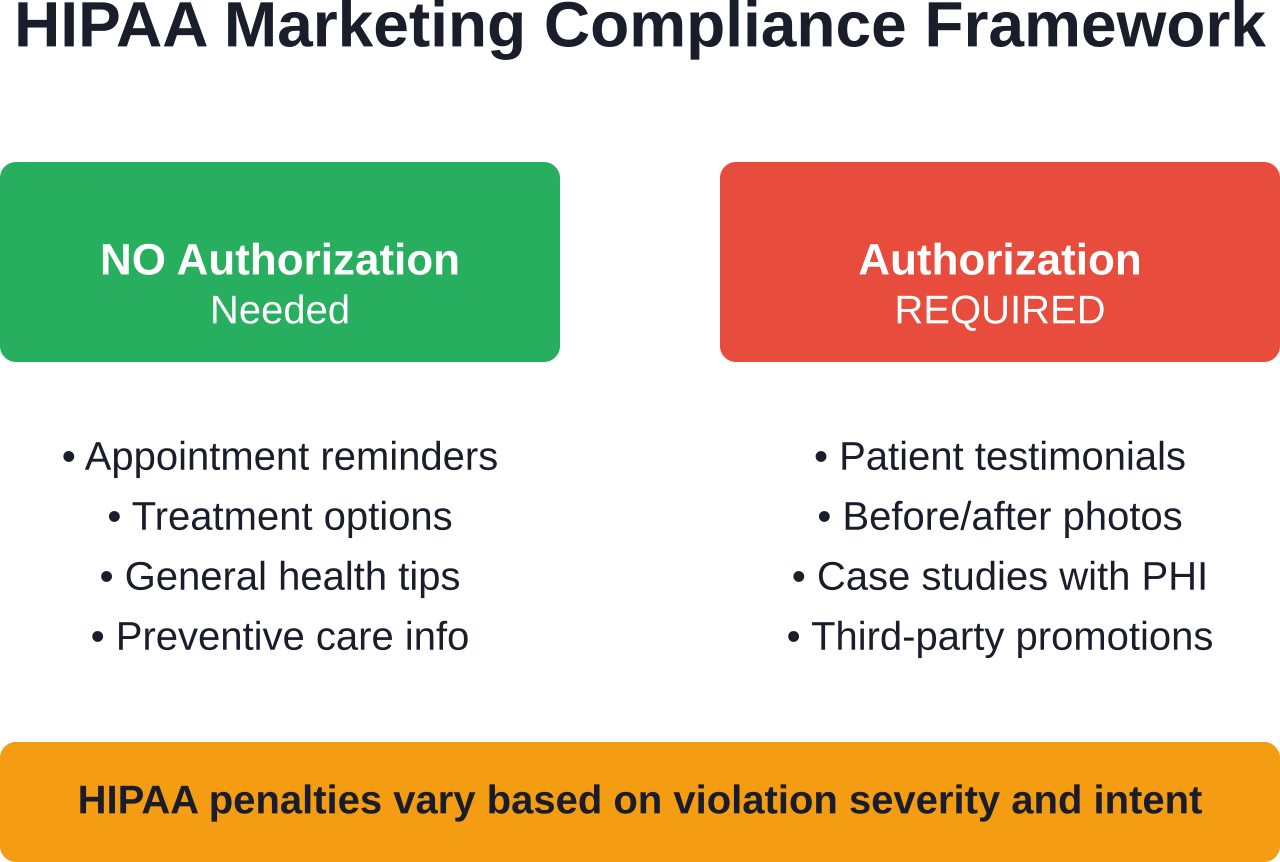
Generally, if the communication is marketing, the covered entity must first obtain written authorization from the patient. HIPAA penalties vary based on violation severity and intent, with calendar year caps applying to multiple violations of the same requirement.
Real talk: you can't use patient health information for marketing without explicit written consent. No testimonials using identifiable information, no before-and-after photos, no case studies—unless you have proper authorization. Treatment communications and appointment reminders don't require authorization, but promotional materials do.

Extuitive helps teams review ad concepts before launching campaigns. The platform uses AI models to forecast likely performance, compare creative options, and support better decisions around messaging and targeting.
For a doctor’s office, this can be useful when choosing which local or service-based ad idea to test first.
Extuitive can help with:
👉 Book a demo with Extuitive to review your ad ideas.
Local search optimization remains the highest-ROI marketing activity for medical practices. When someone searches "family doctor near me" or "pediatrician [city name]," your Google Business Profile determines whether they find you.
The basics are non-negotiable: complete every section, add high-quality photos of your office and staff, list accurate hours, and respond to every review within 24 hours. But the practices that dominate local search go further.
Post weekly updates—health tips, seasonal reminders, new services. Google rewards active profiles with better visibility. Add FAQs that match common search queries. If patients ask "do you take [insurance name]," answer it publicly in your profile.
Reviews matter more than most practices realize. Fresh reviews signal trust and activity. According to industry analyses, practices with consistent review generation dramatically outperform those with stale or sparse feedback.
Your website isn't a digital brochure—it's a conversion tool. Most medical practice websites fail because they focus on credentials instead of patient needs.
Start with clear navigation. Patients should find "New Patients," "Services," "Insurance Accepted," and "Book Appointment" immediately. Bury these in confusing menus and watch potential patients bounce to competitors.
Speed matters. A slow-loading site kills conversions before they start. Optimize images, use modern hosting, and test load times on mobile devices where most searches happen.
Content should answer questions patients actually have: "What should I bring to my first appointment?" "How long does a typical visit take?" "Do you offer same-day appointments?" Generic content about your "commitment to excellence" doesn't convert.
Direct mail isn't dead—it's just more strategic now. While everyone obsesses over digital channels, physical mail stands out in empty mailboxes and targets specific demographics with precision.
One documented case showed a medical practice generating over $40,000 in revenue from a single targeted mailing campaign. The secret? Highly specific audience targeting and compelling offers.
Target new movers in your area—they're actively looking for new providers. Focus on specific demographics: families with young children for pediatrics, seniors for geriatric care, specific zip codes with favorable insurance coverage.
The offer matters. "New patient special: comprehensive exam for [price]" outperforms generic "we're accepting new patients" messages. Include a clear call to action with multiple response options: phone, website, QR code.
Content marketing works for medical practices when it actually helps patients. Generic health content copied from medical databases won't move the needle. Specific, locally relevant content does.
Write about conditions common in your patient population. Answer the questions patients ask during appointments. Address seasonal health concerns before they peak—allergy posts in early spring, flu prevention in fall.
Video content performs exceptionally well. Short clips explaining common procedures, introducing staff members, or giving office tours build familiarity and trust before the first appointment. These don't require professional production—authentic smartphone videos often outperform polished corporate content.
Distribute content across multiple channels: website blog, email newsletters, social media posts. One piece of core content can be repurposed into a dozen touchpoints.
Social media for medical practices is not about going viral. It is about staying visible, useful, and easy to reach. Patients do not expect constant entertainment from a clinic. They want clear updates, simple health information, and a sense that real people are behind the practice.
The platform matters, but consistency matters more. A small, steady presence usually works better than posting heavily for two weeks and then disappearing.
Facebook still reaches a wide patient audience, especially for local medical practices. It works well for practical updates, simple health tips, staff introductions, community involvement, and reminders about services or office hours.
It is also a place where patients may send basic questions about appointments, insurance, location, or availability. Responding promptly can make the practice feel more accessible without turning social media into a full-time job.
Instagram is a better fit for practices that have visual material to share. This can include behind-the-scenes office moments, short educational graphics, wellness tips, or before-and-after content when proper patient authorization is in place.
The goal is not to make the feed look perfect. It should feel clear, trustworthy, and easy to understand.
LinkedIn is less likely to bring in direct patient bookings, but it can still support the practice’s reputation. It works well for physician credibility, professional updates, referral relationships, and industry-related posts.
For many practices, LinkedIn should be treated as a reputation channel rather than a main patient acquisition tool.
Social media only works if the process is manageable. Instead of trying to post every day, set aside 30 minutes three times per week to prepare and schedule content in batches.
Scheduling tools can help keep posts consistent without constant manual work. A simple rhythm is easier to maintain, and that is usually what makes social media useful over time.
Email remains one of the highest-ROI marketing channels for medical practices. The key is relevance and frequency balance—helpful without being annoying.
Monthly newsletters work well for most practices. Include seasonal health tips, new services or providers, practice updates, and educational content. Keep it concise—three to four short sections maximum.
Automated email sequences handle routine communications: new patient welcome series, appointment reminders, post-visit follow-ups, annual checkup reminders. These run on autopilot while maintaining patient engagement.
Segment your list when possible. Parents of young children get pediatric health tips. Patients with chronic conditions receive relevant management information. One-size-fits-all emails underperform targeted communications.
Always include a clear call to action: "Schedule your annual physical," "Book a flu shot," "Download our new patient forms." Generic newsletters without direction waste the opportunity.
No-shows and cancellations represent significant revenue losses for medical practices. That's not just a scheduling problem—it's a marketing problem.
Better communication prevents most no-shows. Multi-channel appointment reminders—text, email, and phone—reach patients through their preferred channels. Send reminders 48 hours in advance and again 24 hours before.
Make rescheduling easy. When patients can quickly move appointments online or via text, they reschedule instead of simply not showing up. Many medical practices report low adoption rates of digital scheduling tools among patients—a massive untapped opportunity.
Waitlist management fills cancelled slots immediately. When a patient cancels, automated systems notify waitlist patients about available openings. This recovers revenue that would otherwise disappear.
Physician-to-physician referrals remain valuable despite direct-to-patient marketing growth. Specialists particularly depend on primary care referrals, while primary care providers benefit from specialist relationships for complex cases.
Personal relationships still matter most. Face-to-face meetings with referring providers, attendance at local medical society events, and genuine professional relationships generate more referrals than any marketing materials.
Make referring easy. Simple referral processes, quick appointment availability for referred patients, and timely communication back to referring providers encourage continued referrals. Complicated referral procedures lose opportunities.
Regular referral reports keep your practice top-of-mind. Send brief updates to referring providers about their patients' progress (with proper authorization), new services, or expanded availability. These maintain visibility without being pushy.
Community events position practices as accessible health resources while generating new patient leads. These work particularly well for practices targeting local populations rather than regional draws.
Health screenings at community centers, senior facilities, or local businesses provide immediate value while introducing providers to potential patients. Blood pressure checks, glucose screenings, or posture assessments cost little but create meaningful contact.
Educational workshops on common health topics attract engaged audiences. Topics like "Managing Diabetes," "Heart Health After 50," or "Sports Injury Prevention" draw people actively interested in those areas—exactly the patients who need related services.
Partner with complementary local businesses. Co-host events with gyms, health food stores, or wellness centers to reach aligned audiences and share marketing costs.
Online reviews directly impact new patient acquisition. Most potential patients read reviews before choosing a provider, and review quality influences their decision as much as credentials.
Respond to every review—positive and negative—within 24 hours. Thank patients for positive feedback. For negative reviews, apologize genuinely, acknowledge their experience, and offer to discuss privately. This demonstrates responsiveness to both the reviewer and everyone else reading.
Never argue in review responses. Never violate HIPAA by discussing patient care details publicly. Keep responses professional, brief, and focused on resolution rather than defense.
Generate more reviews systematically. After positive patient interactions, staff should mention "we'd appreciate a review if you're willing to share your experience." Make it easy with direct links via email or text. Most satisfied patients simply need to be asked.
Effective marketing for medical practices isn't about implementing every strategy simultaneously. It's about choosing the right mix for your specific practice, patient population, and resources.
Start with the fundamentals: optimize your Google Business Profile, generate reviews systematically, and ensure your website converts visitors into appointments. These high-impact, low-cost activities build a foundation for everything else.
Then expand strategically. Add email marketing for patient retention. Test direct mail to specific demographics. Develop content that answers patient questions. Build referral relationships. Each addition should align with measurable goals and available resources.
Remember that patient experience factors like logistics and customer service significantly influence retention. Your marketing efforts must connect to genuine operational improvements. The best advertising can't overcome poor patient experience.
The practices that win in 2026 combine digital visibility, trust-building content, exceptional patient experience, and systematic follow-up. Start with one or two strategies, implement them well, measure results, and expand from there. Consistent execution beats scattered efforts every time.


