Is Etsy or Shopify Better for Your Online Store?
Comparing Shopify and Etsy? Learn which platform fits your goals, budget, and product type – without the jargon or guesswork.
Feb 4, 2026



AI in digital marketing automates repetitive tasks, personalizes customer experiences at scale, and optimizes campaigns in real-time. From chatbot interactions to predictive analytics and content generation, artificial intelligence transforms how brands connect with audiences. According to the American Marketing Association, nearly 90% of marketers have adopted generative AI tools to improve productivity and creative outputs as of 2024.
Artificial intelligence has shifted from experimental pilot projects to the operational core of marketing departments. It's no longer a question of whether to adopt AI, but how to implement it effectively.
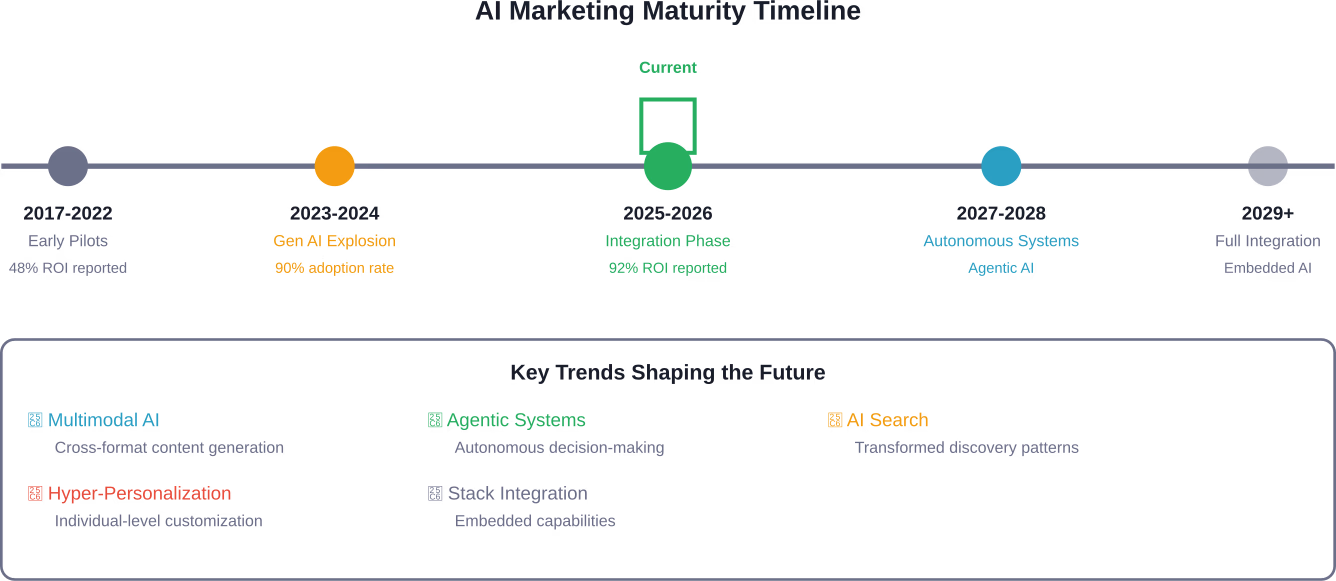
The transformation is measurable. According to a 2022 NewVantage Partners survey cited by MIT Sloan, 92% of large companies reported achieving returns on their data and AI investments—a dramatic increase from 48% in 2017. The American Marketing Association's research reveals that generative AI tools have seen widespread adoption among marketers, with ChatGPT and similar platforms leading the charge at 62% usage rates for content generation.
But here's the thing—adoption alone doesn't guarantee results. The difference between AI implementations that deliver tangible ROI and those that stall at the pilot stage comes down to strategic deployment, clear use cases, and understanding where human oversight remains critical.
Artificial intelligence in marketing refers to computer-based systems capable of performing and integrating multiple tasks that traditionally required human intelligence. Unlike simple automation that follows rigid if-then rules, AI systems learn from data patterns, adapt to new inputs, and improve performance over time without explicit reprogramming.
The distinction matters because it changes what's possible. Basic marketing automation can send an email when someone abandons their cart. AI analyzes thousands of behavioral signals to determine the optimal send time, subject line variant, product recommendation, and incentive level—then adjusts based on individual response patterns.
According to the American Marketing Association, AI technologies currently serve three primary functions in marketing: customer-facing agents like chatbots and service robots, core attributes of interactive products such as voice assistants, and backend analytical engines that process data at scales impossible for human teams.
The practical applications break down into several categories:
Research from MIT Sloan indicates that marketing mix modeling is re-emerging as digital channels multiply and privacy constraints limit identifier-based tracking. Modern AI-powered MMM tools process data faster than traditional statistical models, matching the accelerated planning cycles most brands now operate within.
The business case for AI in digital marketing rests on four core advantages that directly impact bottom-line performance.
AI eliminates the time sink of repetitive manual tasks. Data entry, report generation, basic customer inquiries, ad bid adjustments, A/B test monitoring—tasks that consumed hours now run automatically in the background.
A survey conducted by the American Marketing Association in 2024 found that AI-powered tools like Grammarly achieved 58% adoption rates among marketers specifically because they compress editing and quality control workflows. The reclaimed hours redirect toward strategy, creative development, and relationship building where human judgment still dominates.
The cost implications extend beyond labor. Programmatic advertising platforms using machine learning optimize bidding strategies in real-time across thousands of auctions per second, reducing wasted ad spend while improving placement quality. Manual optimization at that scale simply isn't feasible.
Generic blast emails and one-size-fits-all landing pages no longer cut through. Consumers expect relevant, timely, personalized experiences. AI makes that economically viable even with audiences in the hundreds of thousands or millions.
Consider product recommendation engines. Amazon Personalize, used by wellness app Calm, increased daily mindfulness practice by 3.4% through AI-driven recommendations tailored to individual user patterns. That lift translates directly to engagement and retention—the metrics that determine subscription business viability.
Behavioral trigger systems analyze browsing patterns, purchase history, engagement signals, and contextual factors to deliver the right message at the moment when conversion probability peaks. The personalization happens automatically across email, web, mobile apps, and advertising channels simultaneously.
Traditional campaign management operates in cycles: launch, wait for statistical significance, analyze results, adjust, repeat. AI collapses that timeline. Machine learning models identify performance patterns within hours, automatically adjusting creative rotation, audience targeting, budget allocation, and bidding strategies while campaigns run.
MIT Sloan research on AI investment payoffs shows that 60.4% of companies have used AI in marketing for less than one year as of the study period, yet early adopters already report measurable gains. The speed advantage compounds over time as models accumulate more training data and refinement cycles.
AI processes unstructured data at volumes that overwhelm human analysis. Sentiment analysis tools parse thousands of social media mentions, review comments, and support tickets to identify emerging themes, pain points, and opportunities. Natural language processing extracts insights from open-ended survey responses that would otherwise require weeks of manual coding.
Predictive analytics models built on historical customer data forecast churn risk, lifetime value potential, next-best product recommendations, and optimal engagement timing. These insights inform targeting decisions, content strategies, and resource allocation with precision impossible through manual segmentation.
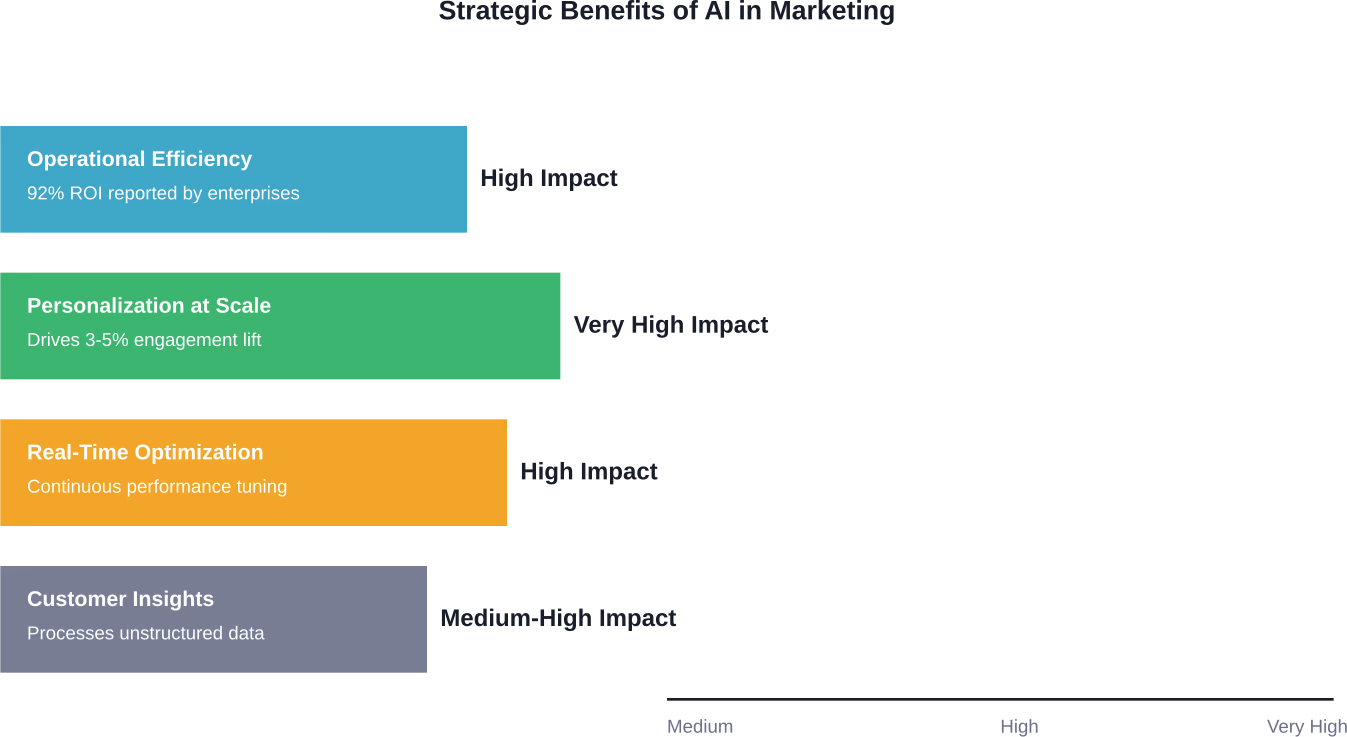
Theory matters less than implementation. Here's where AI delivers measurable results across core digital marketing disciplines.
Generative AI tools like ChatGPT have achieved 62% adoption among marketers according to American Marketing Association research. The use case is clear: draft blog outlines, generate social media variations, create email subject line options, and produce first-draft ad copy in seconds rather than hours.
But raw generation represents just the starting point. AI content optimization tools analyze top-performing content across the web, identify semantic patterns that correlate with engagement, and suggest improvements to headlines, meta descriptions, and body copy structure. Natural language generation combined with SEO analysis creates content that balances readability with search visibility.
The workflow shifts from pure creation to creation-plus-refinement. Human marketers set strategic direction, establish brand voice parameters, and provide final editorial judgment. AI handles draft generation, variant testing, and data-driven optimization suggestions.
Programmatic advertising platforms built on machine learning algorithms manage the complexity of modern digital advertising. Google Ads Smart Bidding, Facebook Advantage+, and similar systems adjust bids in real-time based on conversion probability, competitive pressure, and budget constraints across millions of daily auctions.
Dynamic creative optimization takes this further by automatically testing combinations of headlines, images, calls-to-action, and ad formats. The system identifies which creative elements perform best for specific audience segments, then allocates impression share accordingly—all without manual intervention.
Performance Max campaigns in Google Ads exemplify the fully automated approach. Marketers provide assets and conversion goals; the AI handles placement selection, audience targeting, bid optimization, and budget distribution across Search, Display, YouTube, Gmail, and Discovery inventory.

One area that’s getting more attention is predicting ad performance before campaigns even go live. Instead of relying entirely on A/B testing after launch, some teams are starting to evaluate creatives earlier in the process.
Tools like Extuitive approach this by analyzing past campaign data and testing new ad concepts against simulated audience responses. The idea is simple – identify which creatives are likely to perform before spending budget on distribution. This shifts part of the optimization work from post-launch adjustments to pre-launch decision-making.
In practice, this doesn’t replace platforms like Google Ads or Meta. It sits before them. Marketers still run campaigns, but with fewer unknowns. Instead of testing everything live, they narrow down options to the ones that already show stronger signals. Over time, this can reduce wasted spend and make creative iteration more focused rather than trial-and-error driven.
Email service platforms now incorporate AI features that extend well beyond basic segmentation. Send time optimization analyzes when individual recipients historically engage with email, then schedules delivery for maximum open probability. Subject line generators create variants and predict performance before sending.
Product recommendation engines within email use collaborative filtering and content-based algorithms to suggest items based on purchase history, browsing behavior, and similar customer patterns. Behavioral trigger systems automatically launch sequences when specific actions occur—cart abandonment, price drops, back-in-stock alerts, re-engagement campaigns.
According to the American Marketing Association, behavioral trigger emails deliver substantially higher conversion rates than batch-and-blast campaigns because they reach recipients at high-intent moments with relevant offers.
Conversational AI systems handle routine customer inquiries at scale, providing instant responses 24/7 without human agent involvement. Modern chatbots powered by natural language processing understand intent even when questions use varied phrasing, slang, or typos.
The ROI case is straightforward: chatbots resolve simple issues immediately while routing complex cases to human agents with full context. This reduces support ticket volume, shortens resolution times, and lowers operational costs. The American Marketing Association notes that AI technologies serving as customer-facing agents represent one of the three primary functions where AI currently delivers value.
Voice assistants like Alexa and Siri extend this capability to hands-free interactions, opening new touchpoints for brand engagement and commerce.
AI-powered social media tools analyze engagement patterns to recommend optimal posting times, identify trending topics relevant to brand positioning, and flag potential PR issues through sentiment monitoring. Image recognition technology tags brand mentions in user-generated photos even without text references.
Content generation features create social post variations, suggest hashtags, and produce response templates for common comments or messages. While human oversight remains essential for brand voice consistency and crisis management, AI dramatically reduces the operational burden of maintaining active social presence across multiple platforms.
SEO platforms incorporate AI for keyword research, content gap analysis, technical site auditing, and competitor monitoring. Natural language processing algorithms analyze search intent behind queries, helping content creators align with what users actually seek rather than just matching keyword strings.
MIT Sloan research highlights how AI platforms are transforming consumer search behavior itself. As AI-powered search interfaces become more prevalent, brands that don't optimize for these new discovery mechanisms risk becoming invisible to potential customers. This represents a fundamental shift in how SEO strategy must evolve.
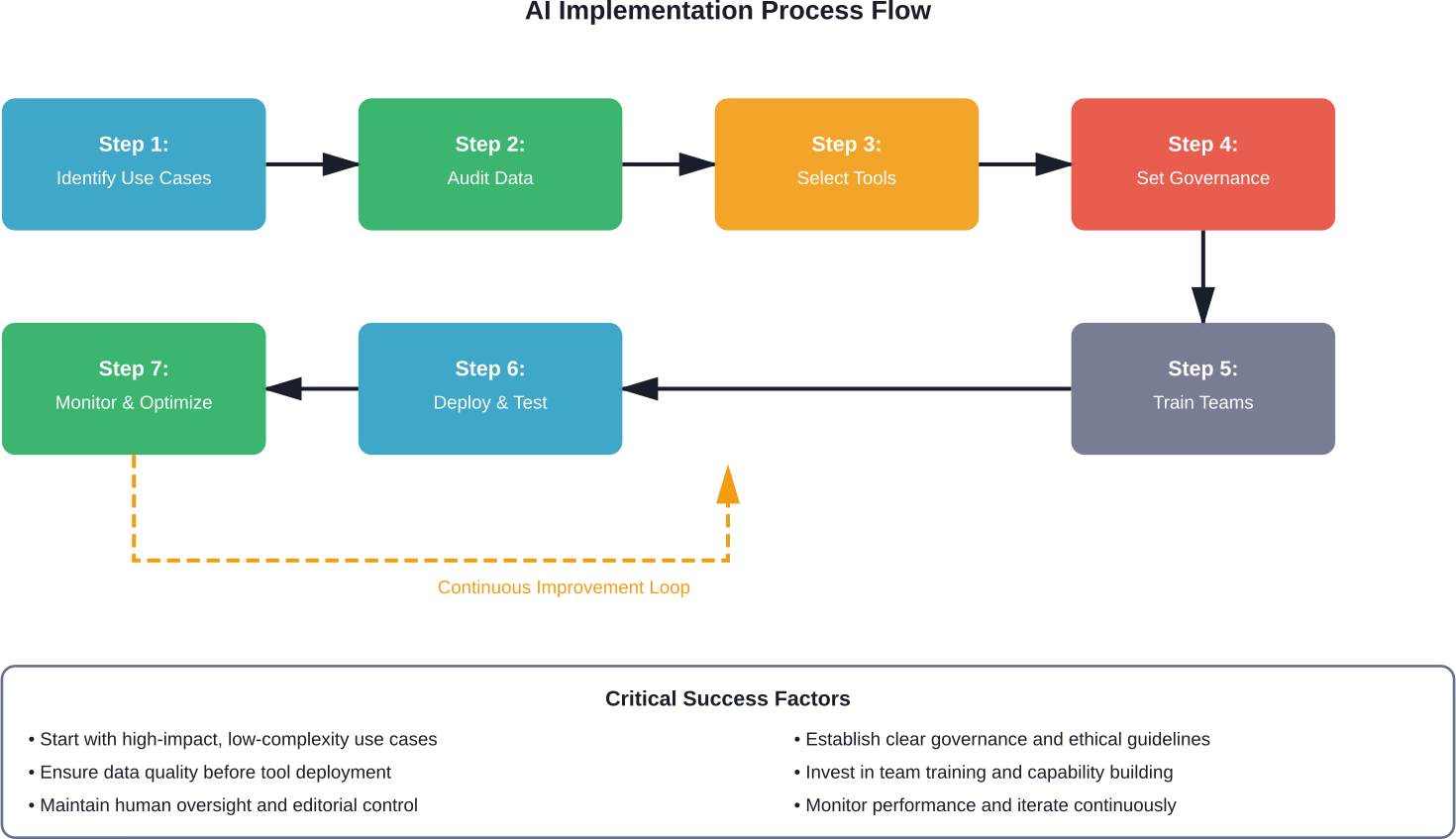
Successful AI adoption follows a structured approach rather than haphazard experimentation.
Start where repetitive work creates bottlenecks. Tasks that consume significant time but follow predictable patterns make ideal initial targets. Data analysis, report generation, basic customer inquiries, and ad optimization typically offer quick wins with measurable time savings.
Map current workflows to identify:
Prioritize based on potential impact versus implementation complexity. Low-hanging fruit builds momentum and internal support for broader initiatives.
AI systems require quality data to function effectively. Garbage in, garbage out isn't just a cliché—it's the primary reason AI projects underdeliver. Before deploying tools, assess data collection, storage, and accessibility.
Critical questions include:
According to the Federal Trade Commission's guidance on AI compliance, data handling practices must uphold privacy and confidentiality commitments. This isn't optional—it's foundational to sustainable AI deployment.
The AI marketing technology landscape includes hundreds of specialized tools and platform features. Selection depends on specific use cases, existing technology stack, team capabilities, and budget constraints.
The American Marketing Association's 2024 survey found that tools with embedded AI features—like Grammarly for editing assistance—often achieve higher adoption than standalone AI platforms because they integrate into existing workflows rather than requiring process overhauls.
AI deployment without guardrails creates risk. Brand voice inconsistency, factual errors in generated content, biased algorithmic decisions, and privacy violations can damage reputation and invite regulatory scrutiny.
The Interactive Advertising Bureau's AI Transparency and Disclosure Framework provides industry guidance on responsible AI use in advertising. The Federal Trade Commission has launched enforcement actions against companies making deceptive AI claims, demonstrating regulatory attention to this space.
Operational guidelines should address:
According to the Federal Trade Commission's AI compliance documentation released in 2024, organizations must maintain accountability for AI system outputs even when using third-party tools. The liability doesn't transfer to the technology vendor.
Technology alone doesn't deliver results. Marketing teams need skills to prompt AI tools effectively, interpret outputs critically, and integrate AI into strategic workflows. The American Marketing Association research on skills marketers need in the AI era emphasizes that human judgment, creativity, and strategic thinking become more valuable, not less, as AI handles tactical execution.
Training priorities include:
Cross-functional collaboration between marketing, data science, IT, and legal teams ensures AI initiatives align with broader organizational capabilities and constraints.
Abstract capabilities matter less than concrete outcomes. Here's how organizations deploy AI for measurable impact.
Recommendation engines represent one of the most mature AI applications in digital marketing. Amazon's algorithm accounts for an estimated 35% of company revenue through personalized product suggestions. The system analyzes purchase history, browsing behavior, items in cart, search queries, and patterns from similar customers to surface relevant products.
Calm, the meditation and wellness app, deployed Amazon Personalize to tailor content recommendations for users. The AI system increased daily mindfulness practice by 3.4%—a significant lift in a space where engagement directly correlates with subscription retention and lifetime value.
The approach scales beyond product recommendations. Dynamic website personalization adjusts hero images, messaging, featured content, and calls-to-action based on visitor attributes, referral source, browsing history, and predicted intent.
Brands running digital advertising at scale rely on machine learning for bid management, audience targeting, and creative optimization. Performance Max campaigns in Google Ads exemplify the fully automated approach—marketers provide conversion goals and creative assets, then AI handles placement selection across Search, Display, Shopping, YouTube, Gmail, and Discovery networks.
The system tests combinations of headlines, descriptions, images, and videos, identifying which variants perform best for specific audiences and contexts. The budget automatically flows toward top performers while underperforming combinations receive less exposure. The optimization happens continuously without manual campaign monitoring.
Media companies and content-heavy brands use AI to expand production capacity. The Associated Press generates thousands of earnings report articles quarterly using natural language generation, freeing journalists to focus on investigative work and complex analysis.
The workflow typically involves AI drafting initial content from structured data inputs, then human editors reviewing for accuracy, adding context, and refining the narrative voice. This hybrid approach combines AI efficiency with human judgment and expertise.
SEO-focused content operations use AI for keyword research, content gap analysis, and outline generation. The system identifies search opportunities, suggests topic angles based on competitor analysis, and produces first drafts that human writers refine into publication-ready articles.
Chatbots handle routine inquiries that previously consumed support agent time. Banking, telecommunications, and e-commerce companies report 60-80% of common questions resolved through conversational AI without human escalation.
The value extends beyond cost reduction. Instant 24/7 responses improve customer satisfaction for straightforward issues—account balance checks, order status lookups, password resets, basic troubleshooting. Human agents focus on complex problems requiring empathy, judgment, and creative problem-solving.
According to the American Marketing Association's research, AI serving as customer-facing agents represents a core use case where technology currently delivers clear value.
Subscription businesses use machine learning models to predict churn risk based on usage patterns, engagement signals, payment history, and support interactions. When the model flags high-risk accounts, automated retention campaigns trigger with personalized offers, content recommendations, or proactive outreach.
The approach shifts from reactive "save" attempts after cancellation requests to proactive engagement before dissatisfaction reaches the breaking point. Early intervention improves success rates and reduces acquisition costs by retaining existing customers.
The marketing technology landscape includes AI capabilities across multiple categories. Selection depends on specific use cases, existing infrastructure, and team capabilities.
ChatGPT leads adoption at 62% usage among marketers according to American Marketing Association data. The tool generates content drafts, brainstorms campaign concepts, produces copy variants, and assists with research tasks. Other popular options include Claude, Gemini, and Jasper for marketing-specific applications.
These platforms excel at first-draft generation but require human oversight for factual accuracy, brand voice consistency, and strategic alignment. The output quality depends heavily on prompt engineering skills—the ability to structure queries that yield useful responses.
HubSpot, Marketo, and Salesforce Marketing Cloud incorporate AI features for lead scoring, email optimization, and workflow automation. These systems analyze historical data to predict which leads have highest conversion probability, then prioritize sales follow-up accordingly.
Send time optimization analyzes when individual recipients typically engage with email, scheduling delivery for maximum open rates. Subject line testing and dynamic content insertion personalize messaging at scale.
Grammarly achieved 58% adoption among marketers in the American Marketing Association's 2024 survey. The tool checks grammar, suggests tone adjustments, flags clarity issues, and recommends vocabulary improvements in real-time as content creators write.
Similar tools like Hemingway Editor and ProWritingAid focus on readability optimization, helping writers produce clear, accessible content that resonates with target audiences.
Google Ads, Meta Advantage+, and The Trade Desk incorporate machine learning for automated bidding, audience expansion, and creative optimization. These platforms manage the complexity of real-time auctions across millions of daily impressions.
Dynamic creative optimization tests ad component combinations—headlines, images, calls-to-action, formats—identifying top performers for specific audience segments and contexts.
Platforms like Google Analytics 4, Amplitude, and Mixpanel use machine learning for anomaly detection, predictive analytics, and automated insights. These systems flag unusual traffic patterns, forecast future trends, and surface significant changes without manual report analysis.
Customer data platforms with AI capabilities—Segment, Treasure Data, ActionIQ—unify data from disparate sources and build predictive models for customer lifetime value, churn risk, and next-best action recommendations.
AI deployment carries real risks that require active management. Overconfidence in technology capabilities leads to avoidable failures.
Generative AI produces plausible-sounding content that may contain factual errors, outdated information, or logical inconsistencies. The systems don't "understand" content—they predict likely word sequences based on training data patterns.
The Federal Trade Commission has launched enforcement actions against companies making deceptive AI claims, including Operation AI Comply announced in September 2024. The agency charged multiple operations with using AI hype to mislead consumers or selling AI technology for deceptive purposes.
Mitigation requires human review before publication. Establish editorial workflows where subject matter experts verify factual claims, check sources, and assess whether generated content meets quality standards. Automated content at scale requires proportional quality assurance investment.
Machine learning models trained on historical data inherit biases present in that data. Advertising algorithms may show different opportunities to demographic groups based on past patterns. Recommendation systems might reinforce filter bubbles rather than exposing users to diverse options.
The IAB's AI Transparency and Disclosure Framework addresses industry concerns about algorithmic fairness and accountability. Regular bias testing, diverse training data, and human oversight of algorithmic decisions help mitigate these risks.
AI systems require data to function. That creates tension with privacy regulations like GDPR, CCPA, and similar frameworks. The Federal Trade Commission emphasizes in its AI compliance guidance that companies must uphold privacy commitments regardless of AI tool deployment.
Data minimization principles suggest collecting only information necessary for specific use cases. Transparent consent processes inform customers how their data powers AI features. Anonymization and aggregation techniques protect individual privacy while enabling analytics.
According to FTC guidance, organizations remain liable for AI system outputs even when using third-party tools. Vendor selection should include scrutiny of data handling practices and compliance capabilities.
Easy access to AI-generated content may erode fundamental marketing skills. If teams outsource all writing to generative AI, strategic thinking about messaging, positioning, and audience psychology can atrophy.
The American Marketing Association research on skills needed in the AI era emphasizes that human capabilities around strategy, creativity, and judgment become more valuable as AI handles tactical execution. Training programs should strengthen these distinctly human skills rather than focusing exclusively on tool operation.
Despite vendor promises of easy deployment, meaningful AI integration often requires significant technical lift. Data infrastructure must support tool requirements. Legacy systems may need upgrading. Cross-platform integration creates compatibility challenges.
MIT Sloan research indicates that while 92% of companies report positive returns on AI investments, the path from pilot to production involves substantial organizational change. Underestimating implementation complexity explains why many AI projects stall at the proof-of-concept stage.
AI capabilities continue evolving rapidly. Several trends will shape how marketers use these technologies over the next few years.
Current tools typically handle one input type—text, images, or audio. Emerging multimodal systems process and generate across formats simultaneously. This enables more sophisticated creative applications: generating video from text descriptions, creating synchronized audio and visual content, or analyzing combined signals for richer insights.
Marketing applications include automated video production at scale, voice-optimized content creation for smart speakers, and cross-format content adaptation that maintains consistency while optimizing for platform-specific requirements.
The IAB's State of Data 2025 report indicates that AI is on the brink of transforming how advertising works at its core. Agentic AI systems take actions autonomously rather than just providing recommendations. An AI agent might independently research competitor positioning, draft campaign strategies, allocate budgets, create assets, and adjust tactics based on performance—with human oversight at strategic checkpoints rather than every decision.
This represents a fundamental shift from AI as a tool to AI as a teammate. The implications for marketing team structure, skill requirements, and operational processes are profound.
MIT Sloan research highlights how AI platforms are transforming consumer search behavior. Traditional search engines return link lists; AI-powered systems provide direct answers synthesized from multiple sources. This changes discovery dynamics—brands optimizing only for traditional SEO risk invisibility in AI-mediated search experiences.
Adaptation strategies include structuring content for AI comprehension, providing clear authoritative information, and exploring direct integration with AI platforms where consumers increasingly begin their research.
Current personalization typically operates at segment level—grouping similar users and tailoring experiences by cohort. Advancing AI capabilities enable true individual-level personalization where every interaction adapts to that specific person's context, preferences, and immediate intent.
The privacy implications are significant. Balancing personalization benefits with consumer comfort around data use requires ongoing calibration and transparent value exchange.
Early AI adoption involved standalone tools for specific tasks. The trajectory moves toward AI capabilities embedded throughout the marketing technology stack—CRM systems with built-in predictive analytics, content management platforms with generation features, advertising platforms with creative optimization.
This integration reduces friction but increases vendor lock-in risks. Marketers need to evaluate whether best-of-breed specialized tools or integrated platform features better serve their specific requirements.
The American Marketing Association's research on AI-era marketing skills emphasizes that technical tool operation represents just one component. Strategic capabilities, creative thinking, and ethical judgment grow in importance as AI handles tactical execution.
Data literacy forms the foundation. Marketers need comfort interpreting analytics, understanding statistical significance, recognizing data quality issues, and translating metrics into strategic insights. This doesn't require becoming a data scientist, but basic statistical literacy is no longer optional.
Prompt engineering—the skill of structuring effective queries to generative AI systems—directly impacts output quality. Well-crafted prompts produce useful first drafts; poor prompts yield generic content requiring extensive revision. This skill develops through practice and understanding how language models interpret instructions.
Strategic thinking becomes more valuable when AI handles tactical execution. Determining which problems to solve, setting campaign objectives, defining target audiences, establishing brand positioning—these human-dependent decisions guide AI tool deployment.
Critical evaluation capabilities matter because AI outputs require verification. Marketers must assess factual accuracy, detect bias, recognize when generated content misses the mark, and identify opportunities for improvement that automated systems miss.
Cross-functional collaboration skills grow in importance as AI initiatives require coordination between marketing, data science, IT, legal, and leadership teams. Translating business requirements into technical specifications and vice versa enables effective implementation.
AI capabilities evolve rapidly. Tools that launched six months ago have different feature sets today. Best practices shift as the industry learns what works. Staying current requires ongoing education through industry publications, professional development programs, and hands-on experimentation.
The American Marketing Association's survey findings show that nearly 90% of marketers have used generative AI, but understanding of AI capabilities remains limited in many organizations. The gap between adoption and comprehension creates risks—teams deploy tools without fully grasping limitations, appropriate use cases, or optimization opportunities.
Formal training programs help systematize learning. Many universities now offer AI-focused marketing courses. Professional certifications in marketing analytics, marketing automation, and AI applications provide structured curricula. Online learning platforms deliver flexible self-paced options.
Demonstrating return on AI investment requires clear metrics tied to business objectives. Vanity metrics around adoption rates or content volume produced miss the point.
Time savings from automation represent the most straightforward measurement. Compare hours spent on tasks before and after AI deployment. Calculate cost savings by multiplying time recovered by fully-loaded labor costs.
Task completion rates and accuracy levels matter for automation projects. If a chatbot handles 70% of customer inquiries without escalation, that's a measurable deflection of support ticket volume. Track error rates and customer satisfaction to ensure quality doesn't suffer.
Campaign results provide direct performance indicators. Compare conversion rates, cost per acquisition, return on ad spend, and engagement metrics between AI-optimized campaigns and baseline approaches. Control groups enable clean before-after comparisons.
Personalization initiatives track lift in engagement rates, average order value, purchase frequency, and customer lifetime value. The 3.4% engagement increase Calm achieved through AI-driven recommendations represents a tangible performance improvement.
Revenue attribution connects AI initiatives to business outcomes. Track incremental revenue from personalized recommendations, improved conversion rates from optimized landing pages, or increased customer retention from predictive intervention campaigns.
MIT Sloan research shows that 92% of companies achieving returns on AI investments track clear business metrics rather than just technical performance indicators. The connection between AI deployment and business results must be explicit and measurable.
Adoption rates, user satisfaction scores, and process improvement metrics serve as leading indicators that predict eventual business impact. These short-cycle metrics help teams iterate and optimize before waiting months for revenue results.
Lagging indicators like revenue growth, market share gains, and customer lifetime value changes demonstrate ultimate success but manifest slowly. Balanced measurement frameworks incorporate both types.
AI in digital marketing has moved beyond experimental curiosity to operational necessity. The data is clear—92% of enterprises report positive returns, adoption rates approach 90% among marketers, and early movers demonstrate measurable performance advantages.
But technology alone doesn't deliver results. Successful implementations follow strategic frameworks: identify high-value use cases, audit data infrastructure, select appropriate tools, establish governance, train teams, and measure outcomes rigorously. Start where repetitive work creates bottlenecks. Build capabilities through manageable projects before tackling complex transformations.
The limitations are real. Quality control requires human oversight. Bias testing can't be optional. Privacy compliance isn't negotiable. Over-reliance erodes critical thinking skills. Navigate these challenges through clear policies, cross-functional collaboration, and maintaining human judgment at strategic decision points.
Looking forward, AI capabilities continue advancing rapidly. Multimodal systems, autonomous agents, transformed search behavior, and hyper-personalization will reshape marketing operations over the next few years. Organizations building AI capabilities today position themselves to capitalize on these emerging opportunities.
The competitive dynamics are straightforward: brands that effectively integrate AI deliver more personalized experiences, optimize campaigns faster, operate more efficiently, and understand customers more deeply than those that don't. The gap between leaders and laggards will widen as AI capabilities compound over time.
The question isn't whether to adopt AI in digital marketing—it's how quickly and strategically to deploy these capabilities while maintaining the human judgment, creativity, and ethical oversight that technology can't replicate. Start building those capabilities now.
Ready to transform your digital marketing with AI? Begin by auditing current workflows to identify high-impact automation opportunities, then experiment with accessible tools before committing to enterprise-scale implementations. The organizations winning with AI today started with focused pilots that proved value, then scaled systematically from there.


