How Many Apps Are in the Shopify App Store in 2026? A Clear Look at the Numbers
A clear look at how many apps are in the Shopify App Store in 2026, why the number changes, and what it means for merchants and developers.
Feb 9, 2026



Law firm marketing in 2026 requires a multi-channel approach combining digital tactics like SEO, content marketing, and social media with traditional strategies such as networking and referrals. Successful firms build strong brands, establish thought leadership through educational content, prioritize online reviews and client relationships, and use data analytics to identify growth opportunities. The most effective marketing strategies are tailored to practice areas and target audiences, balancing authenticity with strategic planning.
Law firm marketing has shifted dramatically over the past decade. The days of relying solely on word-of-mouth or Yellow Pages ads are long gone.
Today's legal landscape demands a strategic blend of digital presence, relationship building, and brand development. But here's the thing—not every tactic works for every firm.
According to research from Harvard Law School, brand plays a hugely important role in developing and maintaining a successful law firm, yet it's often an underutilized and neglected asset. The data shows that networking accounts for 11% of awareness recalls in legal services, while brand density varies dramatically across markets.
The challenge? Most firms face increasing competition, changing client expectations, and evolving technology. Thomson Reuters data from Q3 2025 revealed that Am Law 100 firms saw a 3.9% rebound in demand growth, while midsize firms showed strength with positive growth trends—suggesting smaller, more agile firms may have advantages in adapting marketing strategies.
This guide covers practical marketing ideas that work across firm sizes and practice areas. Some tactics deliver quick wins. Others build long-term equity.
Before diving into specific tactics, it's worth understanding what makes legal marketing different from other industries.
Legal services are built on trust. Potential clients aren't just buying a product—they're entrusting someone with their legal problems, financial future, or even their freedom. That fundamentally changes how marketing works.
Harvard Law School research analyzing brand awareness in the legal industry found that in the United States, where over 600 firms were mentioned in spontaneous awareness recalls, the leading firm achieved relatively low spontaneous awareness levels, demonstrating how brand leadership can gradually diminish without consistent effort—showing how brand leadership can gradually diminish without consistent effort.
Compare that to Spain's market, where brand density varies dramatically across markets, with Spain showing different competitive dynamics than the United States. The takeaway? Market fragmentation matters, and building a dominant brand position requires sustained investment.
Brand in the legal industry encompasses both the firm brand and individual practitioner brands. In every buying decision, these elements come together to influence client choice.
Understanding client acquisition channels helps prioritize marketing efforts. Community discussions and practitioner experiences suggest several primary pathways:
The specific mix varies dramatically by practice area. Personal injury and family law firms see heavy direct search traffic. Corporate and specialized practices rely more on professional referrals. Local practices benefit from community visibility.
That said, here's what works across the board.

Extuitive helps teams review ad concepts before running campaigns. The platform uses AI models to forecast likely performance, compare creative options, and support better decisions around messaging and targeting.
For law firms, this can be useful when there are several service or consultation ad ideas and the team needs a clearer way to choose what to test first.
Extuitive can help with:
👉 Book a demo with Extuitive to review your ad ideas.
Not every effective marketing idea requires a big budget. Several foundational tactics cost nothing but time and strategic thinking.
Start by claiming profiles on Google Business Profile, Avvo, Justia, FindLaw, and relevant state bar directories. These platforms drive significant organic traffic and appear prominently in search results.
For each listing, provide complete information: practice areas, office hours, contact details, and a compelling description. Upload professional photos of the office and attorneys. Respond to all reviews, both positive and negative, with professionalism.
Google Business Profile alone can drive substantial local visibility. When potential clients search for "divorce lawyer near me" or similar queries, a well-optimized profile appears in the map pack—often above traditional organic results.
According to Harvard Law School research, networking accounts for 11% of awareness recalls in legal services Networking may seem low in raw numbers, but it's especially potent for certain practice areas.
Industry conferences, bar association events, alumni gatherings, and professional organization meetings create opportunities for direct relationship building. These connections often lead to referrals years later.
The key is consistency. Attending one conference won't move the needle. Becoming a regular presence in relevant professional communities builds recognition over time.
Referrals represent one of the highest-converting client sources for most firms. But waiting passively for referrals leaves opportunity on the table.
Build relationships with complementary attorneys who handle different practice areas. A family law attorney might partner with estate planning and bankruptcy lawyers. A corporate attorney might connect with employment law and intellectual property specialists.
Make referrals easy: provide clear information about the types of cases accepted, response time expectations, and how the referral process works. Then reciprocate when appropriate opportunities arise.
Stay top-of-mind with potential referral sources through periodic check-ins, sharing relevant articles or legal updates, and acknowledging referrals with thank-you notes.

Content marketing has become essential for law firms that want to compete effectively online. Creating educational content serves multiple purposes: it improves search visibility, demonstrates expertise, and builds trust with potential clients.
The most effective legal content addresses specific questions potential clients actually ask. Not general overviews of law—but practical answers to real problems.
For a family law firm, that might mean articles like "How does child custody work when parents live in different states?" or "What documents do I need to file for divorce in [State]?" For an employment lawyer, it could be "Can my employer force me to work overtime without extra pay?"
These topics have clear search intent. People actively looking for this information are often evaluating whether they need legal help.
The content should be genuinely helpful—not just thinly veiled sales pitches. Explain concepts clearly, provide actionable information where appropriate, and indicate when professional guidance is necessary.
Creating great content means nothing if nobody sees it. Distribution matters as much as creation.
Start with the firm website as the content hub. Then amplify through multiple channels:
Each channel reaches different audience segments. Email hits existing relationships. Social media can reach cold prospects. Guest posts build authority and backlinks.
Thought leadership extends beyond written content. Speaking engagements, podcast appearances, webinar presentations, and media commentary all build visibility and credibility.
Reach out to conference organizers in relevant industries. Many events need speakers on legal topics affecting their audiences. A healthcare conference might want a session on compliance issues. A startup event could use guidance on intellectual property or founding agreements.
Local media outlets regularly need expert sources for stories with legal angles. Building relationships with journalists in the firm's market can lead to recurring quote opportunities.
These activities create secondary content opportunities too—a conference presentation becomes a blog post, a LinkedIn article, and social media content.
Digital marketing represents the biggest shift in how legal clients find attorneys. Getting this right requires attention to both visibility (being found) and conversion (turning visitors into clients).
Many law firm websites check the "having a website" box without actually serving as effective marketing tools. A converting website needs several key elements:
SEO delivers compounding returns over time. While it requires patience—rankings don't improve overnight—the long-term payoff can be substantial.
Local SEO matters most for firms serving geographic areas. This means optimizing for "[practice area] lawyer in [city]" searches through:
Broader SEO focuses on ranking for informational queries related to practice areas. The educational content mentioned earlier serves SEO purposes—each article targeting specific search queries potential clients use.
Technical SEO ensures search engines can properly crawl and index the site. This includes site speed optimization, mobile responsiveness, proper URL structures, and XML sitemaps.
As one practitioner noted in community discussions, SEO is definitely a long game. Results typically take months, not weeks. But firms that invest consistently often dominate their local search results within 12-18 months.
While organic strategies build long-term equity, paid advertising can generate immediate visibility and leads.
Google Ads (formerly AdWords) allows targeting specific search queries. When someone searches for "divorce lawyer in Austin," a well-crafted ad can appear at the top of results. The challenge is managing costs—legal keywords are often expensive due to high competition.
Facebook and Instagram ads work differently, targeting based on demographics, interests, and behaviors rather than active search intent. These platforms work well for building awareness and reaching people who may need legal services soon but aren't actively searching yet.
LinkedIn advertising reaches professional audiences effectively for B2B legal services like corporate law, employment law from the employer side, or intellectual property work.
Retargeting ads follow website visitors across the internet, keeping the firm top-of-mind after someone has already shown interest by visiting the site.
Social proof has become critical in how people evaluate service providers. For law firms, that means managing online presence extends beyond just having a website.
Social media for law firms isn't about posting cat photos or going viral. It's about building visibility, demonstrating expertise, and staying top-of-mind with potential referral sources and clients.
LinkedIn works best for B2B practices and professional networking. Share insights about legal developments affecting businesses, comment on industry news, and engage with posts from potential clients and referral sources.
Facebook serves local practices well, especially those serving consumers rather than businesses. Community involvement, client success stories (with permission), and educational content all perform well.
Instagram can work for firms with strong visual branding or those wanting to showcase firm culture to attract both clients and talent.
Twitter (X) reaches journalists, policy makers, and other influencers—useful for thought leadership in specific legal niches.
The key is consistency and authenticity. Better to maintain a regular presence on one or two platforms than to sporadically post across five.
Online reviews significantly influence client decisions. Research consistently shows that most people read reviews before choosing a service provider, and legal services are no exception.
Actively request reviews from satisfied clients. After a successful case conclusion, send a follow-up email thanking them and asking if they'd be willing to share their experience on Google or Avvo. Make it easy by including direct links.
Respond to all reviews, positive and negative. Thank reviewers for positive feedback. For negative reviews, respond professionally, acknowledge concerns, and offer to discuss offline. Never get defensive or argue publicly.
Address negative reviews appropriately—some require responses that carefully navigate ethical rules about client confidentiality. When in doubt, a simple professional response acknowledging the feedback without addressing specifics of the representation works.
Video creates stronger connection than text alone. Potential clients can hear tone, see body language, and get a sense of personality—all factors in the trust-building process.
Video content for law firms might include:
These don't require Hollywood production values. A smartphone, decent lighting, and clear audio are enough. Authenticity matters more than polish.
Videos can live on the website, YouTube channel, social media, and in email campaigns—multiplying the value of each piece of content created.
Here's where generic marketing advice falls short. What works for a personal injury firm won't work for a corporate M&A practice. What makes sense for a solo practitioner differs from what a 50-attorney firm should do.
Smaller firms have limited budgets but more agility. Focus areas should include:
Different practice areas require different marketing emphasis, as noted in community discussions among practitioners.
Firms with more attorneys and bigger budgets can pursue more sophisticated strategies:
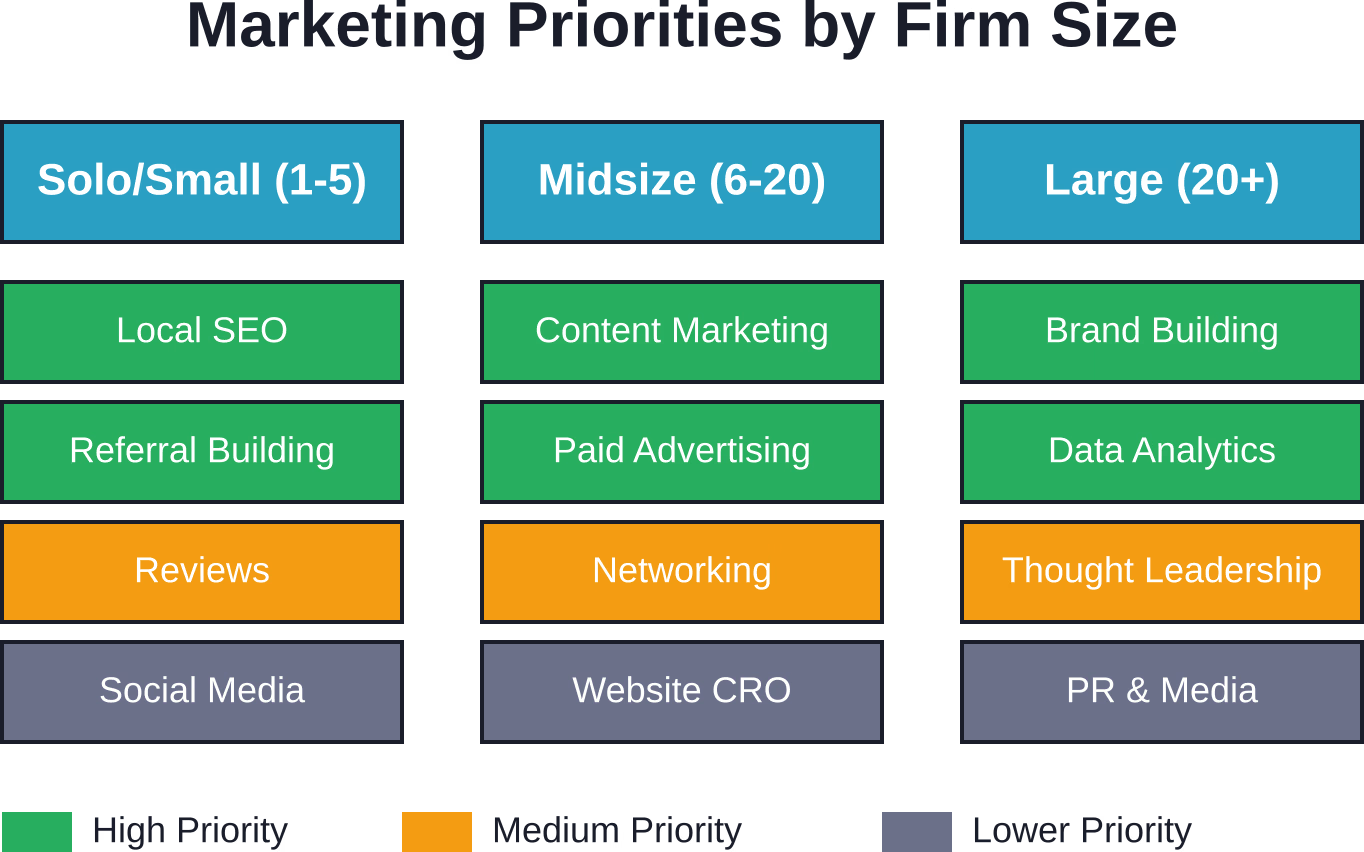
Marketing without measurement is just guessing. Tracking results allows firms to double down on what works and cut what doesn't.
Different marketing activities require different measurements:
For larger firms, sophisticated analytics platforms can reveal cross-selling opportunities and client trends. LexisNexis Client Analysis and similar tools let firms track trends, uncover opportunities, and build strategic client lists through robust segmentation.
But even small firms can benefit from basic data analysis. Google Analytics shows which content performs best, which referral sources drive qualified traffic, and where visitors drop off in the conversion process.
Regular review of this data—monthly or quarterly depending on traffic volume—helps identify opportunities and problems before they become major issues.
Law firm marketing faces unique ethical constraints that other businesses don't encounter. Bar associations regulate attorney advertising and marketing communications.
Key considerations include:
Rules vary by jurisdiction and evolve over time. When in doubt, consult the relevant state bar's ethics opinions on attorney advertising. Better to be conservative than to face ethics complaints or discipline.
Learning from others' mistakes saves time and money. Several pitfalls consistently trip up law firms attempting to improve their marketing:
Marketing a law firm in 2026 requires a multi-faceted approach. No single tactic delivers all the results a firm needs.
The most successful firms combine digital strategies like SEO and content marketing with traditional relationship building through networking and referrals. They build strong brands that resonate with target clients. They track results and adjust strategies based on data rather than guessing.
But here's what matters most: consistency and authenticity. A simple marketing plan executed consistently outperforms an elaborate strategy that gets abandoned after three months. Authentic communication that reflects the firm's genuine personality and values builds stronger connections than generic corporate messaging.
Start with the fundamentals. Claim free listings. Build a professional website that clearly communicates value. Create helpful content that answers real questions. Ask satisfied clients for reviews. Build referral relationships.
Then layer in more sophisticated tactics as resources allow. Invest in SEO for long-term compounding returns. Use paid advertising for immediate visibility. Develop thought leadership through speaking and writing. Track everything to identify what works.
The legal market continues evolving. Client expectations change. New competitors emerge. Technology creates new opportunities and challenges. Firms that commit to ongoing marketing—adapting strategies as conditions change while maintaining consistent effort—position themselves for sustainable growth regardless of market conditions.


