Best AI-Powered Marketing Attribution Tools
A curated list of the best AI-powered marketing attribution tools, showing how teams use them to understand real channel impact and make better decisions.
Jan 7, 2026



Getting your Shopify store off the ground is exciting, but the real challenge kicks in after launch. You need eyes on your products – people browsing, clicking, and buying. But if you're not ready to throw money at ads just yet, that doesn’t mean you’re stuck.
There’s a whole playbook of free tactics that still work – if you know how to use them. From getting your name on Google to turning happy customers into your marketing team, let’s walk through the smart, no-cost ways to drive real traffic to your store.
Whether you're just starting out or looking to reduce ad spend, here’s how to get more eyes on your store and more items in carts without spending your budget.
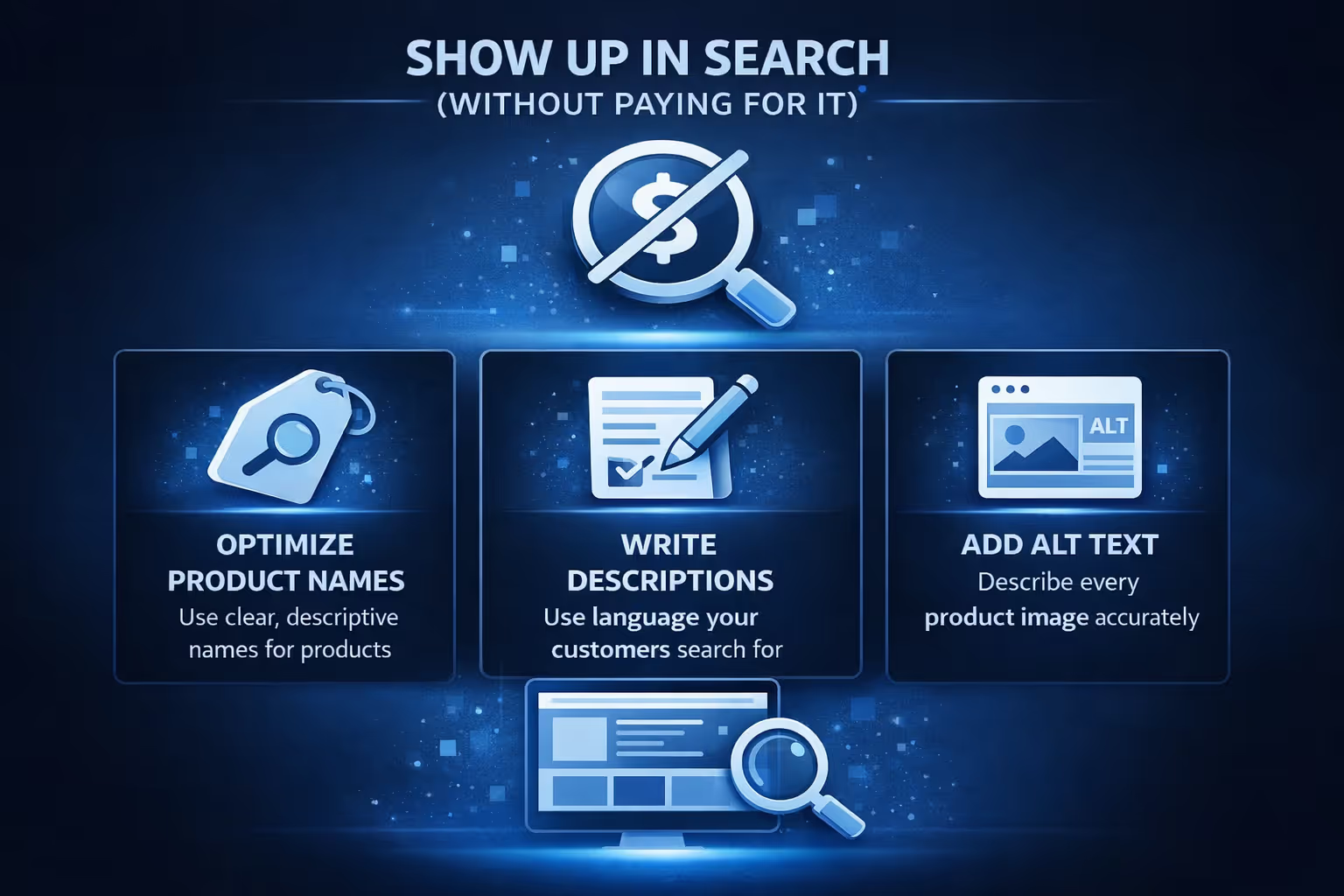
You don’t have to be an SEO expert to make your store easier to find on Google. A few focused steps can help your pages show up when people search for products like yours.
Start with the basics:
Shopify handles some technical stuff like sitemaps automatically, which helps your store get indexed. But Google can’t rank what it doesn’t understand. Your job is to make sure your site talks in your customer’s language, not just your brand’s voice.
If you’ve got the energy, start a blog tied to your product niche. Answer common questions, write short tutorials, or even share behind-the-scenes thoughts. A well-written blog post can keep bringing in traffic for years, and it builds trust along the way.
If you operate from a physical location or offer local pickups, create a Google Business Profile. It’s one of the most overlooked, high-impact tools out there.
Once it’s set up, your store can appear in local search results and on Google Maps. You can add your address and contact info, photos of your store or products, a short description, and links to your website and social profiles.
There’s nothing more persuasive than a happy customer. Reviews build trust and can indirectly support your visibility by providing fresh, user-generated content.
Here’s how to get more (without begging):
Display your reviews everywhere you can: product pages, your homepage, even on social media. Real voices sell better than your product descriptions ever could.
You can also repost user-generated content (UGC) when customers tag you in a story or post. Just make sure to ask permission if it’s not already public. These posts feel more honest and personal, and they help new customers picture themselves buying from you.
Email isn’t dead. In fact, it’s one of the highest-converting tools you’ve got, and it’s free to use as long as you’re starting small.
What you don’t want is a list full of people who forget who you are. Focus on quality over quantity. Offer something in return for the sign-up: a first-order discount, a free printable, early access, etc.
Once someone’s on your list, don’t ghost them. A welcome email is the bare minimum. Then follow up with useful stuff:
Segment your list when you can. If someone’s never bought anything, don’t send them the same email as a longtime customer. Tailor it.
And if you can, combine email with SMS. However, consider that email is free to start, while SMS marketing can be effective but often comes with additional costs. Make sure it fits your budget before diving in.

Trying to be everywhere at once is a fast way to burn out. Start by showing up where your audience actually hangs out. That might be TikTok, Instagram, Facebook, Pinterest, or just one of them.
Whatever platform you choose, your posts should be visual and attention-grabbing, iInformative or entertaining (not just “buy this now”), and regular, even if it’s only twice a week.
Mix up your content. Share quick product demos, behind-the-scenes snippets, polls, and user-generated content. Ask questions. Be human.
And don’t overthink it. Some of the best-performing posts are filmed on a phone in one take. Polish can be good, but personality wins every time.
You don’t always need to build an audience from scratch. Sometimes it’s smarter to show up where one already exists.
Look for Facebook groups or Reddit communities that are related to your niche. Join with your personal profile and start by being helpful – answer questions, share knowledge, give genuine feedback.
Eventually, when it’s natural, mention your product or link to your store. Don’t spam. Don’t force it. Be a part of the conversation first.
People trust other members of their community more than any ad.
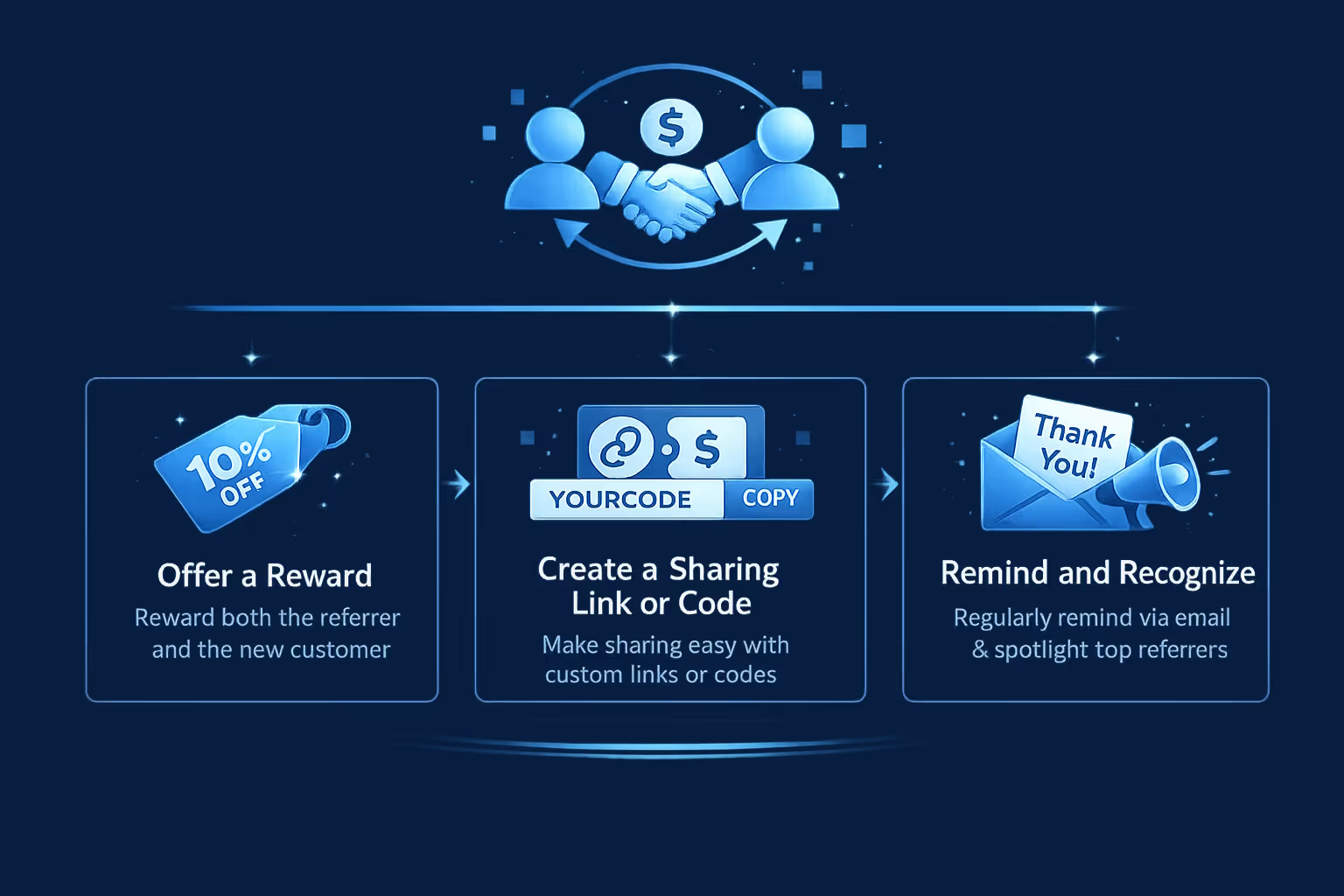
Referral programs can turn your buyers into your best marketers. And you don’t need fancy software to start one.
Here’s how to build a simple referral setup:
To boost momentum, spotlight your top referrers in newsletters or on social media. People love recognition.
If you have the time, content marketing pays off over the long run. This doesn’t just mean writing blog posts. It could be:
You can also guest-post on someone else’s site or collaborate with a complementary brand to reach new audiences. Although collaborating with complementary brands or contributing content to other websites can help reach new audiences, some platforms may require approval or charge fees.
Just make sure whatever you create actually helps someone. Content that solves a problem is the kind people return to and share.
It’s easy to get stuck doing everything at once and seeing no results. The fix? Pay attention to your data.
Use Shopify Analytics to see traffic, sales, and conversion rates, or Google Analytics for deeper audience behavior insights.
Don’t just look at vanity metrics like likes and followers. Focus on what’s actually driving store visits and purchases. Then double down on what’s working and scrap the stuff that isn’t.
Even if you’re keeping your promotion efforts free right now, it helps to think a few steps ahead. When it’s time to test paid ads, the last thing you want is to waste money guessing what might work. That’s where we come in.
At Extuitive, we help Shopify brands like yours forecast ad performance before you ever hit launch. Our AI models are trained on real-world campaign data, so you can test creative ideas, predict outcomes, and see where your best results are likely to come from. No more guessing games or blind spending.
Think of us as your ad decision safety net. Whether you're scaling up or just getting curious about paid traffic, we give you a clear view of what to expect, based on your data, your goals, and what’s already worked for brands like yours. When you’re ready to take that next step, you’ll do it with confidence.
None of these take a big budget – just a bit of time and outreach.
You don’t need to spend thousands on ads to get noticed. Promoting your Shopify store for free is about showing up consistently, building trust, and using the tools you already have.
Will it take work? Of course. But the foundation you build now can pay off tenfold later, especially once you do start spending on paid growth.
Focus on helping your audience, not just selling to them. That’s the difference between a store people visit once and one they keep coming back to.


