Wetracked.io Alternatives Used by Marketing Teams Today
Looking beyond Wetracked.io? Here’s a grounded list of tracking and attribution tools teams are actually using today.
Apr 13, 2026



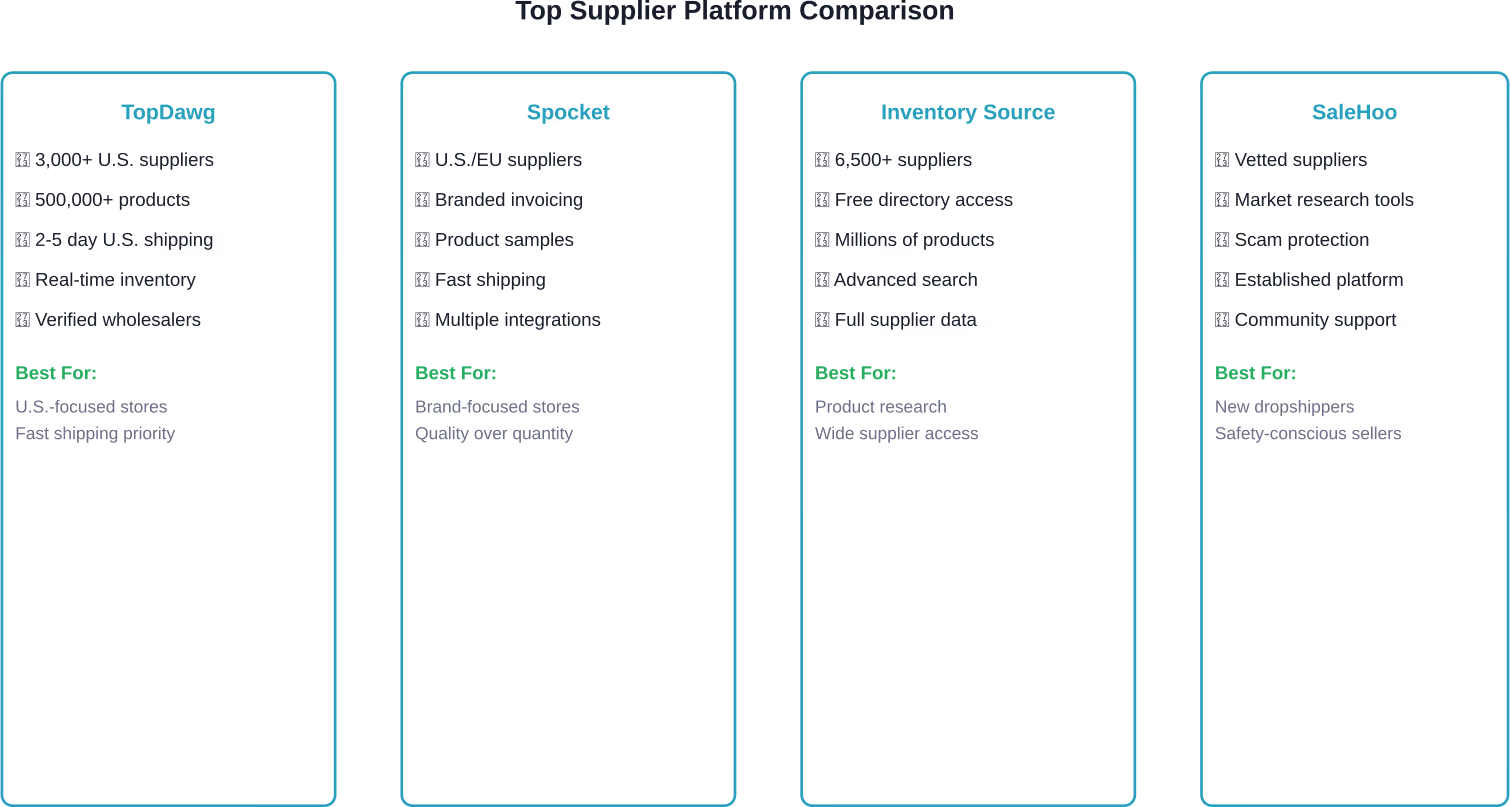
The best dropshipping suppliers in 2026 include TopDawg for U.S.-based wholesalers, Spocket for fast shipping from domestic suppliers, Inventory Source for directory access to thousands of dropshippers, and SaleHoo for vetted supplier databases. Choosing the right supplier depends on your niche, target market, shipping speed requirements, and integration capabilities with your ecommerce platform.
Finding reliable dropshipping suppliers can make or break an ecommerce business. The difference between a supplier that ships products in 2-5 days versus one that takes weeks from overseas directly impacts customer satisfaction and return rates.
But here's the thing—not all supplier platforms are created equal. Some offer verified U.S. wholesalers with fast shipping. Others provide massive directories but leave vetting up to sellers. Some integrate seamlessly with marketplaces like eBay and Shopify, while others require manual order processing.
This guide breaks down the top dropshipping suppliers and platforms for 2026, what makes them stand out, and how to choose the right partner based on actual data and user experiences.
The dropshipping landscape has matured significantly. Consumers expect Amazon-level shipping speeds, and platforms like Shopify have made it easier than ever to launch stores. That means supplier selection criteria have shifted.
Fast shipping times matter more than ever. Dropshipping fulfillment data indicates that faster U.S. shipping times create competitive advantages over international shipping options.
Real-time inventory synchronization prevents overselling. When a supplier's stock levels sync automatically with your store, you avoid the nightmare scenario of selling products that are already out of stock.
Supplier verification has become critical. Community discussions on platforms like Reddit consistently highlight issues with fake suppliers, inflated prices, and poor communication.
The FTC's INFORM Consumers Act, effective as of June 27, 2023, requires online marketplaces to obtain information from "high-volume third party sellers." The FTC's INFORM Consumers Act defines a 'high-volume third party seller' as one who has entered into 200 or more discrete sales or transactions of new or unused consumer products resulting in an aggregate total of $5,000 or more during any continuous 12-month period within the previous 24 months.
Look for suppliers that provide business licenses, tax identification numbers, and verifiable business addresses. Platforms that pre-vet their supplier networks save significant research time.
Manual order processing doesn't scale. The best dropshipping suppliers integrate directly with major ecommerce platforms and marketplaces.
Seamless integrations with Shopify, WooCommerce, BigCommerce, eBay, and Amazon allow automated order routing. When a customer places an order, it flows directly to the supplier without manual data entry.
According to Shopify's supplier relationship management data, brands using SRM software to share real-time sales data with suppliers reduced lead times by 30% and ensured product availability during high-demand periods.

When you pick a supplier, you’re also locking in product angles, pricing perception, and how your offer will look in ads. Most people only realize something is off after they’ve already spent money testing creatives. That’s where it gets expensive.
Tools like Extuitive let you sanity-check those decisions earlier. Instead of launching campaigns blindly, you can run different product angles, positioning ideas, or even supplier-based offers through predictive models to see what’s more likely to get attention. It’s a way to filter out weak directions before they turn into wasted ad spend, especially when you’re comparing multiple suppliers with similar products.
If you’re already evaluating suppliers, don’t stop at price and shipping. Run a quick check on how the product is likely to perform in ads with Extuitive first, then commit.
Based on the analysis of verified suppliers, user feedback, and platform capabilities, here are the leading dropshipping supplier options for online retailers.
TopDawg positions itself as a trusted source for dropshipping suppliers specifically in the USA. The platform connects online retailers with over 3,000 verified U.S. dropshippers offering access to more than 500,000 wholesale products.
The core advantage? Fast 2-5 day U.S. shipping that meets modern consumer expectations. TopDawg also emphasizes tariff-proof pricing by focusing on American suppliers, which matters given ongoing trade policy changes.
Real-time inventory synchronization helps prevent overselling. The platform integrates with major marketplaces including eBay, Shopify, Amazon, and WooCommerce.
That said, according to Better Business Bureau records, TopDawg has received complaints about billing practices, including accounts with disputed charges. When evaluating any platform, verify cancellation policies and monitor subscription renewals carefully.
Spocket appears frequently in discussions about quality dropshipping suppliers, particularly for retailers targeting U.S. and European markets.
The platform curates suppliers from the United States and Europe, which translates to faster shipping times than traditional AliExpress-style models. Spocket also offers branded invoicing, allowing retailers to maintain their brand identity throughout the customer experience.
Product samples are available at discounted rates, which helps assess quality before listing items. Integration support covers Shopify, WooCommerce, BigCommerce, and other major platforms.
Pricing varies across different membership tiers. Check Spocket's official website for current plan details, as feature availability differs between free and premium subscriptions.
Inventory Source functions as a directory and automation platform, offering access to over 6,500 wholesalers and dropshippers. The platform includes more than 100 pre-integrated dropship suppliers with full product data.
The directory is completely free to search, which makes it accessible for retailers just starting out. Advanced search capabilities help filter through millions of products to find specific niches.
Inventory Source provides full supplier product data and reseller information, helping retailers make informed decisions about which suppliers to work with. The platform emphasizes connecting retailers with both U.S. and international wholesalers.
Integration capabilities extend to major ecommerce platforms, allowing automated product imports and inventory updates once a supplier relationship is established.
SaleHoo operates as a directory of vetted suppliers with a focus on legitimacy and reliability. The platform screens suppliers before adding them to the directory, which reduces the risk of encountering scam operations.
The directory includes both dropshippers and wholesale suppliers across various product categories. SaleHoo also provides market research tools to help identify trending products and profitable niches.
Community discussions reference SaleHoo as a more established player in the dropshipping supplier space, though the platform requires a membership fee. Pricing structure and feature access vary, so review current plans on the official SaleHoo website.
General supplier directories work for broad product ranges, but niche-specific suppliers often provide better margins, specialized knowledge, and more engaged customer bases.
Fashion dropshipping requires suppliers who understand sizing consistency, quality control, and trend cycles. According to Shopify's apparel fulfillment research, fashion brands have specific fulfillment needs around returns, size exchanges, and seasonal inventory.
Badgley Mischka uses dropshipping as part of its ecommerce business model, demonstrating that even established fashion labels leverage the model strategically. The brand taps into dropshipping for specific product lines while maintaining control over brand presentation.
Look for fashion suppliers that offer detailed size charts, high-resolution product photography, and reasonable return policies. Branded packaging options help maintain brand consistency even when products ship from third-party warehouses.
Electronics dropshipping demands suppliers with strong quality control and reliable warranty support. Tech products generate higher return rates if quality doesn't match customer expectations.
Margins tend to be thinner in electronics compared to fashion or home goods, but order values are typically higher. That means fewer transactions can generate equivalent revenue.
Suppliers who offer technical specifications, compatibility information, and manufacturer warranties provide significant advantages. Integration with platforms that support variant management helps track different specifications (colors, storage capacities, connection types) accurately.
Home and garden niches saw significant growth during recent years and continue to perform well for dropshipping models. Product categories include furniture, decor, gardening tools, and organizational solutions.
According to user experiences shared in community discussions, home goods often offer better profit margins than highly competitive categories like electronics. The key lies in finding unique items that aren't readily available through major retailers.
Shipping costs matter more for larger items. Verify that suppliers provide accurate dimensional weight calculations and reasonable shipping rates before listing bulky products.
Selecting the right supplier requires methodical evaluation. Rushing this process leads to customer service headaches and damaged reputations.
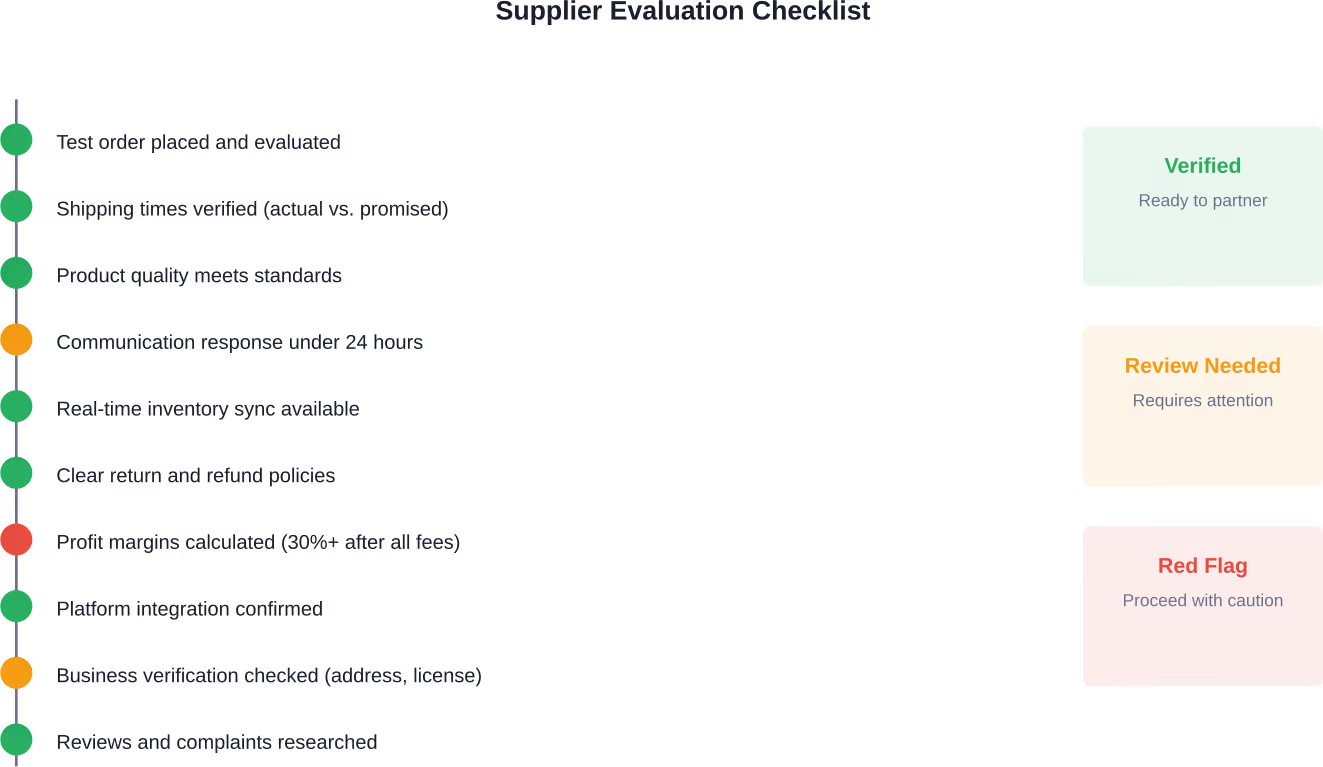
Always place test orders before committing to a supplier relationship. Order multiple products to assess packaging quality, shipping speed, and product accuracy.
Check if products arrive as described. Photograph the packaging, unboxing experience, and actual product quality. These elements directly impact customer satisfaction.
Measure actual shipping times against promised delivery windows. A supplier claiming 3-5 day shipping but consistently delivering in 7-10 days creates expectation mismatches with customers.
Supplier communication quality predicts future problem resolution. Send pre-sales questions via email and measure response time and helpfulness.
Better Business Bureau complaints for various dropshipping platforms frequently mention poor communication, unresponsive support, and difficulty canceling subscriptions. These patterns emerge across multiple services, including AliDropship (which has BBB complaints about charging practices and fake customers) and AutoDS (with complaints about refund processing and unexpected fees).
Ask specific questions about inventory updates, return procedures, and defect handling. Suppliers with clear policies and prompt responses typically perform better during actual order fulfillment.
Calculate realistic profit margins before committing to products. Factor in supplier costs, platform fees, payment processing fees, and advertising costs.
A product with a $10 supplier cost and $30 retail price doesn't yield $20 profit. Payment processing (typically 2-3% for most payment methods), marketplace fees (varies widely), and advertising costs (which can vary significantly for new stores) significantly impact actual margins.
Compare pricing across multiple suppliers for identical products. Some directories show inflated wholesale prices that make profitable retailing difficult. According to Better Business Bureau reviews, one customer reported concerns about competitive pricing on certain dropshipping platforms.
The dropshipping industry includes legitimate wholesalers and scam operations designed to extract fees from hopeful entrepreneurs. Learning to distinguish between them saves time and money.
Suppliers promising guaranteed income, instant success, or specific earning figures often operate as business opportunity schemes rather than legitimate wholesalers.
The FTC has taken action against e-commerce business opportunity schemes. In August 2025, the FTC announced a case against Click Profit operators, resulting in a permanent ban from the industry. According to the FTC announcement from August 25, 2025, under a proposed settlement with Click Profit operators, they must turn over personal and business assets.
Legitimate suppliers focus on product quality, shipping times, and wholesale pricing—not on making specific income or earning guarantees to sellers. Business success depends on marketing, product selection, and execution, not supplier choice alone.
Some platforms require membership fees or monthly subscriptions. That's not automatically a red flag—SaleHoo, for example, charges membership fees for directory access.
But be cautious about suppliers requiring large upfront payments for "exclusive access," "certification," or "premium product lists." According to Better Business Bureau complaints, ECOMHUB LLC received a complaint from a customer who paid $6,800 upfront for a Done-For-You Amazon FBA package with alleged service delivery issues.
Verify exactly what fees cover and check cancellation policies carefully. User complaints across multiple platforms mention difficulty canceling subscriptions and unexpected renewal charges.
Legitimate wholesale suppliers maintain professional websites with clear contact information, business addresses, and product catalogs.
Suppliers without verifiable business addresses, phone numbers, or company registration information pose higher risk. The FTC's INFORM Consumers Act now requires high-volume sellers to provide verification information, so legitimate suppliers operating at scale should have established business credentials.
Search for reviews and experiences from other retailers. While some negative reviews exist for every platform, patterns of similar complaints indicate systemic issues.
Technical integration capabilities separate scalable dropshipping operations from time-consuming manual processes.
Most major dropshipping suppliers offer native integrations with Shopify and WooCommerce—the two most popular ecommerce platforms for dropshipping stores.
Shopify's app marketplace includes integrations for TopDawg, Spocket, Inventory Source, and hundreds of other supplier connections. These apps typically automate product imports, inventory updates, and order routing.
WooCommerce integrations often rely on plugins that connect to supplier APIs. The technical setup can be more complex than Shopify but offers greater customization for retailers with specific requirements.
Many dropshippers sell across multiple marketplaces simultaneously. According to source data, TopDawg offers integrations with eBay, Amazon, Shopify, and WooCommerce.
Multi-channel selling requires inventory synchronization across all platforms. If a product sells on eBay, inventory should update on Amazon and Shopify simultaneously to prevent overselling.
Platform fees vary significantly. eBay charges final value fees typically ranging from 10-15% depending on category. Amazon requires professional seller accounts for multi-item listings. Etsy charges listing fees plus transaction fees. Calculate total platform costs when determining product pricing.
Manual order processing doesn't scale beyond a handful of daily orders. Automation becomes essential as order volume grows.
Automated systems route orders from storefronts directly to suppliers, including customer shipping information and product specifications. The supplier fulfills and ships the order while updating tracking information back to the retailer's system.
According to Shopify's research on supplier relationship management, brands using SRM software to share real-time sales data with suppliers reduced lead times by 30% and ensured product availability during high-demand periods.
Dropshipping involves legal obligations beyond typical ecommerce operations. Understanding these requirements prevents regulatory issues and builds customer trust.
The FTC's INFORM Consumers Act affects high-volume third party sellers on online marketplaces. The law defines a consumer product as "any tangible personal property which is distributed in commerce and which is normally used for personal, family, or household purposes."
The FTC's INFORM Consumers Act defines a 'high-volume third party seller" as one who has entered into 200 or more discrete sales or transactions of new or unused consumer products resulting in an aggregate total of $5,000 or more during any continuous 12-month period within the previous 24 months. The law requires online marketplaces to obtain information from these sellers and ensure that information is clearly disclosed.
While this primarily impacts marketplace platforms, dropshippers selling at volume should understand verification requirements. Providing business information, tax identification, and contact details may become necessary as sales grow.
The FTC's Mail, Internet, or Telephone Order Merchandise Rule applies to dropshipping businesses. The rule requires that when you advertise merchandise, you must have a reasonable basis for stating or implying that you can ship within a certain time.
If shipment delays occur, retailers must notify customers and offer the option to cancel for a full refund. This creates challenges when suppliers experience unexpected inventory issues or shipping delays.
The rule exempts magazine subscriptions, seeds and growing plants, and collect-on-delivery orders. Most dropshipped consumer products fall under the rule's requirements.
Dropshipping businesses typically require business licenses and sales tax permits. Requirements vary by state and sometimes by city or county.
Sales tax obligations for dropshipping can be complex. Generally, retailers owe sales tax in states where they have nexus (physical presence or economic activity). The supplier's location doesn't determine tax obligations—the retailer's nexus and the customer's location do.
Check state laws where operations are planned. Some states have specific requirements for resellers or online retailers that differ from traditional business registration.
Transactional supplier relationships limit growth potential. Strategic partnerships create competitive advantages through better pricing, priority inventory access, and customized arrangements.
As order volume grows, negotiate better wholesale pricing. Suppliers often offer volume discounts once retailers demonstrate consistent order flow.
Track order data to demonstrate value during negotiations. Showing 100+ monthly orders or $10,000+ in monthly supplier purchases creates leverage for reduced per-unit costs.
Better pricing directly improves margins or allows more competitive retail pricing. A 10% reduction in supplier costs significantly impacts profitability, especially in competitive niches.
High-volume retailers can often arrange custom packaging, branded inserts, or even private label products with suppliers.
According to Shopify's branded dropshipping research, a cohesive brand identity and custom shopping experience allow retailers to charge premium pricing for the same items that competitors sell generically.
Start these conversations after establishing consistent order volume. Suppliers invest in custom arrangements for retailers who represent meaningful revenue, not one-time buyers.
Strong supplier relationships provide access to trending products before they become saturated. Suppliers often share upcoming product launches with established partners first.
During high-demand periods or supply constraints, suppliers prioritize fulfillment for reliable, high-volume customers. This prevents stockouts that force turning away ready-to-buy customers.
Regular communication maintains these relationships. Schedule quarterly check-ins to discuss performance, address issues, and explore new opportunities.
According to academic research published through the University of San Francisco, 'lack of market research' and other common difficulties significantly impact dropshipping business sustainability.
Dependence on one supplier creates catastrophic risk. If that supplier experiences inventory problems, quality issues, or goes out of business, the entire product catalog disappears.
Diversify supplier relationships across multiple partners. Even within a niche, work with 3-5 different suppliers to spread risk.
Test backup suppliers before primary ones fail. Having alternative sources identified and tested prevents scrambling during supply disruptions.
New dropshippers often underestimate total costs. A product with 50% markup doesn't yield 50% profit.
Calculate all expenses: supplier cost, payment processing (typically 2-3% for most payment methods), platform fees (varies widely), advertising costs (which can vary significantly for new stores), returns and refunds (which vary by product category), customer service time, and software subscriptions.
A $10 product selling for $20 might net only $2-4 after all expenses. That requires significant volume to build a sustainable business.
Dropshippers don't handle products directly, but they're still responsible for customer experience. Shipping delays, product defects, or missing orders become the retailer's problem regardless of supplier fault.
Build customer service processes for common issues: tracking inquiries, defect reports, return requests, and shipment delays. Response time and helpfulness directly impact reviews and repeat business.
Set realistic expectations in product listings. If a supplier typically ships in 3-5 business days, don't promise 2-day delivery. Better to under-promise and over-deliver than create disappointment.
The best dropshipping supplier depends on specific business goals, target markets, and product categories. There's no universal "best" option—only the right fit for particular situations.
For U.S.-focused stores prioritizing fast shipping, TopDawg's verified supplier network provides access to domestic wholesalers with 2-5 day delivery times. The platform's 3,000+ suppliers and 500,000+ products cover most major categories.
For retailers emphasizing brand identity and quality over product quantity, Spocket's curated U.S. and European suppliers offer branded packaging options and higher-quality products that support premium pricing strategies.
For new dropshippers conducting product research without upfront investment, Inventory Source's free directory access allows exploring thousands of suppliers before committing to paid platforms.
For safety-conscious sellers wanting pre-vetted suppliers, SaleHoo's screening process reduces scam risk, though membership fees apply.
The most successful approach often combines multiple suppliers. Start with one platform to learn systems and processes, then expand to additional suppliers as operations scale and needs become clearer.
Test everything. Place sample orders, measure actual shipping times, evaluate product quality, and assess communication responsiveness before listing products. The time invested in supplier evaluation prevents customer service nightmares and refund requests later.
Build relationships strategically. As order volume grows, negotiate better pricing, request custom arrangements, and prioritize suppliers who demonstrate reliability and responsiveness.
Track supplier performance metrics continuously. Monitor shipping times, defect rates, inventory accuracy, and communication quality. Replace underperforming suppliers before problems significantly impact customer satisfaction.
Stay compliant with regulations including the INFORM Consumers Act and FTC shipping rules. Proper business registration and transparent customer communication build sustainable operations that withstand regulatory scrutiny.
The dropshipping business model offers legitimate opportunities for building profitable ecommerce businesses. Success depends on supplier selection, realistic profit margin calculations, excellent customer service, and continuous optimization based on actual performance data.
Start small, test thoroughly, and scale what works. The best dropshipping suppliers for your business are those that align with your specific niche, target market, and operational priorities—not necessarily the platforms with the biggest marketing budgets or the most suppliers.


