AI Tools for Facebook Ads That Make Campaigns Easier to Run
A practical look at AI tools for Facebook ads, how teams use them, and where they actually save time or improve results.
Jan 8, 2026



Dropshipping is completely legal in the United States and most countries worldwide. The business model itself is a legitimate form of e-commerce. However, dropshippers must comply with consumer protection laws, advertising regulations, tax requirements, and platform-specific rules to operate legally.
The question "is dropshipping legal?" pops up constantly in entrepreneur circles, Reddit threads, and business forums. It makes sense. The model seems almost too good to be true: sell products you never touch, run a business with minimal upfront investment, and ship directly from suppliers to customers.
But here's the thing—dropshipping's reputation problem doesn't come from the business model itself. It comes from sellers who cut corners, ignore regulations, or outright scam customers.
The short answer? Dropshipping is absolutely legal. The longer answer involves understanding what makes it legal, what can make it illegal, and how to stay on the right side of consumer protection laws.
Dropshipping operates on a simple premise: you sell products, a supplier holds the inventory, and that supplier ships directly to your customer when you receive an order. Nothing about this arrangement violates federal law.
According to the Federal Trade Commission, online advertising and marketing follows the same basic rules as traditional retail. The FTC's guidance on online advertising confirms that internet-based businesses must maintain credibility through honest advertising and fulfillment practices.
The business model itself mirrors traditional wholesale arrangements. Retailers have worked with third-party fulfillment for decades. Dropshipping just removes the warehouse from the retailer's side of the equation.
Traditional retail requires inventory purchases upfront. You buy products, store them, and ship them yourself. Dropshipping eliminates the inventory holding step.
This creates both advantages and compliance challenges. You're not handling physical products, which means lower overhead. But it also means less control over product quality, shipping times, and fulfillment accuracy.
From a legal standpoint, the customer doesn't care about your fulfillment method. You're still the seller of records. That's the crucial point many new dropshippers miss.

Legal in 2026 doesn’t just mean having the right policies – it also means how you promote products. Misleading claims, exaggerated creatives, or the wrong messaging can trigger issues with ad platforms and even regulations. That’s where Extuitive fits in. It uses predictive models and simulated consumer behavior to analyze your creatives before they go live, helping you spot weak or potentially problematic messaging early instead of learning from rejected ads or wasted spend.
In practice, this gives you more control over both risk and performance. You’re not just checking if something might convert – you’re seeing how different messages land before they reach real users. That means fewer revisions, fewer rejected campaigns, and less budget spent fixing mistakes after launch. If you want to keep your dropshipping setup both compliant and profitable, it’s worth validating your ads upfront with Extuitive.
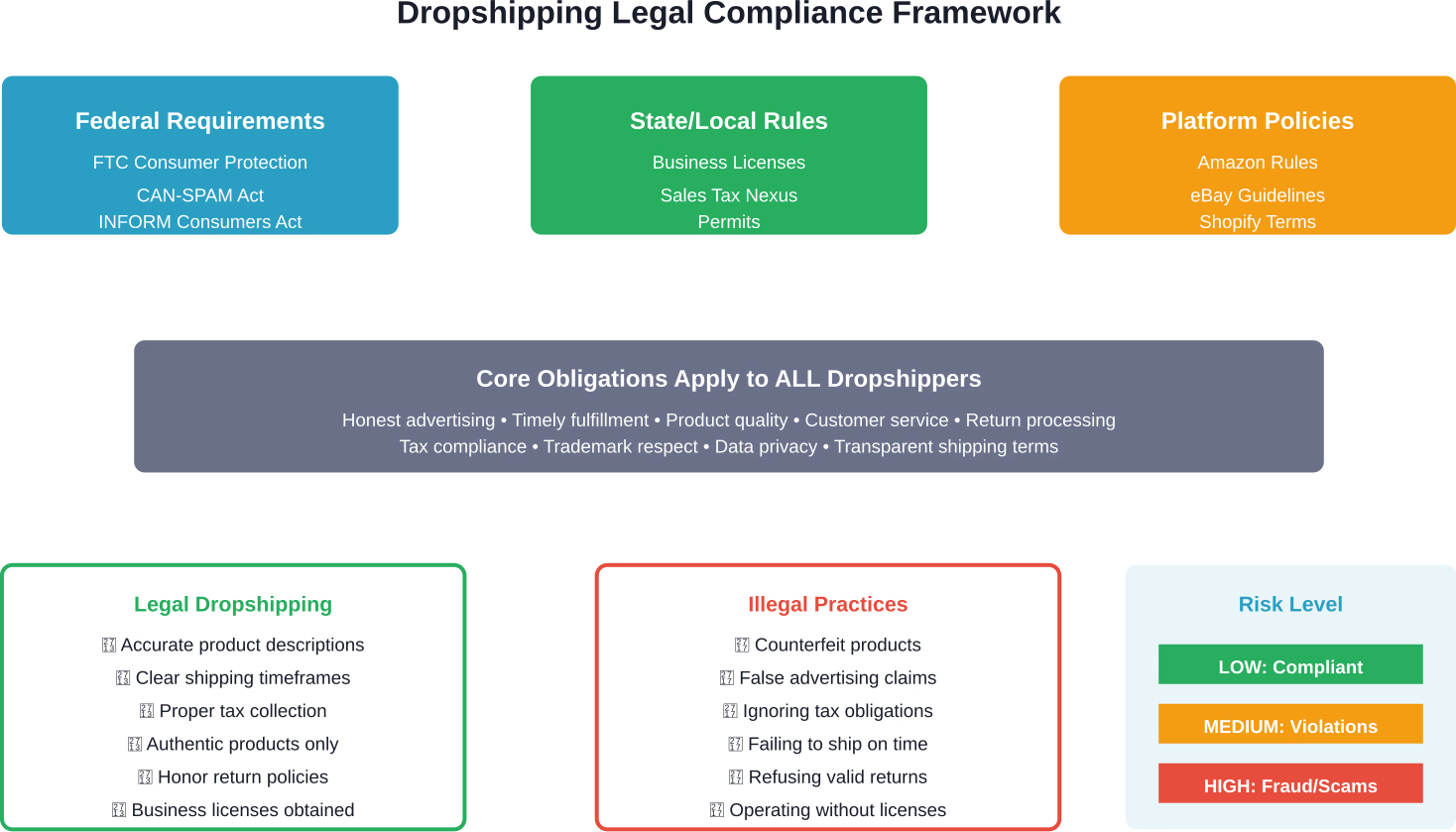
Several federal laws and regulations govern dropshipping operations. Understanding these isn't optional—it's the foundation of running a legal business.
The Federal Trade Commission enforces consumer protection standards across all retail channels. Truth-in-advertising principles apply whether you're selling computers, software, apps, or physical products through dropshipping.
These standards require honest product descriptions, accurate pricing, and clear disclosure of material terms. Misleading claims about product capabilities, origin, or availability violate federal law.
The FTC has taken enforcement action against e-commerce business opportunity schemes that made false income claims. In August 2025, the FTC announced a permanent ban on Click Profit operators who misled consumers about e-commerce opportunities. A separate case in July 2025 resulted in defendants surrendering millions in cash and property.
Effective June 27, 2023, the INFORM Consumers Act imposes specific requirements on online marketplaces and certain sellers. This law aims to increase transparency and reduce stolen or counterfeit goods.
The Act defines "high-volume third party sellers" as those who make 200 or more discrete sales totaling $5,000 or more in a 12-month period during two years. If you meet these thresholds on platforms like Amazon or eBay, additional verification and disclosure requirements apply.
Online marketplaces must collect and verify information from high-volume sellers, including bank account information, tax identification numbers, and contact details. The law's definition of "consumer product" includes tangible personal property normally used for personal, family, or household purposes.
Email marketing drives many dropshipping businesses. The CAN-SPAM Act sets rules for commercial email, giving recipients the right to stop receiving messages.
Key requirements include honest header information, non-deceptive subject lines, clear identification of messages as advertisements, inclusion of a physical postal address, and honor of opt-out requests within 10 business days.
Violations can result in significant penalties per email. That adds up quickly when you're sending marketing campaigns to thousands of subscribers.
Federal regulations form the baseline, but state and local requirements add additional layers. These vary significantly by location.
Most jurisdictions require business licenses for commercial operations. The Small Business Administration notes that requirements and fees vary based on business activities, location, and government rules.
Even home-based dropshipping businesses typically need a general business license from the city or county. Some states require additional permits for specific product categories.
Operating without proper licenses creates liability risks. It can also complicate tax compliance and prevent you from opening business bank accounts or obtaining business insurance.
Sales tax compliance represents one of the biggest legal challenges for dropshippers. The rules changed dramatically after the Supreme Court's South Dakota v. Wayfair decision in 2018.
Previously, retailers only collected sales tax in states where they had physical presence. Now, economic nexus standards apply. Reach certain sales thresholds in a state, and you're required to collect and remit sales tax there.
Each state sets its own thresholds. Some require registration after $100,000 in sales, others after 200 transactions. The complexity multiplies quickly as you scale across state lines.
Drop-shipment situations create additional complications. Illinois regulations, for example, address scenarios where out-of-state purchasers without Illinois nexus make purchases from registered companies that drop-ship to customers in Illinois.
The model itself is legal. Specific practices can cross into illegal territory. Understanding these boundaries keeps your business compliant.
Selling counterfeit goods violates federal trademark law regardless of your business model. The fact that a supplier ships directly to your customer doesn't shield you from liability.
Certain products face legal restrictions or outright bans. Weapons, pharmaceuticals, certain supplements, and products that violate safety standards can't be legally sold through standard dropshipping channels.
You're responsible for understanding product legality. "I didn't know my supplier was selling counterfeits" isn't a legal defense.
Exaggerating product capabilities, using fake reviews, or misrepresenting product origin violates FTC regulations. These practices constitute false advertising whether you hold inventory or dropship.
Common violations include claiming products are made in the USA when they're manufactured overseas, using photoshopped product images that misrepresent actual appearance, and copying competitor product descriptions that contain inaccurate information.
While the FTC monitors anti-competitive behavior, the Supreme Court ruled in Leegin Creative Leather Products, Inc. v. PSKS, Inc. (2007) that vertical price restraints, including MAP policies, are generally legal under federal law and are evaluated under the 'rule of reason' rather than being a per se violation.
Consumer protection laws give customers specific rights regarding refunds, returns, and shipping timeframes. Ignoring these rights creates legal liability.
If you advertise a 30-day return policy, you must honor it. If you can't ship within the promised timeframe, you must notify customers and offer the option to cancel for a full refund.
Many dropshippers run into problems when suppliers fail to ship on time or send defective products. From a legal standpoint, that's your problem to solve, not the customer's.
Major e-commerce platforms impose their own requirements beyond federal and state law. Violating platform policies can get your account suspended or permanently banned.
Amazon allows dropshipping but with strict conditions. You must be the seller of record on all packing slips and external packaging. No third-party packing slips, invoices, or marketing materials can be included.
You're responsible for accepting and processing returns even when a third party ships the product. Amazon also prohibits purchasing products from another online retailer and having them ship directly to customers.
This means dropshipping from other Amazon sellers violates policy. Dropshipping from AliExpress to Amazon customers violates policy if you can't control the packaging and documentation.
eBay permits dropshipping but requires that you guarantee delivery and take responsibility for the delivery experience. You must ship items within the handling time specified in the listing.
Using another retailer's packaging or branded materials violates eBay policy. The customer should never receive an invoice or packing slip showing a different seller's name.
Dropshipping from Amazon to eBay creates particular risks. Both platforms prohibit this practice, and account suspensions are common.
Shopify provides more flexibility since you're operating your own storefront. The platform doesn't restrict dropshipping relationships with suppliers.
However, Shopify's Terms of Service still require compliance with all applicable laws. You're responsible for consumer protection compliance, advertising honesty, and tax collection.
Shopify can suspend stores that receive excessive chargebacks, customer complaints, or legal violations. The platform's payment processing terms give them broad discretion to freeze funds if they suspect fraudulent activity.
Shipping across borders adds complexity. Customs regulations, import duties, and international consumer protection laws all come into play.
U.S. Customs and Border Protection enforces import regulations for products entering the country. Commercial invoices must accurately reflect transaction values.
The First Sale Declaration allows importers to determine transaction value based on an earlier sale rather than the last sale before importation. This can reduce duty obligations but requires proper documentation.
CBP's e-commerce guidance addresses international mail and duty treatment. Executive Order 14324 suspended duty-free de minimis treatment for all countries, affecting small-value shipments that previously entered duty-free.
Dropshipping from Chinese suppliers through platforms like AliExpress is legal. However, it creates specific compliance challenges.
Long shipping times test customer patience and platform shipping standards. Products must comply with U.S. safety regulations regardless of manufacturing origin. Trademark issues arise when suppliers list branded products they're not authorized to distribute.
Customs declarations must be accurate. Undervaluing products to reduce duties violates federal law and creates seizure risks.
Selling to EU customers triggers General Data Protection Regulation requirements. GDPR governs how businesses collect, store, and process personal data of EU residents.
Compliance requirements include obtaining clear consent for data collection, providing easy access to privacy policies, honoring data deletion requests, and implementing appropriate security measures.
GDPR violations carry substantial penalties. That makes compliance non-negotiable for businesses serving European customers.
Certain product categories face additional regulations. Understanding these restrictions prevents costly violations.
Food, dietary supplements, cosmetics, and medical devices fall under Food and Drug Administration jurisdiction. Each category has specific labeling, testing, and approval requirements.
Dietary supplements must comply with the Dietary Supplement Health and Education Act. Making disease treatment claims without FDA approval violates federal law.
Cosmetics face labeling requirements and ingredient restrictions. Medical devices require FDA clearance or approval before marketing.
The Consumer Product Safety Commission sets safety standards for many consumer goods. Children's products face particularly stringent requirements.
Products marketed to children under 12 must meet lead content limits, pass safety testing, and include tracking labels. Certification requirements apply to manufacturers and importers.
As the seller of record, you share liability for safety violations even when a third party manufactures and ships the product.
Trademark and copyright laws protect brand names, logos, and creative works. Selling products that infringe these rights creates legal exposure.
Authorized resale of genuine branded products generally doesn't violate trademark law under the first-sale doctrine. But purchasing counterfeits and misrepresenting them as genuine absolutely does.
Copyright issues arise when sellers copy product photos, descriptions, or other creative content without permission. Creating your own original content eliminates this risk.
How you structure your dropshipping business affects legal liability and tax treatment. The right structure provides important protections.
Many dropshippers start as sole proprietors—the simplest business structure requiring no formal registration. But sole proprietorships offer zero liability protection.
A customer lawsuit, product liability claim, or regulatory violation puts your personal assets at risk. Your house, car, and savings are all fair game for creditors.
Limited Liability Companies separate business and personal assets. LLCs provide liability protection while maintaining tax simplicity for single-member businesses.
Formation costs vary by state. Annual fees and reporting requirements add ongoing costs.
Insurance provides another liability layer. Several types apply to dropshipping operations.
General liability insurance covers customer injuries and property damage claims. Product liability insurance specifically addresses defective product claims. Cyber liability insurance protects against data breaches and cyberattacks.
E&O (Errors and Omissions) insurance covers mistakes in service delivery. This matters when incorrect products ship or orders get lost.
Insurance costs vary based on sales volume, product categories, and coverage limits.
Tax compliance represents one of the most complex aspects of running a legal dropshipping business. Multiple tax types apply depending on your location and sales volume.
All business income is taxable. Dropshipping profits count as self-employment income subject to both income tax and self-employment tax.
Self-employment tax covers Social Security and Medicare contributions. This applies in addition to regular income tax rates.
Quarterly estimated tax payments are required when you expect to owe $1,000 or more. Missing payments triggers penalties and interest.
Economic nexus laws require sales tax collection once you cross state-specific thresholds. Track sales by state carefully to identify when registration becomes mandatory.
After registering, you must collect appropriate tax rates, file regular returns, and remit collected taxes on schedule. Filing frequencies range from monthly to annually depending on sales volume.
Sales tax software helps manage multi-state compliance. Avalara, TaxJar, and similar services automate rate calculations, filing, and remittance.
Selling internationally creates additional tax complexities. Value Added Tax in European countries, Goods and Services Tax in other jurisdictions, and import duties all affect pricing and compliance.
Some countries require foreign businesses to register for VAT above certain thresholds. The €10,000 threshold for VAT applies only to EU-based businesses selling cross-border within the EU. For non-EU businesses (including most dropshippers from the US or China), there is no threshold; they must register for VAT or use the IOSS (Import One-Stop Shop) from the first cent of sales to EU consumers.
Working with a tax professional experienced in international e-commerce prevents costly mistakes.
Understanding common pitfalls helps avoid them. These mistakes create the most frequent legal problems for dropshippers.
Duplicating product descriptions, images, or other content from competitors or suppliers violates copyright law. Many dropshippers copy-paste without considering the legal implications.
Original content takes more effort but eliminates infringement risk. Hiring writers or using AI tools to create unique descriptions provides a legal alternative.
Product photos require proper licensing. Using manufacturer photos without permission creates liability. Stock photos, original photography, or properly licensed images solve this problem.
FTC mail order rules require shipping within advertised timeframes or within 30 days if no timeframe is specified. Failing to ship triggers specific notification requirements.
If you can't ship on time, you must notify the customer, provide a new shipping date, and offer the option to cancel for a full refund. Silence isn't an option.
Many dropshippers discover their supplier can't meet promised timeframes only after taking orders. This creates FTC violations and customer service nightmares.
Customer information requires protection. Data breaches create legal liability under state data breach notification laws and potentially federal regulations.
Minimum security measures include encrypted data transmission, secure payment processing, limited data retention, and restricted employee access.
Privacy policies must accurately describe data collection and use practices. Violating your own privacy policy creates FTC deceptive practices liability.
Ignoring customer complaints escalates problems. Unresolved disputes lead to chargebacks, negative reviews, and potential FTC complaints.
The FTC encourages consumers to report fraud and unfair business practices at ReportFraud.ftc.gov. Multiple complaints about your business can trigger investigations.
Platform policies typically require response to customer messages within 24-48 hours. Failing to communicate violates these requirements and damages seller metrics.
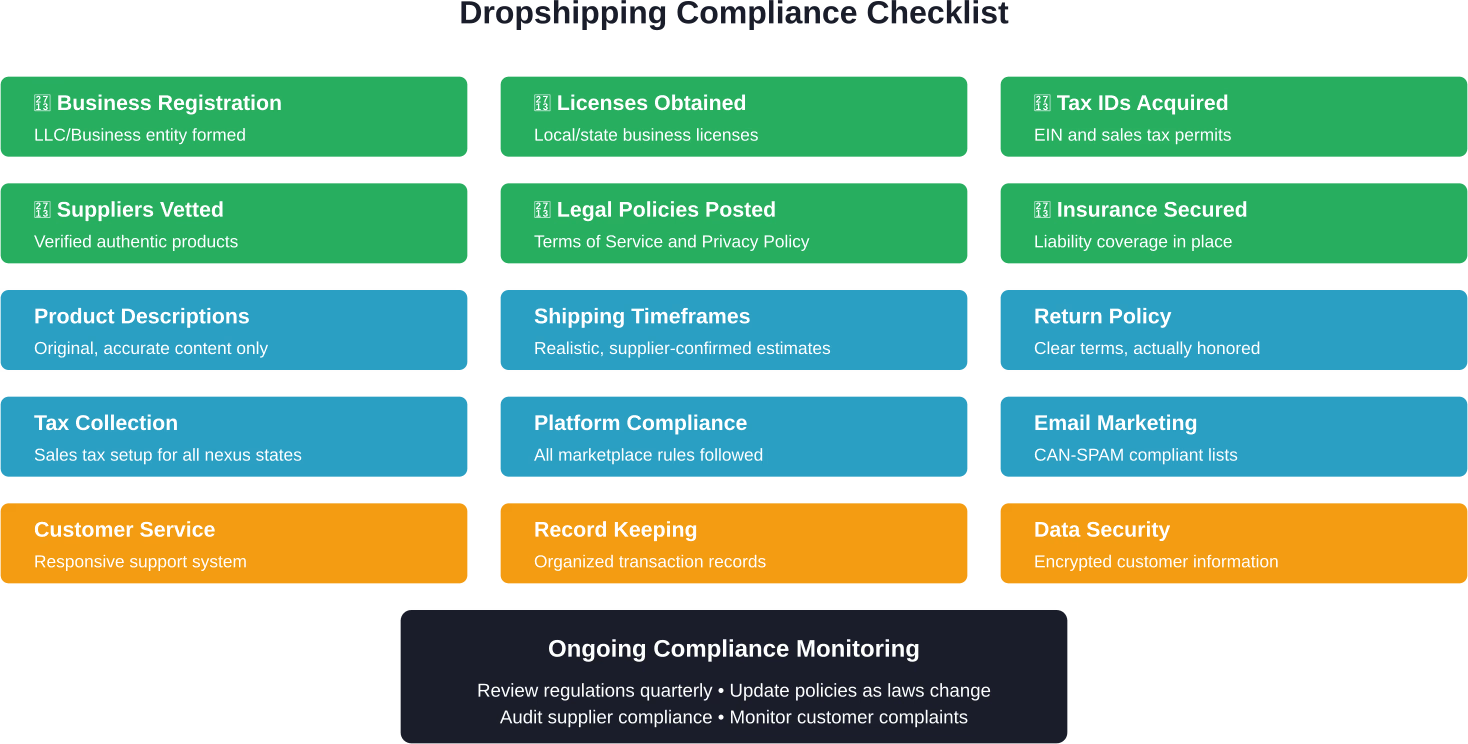
Operating legally isn't complicated once you understand the requirements. These steps establish a solid compliance foundation.
Your legal exposure depends heavily on supplier reliability. Thorough vetting reduces risk significantly.
Verify supplier legitimacy through business registration lookups, request product certifications and safety documentation, order samples to assess quality personally, and check references from other businesses.
Ask about inventory accuracy and shipping timeframes. Suppliers who overpromise create compliance problems when they can't deliver.
Request written agreements covering order processing times, return procedures, product authenticity guarantees, and liability allocation.
Proper records prove compliance and protect against disputes. Maintain documentation of business licenses and permits, sales tax registrations and returns, supplier agreements and communications, customer orders and shipping confirmations, and return authorizations and refund processing.
Retention periods vary by record type. Tax documents require seven years. Other business records should be kept at least three years.
Digital storage with cloud backup prevents loss. Organized records make audits and dispute resolution much simpler.
Clear terms protect both parties and establish expectations. Every dropshipping website needs comprehensive terms of service and a privacy policy.
Terms should cover shipping timeframes and methods, return and refund policies, product warranties and disclaimers, liability limitations, and dispute resolution procedures.
Privacy policies must describe what data you collect, how you use it, whether you share it with third parties, how you protect it, and how users can access or delete their information.
Generic templates create gaps. Policies should reflect your actual practices. Violating your own terms creates legal liability.
Even compliant businesses occasionally face disputes. How you respond determines the outcome.
Account suspension notices require immediate attention. Read the violation notice carefully to understand the specific issue.
Most platforms offer appeal processes. Provide documentation proving compliance or explaining the misunderstanding. Timely responses improve reinstatement chances.
Repeated violations lead to permanent bans. Fix underlying issues rather than just appealing the symptom.
Credit card chargebacks hurt your merchant account standing. Too many chargebacks can result in losing payment processing entirely.
Fight illegitimate chargebacks with documentation. Shipping confirmations, delivery receipts, and customer communication help win disputes.
Prevent chargebacks through clear product descriptions, accurate shipping timeframes, responsive customer service, and easy return processes.
FTC inquiries are serious. The agency has broad authority to investigate deceptive or unfair business practices.
Never ignore FTC communication. Respond promptly and truthfully. Providing false information compounds violations.
Retain legal counsel experienced in FTC matters. The agency's enforcement actions can result in substantial financial penalties and operational restrictions.
Recent cases demonstrate the FTC's focus on e-commerce. The agency has pursued multiple business opportunity schemes and deceptive advertising cases involving online sellers.
Many aspiring entrepreneurs wonder about age restrictions. Can minors legally operate dropshipping businesses?
Individuals under 18 generally can't enter binding contracts in most states. This creates practical barriers for minors running businesses.
Supplier agreements, platform terms of service, payment processor agreements, and business banking all involve contracts. Minors lack legal capacity to bind themselves to these terms.
Contracts signed by minors are typically voidable at the minor's discretion. This makes businesses reluctant to work with underage entrepreneurs.
Parents or legal guardians can establish business entities with minor children as employees or beneficiaries. This provides a legal structure while involving young entrepreneurs.
The parent would be the legal owner, contract signatory, and responsible party. The minor can handle operations under parental supervision.
This approach allows skill development while maintaining legal compliance. Upon reaching majority age, ownership can transfer.
Dropshipping offers legitimate opportunities for entrepreneurs willing to operate properly. The business model itself is entirely legal.
Legal compliance isn't a barrier—it's a competitive advantage. Businesses that prioritize customer protection, honest advertising, and regulatory compliance build sustainable operations that withstand scrutiny.
The legal risks discussed throughout this guide are avoidable through proper planning. Form the right business structure. Obtain necessary licenses and permits. Vet suppliers thoroughly. Maintain accurate records. Treat customers fairly.
These aren't extraordinary measures. They're basic business practices that separate professional operations from the fly-by-night operators who damage dropshipping's reputation.
Start with compliance from day one rather than trying to fix problems later. The cost of proper business formation, licensing, and insurance is minimal compared to the potential consequences of violations.
Resources exist to help. The Small Business Administration offers guidance on licensing and permits. The FTC provides extensive information about advertising requirements and consumer protection standards. State revenue departments publish sales tax guidelines.
Professional advisors provide valuable assistance. An attorney can review supplier contracts and terms of service. An accountant handles tax compliance and structures. An insurance agent identifies appropriate coverage.
The investment in professional guidance pays for itself by preventing costly mistakes. Many small businesses outsource operations to focus on core business functions.
Build your dropshipping business on a legal foundation. The model works when implemented correctly. Millions of legitimate online retailers use dropshipping as part of their fulfillment strategy.
Focus on providing value to customers rather than cutting corners. Source quality products from reputable suppliers. Set realistic expectations about shipping times. Honor your return policies. Respond to customer inquiries promptly.
These fundamentals create successful businesses regardless of the specific model. Dropshipping is simply a tool—legal when used properly, problematic when used to deceive or defraud.
Take action today to ensure your dropshipping operation meets all legal requirements. Review your business structure, verify licensing compliance, audit supplier relationships, and update website policies. The time invested now prevents problems later.
Legal dropshipping isn't complicated. It just requires attention to the same standards that apply to every legitimate retail business. Follow the rules, treat customers fairly, and build something sustainable.


