Best AI Email Marketing Tools for 2026
Discover how AI is changing email marketing with tools that help personalize campaigns, automate workflows, and improve engagement for businesses of all sizes.
Jan 7, 2026



Dropshipping on Amazon is a fulfillment method where sellers list products without holding inventory, and suppliers ship directly to customers. Amazon allows dropshipping but has strict policies requiring sellers to be the seller of record, ensure proper packaging and invoicing, and maintain customer service standards. Success requires careful supplier selection, policy compliance, and strategic product research to build a profitable business.
The dropshipping model continues to attract entrepreneurs seeking low-overhead business opportunities in 2026. Amazon remains one of the most lucrative platforms for this fulfillment method, but the path to profitability isn't as simple as listing products and watching orders roll in.
Understanding Amazon's specific policies and the operational realities separates successful sellers from those who face account suspensions. This guide breaks down everything needed to build a compliant, profitable Amazon dropshipping operation.
Dropshipping represents a fulfillment model where sellers list products on Amazon without maintaining physical inventory. When a customer places an order, the seller purchases the item from a third-party supplier who ships directly to the end customer.
The appeal is straightforward: minimal upfront investment, no warehouse costs, and the ability to test products without financial risk. But here's the thing—Amazon's implementation differs significantly from dropshipping on platforms like Shopify.
On Amazon, sellers compete within an existing marketplace rather than driving traffic to their own stores. This means leveraging Amazon's massive customer base while navigating stricter requirements and heightened competition.
The operational flow works like this: A seller creates product listings on Amazon. A customer purchases the item. The seller then orders from their supplier, providing the Amazon customer's shipping address. The supplier ships directly to that customer.
The profit margin equals the difference between the Amazon selling price and the supplier cost, minus Amazon's fees. Amazon charges referral fees ranging from 3% to 45% depending on product category, plus additional costs for fulfillment if not using FBA.
Sounds simple? The execution requires careful attention to Amazon's specific requirements.

Amazon dropshipping can move fast, but mistakes show up just as quickly. A weak product angle or unclear positioning doesn’t just slow things down – it usually shows up as wasted ad spend. And by the time you see it, the budget is already gone.
With Extuitive, you can review different creative directions before running ads. It gives a way to compare what might actually get attention instead of relying only on live testing. That makes it easier to decide what’s worth listing and promoting, especially when you’re working with similar products.
Before you push a product live or scale ads, make sure the angle makes sense with Extuitive.
Amazon does permit dropshipping, but with critical stipulations that many sellers overlook. According to Amazon Seller Central, the platform has explicit requirements that define compliant versus prohibited practices.
The core policy states that sellers must be the seller of record for all products. This means appearing on all packing slips, invoices, and external packaging as the seller. Amazon customer service discussions reveal that violations often stem from suppliers including their own branding or invoices in shipments.
First, sellers must identify themselves as the seller of record on all packaging and invoices. No supplier branding can appear on anything the customer receives. This protects Amazon's customer experience and prevents confusion about who's responsible for the transaction.
Second, sellers remain responsible for accepting and processing returns. The supplier relationship stays invisible to the customer. All post-purchase communication flows through the seller or Amazon's systems.
Third, compliance with all Amazon seller policies and applicable laws remains mandatory. This includes proper product sourcing, authentic goods, and adherence to restricted product guidelines.
Amazon's policies specifically ban purchasing products from another online retailer and having them ship directly to customers. This means sourcing from competitors like Walmart, Target, or even other Amazon sellers violates the terms.
The platform also prohibits any arrangement where supplier information appears on packaging, invoices, or any customer-facing materials. Real talk: many account suspensions stem from suppliers accidentally including their own documentation in shipments.
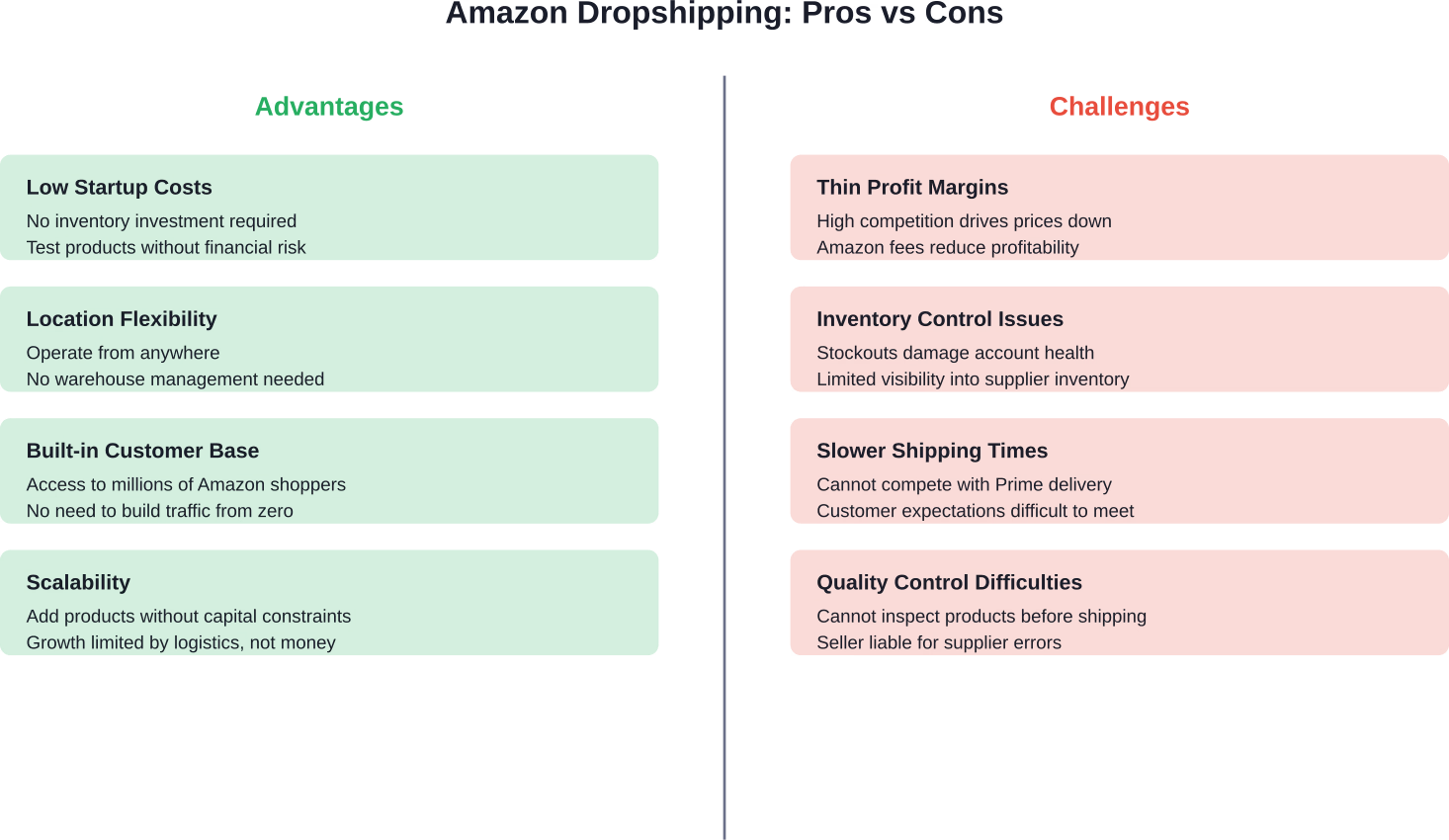
Every business model carries trade-offs. Amazon dropshipping offers distinct advantages but comes with challenges that cause many sellers to fail within their first year.
Low startup costs represent the most obvious benefit. Sellers can launch with minimal capital since there's no need to purchase inventory upfront. Testing products becomes financially feasible because there's no risk of being stuck with unsold stock.
Location flexibility matters too. The business operates entirely online, requiring only a computer and internet connection. Suppliers handle storage and shipping logistics, freeing sellers to focus on product selection and customer service.
Amazon's existing traffic provides immediate access to millions of potential customers. More than 60% of online sellers can make money through various fulfillment methods, according to Amazon's Seller Guide. This eliminates the need to build traffic from scratch.
Thin profit margins plague many dropshipping operations. Competition drives prices down while Amazon's fees eat into revenue. Successful sellers often operate on margins between 10-20%, requiring significant volume to generate meaningful income.
Inventory control issues create operational headaches. When suppliers run out of stock, sellers must either cancel orders (damaging account metrics) or scramble to find alternative sources. These stockouts directly impact the account health that Amazon uses to determine seller privileges.
Shipping times typically can't compete with Amazon Prime. Customers expect fast delivery, but dropshipping suppliers often take 3-7 days to ship, with delivery taking additional time. This puts sellers at a disadvantage against FBA sellers who offer 2-day Prime shipping.
Quality control becomes difficult when sellers never physically handle products. Issues with product quality, incorrect items, or damaged goods all reflect poorly on the seller's account, even when the supplier is at fault.
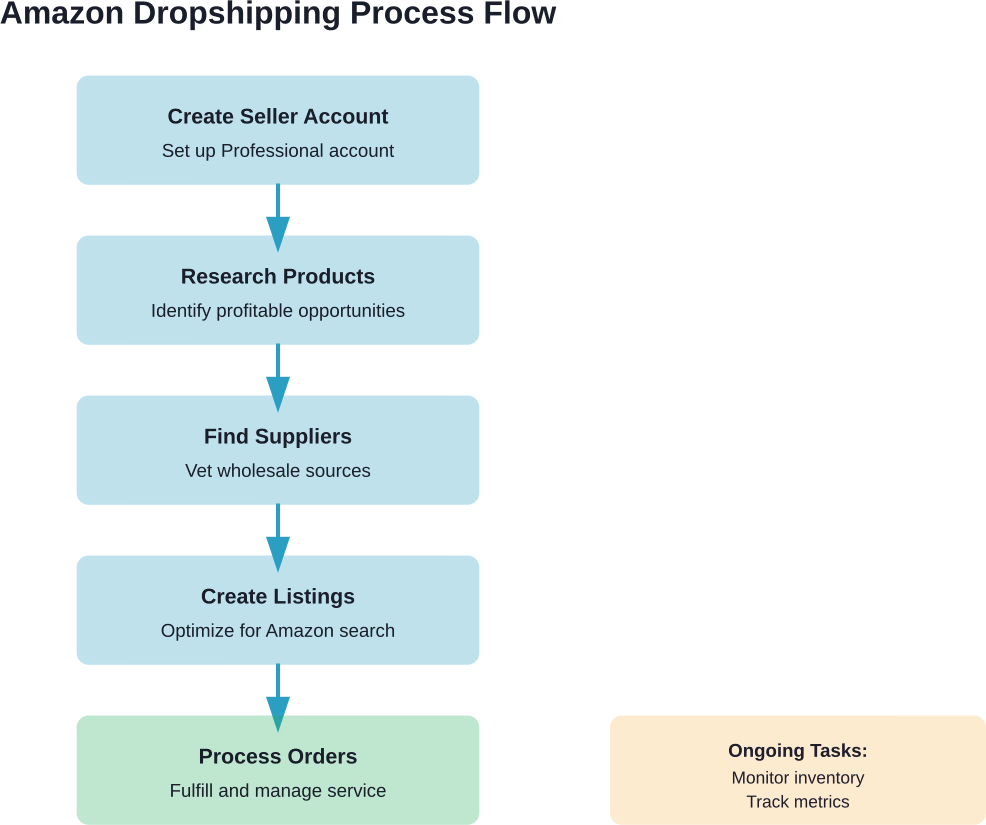
Building a compliant and profitable Amazon dropshipping business requires systematic execution across several key areas. The process isn't complicated, but skipping steps leads to problems down the line.
Setting up an Amazon seller account represents the first concrete step. Sellers choose between Individual and Professional accounts. The Individual plan costs $0.99 per sale but lacks access to bulk listing tools and advertising features.
The Professional plan runs $39.99 monthly but provides full access to Amazon's seller tools, bulk operations, and advertising platforms. For anyone planning to sell more than 40 units monthly, the Professional account becomes cost-effective.
Registration requires basic business information, tax details, and bank account information for payments. Amazon typically approves accounts within 24-48 hours, though some categories require additional approval before listing products.
Product selection determines success more than any other factor. The goal is finding items with sufficient demand, manageable competition, and healthy profit margins after Amazon's fees.
Start by exploring product categories with consistent demand. Tools like Amazon's Best Sellers list, product research software, and competitor analysis reveal what's actually selling. Look for products with steady sales velocity rather than trendy items with temporary spikes.
Calculate potential profitability carefully. Amazon's referral fees, shipping costs, supplier prices, and any advertising expenses all eat into margins. Aim for products where the landed cost (product plus shipping) represents no more than 40-50% of the selling price.
Avoid heavily saturated markets where dozens of sellers offer identical products. Competition in those spaces forces prices down to unprofitable levels. Instead, look for products with moderate competition where quality and service can differentiate offerings.
Supplier selection makes or breaks dropshipping operations. The right partners ensure consistent product quality, reliable shipping, and compliance with Amazon's policies. The wrong ones lead to account suspensions and customer complaints.
Wholesale suppliers and manufacturers represent the safest options. These businesses expect to work with resellers and typically provide proper invoicing and neutral packaging. Directories like SaleHoo, Worldwide Brands, and industry-specific trade shows help identify legitimate suppliers.
Vet potential suppliers thoroughly before committing. Request product samples to verify quality. Confirm they can ship without including their own branding or invoices. Establish clear communication channels and understand their stock management processes.
Ask about typical shipping times, return policies, and how they handle stock shortages. Suppliers who can provide real-time inventory updates help prevent the stockout issues that damage seller accounts.
Amazon's search algorithm determines which products appear when customers search. Optimized listings increase visibility and conversion rates, directly impacting profitability.
Product titles should include key search terms while remaining readable. Include brand name, key features, size or quantity, and important specifications. Amazon allows up to 200 characters, but front-loading the most important information captures attention.
Bullet points highlight key benefits and features. Focus on what customers actually care about—problem-solving capabilities, quality indicators, and practical specifications. Use all five bullet points Amazon provides.
Product descriptions offer space for more detailed information. Include use cases, additional specifications, and any information that helps customers make confident purchasing decisions.
High-quality images are mandatory. Amazon requires at least one image but allows up to nine. Professional photos showing the product from multiple angles, in use, and with size references significantly improve conversion rates.
Order fulfillment in dropshipping requires tight coordination with suppliers. When orders come in, the seller must quickly place corresponding orders with suppliers, providing accurate shipping information.
Many sellers automate this process using software that connects their Amazon account with supplier systems. This reduces manual work and minimizes errors that lead to shipping delays or incorrect addresses.
Track all orders carefully. Upload tracking information to Amazon promptly to maintain healthy account metrics. Late shipments, tracking errors, and order cancellations all negatively impact the metrics Amazon uses to evaluate seller performance.
Customer service responsibilities remain with the seller regardless of where products originate. Respond to customer inquiries within 24 hours. Handle returns according to Amazon's policies. Address problems proactively before they escalate to negative reviews or A-to-Z claims.
Product selection represents the highest-leverage activity in Amazon dropshipping. Get this right, and the business practically runs itself. Get it wrong, and no amount of effort generates profits.
Certain product categories consistently perform well for dropshippers. Home and kitchen items maintain steady demand without extreme seasonality. Products that solve specific problems or improve daily routines tend to generate repeat purchases.
Electronics accessories represent another viable category. Phone cases, charging cables, and device holders sell consistently. These items typically have established market demand and clear search terms customers use.
Hobby and craft supplies appeal to passionate customer bases willing to pay for quality. Items serving specific niches within larger hobbies often face less competition than mainstream products.
Pet products continue growing as pet ownership increases. Items like toys, grooming tools, and accessories maintain consistent sales velocity across seasons.
Steer clear of products with intellectual property concerns. Branded items, licensed characters, or patented designs create legal risks. Amazon aggressively enforces IP rights, and violations lead to immediate account suspension.
Avoid products with high return rates. Clothing, supplements, and electronics often generate returns that eat into profitability. Returns in dropshipping are particularly problematic since the seller must handle the return while coordinating with the supplier.
Skip highly seasonal products unless prepared for dramatic sales fluctuations. Halloween costumes or Christmas decorations might generate strong sales for a few weeks, but capital sits idle the rest of the year.
Products with razor-thin margins rarely work in dropshipping. When competing sellers can source directly from manufacturers at lower costs, dropshippers cannot compete on price while maintaining profitability.
Amazon's own data provides valuable insights. The Best Sellers Rank (BSR) indicates sales velocity within categories. Lower numbers mean faster sales. Products with BSRs under 20,000 in their main category typically sell multiple units daily.
Third-party research tools like Jungle Scout, Helium 10, or Seller Assistant automate product analysis. These platforms estimate monthly sales volumes, track competitor pricing, and calculate potential profitability after all fees.
Manual research still matters. Read customer reviews to identify unmet needs or common complaints. Products with generally positive reviews but consistent mentions of specific issues present opportunities for differentiation.
Analyze competitor listings to understand the competitive landscape. How many sellers offer the product? What price points dominate? Do existing listings have obvious weaknesses in images, descriptions, or customer service?
Suppliers determine whether a dropshipping operation thrives or collapses. The relationship with suppliers affects product quality, shipping speed, policy compliance, and ultimately, customer satisfaction.
Wholesale distributors purchase products in bulk from manufacturers and resell to retailers. These businesses expect to work with dropshippers and typically provide proper invoicing, neutral packaging, and reasonable terms.
Manufacturers sell directly to retailers, cutting out the distributor markup. Working with manufacturers can improve margins but often requires higher minimum orders or more complex negotiations.
Dropshipping-specific suppliers build their entire business model around this fulfillment method. They understand Amazon's requirements and usually provide systems for automated order processing and inventory updates.
Wholesale directories like SaleHoo and Worldwide Brands maintain vetted lists of legitimate suppliers. While these services charge membership fees, they eliminate much of the risk in supplier selection.
Trade shows in specific industries connect retailers with manufacturers and distributors. These in-person events allow for direct relationship building and often lead to better terms than cold outreach.
Industry associations often maintain member directories including manufacturers and wholesalers. These organizations can provide introductions and vouch for member companies' legitimacy.
Direct manufacturer outreach works for sellers willing to invest time in relationship building. Identifying manufacturers through product research and reaching out directly can establish partnerships with better margins than working through distributors.
Before committing to any supplier, ask these critical questions:
Request product samples before committing to any supplier relationship. The only way to verify quality is examining products firsthand. Samples also allow testing shipping times and packaging to ensure Amazon policy compliance.
Amazon enforces its dropshipping policies strictly. Account suspensions result from violations, and reinstatement proves difficult. Understanding common mistakes helps sellers avoid these problems.
Many sellers mistakenly believe they can purchase products from retail stores or websites and dropship them. This violates Amazon's policies explicitly. The platform specifically prohibits sourcing from other online retailers.
Community discussions on Amazon Seller Central forums reveal this represents the most common dropshipping violation. Sellers think buying from Walmart or Target and shipping directly works, but Amazon's systems detect this practice and suspend accounts.
The problem isn't just policy—it's practical. Retail sources include their own branding on packaging and invoices. When customers receive packages with competitor branding, complaints follow. Amazon investigates and discovers the violation.
Amazon regularly requests invoices proving products came from legitimate suppliers. These requests often trigger when customers complain about product authenticity or when algorithms flag potential policy violations.
Proper invoices include the supplier's business name, contact information, itemized product descriptions, quantities, and prices. Personal receipts from retail stores don't qualify. Credit card statements alone are insufficient.
Maintain organized records of all supplier invoices and correspondence. When Amazon requests documentation, sellers typically have 24-48 hours to respond. Having systems in place to quickly access this information prevents account suspensions.
Selling branded products without proper authorization creates significant risk. Brand owners actively monitor Amazon for unauthorized sellers and file complaints that lead to listing removals and potential account suspension.
Stick to unbranded or generic products when starting. As the business grows, establish relationships with brand manufacturers for authorized distribution. Proper authorization letters from brands protect against IP complaints.
Never use stock photos from manufacturers unless explicitly permitted. Using copyrighted images without authorization constitutes IP infringement even if selling authentic products.
Amazon measures seller performance through specific metrics. Order Defect Rate, Late Shipment Rate, and Pre-fulfillment Cancel Rate all impact account standing. Dropshipping makes maintaining healthy metrics challenging.
Order Defect Rate must stay below 1%. This includes negative feedback, A-to-Z Guarantee claims, and credit card chargebacks. Supplier issues that result in defective products or shipping problems directly impact this metric.
Late Shipment Rate should remain under 4%. In dropshipping, sellers depend entirely on suppliers to ship on time. Partner only with suppliers who consistently meet shipping commitments.
Pre-fulfillment Cancel Rate measures how often sellers cancel orders before shipping. This must stay below 2.5%. Stockouts at suppliers force order cancellations that damage this metric. Real-time inventory visibility becomes crucial.
Dropshipping isn't the only path to selling on Amazon. Understanding alternatives helps sellers choose the best approach for their specific situation and goals.
FBA represents Amazon's fulfillment service where sellers ship inventory to Amazon warehouses. Amazon then stores, picks, packs, and ships products when orders arrive. They also handle customer service and returns.
The major advantage is Prime eligibility. FBA products qualify for Prime's 2-day shipping, dramatically improving conversion rates and visibility in search results. Products marked Prime typically outsell merchant-fulfilled listings significantly.
The trade-off is upfront inventory investment. Sellers must purchase stock before knowing if it will sell. Storage fees apply for inventory sitting in Amazon warehouses, particularly for slow-moving products.
FBM means sellers handle all fulfillment from their own location or warehouse. This provides complete control over the shipping process and customer experience.
Sellers avoid Amazon's FBA fees and storage costs. Profit margins can be higher on each sale when fulfillment costs are lower. This model makes sense for oversized items with high FBA fees or products requiring special handling.
But sellers must handle all logistics themselves. This includes warehousing, packaging materials, shipping labels, and daily trips to ship orders. Scaling becomes labor-intensive without automation.
Many successful sellers use multiple fulfillment methods strategically. Fast-moving products go through FBA to maximize sales velocity and Prime eligibility. Slower-moving or lower-margin items ship via FBM or dropshipping to avoid storage fees.
This approach requires more complex inventory management but optimizes for profitability across different product types. Software tools help manage inventory across multiple fulfillment methods from a single dashboard.
Operating an Amazon dropshipping business creates specific tax and legal obligations. Ignorance of these requirements doesn't exempt sellers from compliance.
Most sellers should establish a formal business entity rather than operating as a sole proprietor. LLCs provide liability protection while maintaining operational simplicity. This structure separates personal and business assets.
Corporations make sense for larger operations or when seeking outside investment. The added complexity and costs typically don't justify this structure for beginners.
Consult with an accountant or attorney to determine the best structure for specific circumstances. State laws vary significantly regarding business formation requirements and ongoing compliance.
Sales tax represents one of the most complex aspects of Amazon selling. Economic nexus laws require collecting sales tax in states where sellers have sufficient business activity, even without physical presence.
Amazon collects and remits sales tax on behalf of sellers in many states, simplifying compliance. However, sellers remain responsible for understanding their obligations and ensuring proper tax collection where required.
Tax software or professional tax services help manage compliance across multiple jurisdictions. The cost of these services is minimal compared to penalties for non-compliance.
According to IRS guidance for digital platforms, marketplace facilitators like Amazon report seller earnings. Sellers receive 1099-K forms when earnings exceed specific thresholds.
All business income must be reported regardless of whether a 1099-K is received. Maintain detailed records of all revenue and expenses throughout the year. Quarterly estimated tax payments may be required depending on profit levels.
Deductible expenses include product costs, Amazon fees, shipping expenses, software subscriptions, and business-related supplies. Proper bookkeeping maximizes deductions and simplifies tax preparation.
The INFORM Consumers Act, effective as of June 27, 2023, requires online marketplaces to verify high-volume third-party sellers. Under the INFORM Consumers Act, online marketplaces must verify high-volume third-party sellers, defined by the statute with specific thresholds.
Amazon handles most compliance aspects, but sellers must provide accurate business information when requested. This includes bank account details, tax identification numbers, and contact information.
The law aims to reduce fraud and increase transparency for consumers. Sellers should maintain current information in their Amazon accounts to avoid compliance issues.
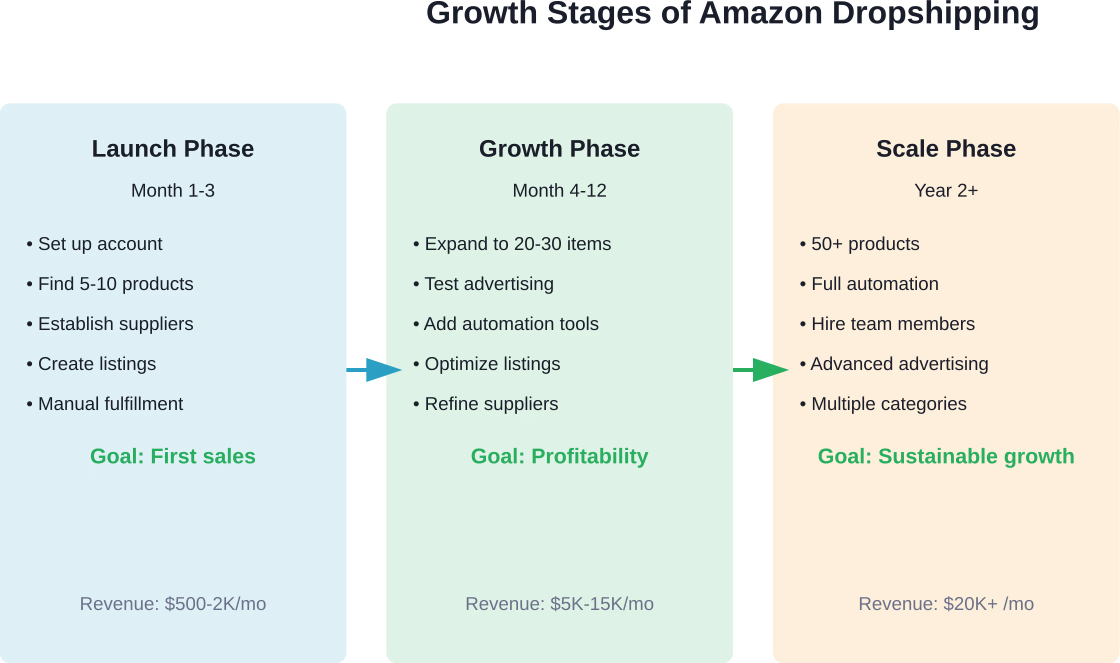
Once initial operations are stable, growth requires systematic expansion rather than simply adding more products randomly.
Add new products strategically based on data from existing sales. Look for complementary items that current customers might purchase. Cross-selling related products increases average order value and customer lifetime value.
Expand into adjacent categories where existing supplier relationships provide advantages. If selling kitchen gadgets successfully, related categories like dining or food storage become logical next steps.
Test new products in small quantities before committing significant resources. Launch with minimal marketing investment to validate demand before scaling advertising spend.
Manual order processing becomes unsustainable as order volume grows. Software solutions connect Amazon seller accounts with supplier systems, automatically forwarding orders for fulfillment.
Inventory management tools track supplier stock levels and automatically adjust Amazon listings to prevent selling out-of-stock items. This protects account health metrics from cancellation rate issues.
Repricing software monitors competitor prices and adjusts listings dynamically to remain competitive while maximizing margins. Automated repricing responds to market changes faster than manual monitoring allows.
At certain volume levels, hiring help becomes necessary. Virtual assistants can handle customer service inquiries, order processing, and routine account management tasks.
Specialists in product research, listing optimization, or advertising management bring expertise that accelerates growth. These roles can start as contractors before transitioning to employees as the business scales.
Document all processes and systems before hiring. Clear standard operating procedures ensure consistent quality as responsibilities transfer to team members.
The question of whether Amazon dropshipping remains viable depends entirely on expectations and execution quality.
For entrepreneurs seeking passive income with minimal effort, dropshipping likely disappoints. The model requires active management, careful supplier relationships, and constant attention to account metrics and customer service.
For those willing to treat it as a real business requiring systems, research, and continuous optimization, Amazon dropshipping can generate meaningful income. The low barrier to entry allows testing business concepts without significant capital risk.
Success rates correlate strongly with preparation and policy compliance. Sellers who thoroughly research products, carefully vet suppliers, and maintain meticulous attention to Amazon's requirements build sustainable businesses. Those seeking shortcuts or ignoring policies face account suspensions and financial losses.
The competitive landscape in 2026 is more sophisticated than in previous years. Basic arbitrage opportunities have largely disappeared. Winning requires differentiation through superior customer service, optimized listings, or strategic product selection in underserved niches.
More than 60% of online sellers can make money through various fulfillment methods, according to Amazon's Seller Guide. Dropshipping represents one viable path among several options for e-commerce entrepreneurship.
Amazon dropshipping in 2026 offers a legitimate path to building an e-commerce business with relatively low startup costs. But success requires far more than simply listing products and hoping for sales.
The foundation starts with understanding and complying with Amazon's specific policies around dropshipping. Sourcing from legitimate wholesale suppliers, maintaining proper documentation, and ensuring seller branding on all customer-facing materials protects accounts from suspension.
Product selection determines profitability more than any other factor. Focus on items with proven demand, manageable competition, and healthy margins after all fees. Thorough research using Amazon's data and third-party tools identifies opportunities before committing resources.
Supplier relationships make or break operations. Vet partners carefully, request samples, and establish clear communication about inventory, shipping, and packaging requirements. Reliable suppliers who understand Amazon's requirements become invaluable business assets.
The competitive landscape requires professionalism and systematic execution. Optimized listings, responsive customer service, and careful attention to account metrics separate successful sellers from those who struggle.
Ready to start building an Amazon business? Begin with thorough research, develop relationships with quality suppliers, and launch your first listings with careful attention to Amazon's policies. The opportunity exists for those willing to approach it as a real business requiring knowledge, systems, and continuous improvement.


