How to Promote Your Shopify Store Without Guesswork
Learn practical and proven ways to promote your Shopify store without wasting time or budget. Covers multiple strategies.
Mar 25, 2026



Alibaba dropshipping allows retailers to source products from Chinese suppliers and ship directly to customers without holding inventory. The platform offers Trade Assurance protection, access to millions of suppliers, and lower wholesale pricing than AliExpress, making it suitable for B2B businesses and established dropshippers willing to negotiate minimum order quantities.
Dropshipping has transformed how entrepreneurs approach ecommerce. No warehouse rentals, no upfront inventory costs, no shipping logistics to manage personally.
Alibaba stands as one of the world's largest B2B marketplaces, connecting businesses with manufacturers and wholesalers primarily based in China. But here's the thing—Alibaba isn't designed for casual one-off purchases like its cousin AliExpress.
According to research from Lehigh University's College of Business, dropshipping emerged as a strategic response to the changing retail landscape. The research notes that more than 8,600 brick-and-mortar stores closed in 2017. The model gained momentum as millennials—those born between 1981 and 1996—were projected to increase their online shopping presence, with research from that period (2017) reflecting their significant impact on mobile commerce.
This guide breaks down exactly how Alibaba dropshipping works, how to find reliable suppliers, and what makes this platform different from other sourcing options.
Alibaba operates as a B2B wholesale marketplace. Suppliers expect business buyers, bulk orders, and professional negotiations.
The platform hosts millions of suppliers across virtually every product category imaginable—electronics, apparel, home goods, beauty products, industrial equipment, and more. That's the opportunity. The challenge? Navigating minimum order quantities, language barriers, and supplier verification.
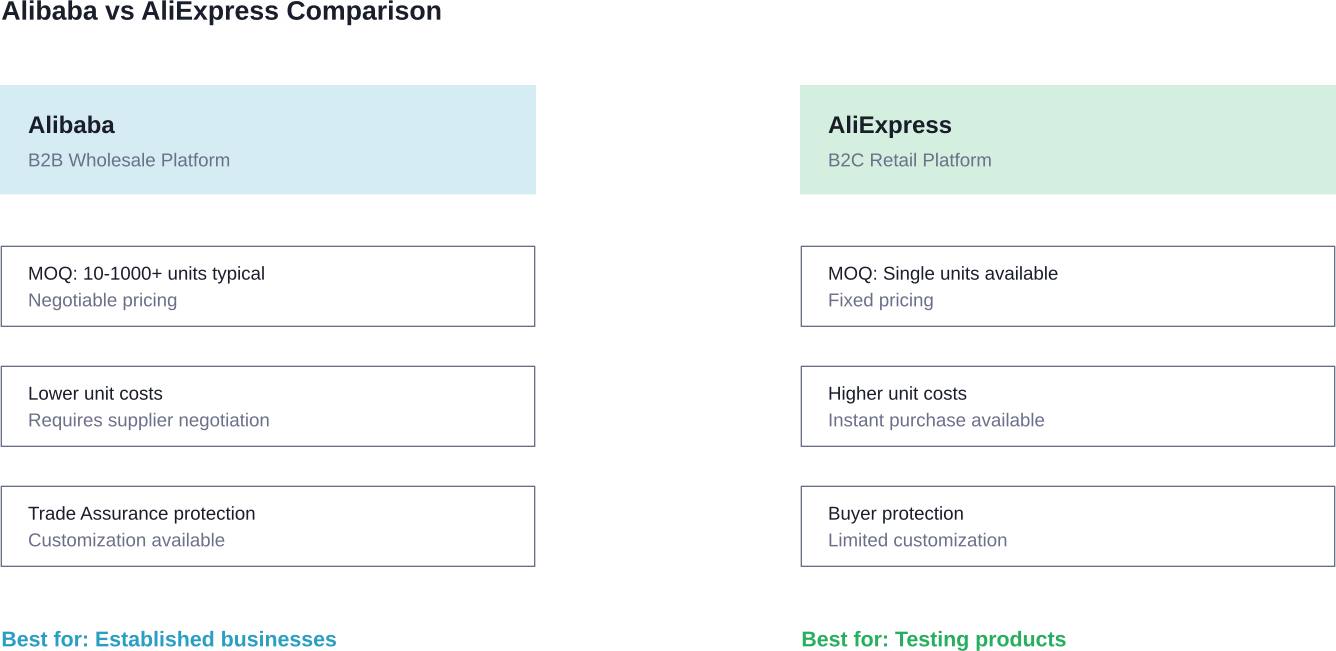
Many newcomers confuse these two platforms. Both are owned by Alibaba Group, but they serve different purposes.
AliExpress caters to individual consumers and small retailers. Single-item purchases, fixed prices, built-in dropshipping integrations with platforms like Shopify. It's plug-and-play.
Alibaba targets wholesale buyers. Prices are negotiable, minimum order quantities (MOQs) apply, and communication with suppliers requires more direct engagement. The trade-off? Significantly lower per-unit costs when ordering in volume.
For dropshipping specifically, Alibaba works best for established businesses ready to handle supplier negotiations and potentially stock some inventory. AliExpress suits beginners testing products with single-unit orders.

When you start dropshipping with Alibaba, ads quickly become your biggest expense. Most setups still rely on trial and error – you launch creatives, wait a few days, then cut what doesn’t work. It gets results eventually, but a lot of budget disappears along the way.
Tools like Extuitive shift that step earlier. Instead of testing everything live, you can review product creatives in advance and see which ones are more likely to perform. That gives you a clearer starting point, so you’re not putting money behind ideas that were unlikely to work in the first place. If you’re already planning to run ads, it’s worth using Extuitive first to narrow down what actually has a chance to convert before you spend.
The dropshipping model follows a straightforward process, though execution requires attention to detail.
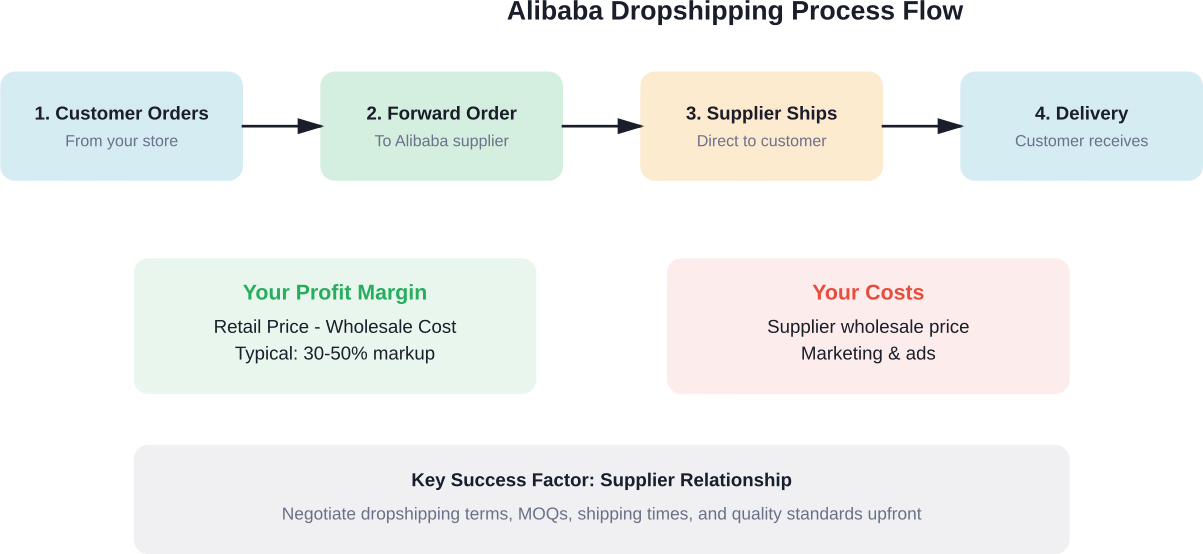
First, a customer places an order on the retailer's online store—whether that's Shopify, WooCommerce, or another platform. The retailer then forwards that order to their Alibaba supplier, paying the wholesale price.
The supplier handles packaging and ships the product directly to the end customer. The retailer never physically touches the inventory. The profit margin sits between the wholesale cost paid to the supplier and the retail price charged to the customer.
Here's where Alibaba gets tricky. Most suppliers on the platform expect bulk orders rather than single-item dropshipping. Community discussions on Reddit reveal mixed experiences—some suppliers accommodate dropshipping arrangements, while others refuse to work with low-volume orders.
Not every Alibaba supplier supports dropshipping. Many focus exclusively on wholesale bulk orders.
Start by using Alibaba's search filters. The platform now includes specific tags for dropshipping-capable suppliers and fulfillment-ready products. Look for indicators like "Dropship Supplier" badges or "CBT-enabled products" (Cross-Border Trade).
When vetting potential suppliers, direct communication proves essential. Message suppliers explicitly asking about their dropshipping policies, minimum order quantities for single-item shipments, and whether they handle individual customer shipping.
Alibaba offers dropshipping-focused services, including fulfillment-ready products and compliance-ready items that meet regional regulatory standards.
Getting started requires methodical preparation rather than rushing into product listings.
Product selection determines everything else. Research trending categories, but balance popularity against competition.
Academic research from An-Najah University's repository notes that successful dropshippers begin by identifying top buying trends in specific target countries, then select products matching those demand patterns.
Use tools like Google Trends, Amazon Best Sellers, and social media platforms to identify what's gaining traction. Look for products with decent profit margins—typically 30-50% markup minimum to cover advertising costs and remain profitable.
Registration is free. Sign up at Alibaba.com with business details.
The platform offers different account types. Free accounts provide basic access to suppliers and messaging. Paid memberships unlock additional verification features and priority support, though they aren't mandatory for buyers.
Use Alibaba's search function with specific product keywords. Don't just browse—apply filters strategically.
Filter by Trade Assurance to ensure payment protection. Filter by minimum order quantity, looking for suppliers willing to work with smaller MOQs. Check supplier response rates and transaction history.
The platform displays supplier metrics including on-time delivery percentages, reorder rates, and response times. Alibaba's supplier data shows that verified suppliers often maintain response times under two hours and on-time delivery rates above 98%.
Never commit to a supplier without thorough vetting. Message multiple suppliers for the same product to compare responses, pricing, and terms.
Ask specific questions: What's the minimum order for dropshipping? What's the average shipping time to your target market? Do they provide tracking numbers? Can they customize packaging or include branded materials?
Request samples before committing to any supplier relationship. Yes, this means paying for initial inventory samples, but it's the only way to verify product quality firsthand. According to Alibaba.com seller guidance, paid sample policies can serve as serious buyer qualification—separating legitimate businesses from casual browsers.
Trade Assurance is Alibaba's payment protection program. It safeguards transactions between buyers and suppliers.
When orders are placed through Trade Assurance, funds are held in escrow until delivery is confirmed. If suppliers fail to meet agreed terms—shipping delays, quality issues, wrong products—buyers can file claims for refunds.
Community discussions highlight Trade Assurance as essential protection when working with new suppliers. Always verify that Trade Assurance is active for any transactions, especially during the initial relationship-building phase.
While Alibaba handles sourcing, a separate platform is needed to sell to customers.
Shopify remains the most popular choice for dropshipping stores due to its user-friendly interface and extensive app ecosystem. WooCommerce offers more customization for WordPress users. Other options include BigCommerce, Wix eCommerce, and standalone website builders.
Research from An-Najah University documents successful dropshippers using Shopify with integrated applications that attract and motivate customers to purchase, combined with strategic SEO and keyword optimization.
Negotiation is expected on Alibaba. Suppliers list prices as starting points, not final offers.
For dropshipping arrangements, negotiate unit pricing for small quantities, shipping costs, and payment terms. Some suppliers offer better rates for repeat customers, so building long-term relationships pays off.
Start with a limited product catalog—maybe 10-20 items. Test which products gain traction before expanding inventory. This minimizes risk and allows focus on marketing the most promising items.
Supplier quality varies dramatically on Alibaba. Knowing what to look for prevents costly mistakes.
Verified supplier status indicates Alibaba has conducted on-site inspections. Gold Supplier badges show suppliers have paid for premium membership, suggesting commitment to the platform.
High response rates (above 80%) and quick response times (under 24 hours) demonstrate professionalism. Transaction history showing hundreds or thousands of completed orders signals reliability.
Certifications matter. Look for relevant quality certifications like ISO, CE, FDA approval (for applicable products), or industry-specific standards. Suppliers with comprehensive certification packages and dedicated account managers tend to deliver consistent quality.
Suspiciously low prices often indicate quality compromises. If one supplier offers products at half the price of competitors, question why.
Poor communication—slow responses, vague answers, or pressure tactics—suggests problems ahead. Suppliers unwilling to provide samples or demanding full payment upfront without Trade Assurance should be avoided.
Brand inconsistencies are another warning. Some suppliers list trademarked products they don't actually manufacture. Selling counterfeit goods can result in legal issues and platform bans.
Real talk: Alibaba dropshipping isn't effortless passive income. Challenges exist, but they're manageable with proper strategies.
Products shipping from China to Western markets typically take 15-45 days via standard shipping methods.
Customers accustomed to Amazon Prime expect faster delivery. Setting accurate expectations is critical—clearly communicate shipping timeframes on product pages and during checkout.
Some suppliers now offer warehousing in the United States, Europe, or other regions, dramatically reducing delivery times. These "fulfillment-ready" options cost more per unit but improve customer satisfaction.
Without holding inventory personally, quality verification becomes difficult.
Order samples periodically, even after establishing supplier relationships. Products can change over time—materials get substituted, manufacturing processes shift.
Consider third-party inspection services. Companies offering factory inspections and pre-shipment quality checks can prevent larger losses from defective inventory. Inspection services on Alibaba's platform start from approximately $118 per report for standard services.
Many suppliers refuse single-item dropshipping, requiring minimum purchases of 10, 50, or even 100+ units.
The solution? Hybrid inventory models. Purchase small quantities of best-selling items to keep in stock while dropshipping slower-moving products. This reduces capital requirements while improving shipping times for popular items.
Alternatively, platforms like CJ Dropshipping and other sourcing agents specialize in connecting dropshippers with Alibaba suppliers willing to handle single-unit orders, though they add service fees.
Not all suppliers have fluent English-speaking staff. Miscommunications about product specifications, shipping addresses, or order details can occur.
Use clear, simple language in messages. Avoid idioms or complex sentence structures. Confirm important details multiple times and request written confirmation of specifications.
Translation tools have improved significantly. Chrome's built-in translation or dedicated apps can help clarify supplier messages.
Understanding the financial reality prevents unrealistic expectations.
Starting Alibaba dropshipping requires less capital than traditional retail, but it's not zero-cost.
Budget for product samples ($50-$200 depending on products), ecommerce platform subscription (Shopify starts around $29/month for basic plans), and domain registration (typically $10-$15 annually).
Marketing costs represent the largest ongoing expense. Paid advertising on Facebook, Instagram, Google, or TikTok can range from hundreds to thousands monthly depending on scale and competition.
Profit margins vary by product category and competition levels.
Wholesale costs from Alibaba tend to be 40-70% lower than retail prices. But shipping costs, payment processing fees (around 2.9% + $0.30 per transaction for most processors), and advertising costs eat into margins.
Realistic net profit margins after all expenses typically fall between 10-25% for competitive product categories. High-value or niche products can achieve 30-50% margins.
Most dropshipping businesses aren't profitable immediately. Expect 3-6 months of testing products, optimizing advertising, and refining operations before consistent profits emerge.
Scaling requires reinvesting early profits into advertising and expanding product catalogs. The businesses that succeed treat dropshipping as a real business requiring ongoing optimization, not a get-rich-quick scheme.
How does Alibaba stack up against alternatives?
Already covered the basics, but the decision really comes down to volume and control.
AliExpress wins for beginners and those testing products with minimal capital. One-click integrations, single-unit orders, and lower complexity make it accessible.
Alibaba wins for established businesses ready to negotiate, order samples, and potentially hold some inventory. The per-unit cost savings scale significantly with volume.
Domestic suppliers (USA-based, Europe-based, etc.) offer faster shipping and easier communication but at higher wholesale costs.
Profit margins shrink with domestic suppliers due to higher product costs. But customer satisfaction improves with 2-5 day shipping instead of 15-45 days.
The best strategy? Hybrid sourcing. Use Alibaba for products where price sensitivity matters most, and domestic suppliers for items where fast shipping provides competitive advantage.
Print-on-demand services like Printful or Printify handle custom apparel, accessories, and home goods with zero inventory.
POD offers maximum flexibility and zero inventory risk but at the cost of higher per-unit pricing and limited product types. Alibaba provides broader product selection and better margins but requires more upfront work.
Sourcing products is only half the equation. Driving traffic and converting sales determines success.
Facebook and Instagram ads remain dominant for ecommerce. Target specific demographics interested in product categories, create compelling visual ads, and test multiple variations.
Google Shopping ads work well for products with clear search intent. When someone searches for "wireless earbuds," appearing in Shopping results captures high-intent buyers.
TikTok has emerged as a powerful platform, especially for products with visual appeal or entertainment value. Organic content that goes viral can drive massive traffic without ad spend.
SEO provides long-term sustainable traffic without ongoing ad costs.
Research from An-Najah University emphasizes using tools to discover valuable keywords and optimize website content. Target long-tail keywords with commercial intent—phrases like "best wireless earbuds under $50" convert better than generic "wireless earbuds."
Product descriptions should be detailed and unique. Don't copy supplier descriptions verbatim—rewrite them with SEO keywords while providing genuine value to shoppers.
Blog content, video tutorials, and social media presence build authority and trust.
Create buying guides, comparison articles, and how-to content related to products. These attract organic traffic and position the store as knowledgeable rather than just transactional.
Social proof—customer reviews, testimonials, user-generated content—significantly impacts conversion rates. Encourage satisfied customers to leave reviews and share photos of products.
Operating legitimately protects both the business and customers.
Treat dropshipping as a real business from day one. Register as an LLC or appropriate business entity in the relevant jurisdiction.
Understand sales tax obligations. In the United States, online retailers must collect sales tax in states where they have nexus (significant business presence). Many platforms like Shopify offer automated tax calculation.
Income from dropshipping is taxable. Keep detailed records of all expenses—product costs, shipping, advertising, software subscriptions—to accurately report profits and claim legitimate deductions.
Different markets have different product safety requirements.
Electronics sold in the European Union require CE marking. Products sold in the United States may need FCC certification for wireless devices or FDA approval for cosmetics and supplements.
Verify that suppliers provide necessary certifications. Selling non-compliant products can result in customs seizures, fines, or legal liability if products cause harm.
Counterfeit and trademark-infringing products are rampant on Alibaba. Selling them is illegal.
Avoid suppliers offering branded products like Nike, Apple, or Disney merchandise at wholesale prices—they're almost certainly counterfeits. Stick to generic or properly licensed products.
Platforms like Shopify, Amazon, and eBay actively remove listings for counterfeit goods and can ban sellers permanently.
Being realistic about advantages and disadvantages helps set appropriate expectations.
Alibaba dropshipping offers legitimate opportunities for entrepreneurs willing to put in the work.
The platform's massive supplier network and wholesale pricing create real advantages over other sourcing methods. But success isn't automatic or effortless.
The businesses that thrive focus on supplier relationships, rigorous product testing, and relentless marketing optimization. They understand that dropshipping is a real business requiring customer service, ongoing learning, and adaptation to market changes.
Start small. Test thoroughly. Build relationships with reliable suppliers. Invest in marketing that actually converts. Track metrics obsessively and cut what doesn't work.
The barrier to entry is low, which means competition is high. Differentiation comes from superior customer service, strategic product selection, and marketing execution—not just finding products on Alibaba.
Ready to start sourcing? Begin with research, vet multiple suppliers, order samples, and build the foundation properly. The businesses still operating a year from now are the ones that treated launch as the beginning of a marathon, not a sprint to quick profits.


