Best-Selling Products on Shopify What Actually Sells and Why It Works
A realistic look at the best-selling products on Shopify, why they sell, and what store owners can learn from them before jumping into trends.
Jan 3, 2026



Dropshipping is a retail fulfillment method that lets entrepreneurs start an online business without holding inventory. A third-party supplier handles storage, packaging, and shipping directly to customers. This low-overhead model allows anyone to launch an ecommerce store with minimal upfront investment.
The ecommerce landscape has transformed dramatically. Traditional retail models requiring massive inventory investments and warehouse space no longer represent the only path forward. Dropshipping has emerged as an accessible entry point for entrepreneurs seeking to build online businesses without the typical financial barriers.
But here's the thing—starting a dropshipping business isn't just about finding products and listing them online. Success requires strategic planning, market research, and understanding the operational realities that separate profitable stores from those that fail within months.
This guide breaks down the essential steps for launching a dropshipping business in 2026, drawing on current market data and proven strategies from successful entrepreneurs.
Dropshipping operates on a straightforward principle: sellers list products on their online store without physically stocking them. When a customer places an order, the seller purchases the item from a third-party supplier who ships it directly to the customer.
The process eliminates traditional retail pain points. No warehousing costs. No inventory risk. No packing and shipping logistics.
Academic research on dropshipping demonstrates that the model allows businesses to operate globally without managing physical inventory. Sellers partner with suppliers who handle manufacturing, packaging, and shipping while the seller focuses on marketing and customer acquisition.
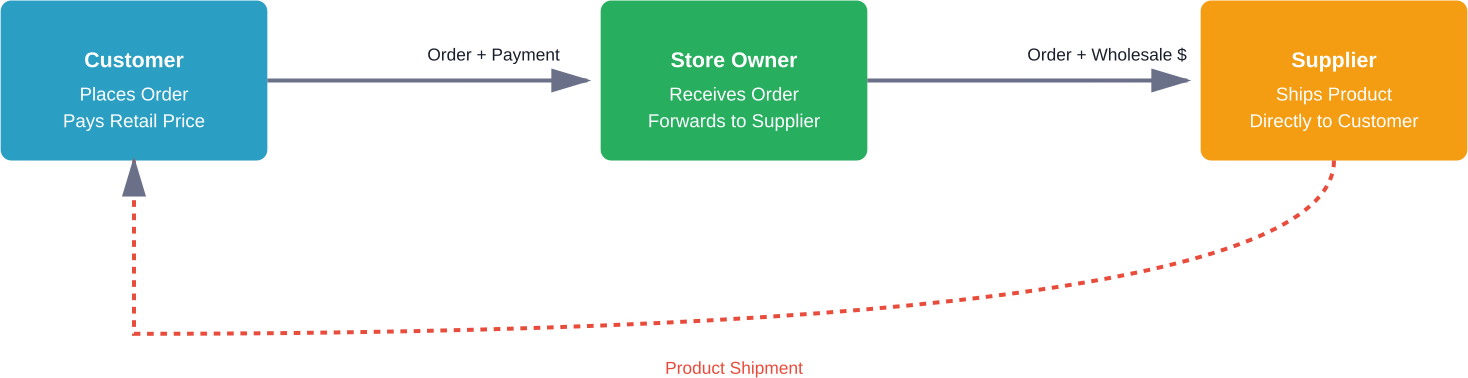
Understanding the operational sequence helps clarify how money and products move through the system. A customer browses a dropshipping store and selects a product listed at a retail price. After completing checkout, the store owner receives payment and order details.
The store owner then forwards the order to their supplier, paying the wholesale price. The supplier packages and ships the product directly to the customer under the store's branding. The difference between the retail price and wholesale cost represents the store owner's profit margin.

Most dropshipping guides start with “pick a product,” but that step is usually based on guesswork. You choose something that looks promising, set everything up, and only later see whether people actually respond. That delay is where a lot of early mistakes come from.
Extuitive helps you make that decision with more clarity. Instead of waiting for store data or ad results, you can check different product angles and creatives in advance and see which ones are more likely to get attention. It gives you a way to narrow things down before committing time to setup.
If you want a cleaner start, it makes sense to validate first and build second. Run your product ideas through Extuitive and begin with something that already shows potential.
The appeal extends beyond just avoiding inventory costs. Market dynamics in 2026 favor flexible, low-overhead business models that can adapt quickly to consumer trends.
Custom Market Insights estimates the global dropshipping market will reach approximately $1.6 trillion by 2033, with a compound annual growth rate around 24.7% during the forecast period. This growth reflects increasing acceptance of online shopping and improved logistics infrastructure worldwide.
Traditional retail demands significant capital for inventory purchases before generating the first sale. Dropshipping flips this model. Businesses only purchase products after customers have already paid.
The U.S. Small Business Administration notes that most small businesses need combinations of licenses and permits from federal and state agencies. However, the inventory-free nature of dropshipping significantly reduces initial capital requirements compared to traditional retail.
According to SBA research published in 2016, entrepreneurs can start businesses using just smartphones, demonstrating the accessibility of modern ecommerce models.
Location independence represents another advantage. Store owners can manage operations from anywhere with internet access. No physical storefront ties the business to a specific location.
Product selection remains fluid. Testing new products doesn't require purchasing bulk inventory. If an item doesn't sell, it can be removed from the store without financial loss beyond marketing costs.
Real talk: dropshipping isn't a guaranteed path to easy money. The model carries distinct challenges that cause many newcomers to struggle or fail.
Competition in popular niches drives prices down. When multiple stores source from the same suppliers, differentiation becomes difficult. Price wars erode margins quickly.
Successful dropshippers often work with margins between 10-30% depending on the niche. This requires significant sales volume to generate meaningful income.
Store owners don't physically handle products. This creates blind spots. Product quality issues may only surface after customers receive items and complain.
Suppliers occasionally run out of stock without warning. A customer orders a product shown as available, but the supplier can't fulfill it. The store owner must issue refunds and potentially lose customer trust.
Orders containing products from multiple suppliers result in multiple shipments with different arrival times. Customers expect Amazon-level shipping speed, but dropshipping suppliers often require longer fulfillment windows.
International suppliers may involve extended shipping times—sometimes 2-4 weeks. Managing customer expectations around delivery becomes critical.
The Federal Trade Commission has taken action against deceptive business opportunity schemes in the ecommerce space. In October 2024, the FTC announced action to stop an online business opportunity scam that cost consumers millions, operating under various names over multiple years.
The FTC obtained a permanent ban in July 2025 against the operator of an e-commerce business opportunity scheme (FBA Machine), prohibiting him from selling any business opportunities in the future and requiring the surrender of assets.
These enforcement actions underscore the importance of operating legitimate dropshipping businesses with transparent practices.
The INFORM Consumers Act requires online marketplaces to obtain information from high-volume third-party sellers. The law defines high-volume sellers as those making 200 or more discrete sales totaling $5,000 or more in a continuous 12-month period.
Broad product catalogs rarely succeed in competitive dropshipping markets. Niche selection determines everything from marketing costs to profit potential.
According to Shopify case studies, eBike Generation founder John Murphy built a $3 million dropshipping company by identifying an underserved niche within the ebike market: ebikes specifically for hunters. Keyword research revealed demand that competitors weren't addressing.
Start with personal interests or knowledge areas. Familiarity with a product category provides insight into customer needs and quality standards. If pet supplies interest someone, exploring that sector makes sense given market size.
According to dropshipping industry research, the pet supplies market was estimated at $248.71 billion in 2025. People consistently spend money on their pets, making it a stable niche with multiple product opportunities.
But size alone doesn't guarantee success. Competition in large markets can be fierce. Look for underserved segments within larger categories.
Google Trends reveals search volume patterns over time. Rising trends indicate growing interest, while declining trends suggest saturation or fading demand.
Amazon bestseller lists show what products currently sell well. Browse specific categories and note recurring products with strong review counts. High review counts indicate sustained sales volume.
Social media platforms, particularly TikTok and Instagram, reveal trending products through viral content. Products gaining traction on social media often experience temporary demand spikes that savvy dropshippers can capitalize on.
Search for potential products on Google and note the top results. Are they dominated by major retailers like Amazon and Walmart, or do independent stores rank well? Heavy big-box presence makes competition difficult.
Check advertising competition using Google Keyword Planner or similar tools. High cost-per-click values indicate competitive advertising markets that require larger budgets.
Supplier relationships determine product quality, shipping times, and ultimately customer satisfaction. Vetting suppliers carefully prevents problems later.
Several supplier models exist in dropshipping. Direct manufacturers offer the best prices but often require higher order volumes or longer lead times. Wholesale suppliers aggregate products from multiple manufacturers and typically handle smaller orders.
Dropshipping platforms like CG Dropshipping, mentioned in An-Najah University research, connect retailers with hundreds of factories and suppliers. These platforms often allow brand customization, giving businesses a unique advantage.
Other popular platforms include AliExpress for international suppliers, Spocket for US and European suppliers, and Printful for print-on-demand products.
Order samples before listing products. This reveals actual product quality, packaging standards, and realistic shipping times. Never sell products without personally inspecting samples.
Check supplier communication responsiveness. Send inquiries and note response times and professionalism. Slow or unclear communication signals potential fulfillment problems.
Review supplier policies on returns, damaged items, and out-of-stock situations. Clear policies indicate professional operations.
Even with established platforms, terms may be negotiable. Volume commitments can unlock better pricing or faster shipping options. Some suppliers offer exclusive arrangements that prevent them from selling to competing stores in specific markets.
The platform hosts the online store, processes payments, and manages customer data. Platform selection affects functionality, costs, and scalability.
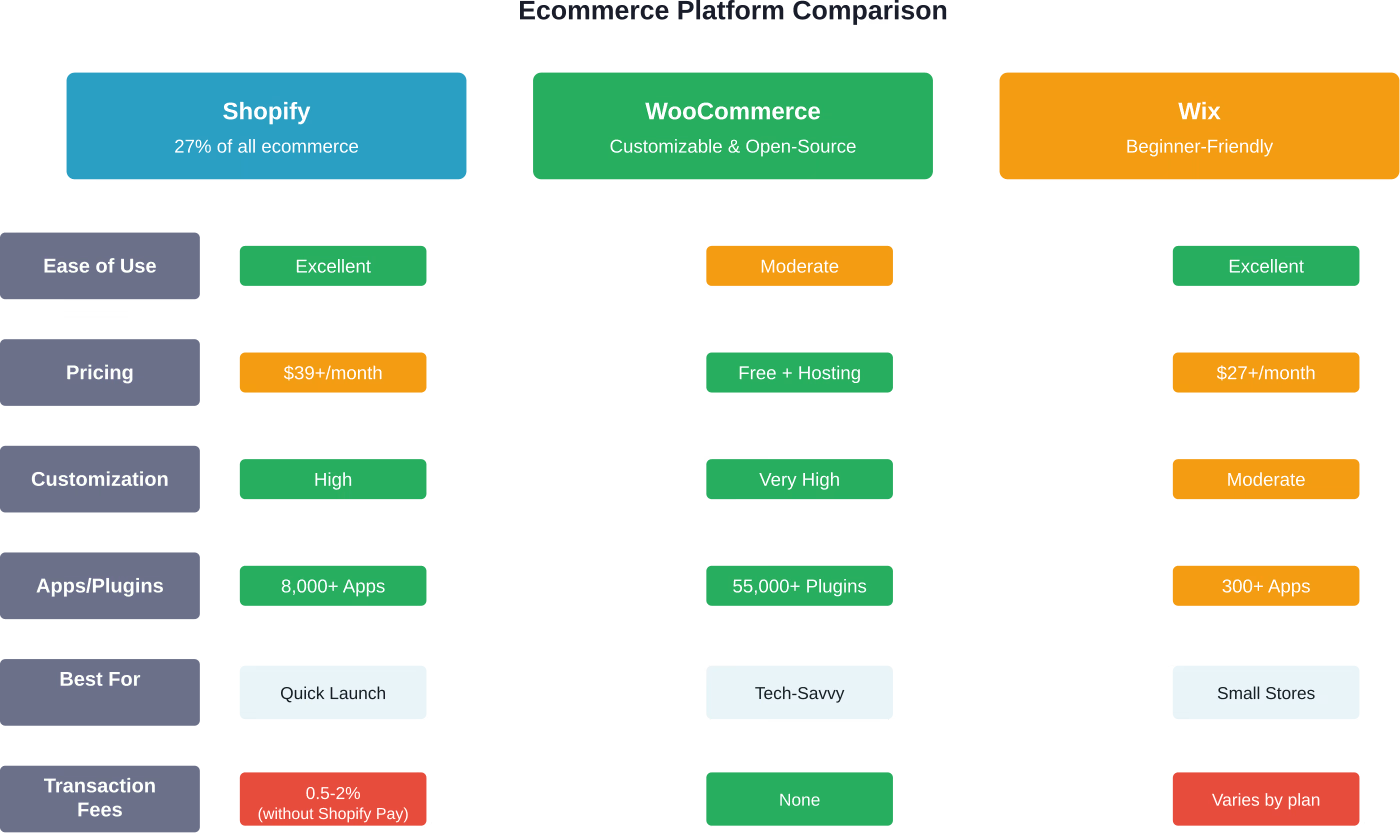
Shopify hosts more than 4.82 million active stores worldwide, representing 27% of all ecommerce globally according to Stripe research. The platform's popularity stems from user-friendly tools and extensive integrations with dropshipping suppliers.
Shopify charges monthly subscription fees starting at lower tiers. Check Shopify's official website for current pricing as plans and features update regularly. The platform offers a trial period—typically at $1/month for 3 months—allowing new sellers to test before committing to full monthly costs.
Thousands of apps extend functionality for inventory management, marketing automation, and customer service. The ecosystem makes adding dropshipping-specific tools straightforward.
WooCommerce operates as a WordPress plugin, offering extensive customization options. The software itself is free, but costs include hosting, domain registration, and premium plugins.
For technically inclined entrepreneurs, WooCommerce provides greater control over store functionality and design. The learning curve is steeper than Shopify but flexibility increases.
Wix combines website building with ecommerce functionality. The drag-and-drop interface appeals to those without technical backgrounds. Integrated dropshipping apps connect stores with suppliers.
Pricing plans vary—check the official Wix site for current subscription costs and feature availability at each tier.
Store design affects conversion rates significantly. Professional appearance builds trust, while poor design drives potential customers away.
Product pages need high-quality images from multiple angles. Write detailed descriptions highlighting features and benefits. Vague or minimal product information increases return rates.
Clear navigation helps customers find products quickly. Category organization should follow logical patterns matching how customers think about products.
Trust signals matter. Display security badges, customer reviews, and clear return policies prominently. Contact information should be easy to find—email, phone, and physical address if applicable.
Most ecommerce traffic now comes from mobile devices. Test the store on various screen sizes and devices. Buttons should be easily tappable. Text should be readable without zooming.
Platforms like Shopify and Wix provide mobile-responsive themes by default, but customization can break mobile functionality. Always test after making design changes.
Complicated checkout processes kill conversions. Minimize required form fields. Offer guest checkout options—not everyone wants to create an account.
Multiple payment options increase completion rates. Credit cards remain standard, but digital wallets like PayPal, Apple Pay, and Google Pay appeal to different customer segments.
Operating legally protects both the business and customers. Requirements vary by location and business structure.
The U.S. Small Business Administration notes that requirements and fees vary based on business activities, location, and government rules. Most small businesses need combinations of licenses and permits from federal and state agencies.
Sole proprietorships represent the simplest structure but offer no liability protection. LLCs separate personal and business assets, providing legal protection if disputes arise.
According to IRS guidance on small business tax obligations, business owners must correctly classify workers and meet requirements for information reporting, tax withholding, filing, and depositing.
The IRS requires digital platforms and marketplace businesses to correctly classify workers and meet tax obligations. Sales tax collection depends on nexus—physical or economic presence in a state.
Many ecommerce platforms now automate sales tax collection based on customer location, but business owners remain responsible for remitting collected taxes to appropriate authorities.
Partnerships must file Form 1065, U.S. Return of Partnership Income, according to IRS Entity guidelines. A domestic partnership must file an information return unless it neither receives gross income nor pays or incurs any amount treated as a deduction or credit.
The INFORM Consumers Act impacts high-volume third-party sellers. The FTC defines high-volume sellers as those in online marketplaces who make 200 or more discrete sales totaling $5,000 or more in a 12-month period.
Online marketplaces must obtain and verify information from these sellers including bank account information, contact information, and tax identification numbers. Transparency requirements protect consumers from fraudulent sellers.
Pricing determines profitability and competitive positioning. Too low, and margins disappear. Too high, and customers choose competitors.
Calculate total costs per product: supplier cost, shipping fees, payment processing fees (typically 2.9% plus $0.30 per transaction), and platform subscription costs allocated per expected sale.
Add marketing costs per acquisition. If advertising costs $1.50 to generate a sale, that must factor into pricing.
Common markups range from 2x to 3x supplier cost depending on niche and competition. Premium or unique products support higher markups. Commodity products with many sellers require competitive pricing.
Psychological pricing affects perception. $19.99 converts better than $20.00 despite minimal difference. Tiered pricing—offering basic, standard, and premium versions—can increase average order value.
Search for products on Google Shopping and note price ranges. Check competitor stores directly. Position pricing within the competitive range unless unique value propositions justify premium pricing.
Building a store means nothing without traffic. Marketing drives awareness and customer acquisition.
Research from An-Najah University highlights the importance of SEO for dropshipping businesses. Tools help discover valuable keywords with sufficient search volume and manageable competition.
Product pages should target specific long-tail keywords. "Wireless earbuds" faces massive competition, but "wireless earbuds for small ears under $50" represents a more achievable target.
Content marketing builds organic traffic over time. Blog posts addressing customer questions or problems related to products can attract searchers and position the store as knowledgeable.
Google Ads and social media advertising provide immediate traffic. Facebook and Instagram ads work well for visually appealing products. Google Shopping ads capture high-intent searchers actively looking to buy.
Start with small budgets and test different ad creatives, targeting options, and products. Track conversion rates and cost per acquisition carefully. Unprofitable campaigns should be paused quickly.
Organic social media requires consistent content creation. Post product photos, use cases, customer testimonials, and educational content related to the niche.
TikTok has emerged as a powerful platform for product discovery. Short videos showing products in use can generate viral interest and traffic spikes.
Influencer partnerships can accelerate brand awareness. Micro-influencers with engaged niche audiences often provide better ROI than celebrity endorsements.
Email lists represent owned assets—not dependent on platform algorithms. Collect emails through pop-ups offering discounts or valuable content.
Welcome sequences for new subscribers, abandoned cart emails, and promotional campaigns drive repeat purchases. Email marketing typically shows strong ROI compared to paid advertising.
Customer experience determines whether buyers return or leave negative reviews that damage future sales.
Respond to customer inquiries quickly—ideally within 24 hours. Slow responses frustrate customers and increase refund requests.
Set realistic shipping expectations. If suppliers require 7-10 business days for fulfillment, communicate that clearly at checkout. Surprises lead to complaints.
Clear return policies reduce disputes. Specify the return window, who pays return shipping, and refund timelines.
Some issues stem from supplier errors—wrong items shipped, damaged products, or quality problems. Maintain good supplier relationships to resolve these situations quickly.
Negative reviews will happen. Respond professionally and offer solutions. Potential customers reading reviews judge businesses by how they handle problems, not just by the problems themselves.
Data reveals what works and what doesn't. Regular analysis prevents wasting money on ineffective strategies.
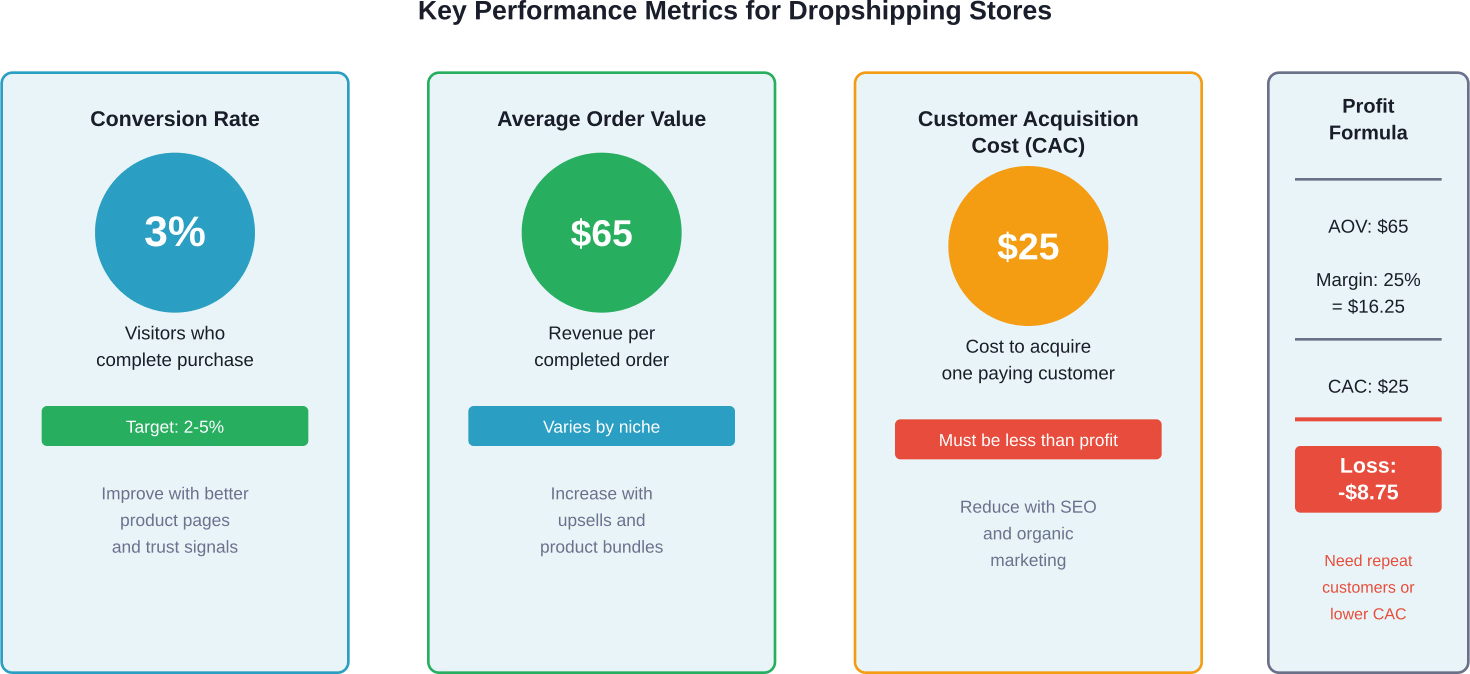
Conversion rate shows the percentage of visitors who make purchases. Industry estimates suggest that 3% serves as a reasonable benchmark, though rates vary by niche and industry.
Average order value indicates how much customers spend per transaction. Upsells, product bundles, and free shipping thresholds can increase this metric.
Customer acquisition cost compared to lifetime value determines profitability. If acquiring a customer costs $30 but they only purchase once for $40 profit, margins are thin. Repeat purchases improve economics significantly.
Traffic sources show which marketing channels deliver results. Google Analytics or platform-specific analytics break down traffic by source—organic search, paid ads, social media, direct traffic.
A/B testing reveals which changes improve performance. Test different product images, descriptions, prices, or ad copy. Change one variable at a time to isolate what drives results.
Product performance varies. Some products will be winners generating consistent sales. Others will underperform. Drop poor performers and allocate resources to successful products.
Learning from others' errors saves time and money. Several mistakes appear consistently among failed dropshipping attempts.
Phone cases, jewelry, and generic clothing represent overcrowded markets with razor-thin margins. Unless bringing unique products or branding, these niches demand huge marketing budgets to compete.
Cheap products generate cheap problems. Returns, complaints, and negative reviews destroy store reputation. Always order and inspect samples before selling.
Dropshipping isn't passive income. Successful stores require ongoing work—marketing, customer service, supplier management, and optimization. The business model removes inventory management, not all work.
Building a store and hoping customers find it organically rarely works. Budget for marketing costs from the start. Organic traffic takes time to develop through SEO and content marketing.
Once a store generates consistent profit, scaling becomes possible. Several strategies accelerate growth.
Add complementary products that appeal to existing customers. Someone who buys yoga mats might purchase yoga blocks, straps, or water bottles. Cross-sells and bundles increase average order values.
Generic dropshipping products limit differentiation. Private labeling—placing custom branding on supplier products—creates unique offerings that can command higher prices.
Some suppliers offer white-label options where products ship with custom packaging and branding. This creates a branded customer experience and reduces direct price comparison with competitors.
Email subscribers represent customers and prospects who've shown interest. Regular email campaigns promoting new products, sales, or content keep the brand top-of-mind.
Automated email sequences for abandoned carts, post-purchase follow-ups, and re-engagement campaigns run continuously, generating sales without ongoing effort.
Relying on one traffic source creates vulnerability. If Facebook ad costs increase or Google algorithm changes reduce organic traffic, revenue can collapse.
Diversify across organic search, paid ads, social media, email marketing, and influencer partnerships. Multiple channels provide stability.
Dropshipping represents one fulfillment approach among several. Understanding alternatives helps businesses choose the right model or transition as they grow.
Print-on-demand services like Printful create custom products—t-shirts, mugs, phone cases—with uploaded designs. Products are manufactured only after orders are placed, eliminating inventory risk.
This model works well for creators, artists, and niche brands. Design differentiation creates unique products that can't be directly compared to commodity dropshipping items.
Successful dropshipping businesses sometimes transition to purchasing inventory in bulk. This reduces per-unit costs, increases margins, and provides quality control.
The transition requires capital and storage space but offers competitive advantages through faster shipping and product customization options.
Leveraging the right tools improves efficiency and effectiveness across business operations.
Google Trends identifies search volume patterns over time. Rising trends signal growing interest worth investigating.
Keyword research tools like Ahrefs, SEMrush, or free alternatives like Ubersuggest reveal search volume and competition levels for product-related keywords.
Oberlo, Spocket, and similar apps integrate with Shopify to automate product imports and order fulfillment. When customers order, the apps automatically forward orders to suppliers.
Inventory management tools track stock levels across multiple suppliers, preventing sales of out-of-stock items.
Google Analytics provides free website traffic analysis. Track visitor sources, behavior, and conversion paths.
Facebook Pixel and Google Ads conversion tracking measure advertising effectiveness. This data guides budget allocation toward profitable campaigns.
Starting a dropshipping business in 2026 offers a realistic path to ecommerce entrepreneurship without massive capital requirements. The model eliminates traditional retail barriers but demands strategic planning, consistent effort, and customer focus.
Success doesn't come from copying generic "winning products" or following get-rich-quick schemes. The Federal Trade Commission has taken action against deceptive business opportunity schemes, most recently obtaining a permanent ban in July 2025 against an e-commerce scheme operator. Legitimate dropshipping businesses build value through smart niche selection, reliable suppliers, professional branding, and effective marketing.
The businesses that thrive treat dropshipping as what it is: a fulfillment method for a real business, not a passive income shortcut. Research thoroughly, start small, test carefully, and scale based on data rather than assumptions.
Market size projections show continued growth in the sector. Competition exists but so does opportunity for those willing to differentiate and provide genuine customer value. The accessibility that makes dropshipping attractive to beginners also means standing out requires more than minimum effort.
Ready to start? Choose a niche worth serving. Find suppliers worth trusting. Build a store worth visiting. Create marketing worth noticing. And most importantly, provide service worth remembering. The technical barriers to launching have never been lower—but the strategic barriers to succeeding remain as important as ever.


