Meta Ads A/B Testing: How It Works in 2026
Learn how Meta Ads A/B testing works, from setup to results. Discover what to test, how to run experiments, and best practices for campaign optimization.
Mar 23, 2026



Most Meta ad accounts do not struggle because of targeting or bidding anymore. They struggle because the creative stops working, often quietly and sooner than expected.
Creative optimization is no longer about finding one winning image or video and riding it until performance collapses. It is about building a steady flow of ads that adapt to placements, audiences, and delivery logic without losing the core message. As Meta leans harder into automation, creative has become both the message and the signal that teaches the system who to reach.
This article looks at creative optimization for Meta ads in a practical way. Not platform checklists or endless testing frameworks, but the decisions that actually help ads stay effective longer, waste less budget, and scale without constant resets.
At Extuitive, we believe most optimization starts too late. Brands still launch ads, spend to learn, and only adjust once the budget is already gone. Even strong teams end up paying for insight instead of starting with it.
We built Extuitive to change that sequence.
Instead of asking which ads worked after launch, we predict which creatives are most likely to perform before they ever go live. Our system evaluates concepts upfront, helping teams make better decisions earlier and avoid wasting spend on low-signal testing.
By combining historical brand performance with large-scale consumer intelligence, we help teams move from experimentation to prediction. Optimization becomes proactive instead of reactive, and performance becomes more stable, scalable, and intentional.
One of the most common mistakes in Meta accounts is overvaluing a single winner. An ad performs well, budgets are pushed, and everything else is paused. For a while, results look great. Then frequency climbs, costs rise, and performance collapses.
This is not creative fatigue appearing out of nowhere. It is a system imbalance. Meta thrives on optionality. When you remove alternatives, learning narrows. When learning narrows, the system becomes brittle.
Creative optimization works better when you think in batches, not heroes. Multiple ads built around the same core idea but expressed differently. Different hooks, different visuals, different pacing. Not random variations, but controlled diversity.
The goal is not to find the best ad. It is to maintain a steady supply of good ads so the system always has room to adjust.
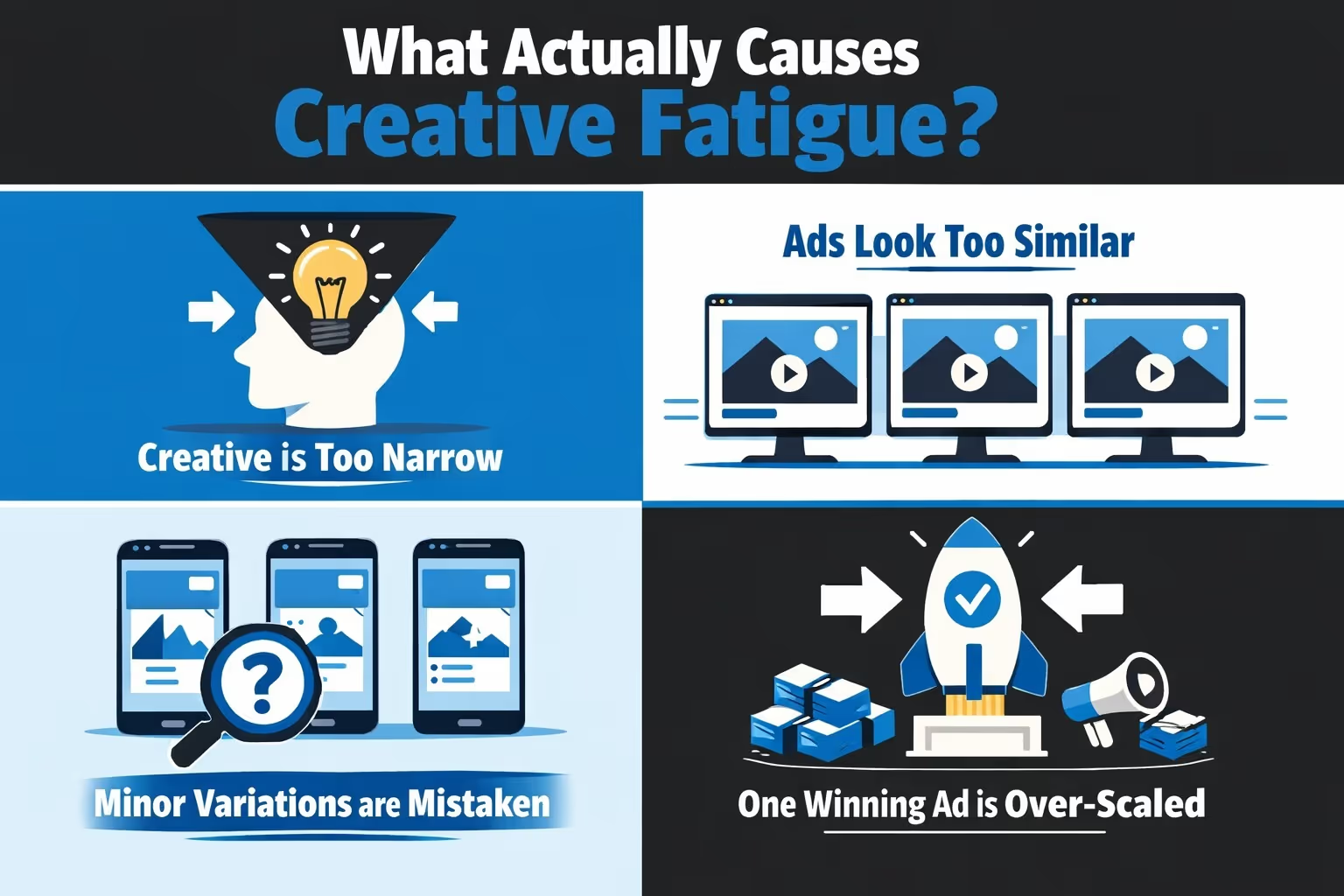
Creative fatigue is often misunderstood. It is not simply users seeing the same ad too many times. It is the system running out of positive signals.
When frequency starts to rise, it usually means Meta is struggling to find new users who respond well to the creative. That loss of momentum typically comes from structural issues, not bad luck.
Fatigue often shows up early if you know where to look. Rising CPMs without volume growth. CTR slowly declining rather than collapsing. Spend concentrating on fewer placements. These are warning signs, not end states.
Good creative optimization treats fatigue as a design problem, not a refresh schedule. You do not rotate ads every two weeks because someone said so. You rotate because the quality and diversity of signals is thinning.
There is no shortage of advice about which formats perform best in Meta ads. Video over image. Short over long. Vertical over square. These patterns exist for a reason, but they are not where optimization should start.
Creative performs best when the format matches the job the ad is meant to do. Awareness, consideration, and reactivation place very different demands on attention, clarity, and pacing. When format is chosen first and intent comes later, performance usually suffers.
At the top of the funnel, the goal is not explanation. It is recognition. Formats that deliver a clear visual or message in the first moments tend to perform better because they reduce the cost of attention.
Video works well here when motion reinforces the idea quickly. Static images can perform just as strongly when the value or problem is instantly clear.
In the middle of the funnel, users are already aware of the category or brand. The job shifts from stopping the scroll to providing clarity.
This is where carousels, longer copy, or slightly slower video pacing can work. The format should support comparison, explanation, or proof. Motion alone does not add value if it does not help the user understand something new.
For retargeting and reactivation, the creative does not need to surprise. It needs to feel relevant and timely.
Simple formats often work best here. Clear product images, direct offers, or short reminder videos tend to outperform complex storytelling. The intent is to prompt action, not to reintroduce the brand.
Problems arise when ideas are forced into formats they do not suit. Product comparisons turned into videos with no narrative. Lifestyle moments stretched into carousels that dilute focus. Motion added where clarity would have worked better.
These choices do not just hurt engagement. They confuse the system by sending weak or mixed signals.
Creative optimization improves when format is treated as a delivery mechanism, not a creative shortcut. Start with the role the ad needs to play, then choose the format that delivers that message with the least friction.
Trends change quickly. Intent does not.
Short video deserves special attention because it dominates delivery across Meta placements. But not all short videos perform well, and many underperform quietly without obvious failure.
The strongest short videos tend to share a few consistent traits that reduce friction and make the message immediately clear.
Creative optimization here is not about production quality. Some of the best performing videos feel rough or unfinished. What they do well is remove uncertainty.
If a video needs explanation to make sense, it is already losing.
Dynamic creative and automated optimization can save time and uncover combinations you might not test manually. But they also hide information.
When everything is interchangeable, insight becomes fuzzy. You may know that performance improved, but not why. That is acceptable for scale phases, less useful for learning phases.
The mistake is relying on dynamic creative as a substitute for thinking. It works best when you feed it strong, distinct inputs. Different ideas, not minor variations of the same one.
Creative optimization still starts upstream. Dynamic tools amplify what you give them. They do not fix weak concepts.
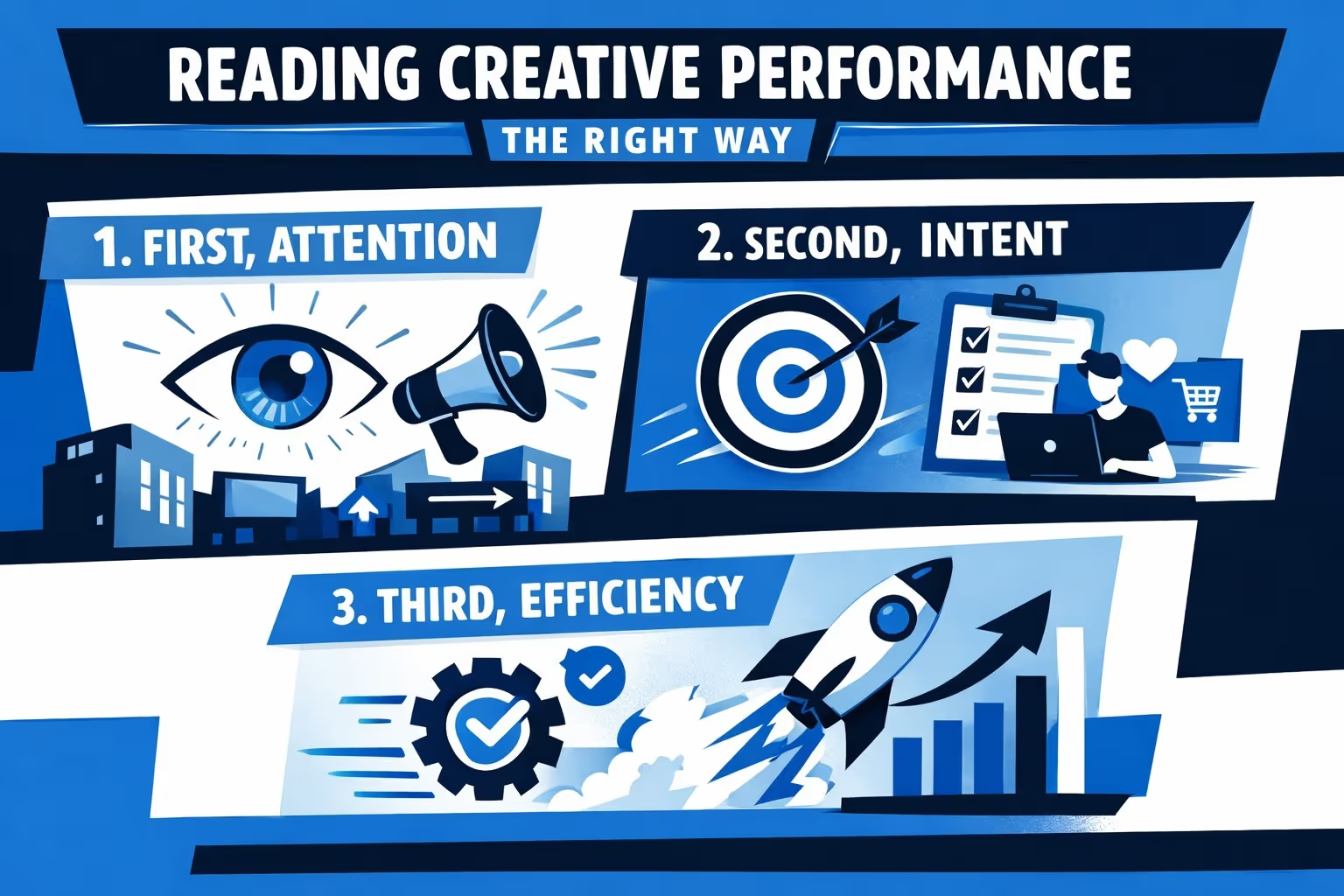
Looking at conversions alone hides early insight. Creative performance should be read in layers.
Creative that fails at the first layer will not recover downstream. Creative that performs well early but fails later may still be useful in upper funnel roles.
Optimization improves when you stop asking which ad won and start asking what each ad is good at.
Meta does not reward repetition. Ads that look and feel too similar are often treated as duplicates by the system. Instead of expanding reach, they compete with each other, split delivery, increase frequency, and limit learning.
When multiple ads share the same layout, composition, and framing, Meta struggles to tell them apart. Even if the copy changes, the system still recognizes the creative as functionally identical. Delivery narrows, and performance plateaus faster than expected.
Changing headlines or swapping a few lines of text rarely solves the problem. If the underlying idea stays the same, Meta still receives the same signal. Minor copy edits do not create new learning or unlock new audiences.
Real differentiation comes from changing how the message is presented, not just how it is worded. Showing the product in use instead of isolated. Leading with a problem instead of a benefit. Framing the story around a moment, a reaction, or a use case rather than a feature.
Creative optimization works when you give the system genuinely different inputs to learn from. That does not mean random variation. It means intentional shifts in visual framing, narrative angle, or user context.
Expanding the creative surface area allows Meta to explore new pockets of demand instead of recycling the same audience. Repainting the same wall rarely changes the room.
User generated content works not because it is trendy, but because it changes how the ad is perceived. It feels closer to organic content, which lowers resistance and increases early engagement.
When used well, UGC feeds Meta broader and more flexible signals that support scale. When used poorly, it blends into noise and adds little to creative optimization.
The biggest mindset shift is this. Creative optimization is not something you do after launch. It is something you design into the account.
You plan creative pipelines, not individual ads. You define refresh triggers, not arbitrary timelines. You document learnings and reuse them.
Accounts that scale consistently treat creative like inventory. Always in stock. Always rotating. Always improving.
Those that do not eventually stall, regardless of budget or tools.
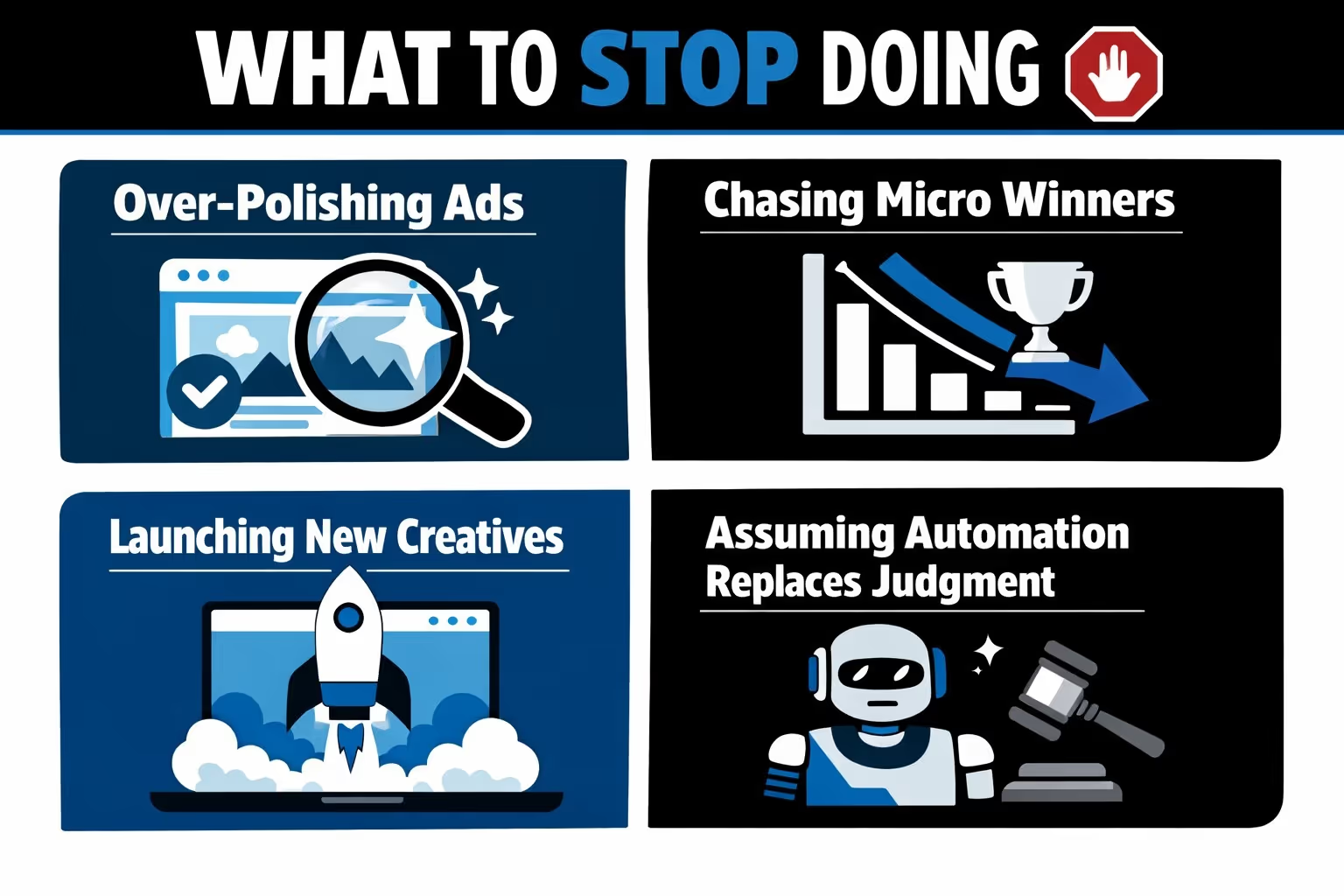
A lot of creative optimization effort is wasted on habits that feel productive but quietly hurt performance. Cleaning these up often has more impact than adding new tools or processes.
Creative optimization improves fastest when you eliminate these patterns and focus on doing fewer things with more intent.
Meta ads have not become impossible. They have become less forgiving. The margin for weak creative is smaller. The cost of slow learning is higher.
Creative optimization is now the main lever you control. Not because Meta says so, but because the system listens to creative more than anything else.
When you treat creative as a signal, not just a message, performance becomes easier to diagnose, easier to stabilize, and easier to scale.
That is what actually moves performance now.


