Generative AI Tools for Marketing Explained Simply
A practical look at generative AI tools for marketing, how teams use them, and where they fit into real workflows today.
Jan 7, 2026



Amazon dropshipping allows sellers to list products without holding inventory, with suppliers shipping directly to customers. To start, create a seller account, find compliant suppliers who won't include their branding, list products, and ensure all packaging identifies you as the seller of record. While profitable for many sellers, success requires strict adherence to Amazon's drop shipping policy and careful supplier selection.
Dropshipping has become one of the most accessible ways to launch an e-commerce business without massive upfront investment. But here's the thing—Amazon's version of dropshipping operates under strict rules that differ significantly from other platforms.
The model itself is straightforward. Sellers list products on Amazon, customers place orders, and third-party suppliers ship directly to those customers. No warehouse needed. No inventory sitting in a garage. Just products moving from supplier to customer while the seller manages the listing and customer experience.
But Amazon doesn't let just anyone dropship however they want. The platform enforces specific policies designed to protect customer experience, and violating these rules can tank account health fast.
More than 60% of sales in the Amazon store come from independent sellers, according to Amazon's official data. In 2024, independent sellers in the US averaged more than $290,000 in annual sales, and more than 55,000 independent sellers generated more than $1 million each. Those numbers show real opportunity exists for sellers who get the model right.

Starting a dropshipping business on Amazon involves more than store setup and product selection. Early ad choices matter too. Extuitive helps teams predict ad performance before launch, which makes it easier to evaluate creative before spending, compare several concepts at once, and avoid putting budget behind weaker ads too early.
Talk with Extuitive to:
👉 Book a demo with Extuitive to review ad concepts before launch.
Amazon dropshipping refers to selling products on Amazon without physically handling inventory. When a customer orders a product, the seller purchases it from a third-party supplier who ships directly to the customer.
The critical difference from traditional retail: the seller never sees or touches the product.
Here's how the process flows in practice:
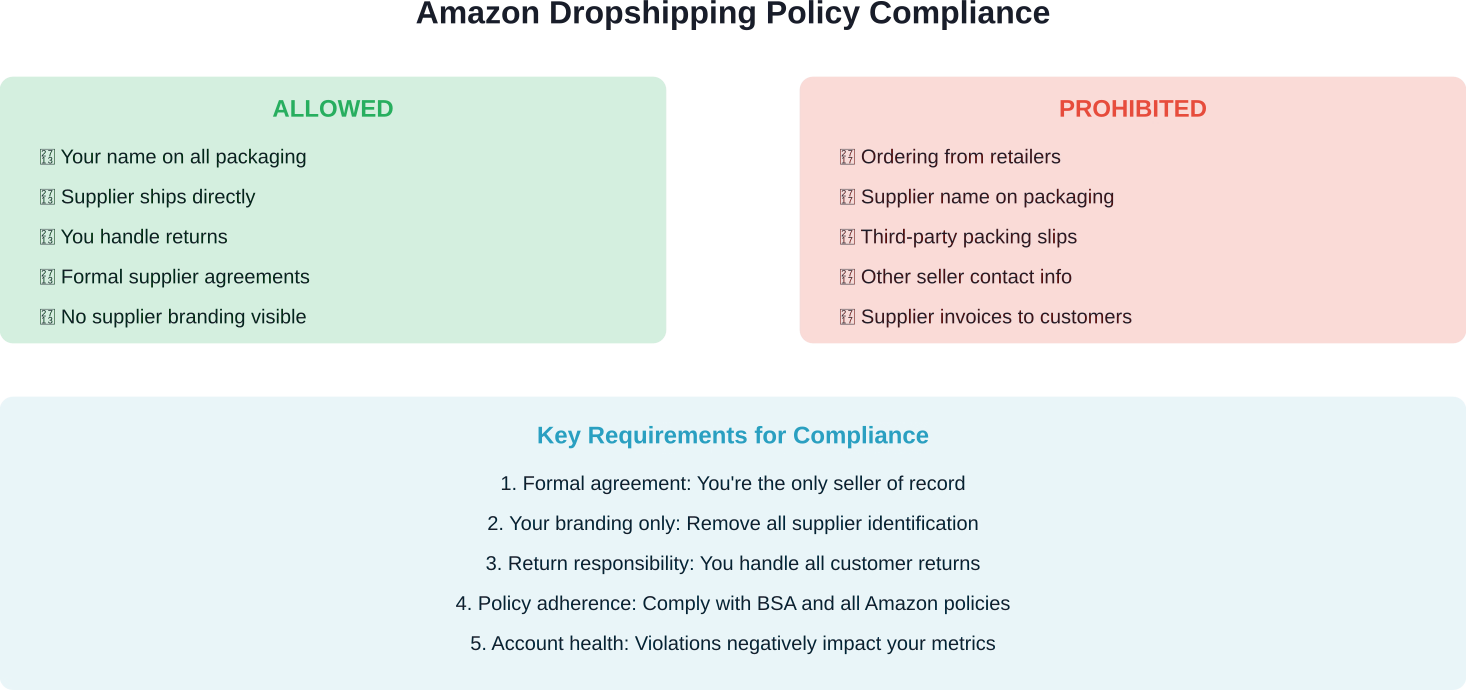
That last point matters more than most beginners realize. Amazon requires that sellers appear as the seller of record on all customer-facing materials. The supplier's name, logo, or contact information cannot appear on packing slips, invoices, or external packaging.
This requirement separates compliant Amazon dropshipping from the model many people associate with dropshipping on other platforms.
The profit mechanism is straightforward. Sellers list products at retail prices on Amazon. When orders come in, they purchase those same products from suppliers at wholesale or discounted rates. The difference between what the customer pays and what the supplier charges represents the seller's profit margin.
Margins vary widely by product category and supplier relationship. Some sellers work with margins as thin as 10-15%, while others secure exclusive arrangements that allow for 30-40% margins.
The model eliminates several traditional retail costs. No warehouse rent. No inventory purchasing upfront. No dead stock taking up space and capital. These savings make the business model accessible to sellers with limited starting capital.
Real talk: the model also introduces unique challenges. Suppliers control inventory levels and shipping times. If a supplier runs out of stock or ships late, the seller's Amazon metrics suffer. Customer service falls entirely on the seller, even though they don't control fulfillment.
Amazon allows dropshipping, but only under specific conditions outlined in their Drop Shipping Policy. According to Amazon Seller Central, violations of this policy can negatively impact account health and the ability to fulfill future orders through the Merchant Fulfilled Network.
The policy centers on one core principle: customers must know who they're buying from, and that seller must be identifiable on all materials.
According to the official Drop Shipping Policy update from Amazon Seller Central, these practices are explicitly forbidden:
That first prohibition matters significantly. Sellers cannot simply order products from Walmart, Target, or another retailer and have them shipped to Amazon customers. This practice—sometimes called retail arbitrage dropshipping—violates Amazon's policy because the shipment identifies the retailer, not the seller.
To dropship compliantly on Amazon, sellers must meet these requirements from the official policy:
The seller of record requirement means having formal agreements with suppliers. These agreements should specify that the supplier will not include their own branding on any customer-facing materials and will allow the seller to be identified as the sole seller.
One of dropshipping's main appeals is the low barrier to entry compared to traditional retail. But "low" doesn't mean zero.
The most immediate cost is the Amazon seller account itself. Amazon offers two account types:
For serious dropshipping businesses, the Professional account makes sense financially once sales volume picks up. It also unlocks access to advertising tools and bulk listing features that Individual accounts lack.
Beyond the account subscription, Amazon charges referral fees on each sale. These fees vary by category, typically ranging from 8% to 15% of the total sale price including shipping.
For example, electronics usually carry an 8% referral fee, while Amazon takes 15% on most other categories. These percentages come directly out of each sale, so profit margin calculations must account for them from the start.
Sellers using Merchant Fulfilled Network also pay variable closing fees on media items like books, music, and videos.
Several other costs factor into the total investment:
According to IRS guidance, online sellers receiving more than $5,000 in payments for goods or services through payment platforms in 2024 will receive Form 1099-K. This threshold dropped from previous years' $20,000 minimum, affecting tax reporting for many dropshippers.
Getting started with Amazon dropshipping requires following specific steps in the right order. Miss a crucial element early on, and the entire operation can face compliance issues later.
The foundation of any Amazon dropshipping business starts with account creation. Visit Amazon Seller Central and choose between Individual or Professional accounts based on projected sales volume.
The signup process requires:
Amazon reviews new seller applications to verify identity and business legitimacy. This process typically takes 24-48 hours but can extend longer if Amazon requests additional documentation.
The INFORM Consumers Act, as outlined by the FTC, requires online marketplaces to collect information from high-volume third party sellers. Amazon complies by requesting verification documents during account setup or after reaching certain sales thresholds.
Product selection makes or breaks dropshipping success. The goal is finding items with sufficient demand, manageable competition, and healthy profit margins.
Effective product research considers:
Some categories require approval before sellers can list items. Grocery, health, beauty, and jewelry often require demonstrating proper sourcing and product authenticity through invoices from approved suppliers.
Look for products where competition exists but isn't overwhelming. Zero competition often signals zero demand. Hundreds of sellers typically means razor-thin margins and fierce price competition.
Supplier selection determines operational success. The wrong supplier leads to stockouts, delayed shipments, and poor product quality—all of which damage seller metrics.
Quality suppliers for Amazon dropshipping share these characteristics:
Remember, Amazon's policy explicitly prohibits ordering from other retailers. Suppliers must be wholesalers, manufacturers, or dedicated dropshipping companies—not retail stores.
When vetting suppliers, request sample products to verify quality. Ask about their average processing time, shipping methods, and return procedures. Get written confirmation they'll ship with the seller's information only.
Product listings serve as the storefront on Amazon. Well-optimized listings convert browsers into buyers, while poor listings waste traffic.
Effective Amazon listings include:
In Seller Central, navigate to the Inventory section and select "Add a Product." Choose whether to match an existing product listing or create a new one. For branded items, matching existing ASINs ensures consistency. For unique products, creating new listings requires more detail.
Amazon's algorithm favors listings with complete information. Fill every available field to improve search visibility.
Efficient order fulfillment separates successful dropshippers from those who struggle with metrics and suspensions.
The basic fulfillment workflow looks like this:
Automation tools can streamline this process. Many dropshipping suppliers offer API integrations or software that automatically forwards orders, reducing manual work and errors.
Always verify that tracking information uploads to Amazon promptly. Late tracking updates or missing tracking hurt seller metrics and can trigger performance warnings.
Amazon holds sellers responsible for the entire customer experience, regardless of who ships the product.
This means handling:
Amazon's policy explicitly states that dropshipping sellers must accept and process customer returns themselves. Directing customers to contact suppliers violates the policy and damages account health.
Set up clear processes for return handling. When customers request returns, coordinate with suppliers to provide return shipping labels or arrange product pickup. Process refunds promptly according to Amazon's timelines.
Amazon tracks seller performance through several key metrics visible in Seller Central's Account Health dashboard:
Poor metrics trigger performance notifications and can lead to account suspension. Monitor these numbers weekly and address issues immediately.
Beyond performance metrics, track business metrics like:
Use this data to refine product selection, adjust pricing, and identify problematic suppliers before they damage account health.
Many sellers wonder whether to pursue dropshipping or Fulfillment by Amazon. The models differ significantly in operation, costs, and control.
FBA offers Prime eligibility, which significantly increases conversion rates. Products fulfilled by Amazon typically appear higher in search results and appeal to Prime members who prefer free two-day shipping.
But FBA requires buying inventory upfront. Sellers must forecast demand, purchase products in bulk, ship them to Amazon warehouses, and pay storage fees. If products don't sell, that capital sits tied up in unsold inventory.
Dropshipping eliminates inventory risk and upfront costs. Sellers can test products without financial commitment. The tradeoff comes in reduced control over shipping speed and quality, plus typically lower profit margins.
Some successful sellers combine both models. They start with dropshipping to test products and validate demand. Once a product proves profitable, they transition to FBA for better margins and Prime eligibility.
The profitability question lacks a simple answer. Amazon dropshipping can generate significant income for some sellers while others struggle to break even.
According to official Amazon data, independent sellers in the US averaged more than $290,000 in annual sales in 2024. But that figure includes all seller types—FBA, dropshipping, handmade, and others. It also represents an average, meaning many sellers earn less while some earn considerably more.
Profit margins vary widely by product category and supplier relationship:
Those percentages represent gross margin before accounting for Amazon fees, advertising costs, software subscriptions, and other expenses.
Consider a product selling for $50 on Amazon:
That example shows how margins compress in competitive markets. A 40% gross margin ($20 on a $50 sale) shrinks to just $0.50 after fees and advertising.
Successful dropshippers improve these numbers through:
Several variables determine whether individual dropshipping businesses succeed financially:
Amazon dropshipping presents specific challenges that trip up beginners and experienced sellers alike.
Unreliable suppliers cause most dropshipping headaches. Stockouts, delayed shipments, and quality issues directly impact seller metrics and customer satisfaction.
The Federal Trade Commission has taken action against multiple e-commerce business opportunity schemes that promised easy profits from Amazon selling. In one case from 2020, the FTC sent more than $1 million in refunds to individuals targeted by a scheme that overpromised Amazon selling success.
To minimize supplier problems:
When a supplier ships late or runs out of stock, communicate proactively with customers. Amazon's metrics forgive some late shipments if tracking uploads on time and sellers keep customers informed.
Amazon's strict policies and performance requirements create another common challenge. Violations can result in listing suppression, selling privilege suspension, or permanent account termination.
The most frequent policy violations in dropshipping include:
Review the Drop Shipping Policy regularly and audit supplier shipments periodically. Order from the seller's own account occasionally to verify packaging compliance.
Many dropshipping sellers struggle with profitability because margins are tight and competition is fierce.
When margins feel too thin, consider these approaches:
Avoid the temptation to cut corners on shipping speed or product quality to save costs. Those savings get erased quickly by damaged metrics and negative reviews.
Handling customer service while not controlling fulfillment creates friction. Customers expect instant answers about shipping status, but dropshippers must wait for supplier responses.
Set clear expectations in product listings about shipping timeframes. Communicate proactively when delays occur. Build relationships with suppliers who provide quick responses to status inquiries.
Many successful dropshippers use templated responses for common questions, reducing time spent on customer service while maintaining quality.
Beyond the basics, certain strategies separate consistently profitable dropshippers from those who struggle.
Broad categories like electronics or home goods attract massive competition. Niche categories with passionate audiences often offer better opportunities.
Look for products where customers prioritize specialty features over price. These categories typically support higher margins because customers care more about finding the exact right product than saving a few dollars.
Treating suppliers as partners rather than vendors creates competitive advantages. Suppliers who view a seller as valuable may offer:
Communicate regularly with suppliers. Pay invoices promptly. Provide feedback about products and processes. These actions build relationships that improve business operations.
Manual order processing consumes time that could go toward growing the business. Automation tools can handle:
Many dropshipping suppliers offer API integrations or work with automation platforms. The time saved often justifies the software costs.
Amazon's marketplace changes constantly. New sellers enter categories, pricing fluctuates, and product trends shift.
Track competitor pricing, review strategies, and listing optimization approaches. When competitors reduce prices significantly, investigate whether they found better supplier terms or are simply losing money to gain market share.
Use competitor insights to refine strategies rather than simply copying their approaches.
Relying on one or two products creates vulnerability. Supplier issues, increased competition, or market shifts can devastate single-product businesses overnight.
Build a catalog of complementary products that share target audiences. This diversification spreads risk while creating opportunities for cross-selling.
Running an Amazon dropshipping business means operating a real business with legal and tax obligations.
Many sellers start as sole proprietors, which requires minimal paperwork. But sole proprietorships offer no liability protection. Business debts and legal issues can affect personal assets.
Forming an LLC provides liability protection and can offer tax advantages. Requirements and costs vary by state, typically ranging from $100-500 for initial formation plus annual fees.
Online sellers must collect sales tax in states where they have economic nexus. Amazon handles sales tax collection on behalf of sellers in most states, but sellers remain ultimately responsible for compliance.
Review Amazon's tax collection settings in Seller Central to verify proper configuration. Some states still require manual collection and remittance.
According to IRS guidance, dropshipping income is taxable business income. Sellers must report all revenue and can deduct legitimate business expenses.
Common deductible expenses include:
Sellers receiving more than $5,000 in payments through payment platforms in 2024 will receive Form 1099-K, according to updated IRS thresholds. This form reports gross payments received, not net income, so careful record-keeping is essential to track actual profit.
As the seller of record, dropshippers bear legal responsibility for products sold. If a product causes injury or damage, customers can pursue legal action against the seller listed on Amazon.
Product liability insurance protects against these risks. Many insurance carriers offer e-commerce policies designed specifically for online sellers.
Amazon dropshipping offers a legitimate path to building an e-commerce business without massive capital requirements. The model works for sellers who understand and follow Amazon's strict policies, build relationships with reliable suppliers, and maintain excellent customer service despite not controlling fulfillment.
Success requires more than just listing products and forwarding orders. The most profitable dropshippers focus on finding products with healthy demand and manageable competition, work with suppliers who understand Amazon's requirements, and monitor performance metrics obsessively.
The barriers to entry are low compared to traditional retail, but that accessibility attracts competition. Standing out means providing genuine value through product selection, listing optimization, and operational excellence.
For sellers willing to invest time in learning Amazon's systems, building supplier relationships, and continuously optimizing their approach, dropshipping can generate meaningful income. The key is treating it as a real business requiring ongoing effort rather than a passive income scheme.
Start by creating a seller account, researching product opportunities in specific niches, and connecting with 2-3 potential suppliers. Test the process with a few products before scaling. Monitor metrics weekly and adjust strategies based on data rather than assumptions.
Ready to start? Head to Amazon Seller Central, create your account, and begin researching products that align with your interests and market demand. The opportunity exists for sellers who approach it seriously and commit to following Amazon's requirements.


