Marketing Ideas for Staffing Companies in 2026
Discover proven marketing strategies for staffing agencies in 2026. Learn digital tactics, content marketing, and client acquisition methods that drive results.
May 26, 2026



Short answer: yes, you can sell CBD on Shopify. But it’s not as simple as launching a regular online store and turning on payments.
Shopify supports hemp and hemp-derived products, including CBD, as long as you follow local laws and Shopify’s own policies. Where most sellers get stuck isn’t the storefront. It’s compliance, marketing limits, and especially payments.
This article breaks it down without fluff. What Shopify allows, what it doesn’t, and what you actually need to prepare for if you want to sell CBD without risking shutdowns or frozen funds.
If you’ve seen people say “Shopify bans CBD” and others claim “it’s no problem at all,” the truth sits somewhere in between.
Shopify attracts CBD sellers for practical reasons, not because it offers workarounds or gray-area shortcuts.
It provides a stable storefront, a reliable checkout experience, and tools that make launching relatively fast, even for founders without technical backgrounds. More importantly, Shopify openly acknowledges hemp-derived products instead of quietly banning them or leaving sellers guessing.
That transparency matters in a regulated category like CBD.
Shopify gives CBD businesses a solid operational base:
For many sellers, this clarity is preferable to platforms that appear permissive until enforcement suddenly happens.
At the same time, Shopify is explicit about its limits:
Shopify enables the store. Everything else still requires planning, research, and external partners.
Understanding this split early helps avoid expensive surprises once real traffic and sales start coming in.
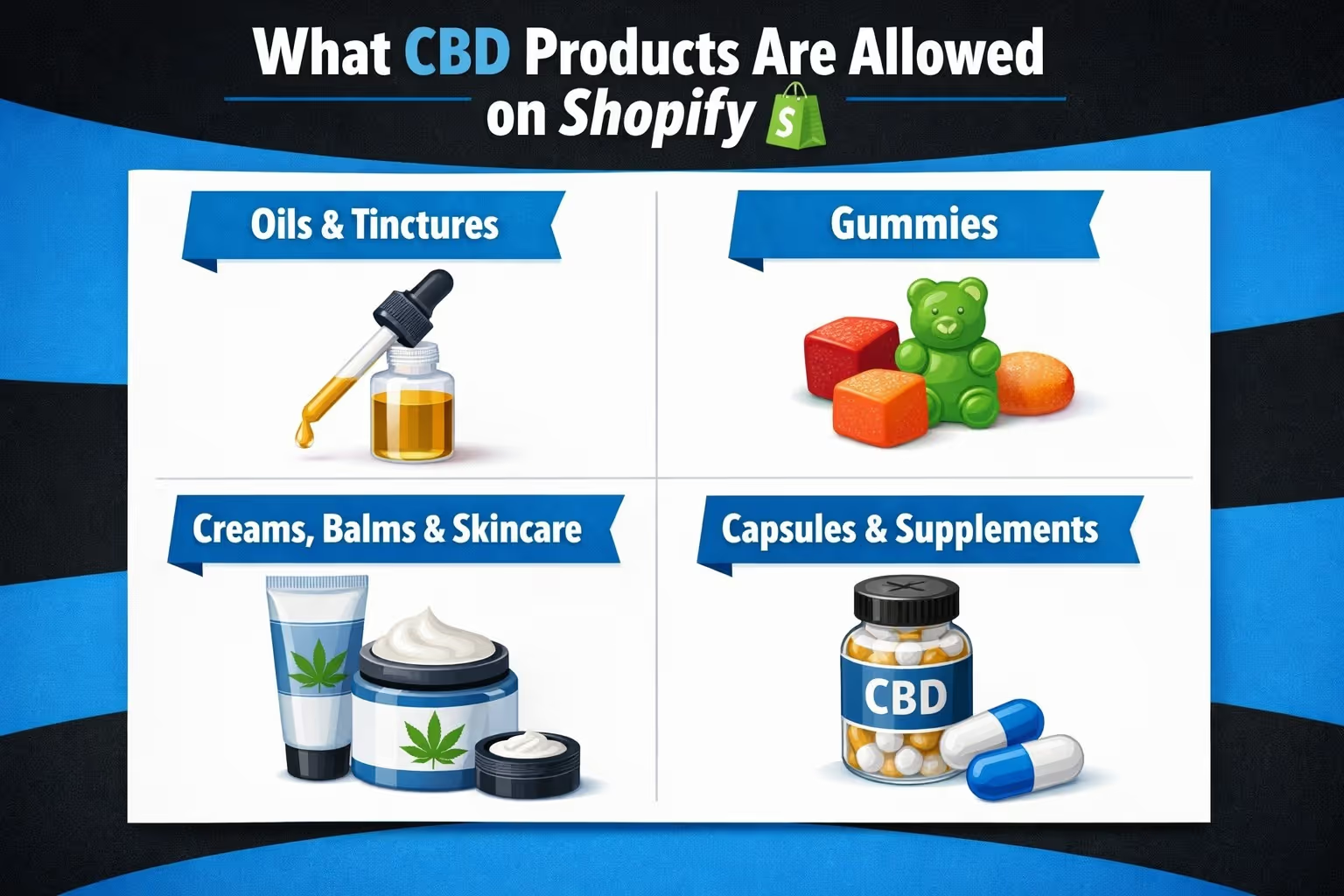
Shopify allows hemp-derived CBD products when they are legal in both your business location and the customer’s destination. For US sellers, this generally means products derived from hemp with no more than 0.3 percent THC.
In practice, these product types are commonly sold on compliant Shopify stores:
The product itself is rarely the issue. The problem usually starts with how the product is described, labeled, or shipped.
This is where many first-time CBD sellers get careless.
You cannot:
That last point deserves its own section.
Even if your CBD products are fully legal, Shopify Payments does not support CBD sales. The reason has little to do with Shopify itself and everything to do with how banks and card networks classify CBD. Most consider it a high-risk category.
In practice, this means CBD sales processed through Shopify Payments will eventually be flagged. When that happens, funds can be frozen without much notice, and stores are often reviewed only after they have started gaining traction. Many sellers assume that approval at launch means they are safe. In reality, enforcement often happens weeks later, once transaction patterns become clear.
This delay is what makes the issue so costly. By the time a problem appears, real money is already involved.
CBD sellers need a third-party payment processor that explicitly supports high-risk businesses and allows CBD transactions. These processors require more upfront work, but they exist because standard payment systems are not built for regulated products.
Expect to provide detailed business and ownership information, clear product descriptions, and a fully compliant website with transparent policies. Proof of sourcing and third-party lab testing is commonly required as well.
Approval usually takes longer than it would for a standard ecommerce store. That slower process is a tradeoff for stability. In the CBD space, reliable payments matter far more than getting live quickly.
CBD laws vary by country, state, and sometimes city. Shopify makes this clear in its policies: it offers general guidance, not legal advice.
As a seller, you are responsible for:
This becomes more complex if you sell across multiple states or internationally. Compliance is not something you finish once and forget.
Some regions restrict CBD purchases by age, commonly 18 or 21.
If you sell into those areas, you are expected to take reasonable steps to restrict access. Many Shopify CBD stores use age verification pop-ups or confirmation screens.
These tools do not replace legal compliance, but they reduce risk and signal intent. Ignoring age restrictions is one of the fastest ways to attract enforcement attention.
CBD marketing is more constrained than most ecommerce niches.
Organic traffic through SEO is usually the safest long-term channel. Email marketing works, but language must be careful. Paid advertising is unpredictable.
Platforms like Google and Meta have strict rules around CBD ads. Campaigns may be approved, paused, or rejected without much explanation.
This does not mean growth is impossible. It means CBD businesses need patience and diversified acquisition strategies.

When CBD marketing options are limited, every paid ad matters more. That is exactly the problem we built Extuitive to solve.
At Extuitive, we help Shopify brands reduce guesswork before they spend money on ads. Instead of launching creatives and hoping they pass reviews, perform well, and stay live, we predict real-world ad performance before launch using AI models trained on live campaign data. For regulated categories like CBD, that early signal can be the difference between scaling carefully and burning budget on ads that never get traction.
Our platform is built to identify likely winners and losers upfront. We analyze creative variations at scale, forecast expected performance, and show how new ads compare against your historical benchmarks. That means fewer rejected campaigns, fewer underperforming tests, and more confidence when you do decide to run paid traffic in a constrained environment.
We also focus heavily on audience alignment. Our models help identify which audiences are most likely to convert, so CBD brands are not wasting limited ad opportunities on broad or mismatched targeting. The goal is not to push volume at all costs, but to improve CTR and ROAS while staying within platform rules.
For CBD brands navigating strict ad policies, Extuitive becomes a way to move forward with intention instead of trial and error. When paid ads are unpredictable, predicting outcomes before launch is often the safest path to sustainable growth.
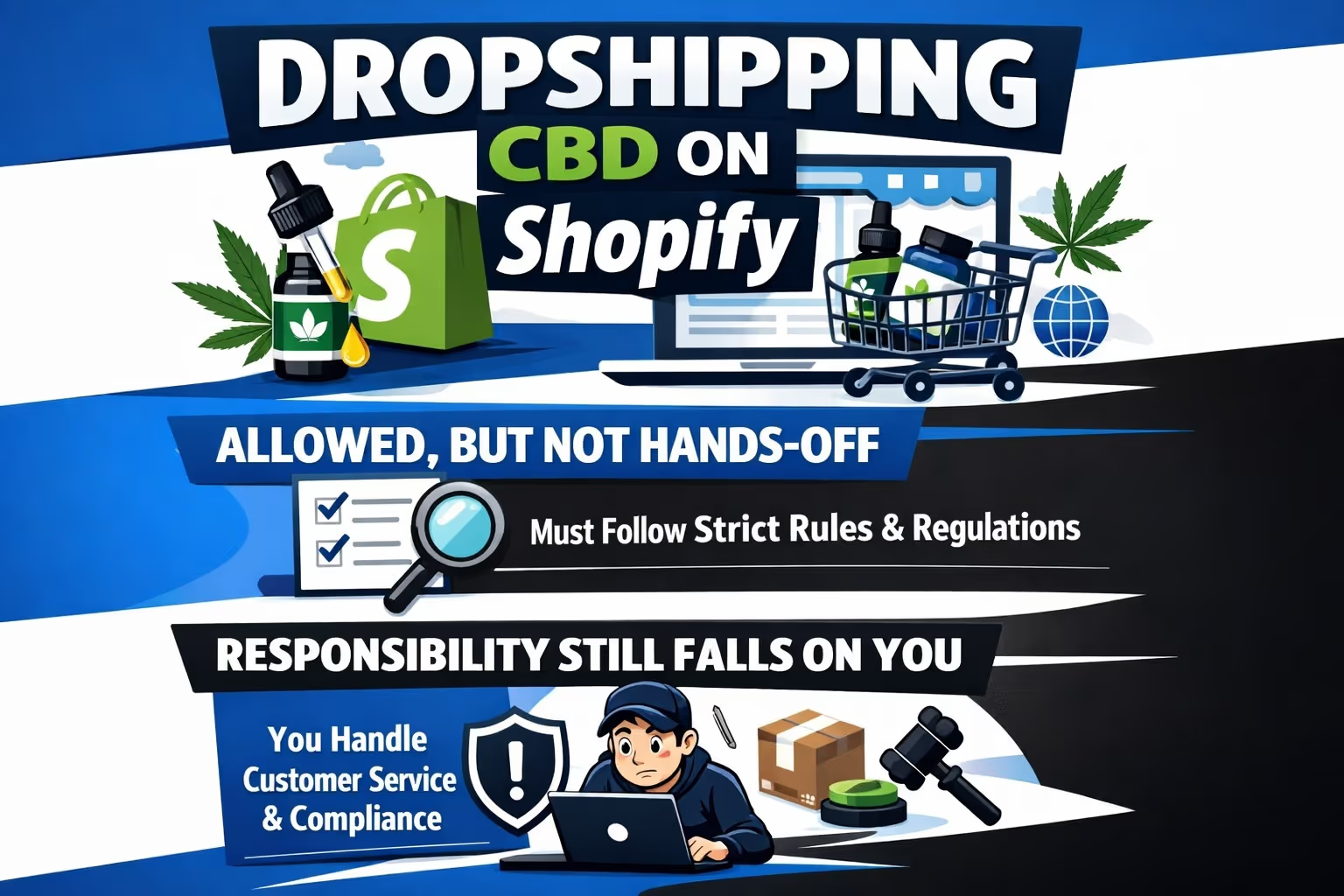
CBD dropshipping is allowed on Shopify as long as all compliance requirements are met. That said, dropshipping does not reduce responsibility. It only changes where the work happens.
Even if a third party handles storage and fulfillment, the store owner remains accountable for what reaches the customer. Shopify does not treat dropshipped CBD differently from stocked inventory when it comes to enforcement.
As the merchant, you are still responsible for several critical areas:
When something goes wrong, customers do not blame the supplier. They blame the store.
Because supplier mistakes become your brand’s problem, choosing the right partners is critical. Reliable CBD suppliers provide up-to-date lab reports, consistent product quality, and clear documentation.
In a regulated category like CBD, a weak supplier can undo months of careful setup in a single shipment.
Reputable CBD suppliers provide certificates of analysis from independent, third-party labs. These reports are one of the clearest ways to prove that a product is what it claims to be and nothing more.
A proper certificate of analysis typically verifies:
From a customer’s perspective, these documents build confidence, especially in a category where skepticism is common. From a platform and payment processor perspective, they show that you are taking compliance seriously rather than cutting corners.
Including certificates of analysis directly on product pages is not required by Shopify, but it is widely considered a best practice for CBD stores that want long-term stability.
Shipping CBD is more complicated than standard ecommerce fulfillment. Not all carriers treat CBD the same way, and policies can vary based on product type, destination, and even how the item is labeled.
Some carriers restrict certain CBD products altogether. Others allow shipments but require additional documentation. International shipping introduces another layer of legal and customs-related complexity.
Before you start selling, you need clear answers to a few questions:
Shipping problems rarely show up during store setup. They tend to surface after orders start moving, which makes them harder and more expensive to fix. Planning for shipping constraints early helps avoid disruptions once customers are already expecting deliveries.
Pricing CBD products involves more than covering the cost of the item itself. The category comes with structural expenses that do not exist in most standard ecommerce businesses.
Higher payment processing fees are common due to CBD’s high-risk classification. Compliance and legal overhead add ongoing costs, especially if you sell across multiple regions. Marketing options are more limited, which can increase the cost of acquiring each customer. Chargeback risk is also higher than average, and that risk is reflected in processing terms.
CBD products often carry higher margins for a reason. Those margins help absorb the extra complexity behind the scenes. Underpricing may look competitive at first, but it usually creates sustainability problems once real operating costs start to show.
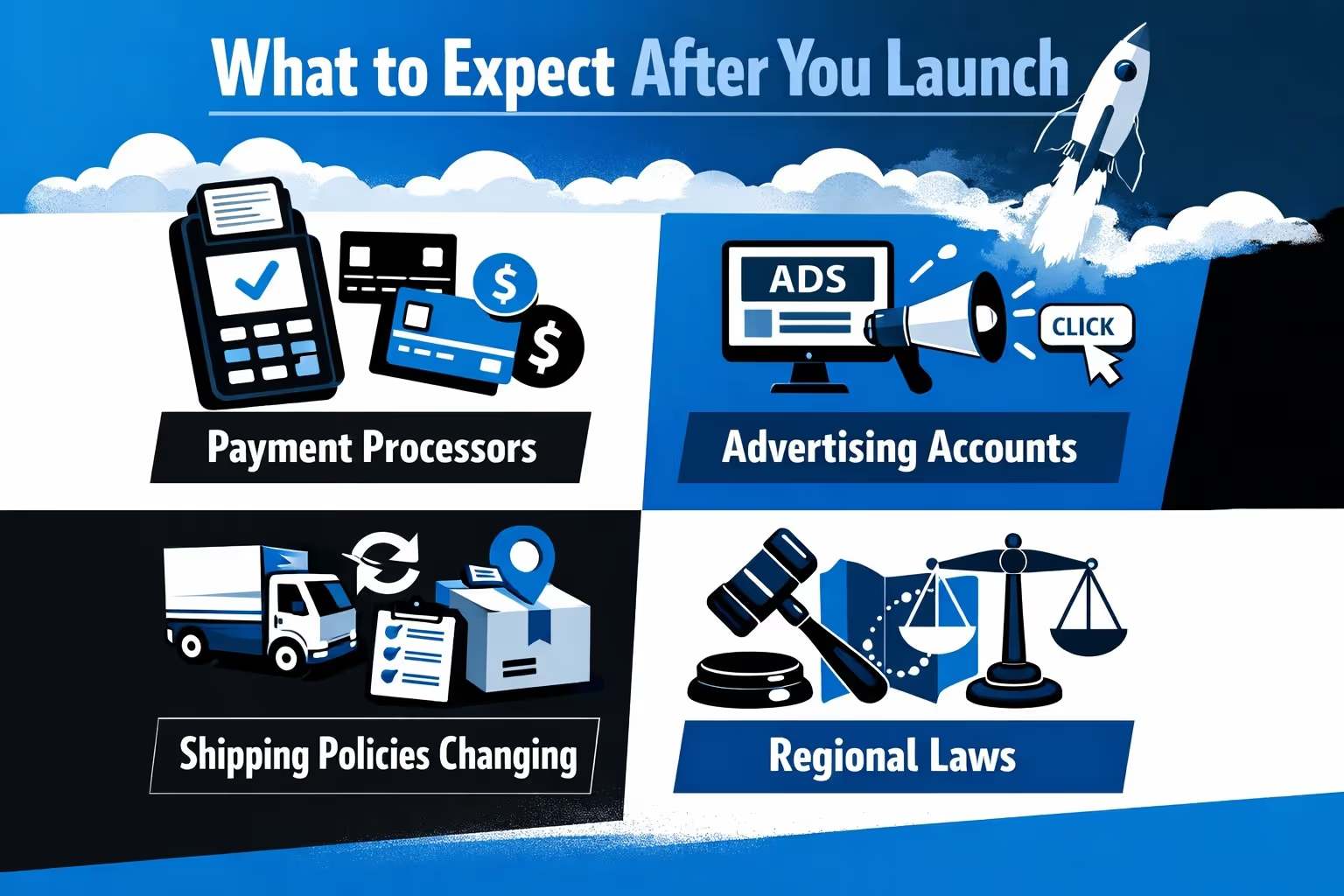
Many CBD sellers brace for problems right away. In reality, issues tend to appear after the store has already gained some traction. Once sales, traffic, and transactions increase, more eyes are on the business.
Common post-launch realities include:
None of this means Shopify is hostile to CBD sellers. It reflects the nature of a regulated industry that requires ongoing attention. Successful CBD businesses plan for active oversight instead of assuming the hard part ends at launch.
For many sellers, yes.
Shopify offers a stable platform, strong ecommerce tools, and clear policies. What it does not offer are shortcuts or protection from regulation.
If you approach CBD with realistic expectations and proper setup, Shopify can support long-term growth. If you treat CBD like a normal product category, friction is inevitable.
Selling CBD on Shopify is allowed, but it is not effortless.
The platform supports compliant CBD stores, but payments, marketing, and regulation introduce real constraints. Success comes from planning for those limits instead of discovering them the hard way.
CBD is not difficult because of Shopify. CBD is difficult because it is regulated.
Understanding that difference upfront makes all the difference later.


