How to Change Your Shopify Theme
Learn how to safely change your Shopify theme without losing content. Avoid broken layouts or SEO drops with our complete instructions for a smooth switch.
Mar 24, 2026



It’s no secret that running ads online has gotten more expensive. Whether you’re promoting a Shopify store or scaling an e-commerce brand, ad budgets don’t stretch like they used to. In the past year alone, marketers have seen sharper competition, platform changes, and AI shake up the rules. So where are prices actually heading in 2026? Is this just inflation or something bigger?
In this article, we’ll unpack the signals behind the price shifts – from Meta’s growing ad engine to Google’s AI-powered campaigns – and offer a grounded look at what brands should expect next. No hype, just clear insight and a bit of forward-thinking.
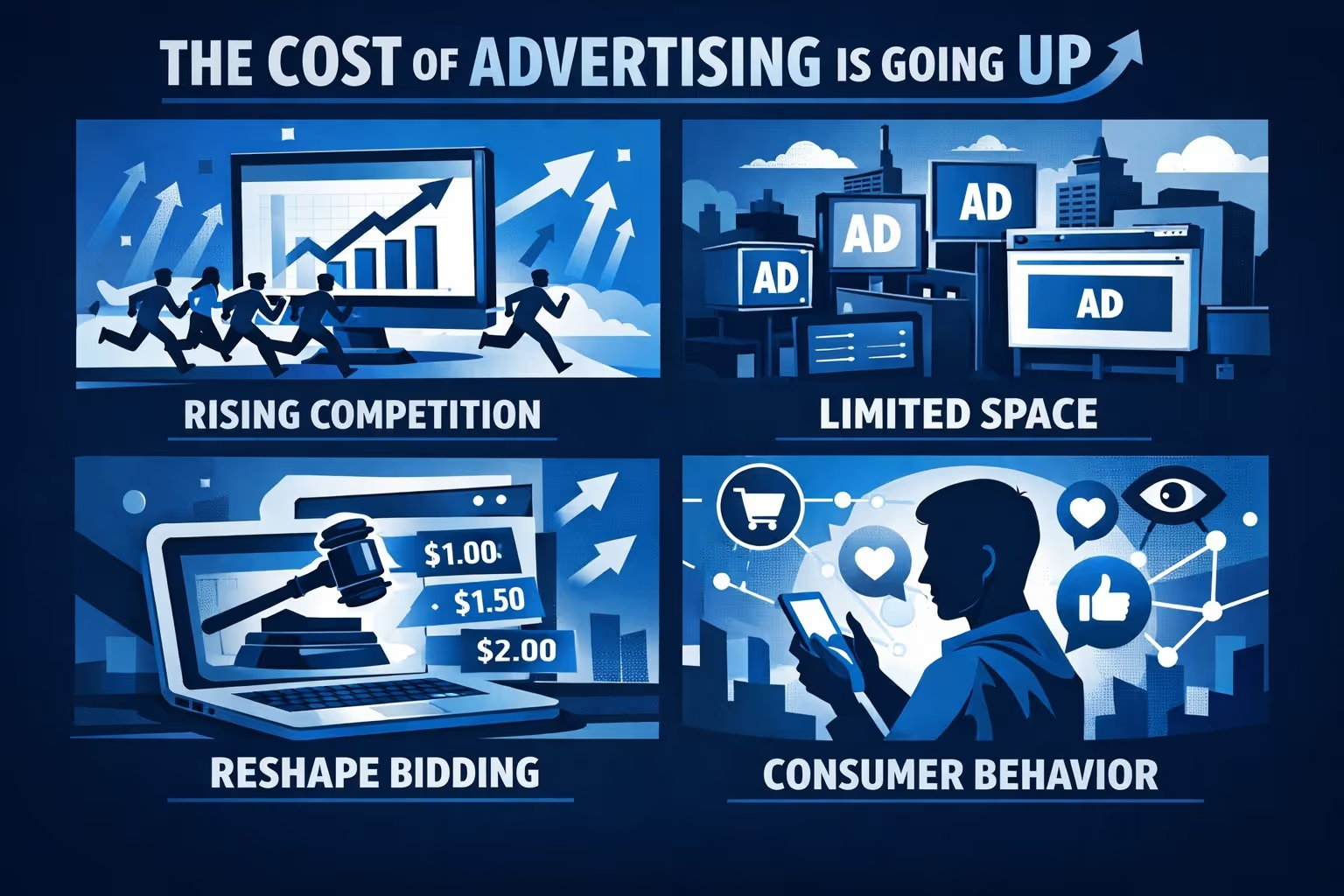
Let’s be honest – the price hikes aren’t just something you feel. They’re backed by real changes happening across every major platform.
Here’s what’s pushing digital ad costs higher:
So yes, costs are rising – but not randomly. There’s a pattern to it.
One big reason for the price changes? The platforms themselves are evolving.
Meta has quietly shifted from selling ad space to selling results. Instead of focusing on reach, Meta’s ad tools now prioritize outcomes – purchases, leads, conversions. It’s fueled by one of the most sophisticated identity graphs in the world, tracking user behavior, interests, and buying signals.
That shift helps drive ROI – but it also concentrates spend on high-performing audiences. And those audiences? They don’t come cheap.
Google’s shift toward AI-powered campaigns, like Performance Max, marked a significant move away from keyword targeting. These tools flipped the switch from keyword targeting to audience modeling. Marketers now upload assets, and Google figures out which people to show them to – based on behavior, context, and predicted outcomes.
So instead of competing for search terms, you’re competing for attention from specific buyer cohorts. That means if your ideal audience is also being chased by ten other brands... expect a bidding war.
And then there’s ChatGPT and its cousins. As generative AI tools begin experimenting with commerce integrations and product recommendations, we’re entering a new kind of ad economy. These platforms don’t work like search engines. They work more like assistants, surfacing options based on inferred needs, not keywords.
The implication? Brands need structured content and data that generative systems can understand. And they’ll be fighting for position in this new channel just like they did on Google a decade ago.
While it’s hard to pin down exact future rates, here’s what current data and platform behavior suggest:
These are directional at best, but the trend is clear: better targeting equals higher cost per action. If you want to reach people who are likely to convert, you’re not alone, and that drives prices up.
Here’s where things get more interesting. Even though prices are going up, the actual cost per qualified lead might go down for brands that get smart.
Why? Because precision marketing cuts waste.
In the old days, you paid for a ton of impressions or clicks and hoped a few would convert. Now, with predictive modeling and better audience data, platforms can serve ads to people who are far more likely to buy. That means fewer wasted impressions and better ROI, even if the initial CPC looks scary.
As an illustrative example: a $1 CPC with a 1% conversion results in $100 per lead, while a $2 CPC with 5% conversion could result in $40 per lead. Actual performance may vary.
The takeaway? It’s not about cheaper clicks. It’s about better fits.
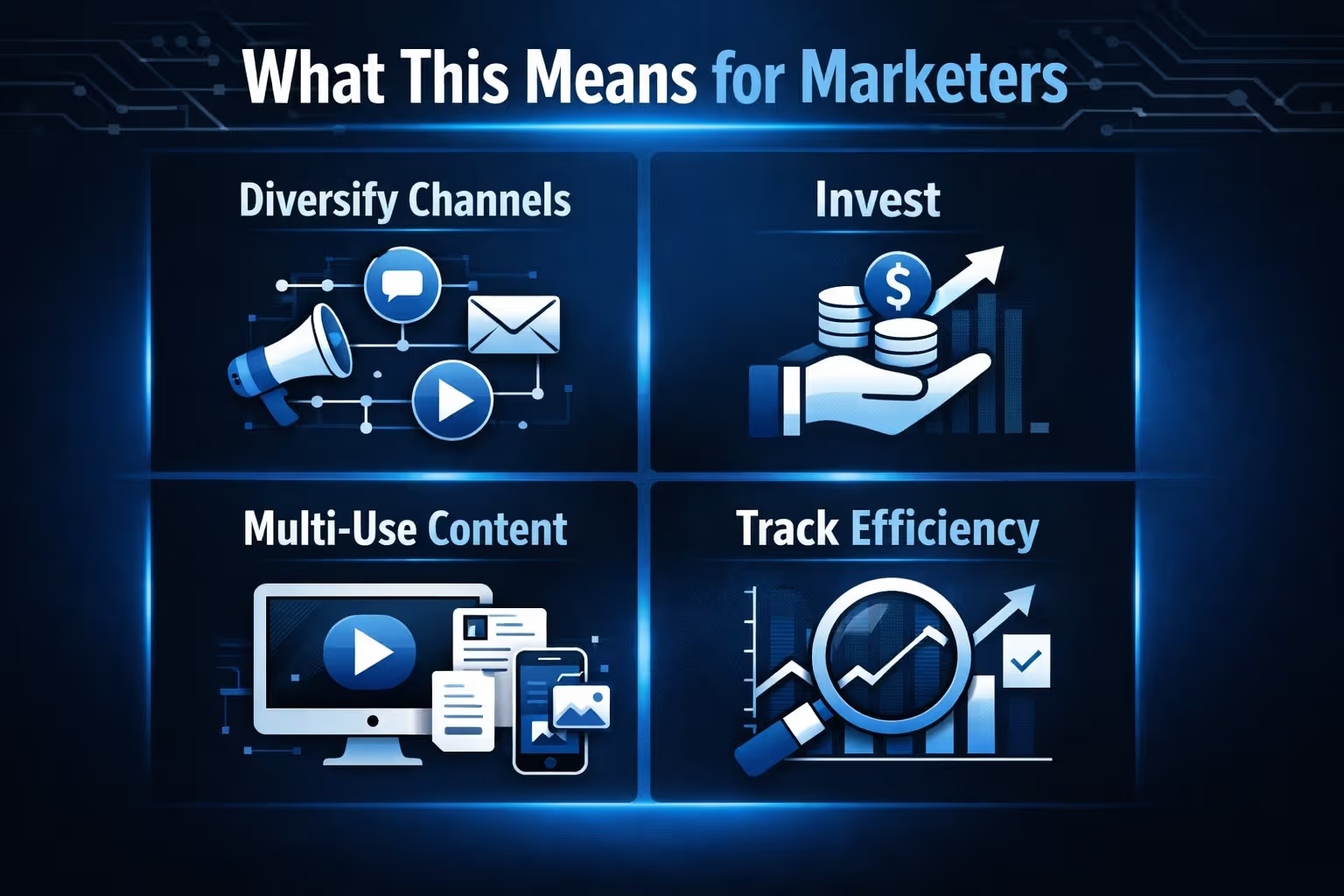
If you’re running campaigns or planning budgets, the shifts we’re seeing in digital ad pricing call for a smarter, more flexible approach.
Here’s what to focus on:
At Extuitive, we’re not just watching ad costs rise – we’re helping brands respond in real time. Our platform is built to take the guesswork (and the budget burn) out of digital ad creation. We use AI agents trained on real consumer profiles to model behavior, test creative, and predict performance before a single dollar is spent.
If you’re running a Shopify store, it’s as simple as connecting your site. From there, we help you generate audience-specific ad assets, validate them with simulated buyer cohorts, and launch campaigns that already have signal. It’s faster, leaner, and way more reliable than traditional A/B testing or running blind. You get real insights into purchase intent, not just vanity metrics.
The reason this matters in today’s market is simple: precision is the only way to compete when CPCs are rising. You don’t have to outspend your competition. You just need to outmatch them on fit. We give you that edge by helping you understand your audience, create relevant content, and test everything before it goes live. Because in 2026, performance comes from alignment – not guesswork
A term you’ll hear more in 2026 is Generative Engine Optimization (GEO). It’s like SEO, but for platforms like ChatGPT or Google’s AI Mode that don’t just list links – they generate answers.
With GEO, the rules change:
That means creating content that directly addresses real buyer scenarios:
If your brand is part of those conversations, you’ll get visibility in a world where paid and organic blur together. But to get there, your content needs to be clean, specific, and machine-readable.
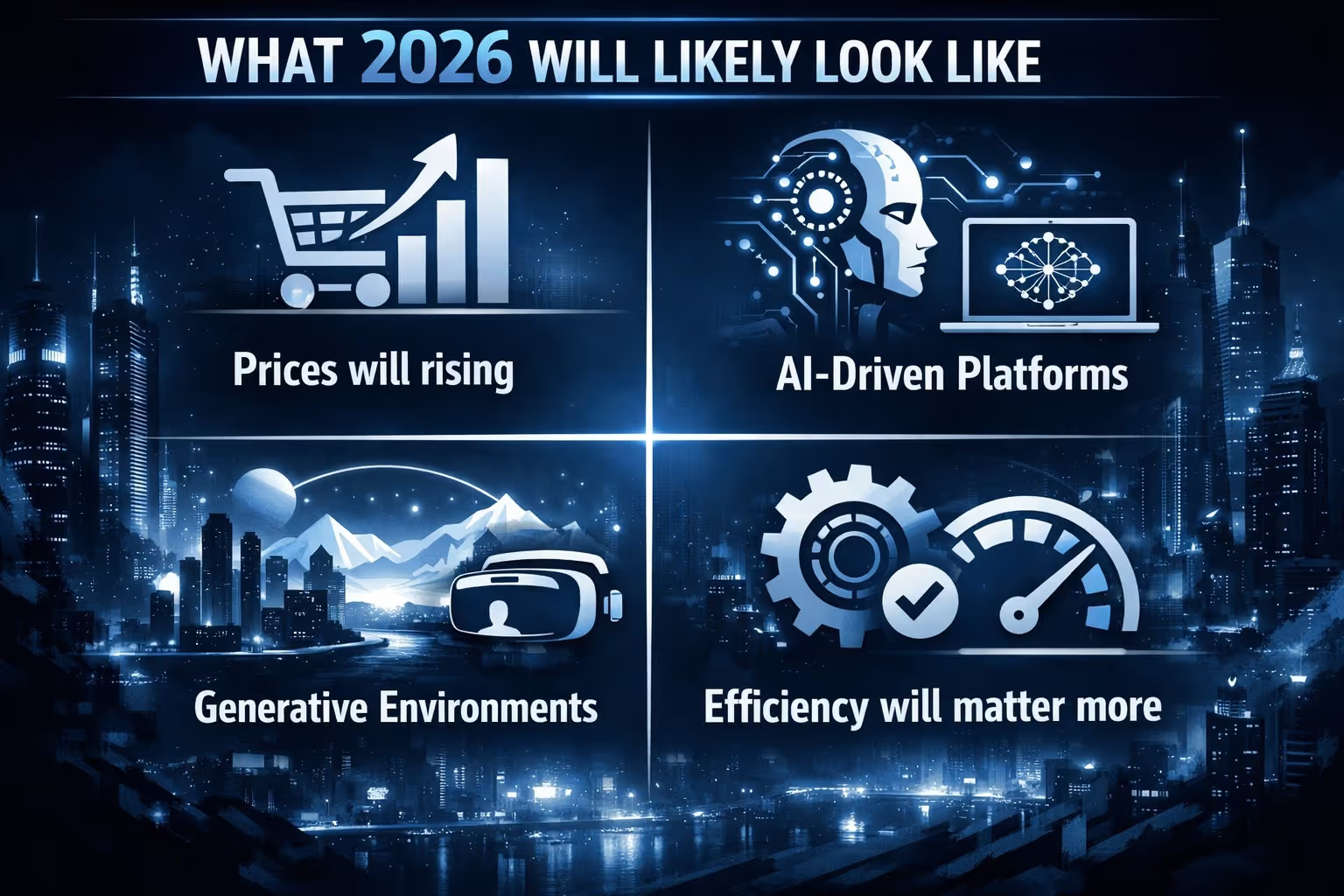
So where are we headed with digital ad pricing?
Here’s the most likely scenario:
In short, the brands that win in 2026 won’t necessarily be the ones with the biggest ad budgets. They’ll be the ones who adapt early, model their audiences deeply, and build assets that travel well across systems.
Digital advertising is entering a new phase. The rise in ad costs isn’t just about inflation or competition. It’s about a deeper shift in how platforms connect brands to people.
If you treat this like a warning sign, you’ll miss the opportunity. But if you treat it like a signal to refine your strategy, align your assets, and invest in your audience understanding, the returns can be significant.
Don’t just chase lower CPCs. Chase relevance. Because in 2026, relevance is what gets rewarded.


