Marketing Ideas for Plumbers: 18 Strategies That Work in 2026
Discover 18 proven marketing ideas for plumbers to grow your business. From local SEO to social media, learn strategies that actually drive leads in 2026.
May 18, 2026



Quick Summary: AI is revolutionizing ecommerce through personalized product recommendations, intelligent chatbots, dynamic pricing, visual search, and automated operations. By implementing AI-powered tools for search optimization, customer service, and inventory management, online retailers can boost conversions while reducing operational costs. The key is starting with clear business goals, using real shopper data, and ensuring compliance with privacy regulations.
Over half of US consumers now turn to AI tools like ChatGPT or Gemini to browse and buy online. On the business side, 95% of ecommerce brands using AI technology report strong returns on investment.
But here's the thing—successfully implementing AI in ecommerce isn't about jumping on every new tool. It's about understanding which applications actually move the needle on core metrics like conversion rate, revenue per visitor, and customer lifetime value.
This guide breaks down exactly how to use AI in ecommerce, from foundational strategies to specific use cases that are transforming online retail in 2026.
Artificial intelligence in ecommerce encompasses machine learning algorithms, natural language processing, computer vision, and generative AI working together to create smarter shopping experiences.
The technology analyzes shopping habits, preferences, and behavioral patterns to deliver personalized experiences at scale. That's something human teams simply can't replicate manually.
Real talk: the biggest mistake retailers make is implementing AI without proper data infrastructure.
According to research from academic studies on ecommerce personalization, effective AI requires full clickstream data—100% real shopper data capturing every interaction, click, and behavioral signal.
Search experiences powered by synthetic or incomplete data consistently fall short. The algorithms need comprehensive information about how actual customers navigate, search, abandon carts, and convert.
Before implementing any AI solution, audit these data collection points:
Static product catalogs and manual merchandising can't keep pace with modern consumer expectations. Most customers—73% according to current data—expect better personalization as technology advances.
Manual A/B testing takes weeks. Rule-based product sorting misses nuanced preferences. One-size-fits-all experiences drive customers to competitors.
AI closes these gaps by processing millions of data points in real-time, adapting to individual preferences instantly.
Let's break down the specific applications where AI delivers measurable business impact.

Most ecommerce teams still rely on post-launch data to understand what works in advertising. Campaigns go live, budgets get spent, and only then does the learning start. That process is slow and often expensive, especially when multiple creatives are tested at once.
Some AI tools shift this earlier in the workflow. Platforms like Extuitive use past performance data and simulated audiences to evaluate ad creatives before they are launched. Instead of replacing testing completely, this adds a layer of filtering, helping teams narrow down options and focus on ideas that are more likely to perform.
Product recommendation engines analyze browsing history, purchase patterns, and similar customer behaviors to suggest relevant items.
Amazon's machine learning algorithms generate 35% of their total revenue through recommendations alone. That's the power of showing the right product at the right time.
Modern recommendation engines go beyond basic "customers who bought this also bought" logic. They factor in:
The technology continuously learns from new interactions, refining suggestions as customer preferences evolve.
Search is where many ecommerce purchases begin. But traditional keyword matching misses synonyms, handles typos poorly, and ignores intent.
AI-powered search understands natural language queries, interprets misspellings, and ranks results based on what actually converts—not just keyword matches.
Visual search takes this further, allowing customers to upload photos and find similar products. This proves particularly valuable for fashion, home décor, and furniture categories where describing style in words is difficult.
Dynamic pricing algorithms adjust prices in real-time based on demand, competitor pricing, inventory levels, and customer segment.
However, research from Carnegie Mellon University (published in Marketing Science) found that certain AI-powered pricing algorithms may learn to engage in tacit collusion in competitive scenarios, resulting in overly competitive prices and potentially harmful consequences for consumer welfare
The key is implementing dynamic pricing that optimizes for long-term customer value, not just short-term margin extraction. Transparent pricing strategies build trust while still capturing revenue opportunities.
Effective dynamic pricing considers:
Natural language processing enables chatbots to handle common customer inquiries 24/7, freeing human agents for complex issues.
According to NRF 2026 data, Sephora's AI chatbot has tripled usage since launch. Customers who add products to their basket directly from chat show 30% higher basket sizes compared to traditional browsing.
Modern AI customer service goes beyond scripted responses. The systems understand context, sentiment, and intent to provide genuinely helpful assistance.
Best applications include:
Machine learning models predict future demand by analyzing historical sales data, seasonal patterns, market trends, and external factors like weather or economic indicators.
Accurate forecasting prevents both stockouts and overstock situations, optimizing working capital while maintaining product availability.
AI inventory systems automatically trigger reorder points, suggest optimal stock levels by location, and identify slow-moving items for promotional markdown.
Generative AI creates personalized email content, product descriptions, and advertising copy tailored to specific customer segments.
The technology analyzes which messaging resonates with different audiences, then generates variations optimized for engagement and conversion.
California Management Review research highlights that Amazon's machine learning algorithms already drive massive personalization at scale—but also notes the critical balance between personalization and data privacy.
Successful personalized marketing requires transparent data practices and clear customer consent.
AI fraud detection systems analyze transaction patterns, device fingerprints, and behavioral signals to identify suspicious activity in real-time.
The algorithms learn normal purchasing patterns for each customer, flagging anomalies that may indicate account takeover, stolen credit cards, or other fraudulent behavior.
This protects both the business and legitimate customers while minimizing false positives that create friction in the checkout process.
Writing product descriptions for thousands of SKUs is time-consuming. Generative AI can create unique, SEO-optimized descriptions at scale.
But there's an important caveat here. The Federal Trade Commission has cracked down on deceptive AI claims and practices. In September 2024, the FTC announced Operation AI Comply, taking enforcement action against companies making false claims about AI capabilities.
In March 2026, the FTC banned Air AI from marketing business opportunities as part of a settlement over charges the company misled entrepreneurs and small businesses
The lesson? Use AI for content generation, but ensure accuracy, transparency, and compliance with advertising standards.
Machine learning models analyze customer behaviors to segment audiences far beyond basic demographics.
These algorithms identify high-value customer patterns, predict churn risk, and calculate lifetime value projections to guide acquisition and retention strategies.
PSYKHE AI uses proprietary psychographic data to enable personalization across different categories. Through shopper interactions in one category like shirts, the system personalizes recommendations in seemingly unrelated categories like shoes or furniture. The company was featured in NRF's Innovation Lab and is working with a select cohort of fashion retailers.
Voice-activated shopping through smart speakers and voice assistants represents the next frontier of ecommerce convenience.
Natural language processing allows customers to search, compare, and purchase products through conversational interactions rather than traditional navigation.
While adoption is still emerging, retailers positioning themselves for voice commerce now will capture market share as the technology matures.
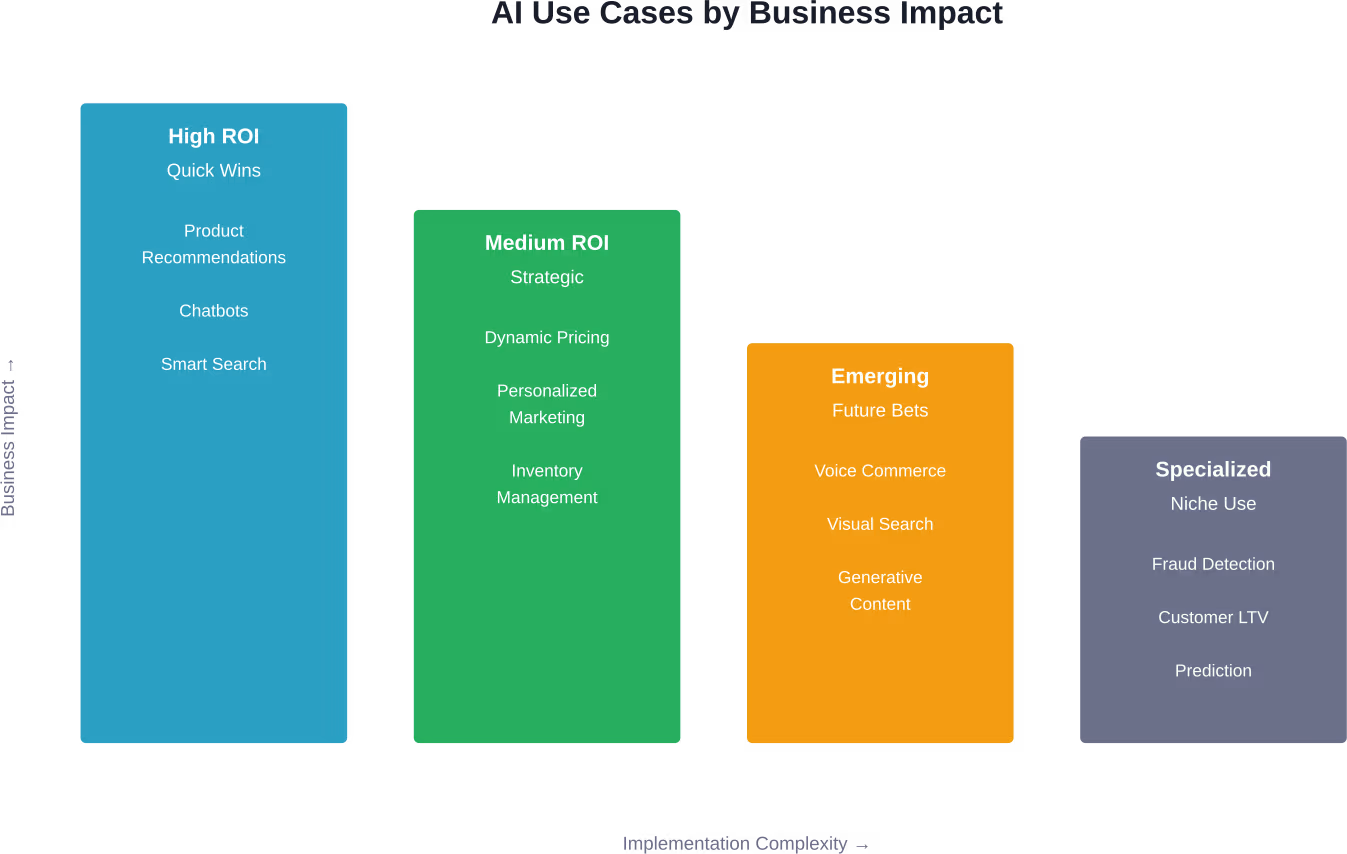
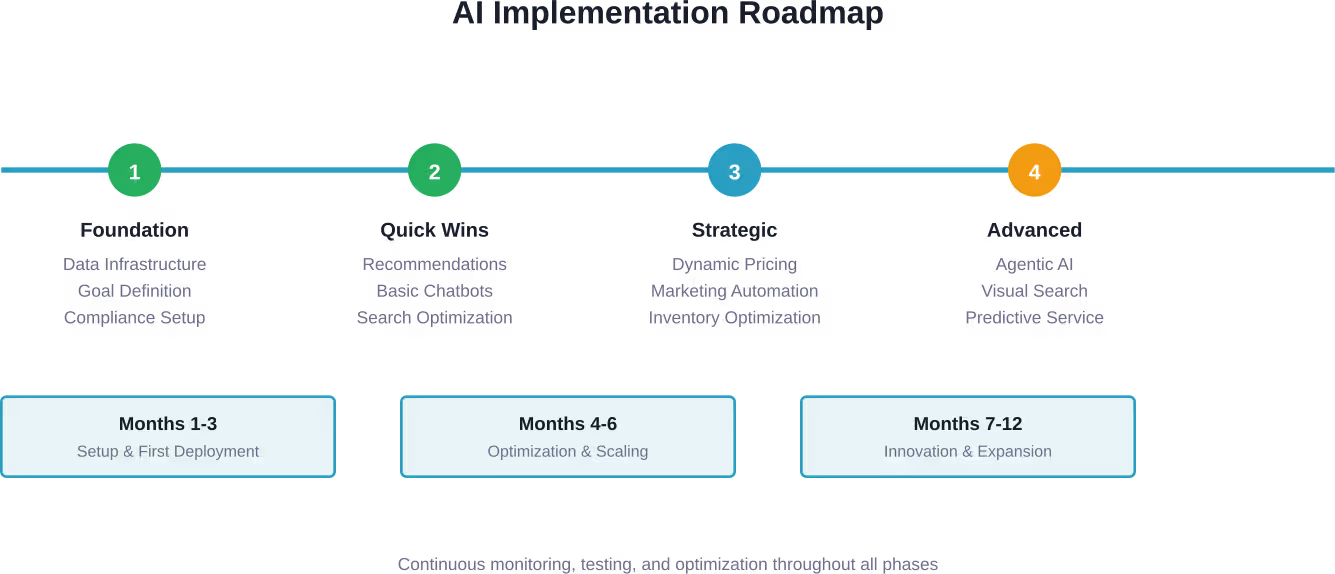
Deploying AI effectively requires a structured approach. Here's the implementation framework that works.
Don't implement AI for its own sake. Start with specific business problems or opportunities.
Common objectives include:
Each AI application should tie directly to measurable KPIs that matter to the business.
Assess whether current data collection captures the signals AI needs.
Key questions to answer:
Many retailers discover gaps in data collection that must be addressed before AI can deliver results.
Product recommendations, basic chatbots, and search improvements offer strong ROI with manageable implementation complexity.
These foundational applications build organizational confidence in AI while delivering measurable results quickly.
Save complex applications like comprehensive dynamic pricing or generative content systems until teams have experience with simpler implementations.
Build versus buy is the critical decision. Most ecommerce businesses should partner with established AI platforms rather than building from scratch.
Evaluate potential solutions based on:
According to a Forrester study commissioned by AWS in October 2025 (note: this study describes a composite organization and should be verified for applicability to specific use cases), organizations implementing generative AI solutions on cloud platforms with partner support see significant cost savings and business benefits.
Data privacy regulations like GDPR, CCPA, and emerging AI-specific regulations require careful attention.
The FTC has made clear that false or misleading claims about AI capabilities will face enforcement action. In August 2024, the FTC announced a final rule banning fake reviews and testimonials, allowing the agency to strengthen enforcement, seek civil penalties against violators, and deter AI-generated fake reviews.
Best practices include:
AI systems require ongoing monitoring to ensure they're delivering expected results and not developing problematic patterns.
Establish dashboards tracking:
Continuous optimization separates successful AI implementations from those that plateau after initial deployment.
Agentic AI represents the next evolution—autonomous systems that can complete complex multi-step tasks with minimal human intervention.
At NRF 2026, At NRF 2026, Google CEO Sundar Pichai announced a new agentic shopping standard for Google Gemini called Universal Commerce Protocol. This signals a major shift toward AI agents that can research products, compare options, and facilitate purchases across multiple retailers.
Gartner projects that by the end of 2026, 40% of enterprise applications will include task-specific AI agents (per NRF report). In a best-case scenario, agentic AI could generate nearly 30% of enterprise application software revenue by 2035.
What does this mean for ecommerce retailers?
Agentic AI will handle tasks like:
The technology is still emerging, but early adopters are testing these capabilities now.
Hyper-personalization drives conversions, but customers are increasingly concerned about data privacy.
Academic research from Berkeley's California Management Review emphasizes that a proactive approach to data governance is no longer optional.
The challenge is clear: customers expect personalized experiences (73% according to recent data) while simultaneously demanding better privacy protections.
Successful retailers navigate this tension by:
Privacy-first personalization will differentiate winners from losers as regulations tighten.
Learning from others' mistakes saves time and resources.
Deploying technology because it's trendy leads to wasted investment. Every AI application needs specific, measurable objectives.
Garbage in, garbage out applies doubly to AI. Poor data quality undermines even the most sophisticated algorithms.
The FTC's crackdown on deceptive AI claims shows the regulatory risk of exaggerated promises. Be realistic about what AI can and cannot do.
Fully autonomous AI without human monitoring creates risk. Critical decisions should include human review, especially those affecting customer trust or brand reputation.
AI systems can perpetuate or amplify biases present in training data. Regular audits ensure fair treatment across customer segments.
AI implementation affects workflows, roles, and decision-making processes. Without proper change management, even good technology fails due to organizational resistance.
The AI ecommerce landscape continues evolving rapidly. Here's what's emerging.
Conversational AI that guides customers through entire shopping journeys—from discovery to purchase to post-sale support—is becoming mainstream.
These assistants understand context across sessions, remember preferences, and provide genuinely helpful recommendations rather than scripted responses.
Research from MIT Sloan Review (2016) highlights how analytics drive the subscription ecommerce phenomenon. The most successful subscription company, ipsy, uses AI to tailor boxes to individual tastes, creating a "Christmas every month" experience.
This model combines the convenience of subscriptions with AI-powered personalization that keeps customers engaged long-term.
Search is expanding beyond text to include images, voice, and even video. Customers can snap a photo of something they like and find similar products instantly.
Multimodal AI understands queries that combine different input types—like "show me red dresses similar to this photo under $100."
Rather than waiting for customers to contact support, AI predicts issues before they occur and proactively reaches out with solutions.
Systems analyze behavioral signals indicating confusion, frustration, or problems, then trigger automated assistance or human intervention.
AI helps customers make environmentally conscious purchasing decisions by calculating carbon footprints, suggesting sustainable alternatives, and optimizing shipping for reduced environmental impact.
This aligns with growing consumer demand for sustainability while helping retailers meet corporate environmental goals.
Track these metrics to evaluate AI effectiveness:
Compare these metrics before and after AI implementation to quantify ROI.
Here's what often gets lost in AI hype: the technology amplifies human expertise, it doesn't replace it.
Successful AI implementations combine algorithmic intelligence with human judgment. Merchandisers guide AI recommendations with category knowledge. Customer service agents handle complex emotional situations that chatbots escalate.
The most effective ecommerce organizations view AI as augmentation, not automation. Teams that understand both the business and the technology make better decisions about where and how to apply AI.
This requires investment in training and change management. Employees need to understand AI capabilities, limitations, and how their roles evolve in an AI-augmented environment.
Most ecommerce businesses should partner with established AI platform providers rather than building proprietary systems.
Building in-house makes sense only when:
For most retailers, specialized AI platforms deliver faster time-to-value with lower risk.
What does successful AI implementation actually look like?
According to data from NRF 2026, retailers successfully deploying AI see specific patterns:
But success isn't universal. The same research shows customers aren't yet completely on board with all AI applications. Winning retailers balance innovation with customer comfort levels.
The competitive advantage of AI in ecommerce is no longer debatable. The question is execution.
Start by identifying one high-impact use case aligned with clear business objectives. Audit data infrastructure to ensure AI has the inputs it needs. Choose proven technology partners rather than building from scratch.
Implement thoughtfully with proper governance, privacy protections, and human oversight. Monitor results rigorously against defined KPIs. Optimize continuously based on performance data.
According to Gartner projections, 40% of enterprise applications will include AI agents by the end of 2026. Retailers who build AI capabilities now position themselves to compete as the technology becomes table stakes.
The transformation won't happen overnight. But with the right approach, AI delivers measurable improvements in customer experience, operational efficiency, and business results.
The retailers thriving in 2026 and beyond won't be those with the most AI. They'll be the ones using AI most effectively to solve real business problems and create genuine value for customers.


