Marketing Ideas for Home Builders: 25 Tactics for 2026
Discover 25 proven marketing ideas for home builders in 2026. From digital strategies to community engagement, learn how to attract buyers and grow sales.
May 15, 2026



Running Facebook and Instagram ads is easy. Turning them into a steady source of profit? That’s where it gets tricky. Too many campaigns focus on chasing cheap conversions, only to find those customers drop off fast. That’s why more marketers are shifting focus to LTV – customer lifetime value. Instead of asking “Who will click?”, they’re asking “Who’s actually worth acquiring?”
In this guide, we’ll break down what Meta Ads LTV prediction is, why it matters, and how to actually make it work for your business. Whether you’re running an eCommerce store or scaling a subscription brand, thinking in terms of LTV can turn your ad strategy from short-term hustle into something more stable, and honestly, less stressful.
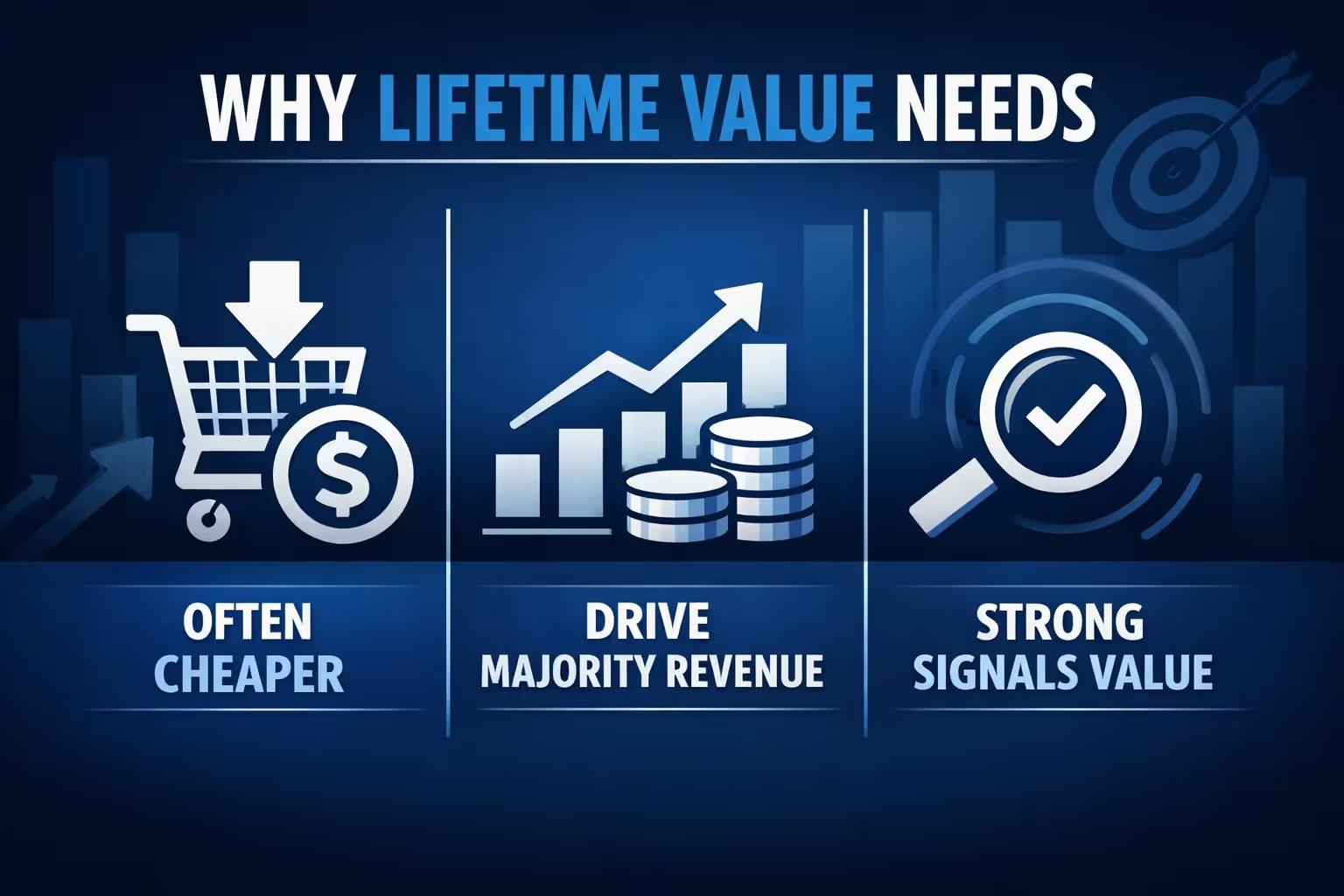
Most Meta ad campaigns are built around short-term wins. You set up a purchase conversion, optimize for the lowest cost per result, and call it a day. But not every customer is equally valuable, and not every conversion should be celebrated.
Optimizing for LTV (lifetime value) means you’re training Meta’s algorithm to look beyond the first sale and focus on the people who are most likely to stick around, spend more, and come back again.
Why does that matter?
If your current campaigns treat every conversion equally, you're likely overpaying for customers who won’t generate long-term profit.
At its core, LTV prediction is Meta's way of estimating how much a given customer is likely to be worth over time. It uses a mix of machine learning, past behavioral data, and purchase patterns to guess which users will be the most valuable for your business.
This isn't just theoretical. Meta’s system can use these predictions to adjust bid strategies dynamically, target higher-value customer segments, feed its algorithm smarter signals for optimization.
It’s less about who will buy today, and more about who will keep buying over the next 30, 60, or 180 days.
Meta's LTV features won’t do much unless you’re feeding the system high-quality data. Here's what you need in place:
If you’re not capturing these signals yet, start there before diving into bid strategies.
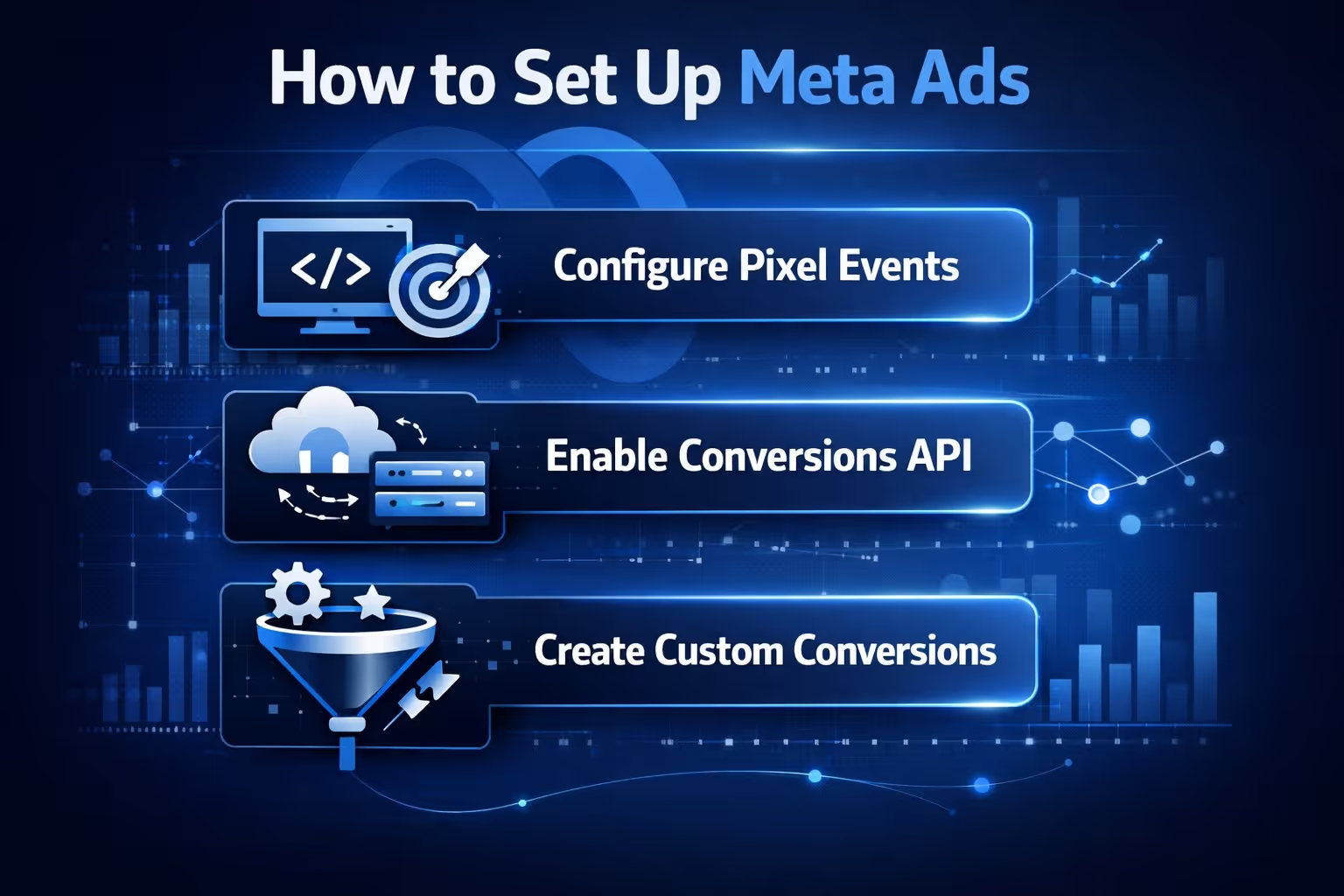
Setting up for LTV prediction doesn’t happen automatically. You’ll need to configure some things manually inside Meta Ads Manager.
Make sure your “Purchase” event includes a value parameter. That means Meta is being told not just that a purchase happened, but how much it was worth.
If you’re running a subscription or service business, consider tracking events like “Subscribe,” “Add Payment Info,” or “Start Trial” with custom value fields.
Pixel tracking alone is no longer enough, especially with iOS privacy updates. Use the Conversions API to send server-side data to Meta for better reliability.
This also lets you send back data from other platforms like Google Analytics, Shopify, or custom CRMs.
You can set up custom conversions for:
This helps Meta train its algorithm to prioritize actions tied to long-term revenue.

At Extuitive, we believe the real value of LTV prediction isn't in the theory. It's in how fast and accurately you can apply it. That’s why we built a platform that takes the guesswork out of launching high-performing ads. Once you connect your Shopify store, our AI gets to work creating and validating ad creatives based on real consumer behavior – not assumptions.
Instead of burning budget on test campaigns, we simulate performance across over 150,000 modeled personas. We’re not just talking about generic demographics either. We analyze purchase intent, psychographics, and behavioral data to help you identify audiences that are most likely to convert and stay loyal over time. That’s how we help you align your campaigns with actual LTV potential from day one.
The goal isn’t just faster ads – it’s smarter ads. By integrating LTV-focused testing into our creative process, we help brands launch with confidence and optimize for profitability, not just clicks. Whether you're running five campaigns or fifty, you get better insight into what’s working and who’s really worth investing in.
One of the most powerful things you can do with LTV prediction is adjust your bidding strategy to prioritize high-LTV users.
Instead of optimizing for the cheapest conversion, you can:
This only works if you send dynamic values back to Meta, which can be done using tools like:
Let’s ground this with a few real scenarios where LTV prediction changes how you approach campaigns:
Say your subscription box company gets most of its profit after month three. If you optimize only for first-month conversions, you’re constantly undervaluing your best customers. LTV prediction helps you train Meta to look for those who will stick around, even if their first transaction isn’t huge.
Selling $500 products? Most people don’t convert after one ad. You need longer attribution windows and smarter modeling to capture those customers. Meta’s LTV prediction helps optimize for users who historically generate more revenue over time, based on available purchase data.
If your customer interacts with you across Meta, email, TikTok, and your site, it’s hard to credit the right source. LTV prediction helps unify those data points to focus on lifetime value, regardless of first click.
Most businesses don’t live in a Meta-only world. Your customers are bouncing between platforms and devices, and that causes attribution chaos.
Here's how to handle it:
Yes, attribution will always be a bit fuzzy. But focusing on value rather than perfection helps cut through the noise.
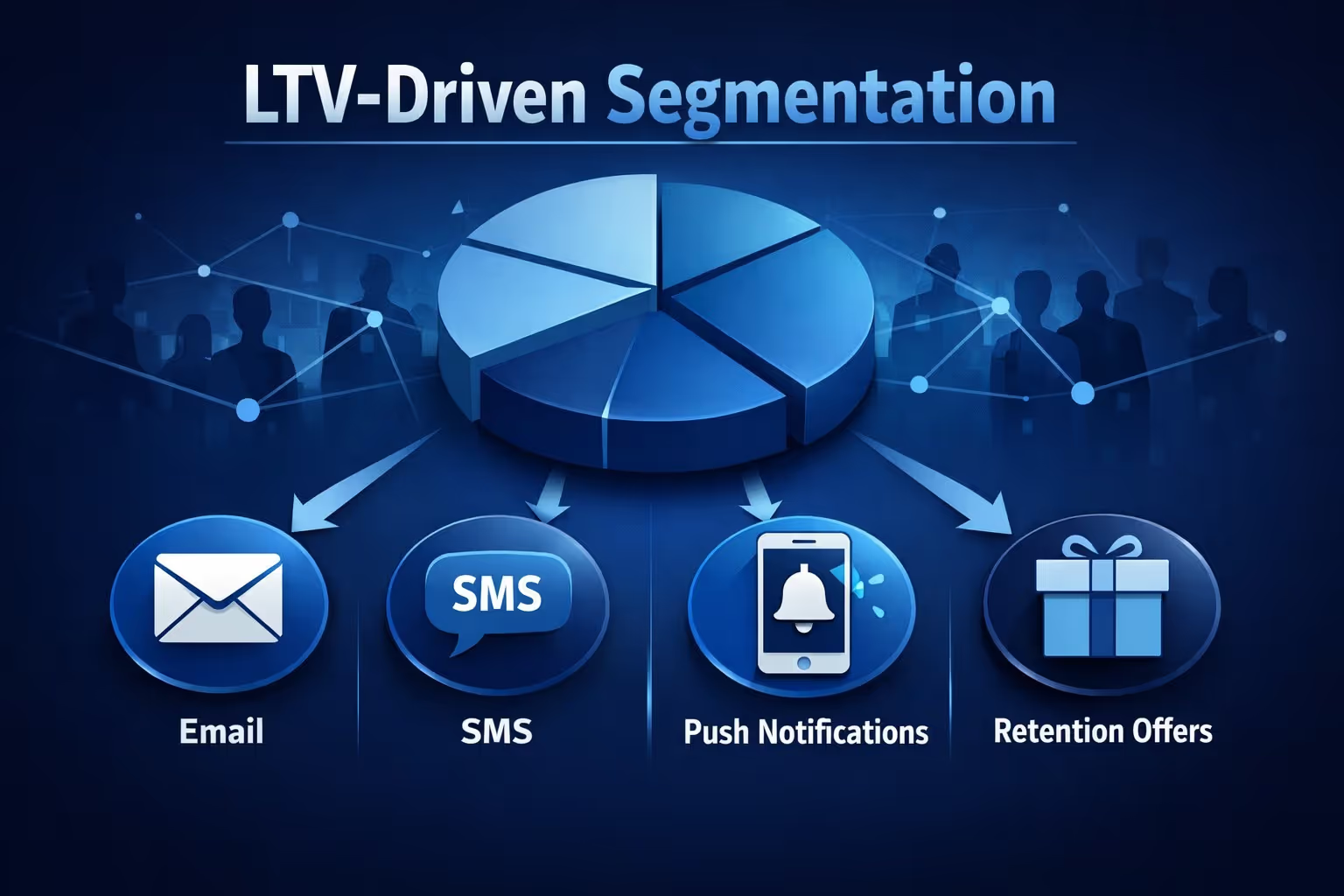
Once you’ve got LTV predictions in place, you can use them beyond Meta Ads.
Here’s where else they help:
If you're shifting to an LTV-driven approach, your KPIs should shift too. Here’s what to track:
Primary metrics:
Secondary metrics include Churn Rate, Purchase Frequency, Gross Margin per Customer, and Attribution Lag.
These tell you if your value-based strategy is working, even if short-term ROAS looks worse at first.
Let’s not pretend this is all smooth sailing. Here are a few traps to avoid:
LTV prediction needs enough data to learn from. If your campaigns are generating fewer than 50 conversions a week, the signals are usually too weak for reliable predictions. In that case, it’s better to focus on improving volume first before leaning heavily on LTV-based optimization.
When Meta shows one set of numbers and your analytics platform tells a very different story, something’s off. This often points to missing value parameters, broken events, or gaps in server-side tracking. A proper data audit can save you weeks of confusion and bad decisions.
It’s tempting to tweak budgets, bids, or audiences as soon as results look shaky. With LTV-focused campaigns, that usually backfires. The algorithm needs time to connect early behavior with long-term value, so major changes during the first 2 to 4 weeks can reset learning and slow everything down.
LTV is powerful, but it doesn’t live in a vacuum. If you ignore margins, churn, fulfillment costs, or refunds, you can end up scaling customers who look valuable on paper but aren’t profitable in real life. Always balance LTV insights with broader business metrics.
Here’s the real value of LTV prediction: it aligns your ad strategy with your business strategy. Instead of chasing cheap clicks, you’re investing in customer relationships that matter. You’re telling Meta’s machine what success looks like, not just today, but three months from now.
That’s not just smart marketing. That’s sustainable growth.


