How to Create a Shopify Store Step by Step
A simple, hands-on guide to setting up your Shopify store from scratch, even if you're new to ecommerce.
Feb 4, 2026



Shopify pricing looks simple at first glance. A monthly plan, a checkout, and you’re ready to sell. But once you start digging, the real cost depends on more than just the number on the pricing page. Transaction fees, apps, themes, and payment choices all play a role, and they add up differently depending on how your store operates.
This article walks through Shopify’s costs in a straightforward way. No hype, no shortcuts. Just a practical look at what you actually pay, why those costs exist, and how they tend to change as a business grows. The goal is clarity, not persuasion.
Shopify uses a subscription-based model, but that subscription is only the foundation. The total cost usually comes from four areas working together.
First, there is the monthly or yearly plan. Then come payment processing fees on every sale. After that, most stores add apps to cover marketing, reporting, or automation. Finally, design and setup choices can add one-time or recurring costs.
Understanding this structure matters more than memorizing plan prices. Shopify is predictable, but it is not flat-priced.
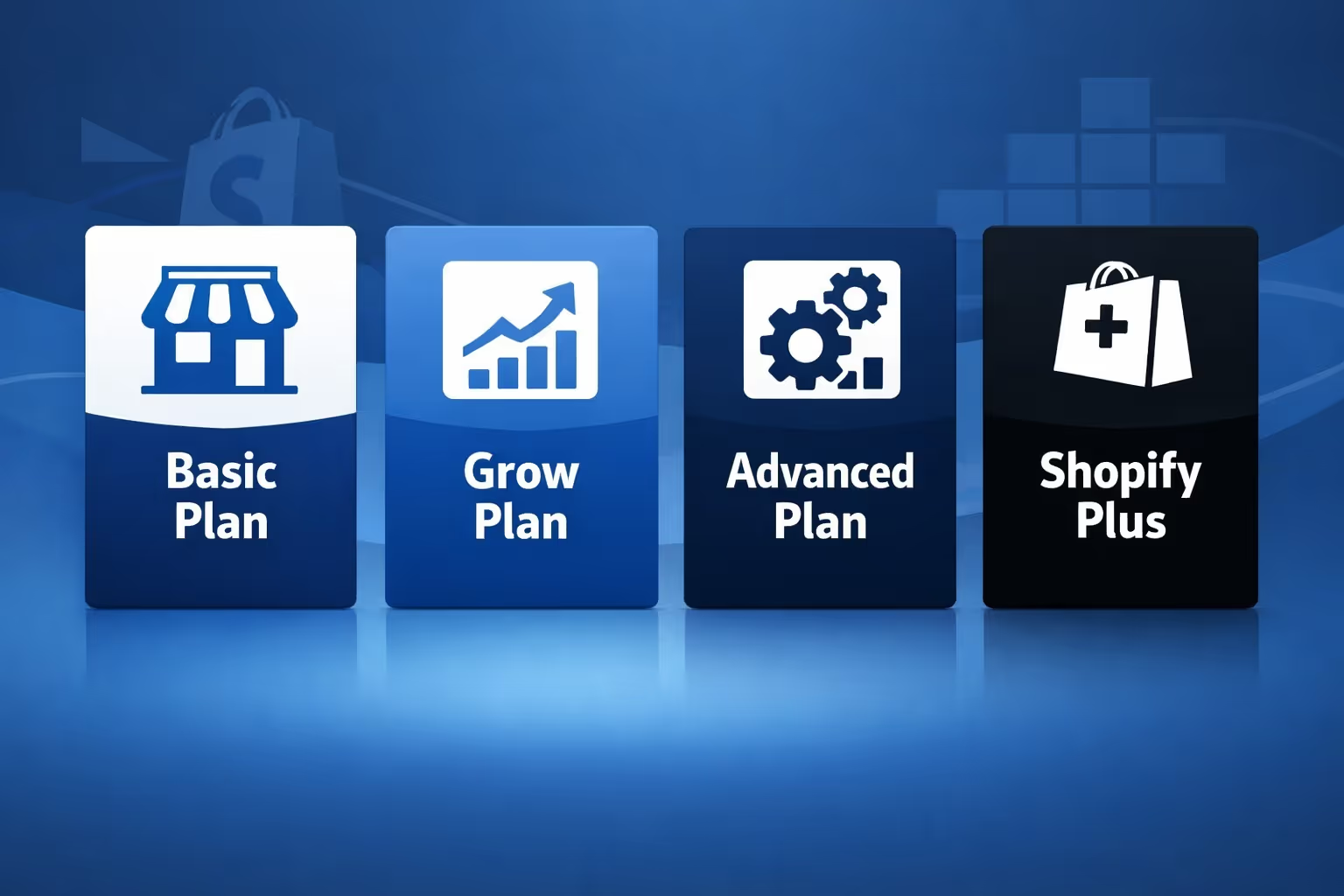
Shopify structures its plans around business stage rather than feature overload. Each tier is designed to remove the kind of friction that tends to appear as a store grows, whether that friction comes from transaction fees, reporting limits, or team access.
The Basic plan is built for new and small stores. It starts at $29 per month when billed yearly.
This plan includes:
For many businesses, the Basic plan remains sufficient well beyond launch, especially while sales volume and operational complexity are still manageable.
The Grow plan is designed for small teams with steady, repeat sales. It starts at $79 per month when billed yearly.
In addition to everything in Basic, it adds:
At this level, Shopify begins to feel less like a simple website builder and more like a platform that supports day-to-day business operations.
The Advanced plan targets scaling businesses and high-volume sellers. It starts at $299 per month when billed yearly.
This plan includes:
The Advanced plan typically makes sense once reduced transaction fees begin to offset the higher subscription cost.
Shopify Plus sits outside the standard pricing structure and is built for more complex businesses. Pricing starts at $2,300 per month on a 3-year term, or $2,500 per month on a 1-year term.
Key features include:
Rather than a fixed feature set, Shopify Plus pricing reflects scale, customization needs, and operational demands.
Shopify also offers plans for specific selling scenarios.
The Starter plan costs $5 per month and is intended for selling through social media and messaging apps using simple product links, without a full online store.
The Retail plan costs $89 per month and focuses on in-person selling. It includes advanced staff management, inventory controls, and loyalty features designed for physical retail environments.
Both plans work well in narrow use cases but are not full replacements for a standard ecommerce store.
Every Shopify store pays transaction-related fees in addition to the subscription cost.
When using Shopify Payments, there are no extra Shopify transaction fees. You only pay credit card processing rates, which depend on your plan.
Typical online card rates in the US:
In-person rates are slightly lower. Rates may vary by country.
If you use a payment provider other than Shopify Payments, Shopify adds an additional transaction fee.
These fees are:
This fee is charged on every sale and is separate from the payment provider’s own processing fee.
Apps are where Shopify costs quietly expand.
Most stores rely on apps for reviews, SEO, email marketing, subscriptions, analytics, or compliance. While many apps offer free plans, serious usage often requires a paid tier.
Typical app costs range from $9 to $99 per month, with advanced tools costing more. A store using ten modestly priced apps can easily add $100 or more to its monthly spend.
Apps are not optional for many businesses, but they should be reviewed regularly. Removing unused tools is one of the easiest ways to control Shopify costs.
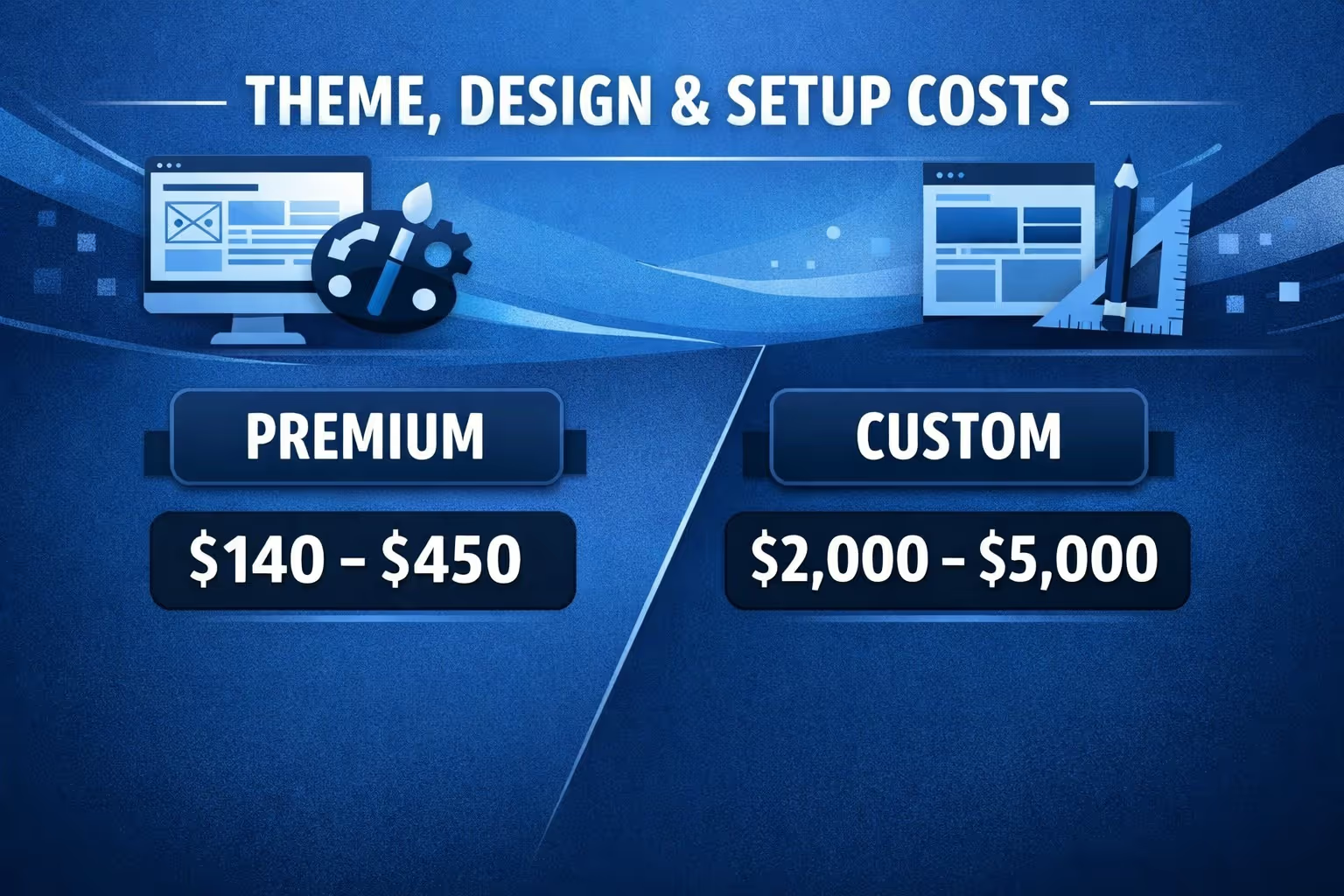
Shopify includes free templates that are mobile-responsive and fairly customizable. Plenty of businesses run on a free theme.
If you want something more tailored:
These are not recurring Shopify fees, but they are real parts of launching or refining a store.
Shopify includes hosting in every plan. You never pay separately for bandwidth or storage, even with traffic spikes.
A custom domain typically costs around $10 to $20 per year, whether you buy it through Shopify or a domain provider like GoDaddy. You can use a custom domain or stick with Shopify’s free subdomain.
This is one of the simpler parts of Shopify pricing compared to self-hosted platforms, where hosting, bandwidth, security, and backups are separate line items.
Shipping itself is not free, but Shopify offers discounted carrier rates and built-in tools for managing labels, taxes, and duties.
Depending on your plan and location, shipping discounts can be significant. While these do not appear as direct charges, they reduce operating costs over time.
For stores selling internationally, automated tax calculations and localized storefronts can also prevent expensive manual work or third-party tools.
Costs vary a lot depending on your store’s size and needs. Here are some rough ranges many merchants experience:
Estimated monthly cost: $50 to $80
Estimated monthly cost: $150 to $400+
Estimated monthly cost: $500 up to several thousand
The key takeaway is that Shopify’s cost reflects how you use it. A simple store with a clean setup can stay affordable. A complex global operation will pay for functionality and support.

For many Shopify stores, advertising becomes the most unpredictable part of the budget. You can choose the right plan, manage apps carefully, and still lose money testing ads that never convert. That’s where we built Extuitive to change the equation. Instead of guessing which creatives or audiences will work, we help Shopify brands validate ads before they go live.
We connect directly to your Shopify store and use AI agents modeled after 150,000+ real consumer personas to test ad concepts in minutes. Messaging, visuals, audience fit, and purchase intent are evaluated upfront, so you know what’s likely to perform before spending real budget. What used to take weeks of trial and error, or expensive consumer research, now happens faster and at a fraction of the cost.
For growing Shopify businesses, this turns ad spend into a controlled input rather than a risk. Teams launch with confidence, scale winners sooner, and stop burning money on ads that never had traction. Extuitive isn’t about adding more tools. It’s about making paid growth predictable as your store scales.
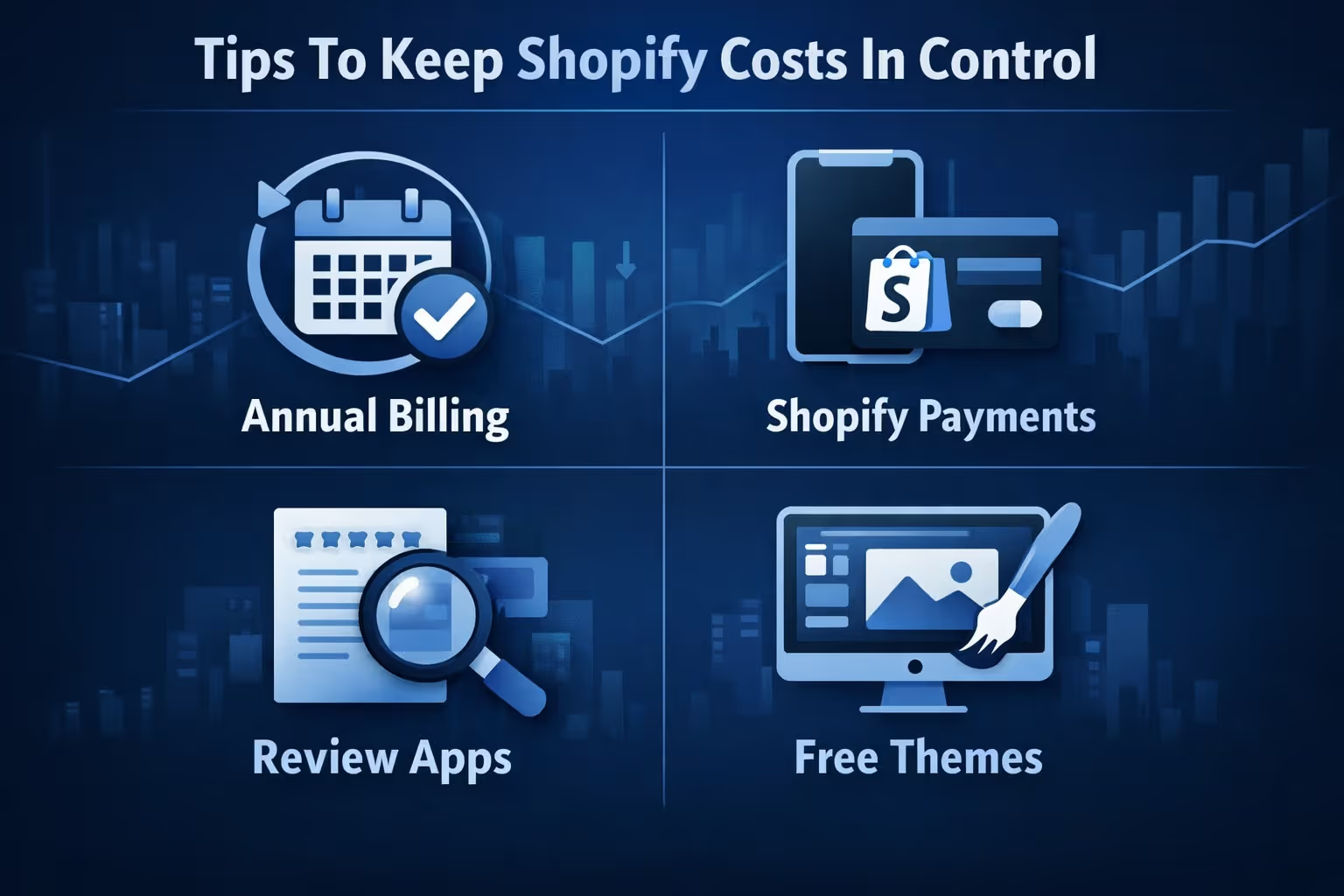
Shopify can stay affordable if you treat it like an operating system, not a collection of add-ons. Small decisions made early often have a bigger impact than switching plans later.
In practice, Shopify feels expensive when decisions are reactive. When choices are intentional, costs stay predictable and easier to plan around.
Shopify pricing is best understood as a system, not a single number. The monthly plan sets the baseline, but real costs reflect how a store grows, sells, and operates day to day.
For businesses that value reliability and reduced technical overhead, Shopify’s pricing model makes sense. The key is knowing where the costs come from and making deliberate choices as your store evolves.
That clarity is what turns Shopify from an expense into a tool you can actually plan around.


