Best AI Systems for Ecommerce Businesses
A list of AI solutions for ecommerce, covering ads, support, personalization, pricing, and forecasting.
Apr 13, 2026



It’s no secret that ad performance lives and dies by creativity. Not the budget, not the audience targeting, not even the channel. Creative is what people see, engage with, and remember (or ignore). The problem is, creative success has always been measured after launch. You run the ads, watch performance data trickle in, and then make adjustments based on what worked. That lag costs time, budget, and often a few bruised egos.
But things are shifting. Fast. With real-time AI creative optimization, advertisers are moving from reactive to predictive. We're no longer waiting to see what performs. We're modeling it ahead of time. This article breaks down how it works, why it matters, and what to expect if you're thinking about making the switch.
Creative optimization has long relied on trial, error, and delayed insight. Teams produce multiple variations, launch them live, and wait, hoping performance data will reveal what to scale. At Extuitive, we believe that phase should come much earlier. Our AI-driven system brings clarity to the creative process before spend begins.
We use predictive advertising to evaluate new assets in context, based on how your brand has historically performed and how simulated audiences are likely to respond. It’s not just pattern recognition. It’s a decision layer that scores each creative for expected CTR and ROAS before anything reaches the ad platform. Underperforming variants are filtered out automatically, while high-potential concepts move forward with clear, data-backed confidence.
In real use, this approach delivers up to 81% prediction accuracy and helps teams increase creative testing speed more than tenfold without raising budget. This transforms creative optimization from a reactive cycle into a proactive workflow. You don’t need to guess, launch, and adjust. With Extuitive, AI helps you focus only on what’s most likely to succeed – right from the start.
Let’s skip the buzzwords. At its core, real-time AI creative optimization is about predicting how ad creative will perform before the campaign goes live. Instead of launching 10 ad variations and waiting days or weeks to see which ones stick, AI systems forecast performance based on historical data, audience behavior, and contextual cues.
Real-time AI creative optimization builds on traditional A/B testing by automating and scaling creative experimentation using machine learning, but it’s not just A/B testing with a fancy name. These systems can process massive datasets instantly, comparing patterns across thousands of variables to predict which visuals, headlines, formats, and messaging styles are likely to drive clicks, conversions, and engagement. And they do it in real time, often before a single impression is served.
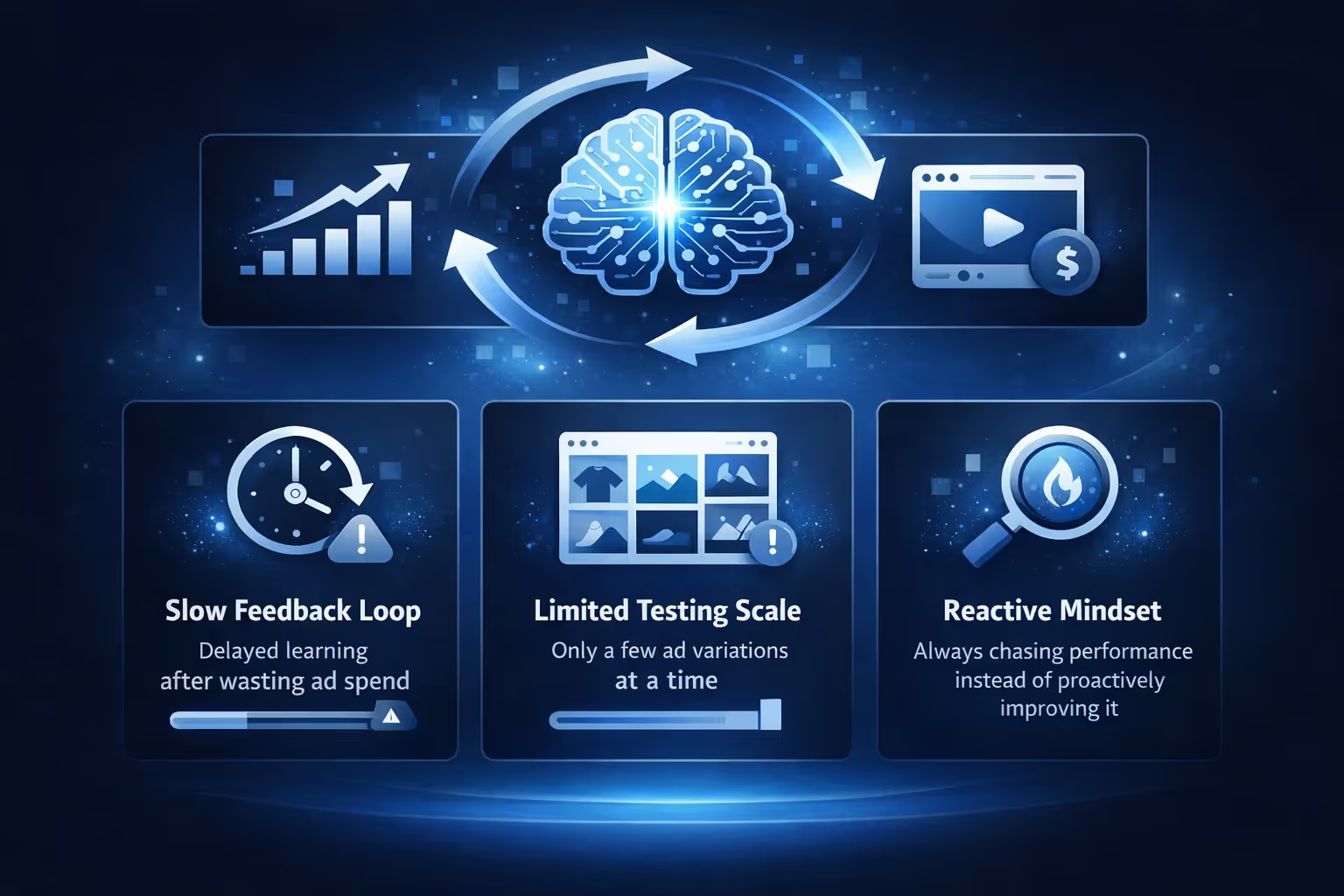
Most marketers still rely on what’s essentially trial and error. You build a few ad variations, launch them into the wild, and check the metrics once enough data comes in. But by then, you’ve already spent a good chunk of your budget. And if performance drops because of creative fatigue (which often happens within 7 to 10 days), your only option is to scramble and replace it mid-flight.
The gaps here are clear:
Real-time optimization flips that approach. Instead of waiting to fix underperforming creatives, it helps you avoid launching them in the first place.
The process starts with feeding the AI engine data – lots of it. That can include past ad performance, audience behavior, engagement history, time of day, platform-specific insights, and even broader contextual signals like seasonality or device type.
Here’s what happens behind the scenes:
This approach removes a lot of the guesswork and manual tinkering that slows down traditional media buying.
AI-assisted optimization is already valuable. But real-time optimization brings something extra: speed. Instead of relying on static models that require frequent retraining, these systems adapt to changing conditions using continuously updated data, though underlying models still require periodic retraining and recalibration.
That’s a big deal because of several reasons. Audiences scroll fast. First impressions count. Creative fatigue sets in quickly, often within days. Competitive landscapes shift rapidly, especially during sales cycles or seasonal events.
When the system can recognize fatigue patterns, spot early signs of performance decline, and adjust creatives before they become stale, you’re always one step ahead.
Let’s walk through a simplified example. Say you’re running a Facebook campaign for a skincare brand. You’ve built out five image variations, three headlines, and two calls-to-action.
In a traditional setup, you’d have to launch every combo, watch performance over several days, then pause the losers and scale the winners.
With real-time AI creative optimization, things work differently.
Before launch, the system already forecasts which creative pairs are likely to perform best based on similar campaigns and audience behavior.
During the first few hours, performance signals (clicks, engagement, bounce rates) are fed back into the model.
By day two, budgets are already shifting toward the top variants, while underperformers are paused or refreshed automatically.
By day five, if fatigue is detected, the system recommends or generates fresh creative variants to test.
That’s a tighter, smarter loop. Less waste, more signals.

Creative optimization in real time doesn’t just help performance. It also relieves pressure on teams juggling deadlines, asset production, and reporting.
You don’t have to run long A/B tests just to figure out which creative performs best. Real-time prediction shortens that loop by identifying likely top performers before launch, so your team can go to market faster and with fewer blind spots.
Instead of spending hours cycling through headline tweaks or layout tests, your creative team can focus on brand voice, storytelling, and campaign strategy. AI handles the variations and pattern analysis, giving humans the space to do what they’re actually good at.
When your best creative is matched with the right audience from day one, you reduce wasted impressions and boost returns. That tighter alignment helps improve ROAS across the board, especially when scaling campaigns.
Creative fatigue is one of the biggest silent killers in digital campaigns. Real-time optimization spots early signs of decline, like drops in CTR or engagement, and triggers adjustments before the damage spreads.
Instagram and Facebook don’t behave the same, and neither should you. With cross-platform analysis built in, you can see how different formats perform across placements and tailor your strategy without digging through fragmented reports.
It’s not just about more ads or faster testing. It’s about building a smarter creative system that learns as it goes.
You might be wondering how this compares to Dynamic Creative Optimization (DCO), which has been around for a while.
Modern DCO systems increasingly incorporate predictive modeling and real-time performance signals, making the distinction between DCO and AI creative optimization less rigid.
Real-time AI creative optimization goes further. It predicts which combinations are likely to work before they’re even served. It uses performance forecasting, not just personalization rules. It continuously learns from real campaign outcomes and makes adjustments mid-flight.
So while both approaches involve automation, one focuses on personalized assembly, the other on predictive performance.
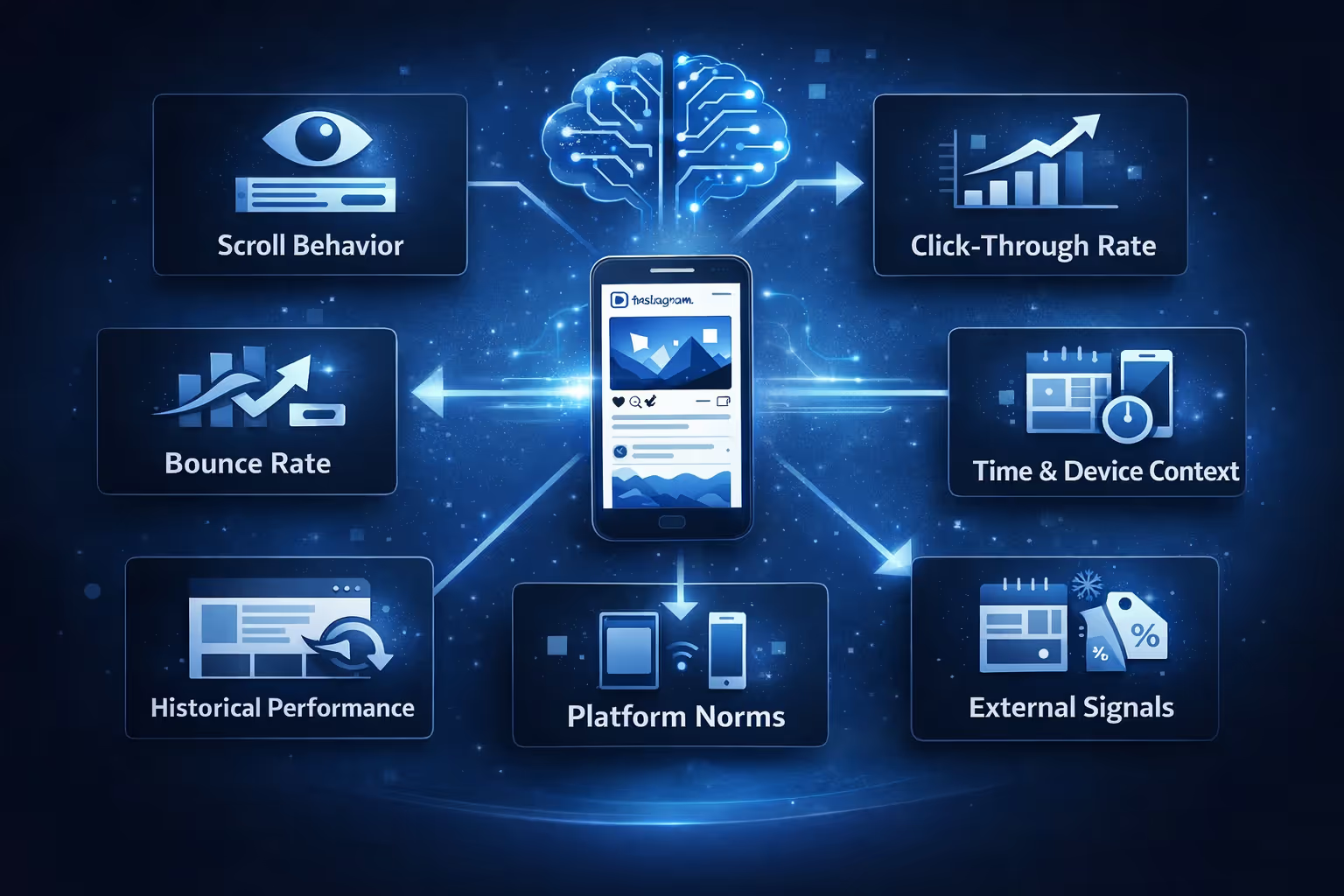
Here are some of the signals AI looks at when making predictions:
It doesn’t just track whether people click. It learns what leads to the click, and whether that click turns into something meaningful.
No system is perfect. While real-time AI creative optimization is powerful, it still depends on good inputs. Here are a few things to keep in mind:
Used properly, the system acts as a creative partner, not a decision-maker. The human element still sets direction.
Looking ahead, real-time creative optimization is only going to get sharper.
We’re likely to see biometric signals like eye-tracking used to deepen prediction accuracy. Systems will also begin factoring in long-term brand impact, not just short-term clicks, helping teams balance performance with equity. And as tools become more integrated, insights from prediction engines will feed directly into the creative process, making iteration faster and more intentional from the start.
In short, creativity won’t just be built and tested. It’ll be shaped and reshaped live, guided by real-time data.
Real-time AI creative optimization isn’t about removing humans from the process. It’s about removing the slow, expensive parts. It gives marketers a smarter starting point, more confidence in what they launch, and a better shot at driving results without burning through budgets.
It won’t write your brand story for you. It won’t replace bold ideas. But it will help those ideas get the attention they deserve, faster and more predictably than ever before.
If you're tired of guessing what creative will work and want a system that actually learns with you, this is the way forward.


