AI Tools for Facebook Ads That Make Campaigns Easier to Run
A practical look at AI tools for Facebook ads, how teams use them, and where they actually save time or improve results.
Jan 8, 2026



Getting traffic to a Shopify store sounds simple. Post on social media. Run a few ads. Write a blog. In reality, most stores don’t struggle with ideas. They struggle with direction.
You can drive traffic in dozens of ways, but not all traffic helps your business grow. Some visitors bounce. Some scroll and disappear. Others never had buying intent to begin with.
This guide focuses on how to drive meaningful traffic to a Shopify store - the kind that sticks around, explores your products, and eventually buys. No gimmicks. No filler. Just the methods that consistently work when applied with a bit of patience and common sense. If you’re starting from zero or trying to move past a plateau, this is where to begin.
Before talking about SEO, ads, or social media, it helps to pause and ask a simple question:
Why would someone come to your store today?
People arrive at ecommerce sites for different reasons. Some are actively shopping. Some are researching. Some are killing time. Treating all of them the same is a mistake.
High-performing traffic strategies are built around intent. Not platforms.
Broadly speaking, Shopify traffic falls into three intent levels:
Your goal is not to eliminate low-intent traffic. It is to understand where it fits and how much effort it deserves compared to traffic that is closer to buying.
Many stores fail because they invest heavily in discovery channels while neglecting demand that already exists.
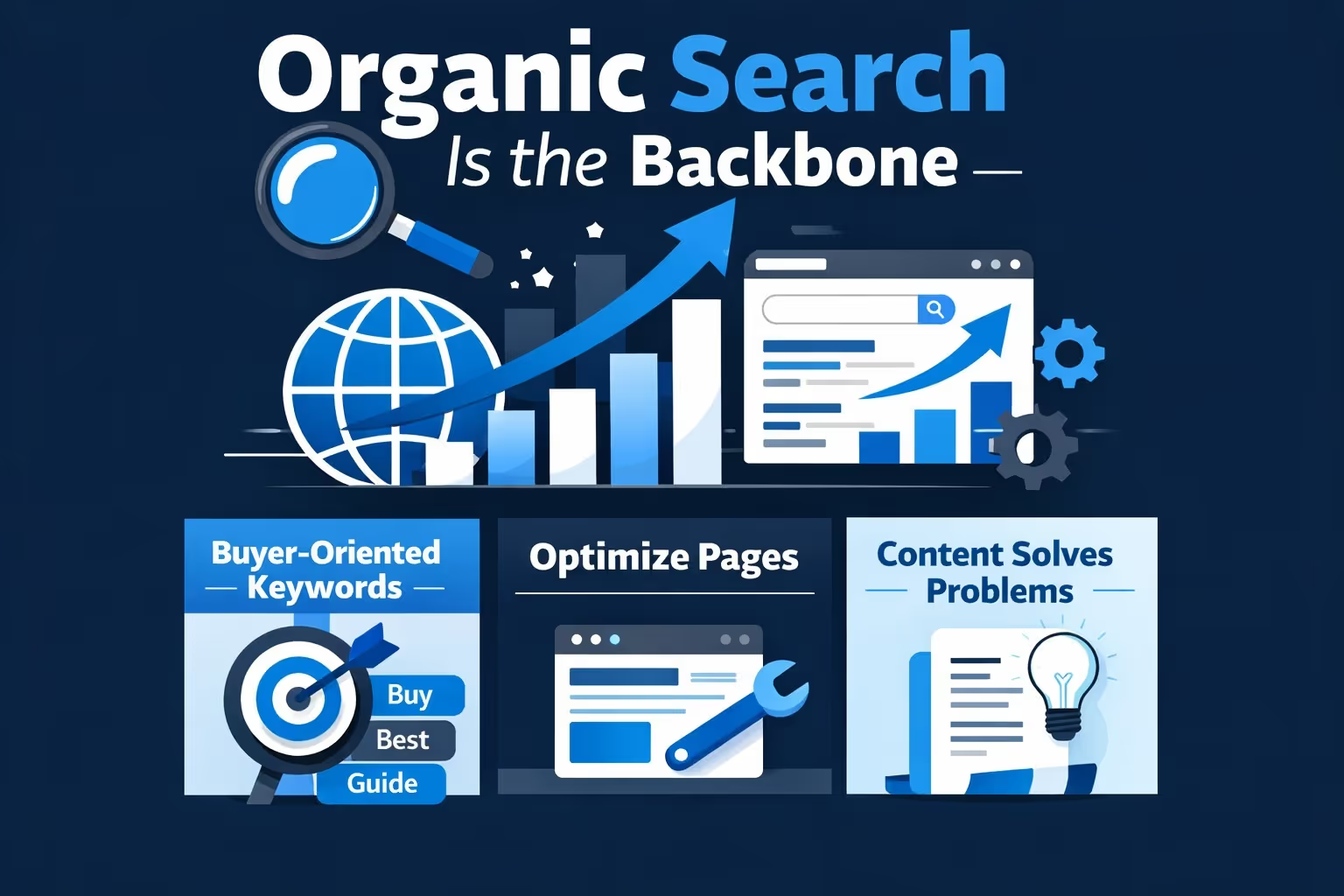
If you want traffic that keeps coming without constant spending, organic search needs to be part of your plan.
SEO is a powerful long-term strategy, but it is not mandatory for every business model. While it provides sustainable organic traffic, many fast-growing brands successfully rely entirely on paid social or influencer marketing.
People use search engines when they are actively looking for something. That alone makes organic traffic one of the highest-quality sources available to Shopify stores.
The biggest SEO mistake Shopify stores make is chasing volume instead of intent.
Ranking for a broad term like “running shoes” sounds impressive, but it is incredibly competitive and often vague. Ranking for “women’s trail running shoes waterproof” brings fewer visitors, but far better ones.
Start with keywords that signal buying behavior:
Longer queries usually mean clearer intent. They also tend to convert better.
You do not need to optimize your entire store at once. That is overwhelming and unnecessary.
Start with:
Improve titles, meta descriptions, headings, and internal links. Make sure each page answers the question the searcher had when they clicked.
If your product page reads like a manufacturer spec sheet, rewrite it. People want clarity, not filler.
Blogs still work when they are written for humans, not algorithms.
The best content answers questions customers are already asking:
This type of content attracts mid-intent traffic. It builds trust before the sale happens.
Avoid publishing content just to hit a keyword. If it does not help a real buyer make a decision, it will not perform long term.
Social platforms are powerful, but they work differently than search.
Most people on social media are not shopping. They are scrolling. That does not make social traffic useless, but it does change how you should approach it.
Not every platform deserves equal effort.
Pick one or two platforms and do them properly. Spreading thin rarely pays off.
Posting daily without a goal is a fast way to burn out.
Good social content usually does one of three things:
Not every post needs a link. Social media often works as a supporting channel that makes people more likely to search for your brand later.
That delayed effect still counts.
Ten meaningful conversations are worth more than ten thousand passive views.
Reply to comments. Answer questions. Participate in discussions. Social algorithms reward interaction, but more importantly, so do people.
Brands that feel present tend to get shared naturally.

Paid ads can be a great traffic lever, but they also get expensive fast when you are guessing. That is why we built Extuitive. As one of the ways to drive traffic to your Shopify store more efficiently, we help you validate ad creative and messaging before you scale budgets.
Instead of launching campaigns and hoping the data tells you what works, we let you pressure-test ideas upfront. Our platform uses AI agents modeled after more than 150,000 real consumer profiles to simulate how different audiences respond to your ads. We generate and test concepts, visuals, and copy, then predict purchase intent before a dollar is spent on media. In practice, that means you can spot which angles are strong, which need a rewrite, and which are not worth running at all.
For Shopify stores, this changes the rhythm of paid growth. You stop treating ad spend like a research budget. You start treating it like distribution for ideas you have already validated. The result is typically cleaner traffic, stronger engagement, and fewer wasted clicks, because the ads you scale are already aligned with the right audience and message.
We do not replace Google Ads or Meta, and we are not an agency running campaigns for you. We are the layer that helps you enter those platforms with more confidence, better creative, and a clearer reason to believe the traffic you buy has a real chance of converting.
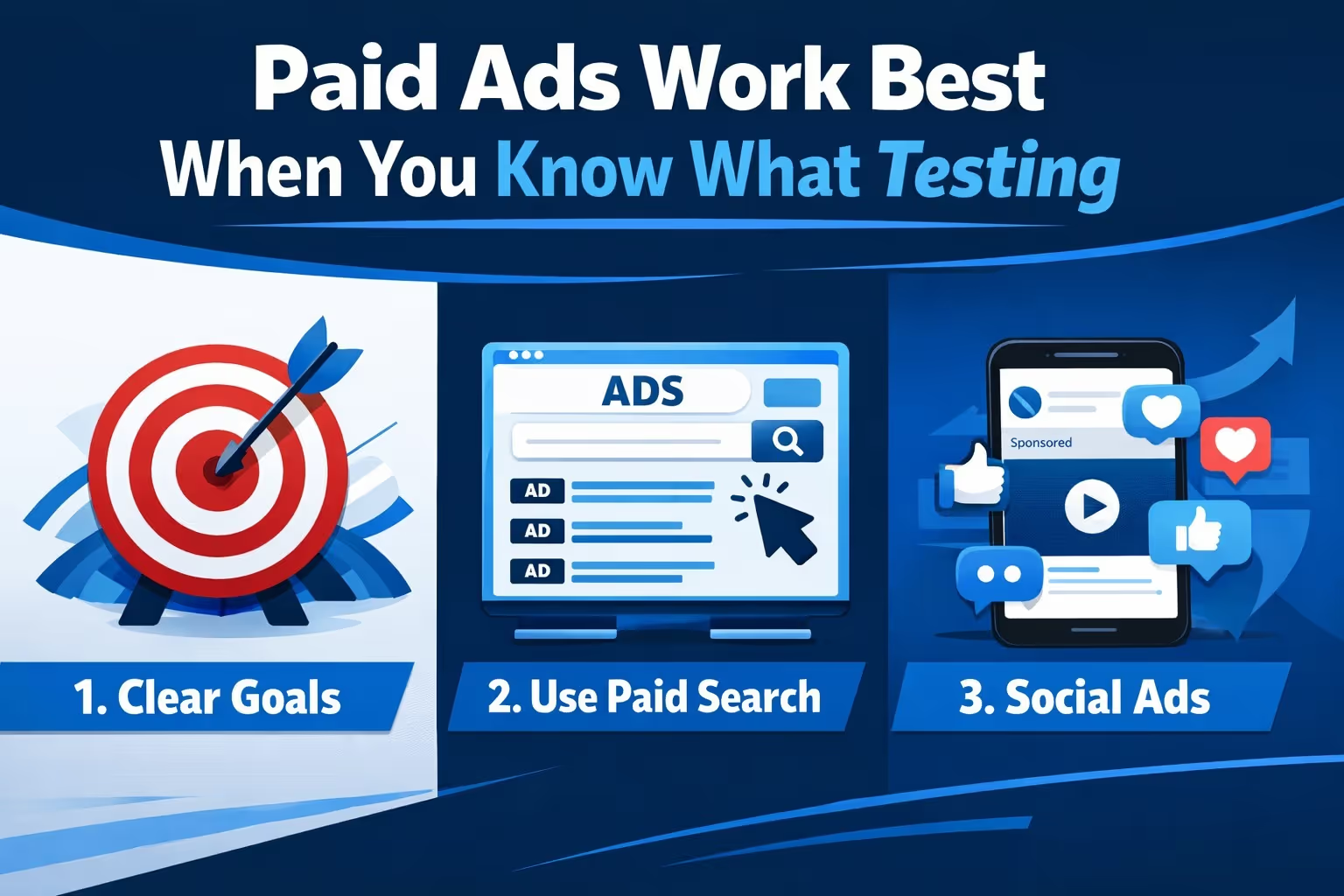
Paid traffic can accelerate growth, but it is also where money disappears fastest.
Ads are not a replacement for strategy. They amplify whatever you already have.
Before launching any campaign, define what success looks like:
Running ads without a clear outcome leads to vague results and wasted spend.
Search ads work because they capture demand that already exists. When someone types a query into Google, they are actively looking for something. That makes paid search one of the most efficient ad channels when it is done properly.
The strongest campaigns focus on exact or phrase match keywords that clearly describe the product being sold. Product-specific queries tend to perform far better than broad, generic terms because the intent is clearer. Just as important is where that traffic lands. Sending paid search visitors to a generic homepage almost always underperforms. The landing page should directly match what the person searched for, both in wording and in offer.
Social ads play a different role. They are especially useful for testing creative ideas, messaging angles, and offers in a short amount of time. They also work well for retargeting visitors who have already interacted with your store but did not purchase, as well as re-engaging past customers with new products or promotions.
What social ads are less reliable at is cold conversions, especially if your product-market fit is not fully proven yet. People scrolling social feeds are not actively shopping, which means the bar for attention and trust is much higher. This is why testing multiple creatives is critical. The platform rarely explains why one ad outperforms another, so your job is to keep experimenting, observe patterns, and double down on what clearly resonates.
Traffic that leaves your store and never comes back is a missed opportunity. Email marketing exists to close that gap. It gives you a direct line to people who have already shown interest and makes your traffic strategy more durable over time.
Do not hide your signup forms, but do not interrupt visitors the second they arrive either. The best email capture feels like an invitation, not a trap. People are far more likely to subscribe when there is a clear reason to do so. That might be early access to products, a meaningful discount, genuinely useful content, or updates they actually want to receive.
What matters most is honesty. Be clear about what kind of emails you will send and how often. Trust starts here, and once it is broken, it is very hard to rebuild.
Not all subscribers are the same, and treating them that way usually leads to declining engagement. Segmenting your email list from the beginning makes every message more relevant. Some people browse without buying. Others purchase once and disappear. Some return again and again.
When your emails reflect browsing behavior, purchase history, or expressed interests, they feel personal instead of generic. Sending the same message to everyone may be easier, but it quickly trains people to ignore you.
Email works best when it supports everything else you are doing. It is a place to share content you have published, announce launches, reinforce social proof, and follow up on abandoned carts without being intrusive.
Unlike social platforms or ad accounts, email is one of the few channels you actually own. Used well, it turns one-time visitors into repeat customers and gives your traffic strategy long-term leverage.
Influencers and partnerships can significantly shorten the trust gap between your brand and potential customers. People tend to trust recommendations from other people far more than they trust ads, which is why influencer marketing still works when it is approached thoughtfully.
Follower count on its own is rarely a good indicator of success. A smaller creator with a loyal, engaged audience often drives better results than a large account with passive followers. What matters most is alignment. The creator’s audience should match your target customers, their content style should feel compatible with your brand, and their values and tone should not clash with how you want to be perceived. When a partnership feels forced or purely transactional, audiences notice, and conversions suffer.
You also do not need a large budget to get started. Product gifting, affiliate links, or small, time-bound campaigns are often enough to understand whether a collaboration has potential. These low-risk tests provide valuable insight into what resonates with a new audience. It is important to track performance carefully, but not every campaign needs to convert immediately. Traffic without conversions is still a useful signal. It tells you something about awareness, positioning, or timing, and those signals can guide smarter decisions in the next round.
New traffic is expensive, unpredictable, and increasingly competitive. Returning traffic, on the other hand, is cheaper, more stable, and far more likely to convert. Referral and loyalty programs are effective because they build on relationships that already exist. Instead of constantly chasing new visitors, you give satisfied customers a reason to come back and to bring others with them.
When done well, these programs do more than increase traffic. They create momentum. Each satisfied customer becomes a potential distribution channel for your store, and over time that effect compounds.
A strong referral program is easy to understand and even easier to share. Customers should immediately know what they get, what their friend gets, and how the referral works. While incentives matter, clarity matters more. Confusing rules, long explanations, or too many conditions reduce participation almost instantly.
The best referral programs feel effortless. A short message, a single link, and a clear benefit on both sides is usually enough. If customers have to stop and think about how it works, most of them will not bother.
Discounts and points can encourage repeat purchases, but true loyalty comes from feeling recognized. Customers are more likely to return when a brand makes them feel seen rather than treated like a transaction.
Early access to new products, personalized offers based on past behavior, or small unexpected rewards often outperform generic discounts. These touches signal appreciation instead of price pressure. Over time, retention strategies like these compound quietly. Each repeat visit strengthens the relationship and increases the lifetime value of your traffic without increasing acquisition costs.
You can drive the right traffic and still fail if the experience is poor. Speed and usability influence almost every outcome, from bounce rates to conversions, and they affect how search engines and users perceive your store.
Most Shopify traffic comes from mobile devices, which makes mobile performance critical. Testing your store only on desktop is not enough. Open it on real phones and tablets and pay attention to how it actually feels to use. Load time matters, but so does navigation clarity, tap targets that are easy to use, and a checkout flow that does not feel cramped or confusing.
On mobile, small issues add up fast. A slow-loading image, a hard-to-tap button, or an unclear step in checkout can be enough to lose a potential customer before they reach the product page.
Every extra step in the buying process costs you attention and trust. Unnecessary popups, cluttered menus, and unclear pricing create hesitation at the exact moment you want confidence.
Simplifying the experience often has a bigger impact than driving more traffic. Clear shipping information, straightforward navigation, and a checkout that feels effortless turn a higher percentage of visitors into customers. When the experience is smooth, your existing traffic starts working harder for you without increasing visitor count.
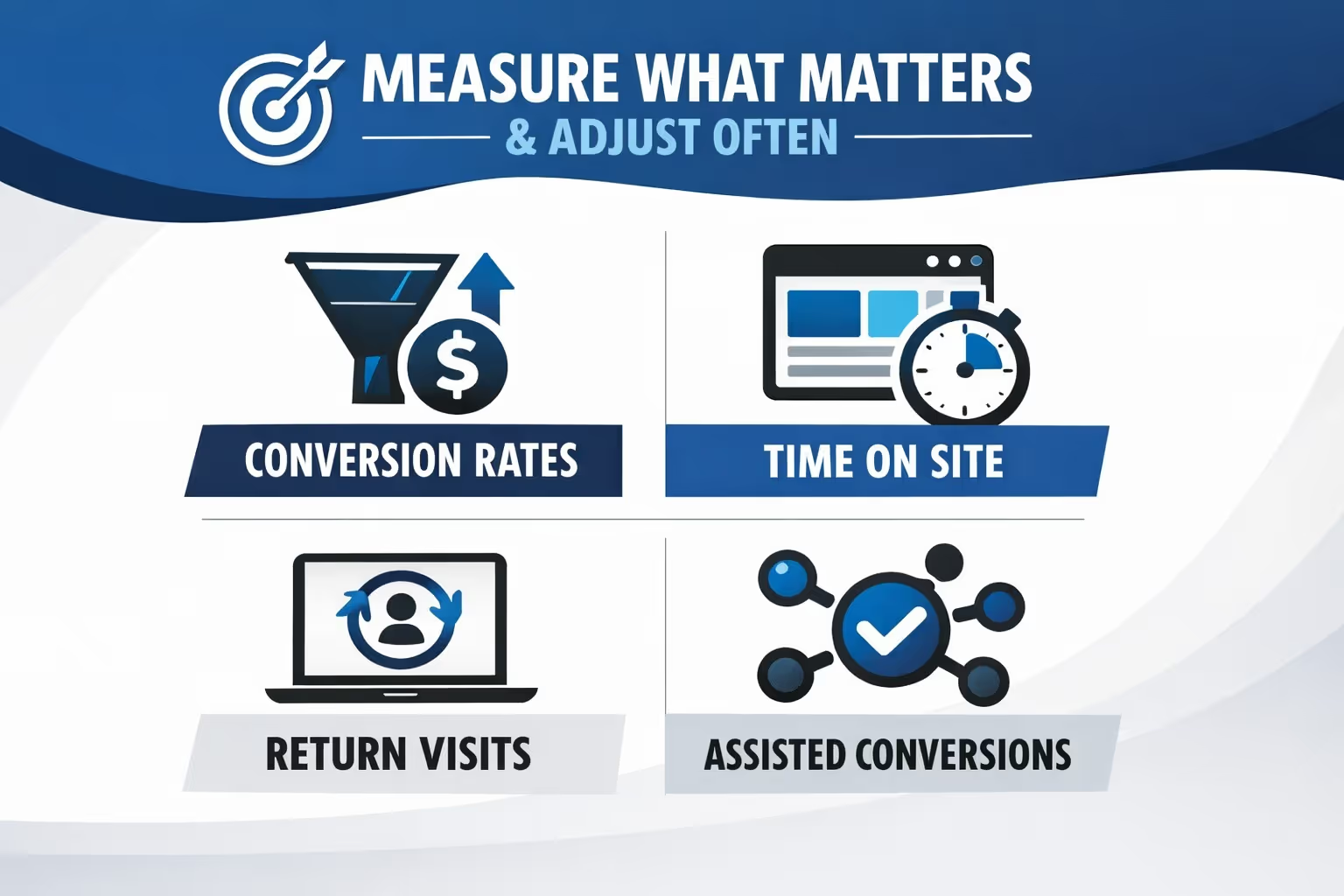
Traffic strategies are not set-and-forget. What works today can stall tomorrow, which is why regular review and adjustment matter more than chasing the latest tactic. Page views alone rarely tell the full story, especially if they are not tied to real outcomes.
Focus on a small set of meaningful metrics that show how visitors actually behave and contribute to growth:
Rather than trying to improve everything at once, pick one channel or one page and work on it deliberately. Make a change, measure the result, and then move on to the next improvement. Over time, these focused adjustments compound into steady, predictable growth.
Driving traffic to a Shopify store is not about doing more. It is about doing the right things in the right order.
Start with intent. Build organic foundations. Use paid channels strategically. Retain what you earn. Improve the experience continuously.
There is no single tactic that guarantees success. But there is a clear pattern behind stores that grow steadily instead of burning out.
They focus on relevance over volume. They test before scaling. And they treat traffic as a long-term system, not a quick win.
That approach does not just bring visitors. It builds a business that can actually support them.


