Top Digital Firms for Instagram Ads Optimization Worth Knowing
Discover top digital firms known for optimizing Instagram ads. A practical, curated list of agencies brands trust to scale results.
Feb 9, 2026



Setting CPA goals for CBO campaigns sounds simple until you actually try it. Set them too low and delivery dries up. Set them too high and costs quietly spiral. Most performance issues with CBO are not caused by bad creatives or weak audiences. They come from CPA targets that ignore how Meta actually allocates budget.
CBO does not behave like ABO. It moves money dynamically, favors momentum, and reacts fast to early signals. That means CPA goals need to be flexible, contextual, and tied to how learning really works. This guide breaks down how to set CPA goals for CBO campaigns in a way that protects delivery, controls cost, and gives the algorithm room to do its job without burning budget.

We built Extuitive for e-commerce brands that want to know which ad creatives are most likely to perform before spending media budget. Instead of relying on trial-and-error testing, we shift paid media from experimentation to prediction.
The system analyzes historical brand-level performance data and combines it with large-scale consumer intelligence to forecast creative outcomes ahead of launch. This helps teams spot high-potential ads early, cut weak assets before they drain budget, and focus spend on creatives with a higher probability of strong CTR and ROAS.
The platform is contextual by design. A custom perceptual model is trained for each brand using its own best and worst-performing ads. As a result, the same creative can receive different predictions depending on brand, audience, and historical performance patterns.
As ads run, the system continues learning. It monitors prediction accuracy, detects shifts in audience response, and refreshes models over time. The result is a living intelligence layer that captures what works, what does not, and why - allowing creative learnings to become reusable across campaigns instead of resetting with every launch.
The biggest mistake is treating CBO CPA goals like ABO CPA goals.
In ABO, every ad set lives in its own world. You assign a budget, watch CPA, and adjust based on local performance. If one ad set struggles, it does not drag the rest of the campaign with it.
CBO does not work that way. In CBO, Meta constantly reallocates budget across ad sets based on short term signals. This creates momentum effects. Ad sets that perform early get more budget. Ad sets that lag can be starved before they ever stabilize.
Your CPA goal in a CBO campaign is not just a cost expectation. It is a signal constraint. If that constraint is unrealistic, Meta does not politely warn you. It simply limits delivery or pushes spend into narrow pockets that technically meet the goal but hurt scale.
This is why CPA goals matter more in CBO, not less.
Before talking about numbers, it helps to be clear about what Meta optimizes for in practice.
Meta does not chase your CPA goal directly. It optimizes for probability of conversion in auction, then learns cost efficiency over volume.
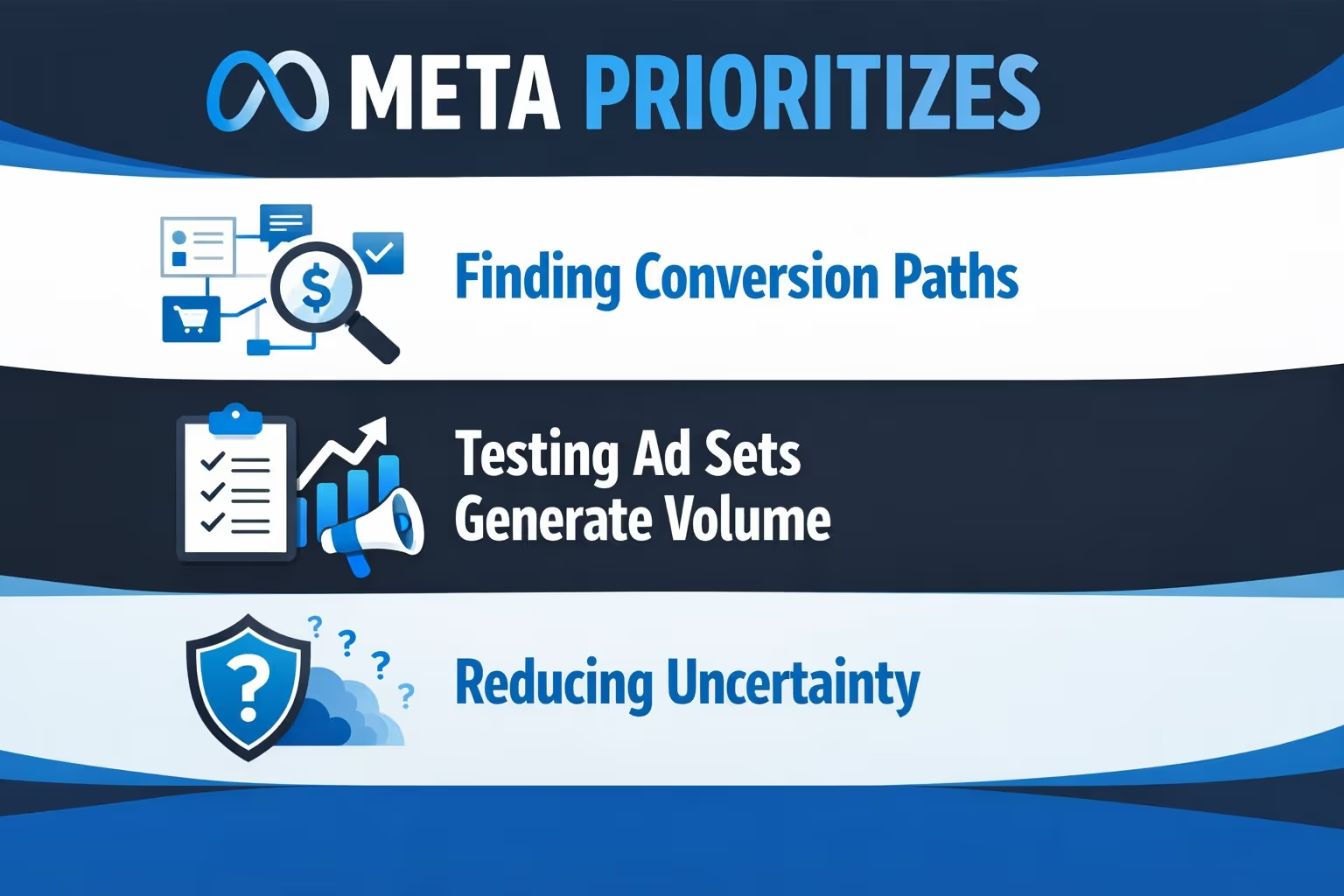
That is why early CPAs are often higher and volatile. If you force tight CPA constraints during this phase, you block learning before it has enough data to improve efficiency.
A healthy CBO campaign usually looks inefficient before it looks efficient. CPA goals must allow for that curve.
Every CPA goal should start with historical context. Not industry averages. Not target margins. Your own data.
Look at the last 30 to 90 days across comparable campaigns and extract:
Do not cherry-pick best weeks. Use stable ranges.
If your average purchase CPA has been $40, setting a $25 cost cap in CBO is not ambitious. It is unrealistic. Meta cannot optimize toward something it has never seen consistently.
A good rule is this: your initial CBO CPA goal should sit slightly above your recent average, not below it.
That gives the algorithm room to move without choking delivery.
One CPA goal across an entire funnel is a quiet way to sabotage CBO.
Different audiences convert differently. Meta knows this. Your CPA goals need to reflect it.
Prospecting CPAs are always higher. Pretending otherwise does not make them cheaper.
If you cap CPA too aggressively here, Meta will push spend toward narrow pockets of cheap clicks that rarely scale.
The goal at top of funnel is not efficiency. It is creating enough clean conversion data to feed the system.
Warm audiences should convert more efficiently, but they still fluctuate.
Middle funnel CPAs often degrade quietly through saturation. CPA goals here should be monitored, not locked.
Retargeting is where CPA control is most realistic.
Underfunded CBO campaigns almost always miss CPA goals. CBO needs budget to test, reallocate, and stabilize. If the budget is too small, a single expensive conversion can distort the entire campaign and create misleading performance signals that the system cannot properly correct.
A practical minimum budget formula looks like this. Daily budget should allow each ad set to realistically generate at least two conversions per day. This gives the algorithm enough data to compare performance and make meaningful allocation decisions instead of reacting to noise.
If your target CPA is $30 and you run five ad sets, $300 per day is not aggressive. It is the minimum required for learning to function in a stable way. Below that level, the system is forced to make decisions with limited information, which increases volatility and slows optimization.
If you want stability, plan for more than the bare minimum. Additional budget allows CBO to smooth out performance swings, handle fluctuations in auction costs, and maintain consistent delivery across ad sets.
CPA goals without sufficient budget are just pressure without support.
Meta gives you multiple bid strategies, and each one interacts with CPA goals in a different way. The choice affects delivery, scale, and how tightly costs can be controlled.
For most advertisers, lowest cost supports learning, cost cap supports controlled scaling, and bid cap is a last resort when strict constraints outweigh growth.
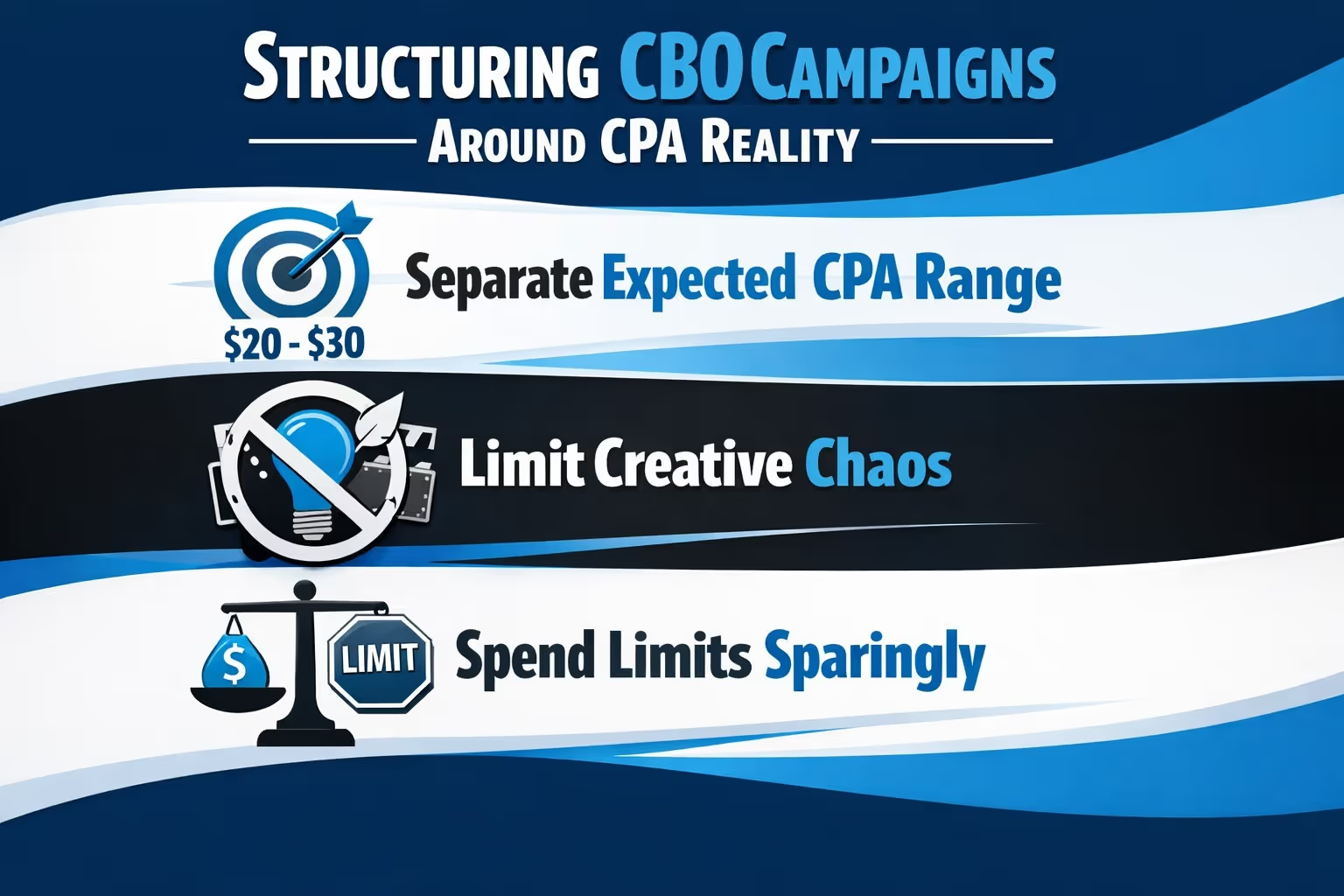
Structure matters more than settings. How campaigns and ad sets are grouped often has a bigger impact on CPA performance than small bid or targeting adjustments.
Audiences with very different cost expectations should not live in the same CBO campaign. Cold prospecting and retargeting behave differently, and broad audiences do not operate under the same CPA conditions as narrow lookalikes. When ad sets with widely different CPAs are mixed together, the system is forced to constantly choose between scale and efficiency. Grouping ad sets that are expected to perform within similar CPA ranges allows Meta to allocate budget more smoothly and reduces internal cost conflicts.
Too many creatives dilute signal and make it harder for the system to identify what is truly driving performance. A focused set of creatives with clear differences in format and message provides better learning conditions. Consistency in the conversion event also helps the algorithm compare performance accurately. When creative testing expands too quickly, optimization slows because the system spreads data too thin. Allowing clear winners to emerge before adding more variations leads to stronger CPA control over time.
Minimum and maximum spend limits can protect important ad sets, but they reduce algorithm flexibility. They should be used carefully and only when there is a clear structural issue, such as a critical audience being starved or one ad set absorbing a disproportionate share of the budget. If many spend constraints are needed, it often signals that the campaign structure itself needs to be reconsidered rather than controlled through rules.
The fastest way to break CBO is emotional optimization. CPA fluctuates, and that alone does not mean something is wrong. Short-term swings are normal in a dynamic auction environment.
Focus on trends rather than daily numbers. What matters is the overall direction of CPA over time, not isolated spikes. Volume consistency is just as important. If CPA looks good but conversion volume drops, performance may be restricted rather than improved.
The relationship between CPA and conversion count also matters. Rising CPAs with rising volume can signal scaling pressure, while falling CPAs with falling volume may indicate limited delivery.
Avoid touching campaigns before each ad set reaches at least 50 conversions. Early changes reset learning and often make CPAs worse. If CPA slowly increases, the cause is usually audience saturation, creative fatigue, or competition shifts.
CPA goals should evolve with conditions, not fight them.
CPA goals are not permanent. They should reflect current market conditions, business realities, and how performance is evolving over time. Locking a CPA target for too long ignores how dynamic both auctions and consumer behavior can be.
Revisit CPA goals when:
Adjustments should be incremental. Large sudden changes confuse delivery, restrict auction participation, and often reset learning instead of improving efficiency.
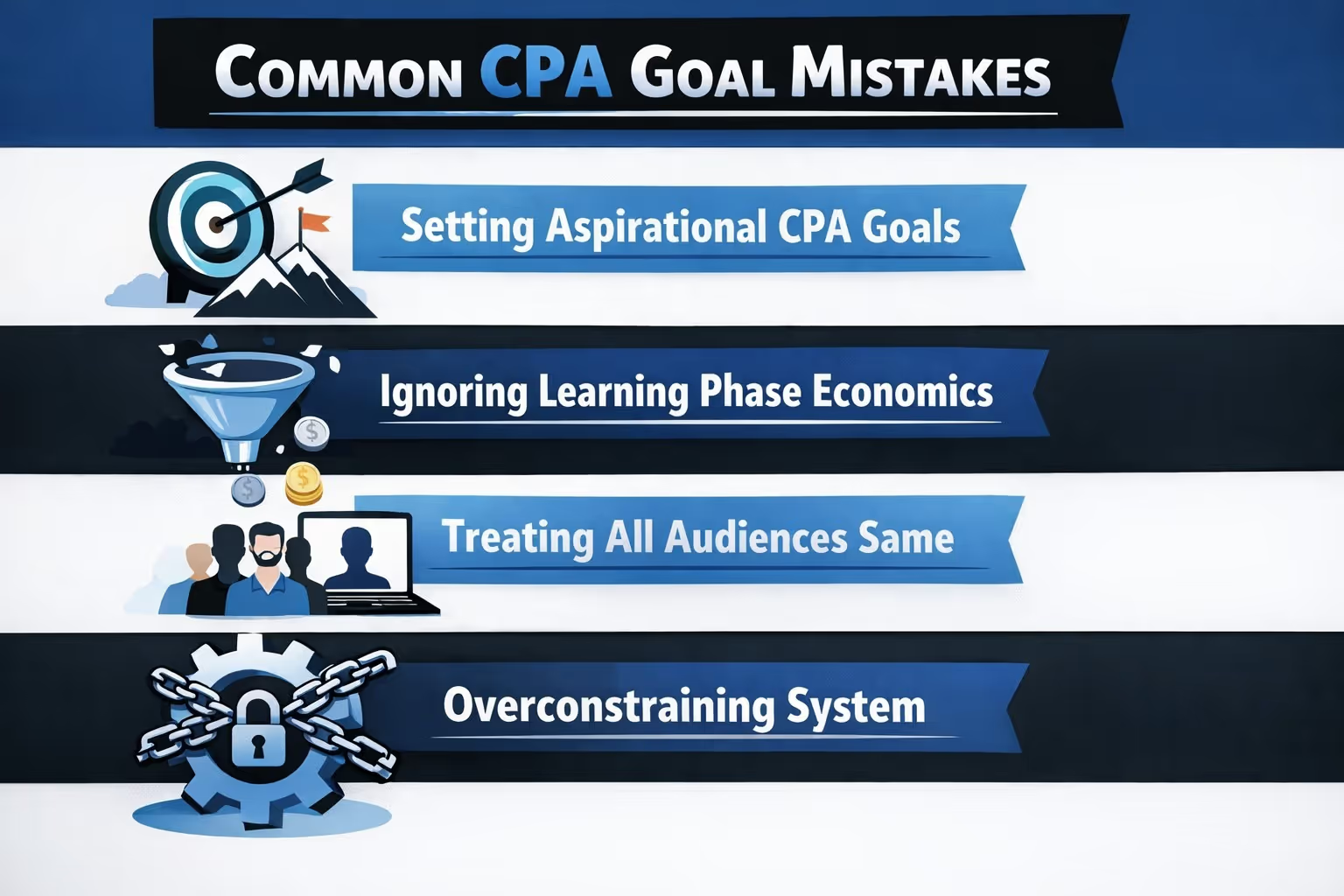
Some mistakes show up repeatedly, and most of them come from trying to force efficiency instead of creating the conditions for it.
A CPA goal should reflect reality, not desire. Meta cannot optimize toward numbers your account has never supported in a stable way. When targets are based on ideal margins instead of historical performance, delivery is restricted and learning slows down. Ambition without data usually leads to limited scale rather than better efficiency.
Learning is expensive, especially early in a campaign. The system needs room to test, compare, and reduce uncertainty before efficiency improves. Blocking that process with tight CPA constraints prevents the algorithm from gathering the data it needs. Short-term cost control often leads to worse long-term performance.
Different audiences convert at different rates and costs. Prospecting, retargeting, and lookalike segments do not share the same CPA reality. Applying one CPA goal across all of them creates internal competition where some ad sets are unfairly restricted while others dominate. This reduces balance and limits overall growth.
CBO is designed to move budget dynamically based on performance signals. Too many rules, caps, and restrictions limit that flexibility. When the system cannot reallocate budget freely, it cannot adapt to changes in auction conditions or creative performance. Efficiency comes from guided freedom, not tight control.
A healthy CBO campaign feels boring. That is usually a sign things are working the way they should.
Spend flows steadily instead of jumping between ad sets every day. CPA fluctuates within a reasonable range rather than swinging wildly. Conversion volume grows gradually as the system finds stable pockets of performance. There are no dramatic spikes, crashes, or constant emergencies that demand daily fixes.
When CPA goals are set correctly, optimization becomes quieter. Fewer sudden drops in delivery, fewer panic reactions, and fewer major restructures are needed. Most adjustments become small and planned rather than reactive.
That calm, predictable rhythm is the real signal that your CPA goals are aligned with how the system learns. Stability, not constant activity, is what effective CPA optimization looks like.
CBO rewards advertisers who respect how Meta learns, not those who try to dominate it with hard rules.
Good CPA goals are flexible, contextual, and supported by budget and structure. They allow learning before demanding efficiency. They adapt as conditions change.
If your CBO campaigns keep stalling, overspending, or behaving unpredictably, the problem is often not creative or targeting. It is the CPA goal itself.
Set goals that Meta can realistically work with, and optimization becomes easier. Fight the system, and it will quietly fight back.


