Is Shopify Bad for SEO or Just Misunderstood?
Is Shopify bad for SEO or just misunderstood? A clear, practical look at what Shopify does well, where it struggles, and what really matters.
Jan 27, 2026



Instagram isn’t just a pretty feed - it’s a powerful sales channel for Shopify stores. With the right approach, you can turn likes and comments into real revenue. But there’s a difference between posting randomly and running a strategy that actually moves the needle. In this article, we’ll break down practical ways to grow your brand, engage your audience, and drive sales on Instagram without wasting time or budget.
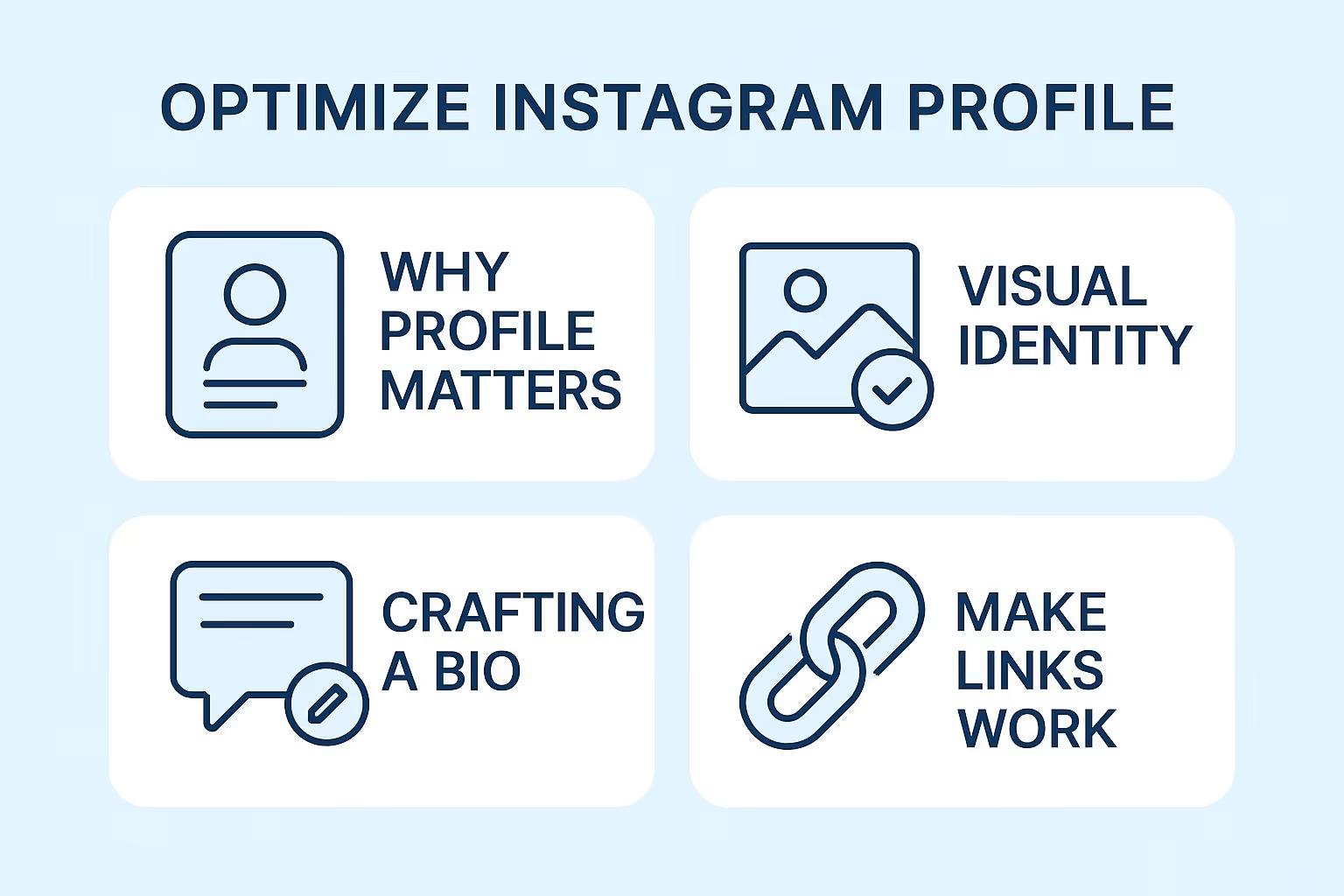
Your Instagram profile is more than just a page. It’s your storefront, your elevator pitch, and the first point of connection with potential customers. Treat it like a mini landing page designed to grab attention, build trust, and guide visitors toward action. The details matter, and every element of your profile should serve a purpose.
Think about the last time you checked out a brand on Instagram. Chances are, your decision to follow, engage, or click a link happened in the first few seconds. A profile that looks unprofessional, incomplete, or inconsistent can send the wrong message. On the other hand, a polished, approachable profile immediately signals credibility and makes people feel comfortable interacting with your brand.
Here’s what a strong profile can do for your Shopify store:
Even before you post your first product, your profile sets the tone.
Your profile picture is often the first thing people notice. It should:
Keep in mind that this tiny circle can influence whether someone decides to follow you. Make it simple, clean, and unmistakably “you.”
Your Instagram bio is like a mini mission statement. It needs to explain who you are, what you offer, and why someone should care - all in a few lines. Here’s how to make it work:
Remember, your bio is also a trust signal. A visitor who understands immediately what you do and why it matters is far more likely to engage.
Instagram allows up to five clickable links in your bio, so make them count. Tools like Linktree, Shorby, or Tap.bio can still help guide visitors to multiple destinations if you need more options:
Pro tip: Make sure the links are mobile-friendly. Most Instagram traffic is on smartphones, and a broken or messy landing page kills conversions.
Your feed isn’t just a collection of photos. It’s a reflection of your brand. Consistency helps visitors instantly understand who you are and what to expect. Consider:
Consistency isn’t about perfection. It’s about creating a recognizable, cohesive presence that makes your brand feel reliable and professional.
A strong Instagram profile is in the details:
Even minor touches like a well-labeled Highlight or a professional-looking profile photo can tip the scale in your favor.
Optimizing your profile is the foundation for everything else. It’s where visitors decide whether to stay, engage, or click through to your Shopify store. Take the time to get it right - your first impression is a lasting one.
Posting randomly on Instagram won’t cut it if you want real results. Your feed isn’t a personal scrapbook - it’s a marketing channel, a storytelling platform, and a sales driver all rolled into one. A smart content strategy helps you stay focused, plan ahead, and make every post serve a purpose. By thinking in terms of goals, variety, and consistency, you can turn your Instagram presence from a chaotic scroll into a polished, engaging experience that draws followers in and nudges them toward your Shopify store.
A well-planned content strategy isn’t about rigidity - it’s about direction. When you define your objectives, plan your posts around key moments, mix up content types, and craft compelling captions, your feed starts to feel intentional and cohesive. That clarity builds trust, keeps followers coming back, and ultimately drives the results you’re after. Instagram works best when you’re strategic, not just active, and the payoff shows in engagement, loyalty, and sales.
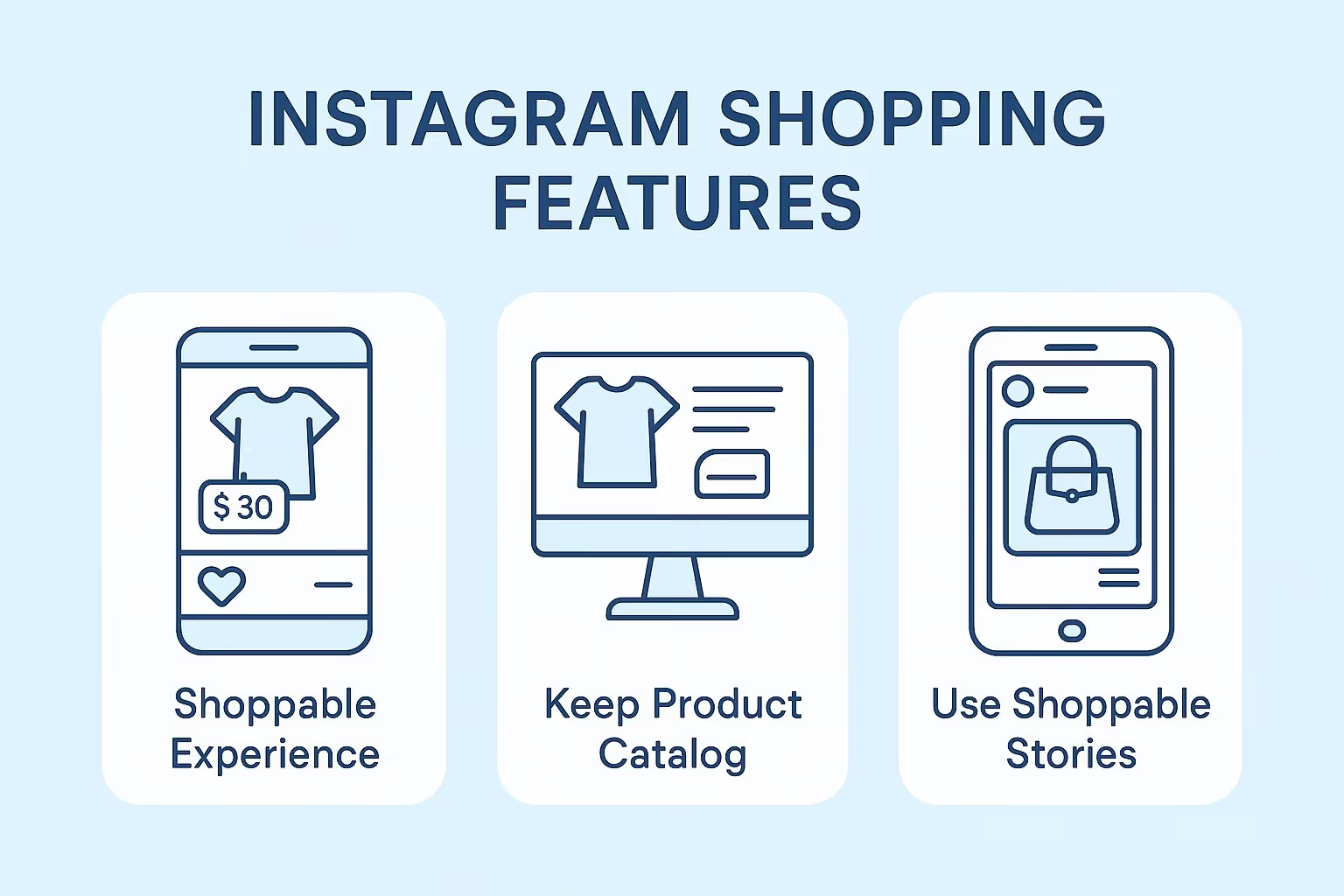
If you sell on Shopify, Instagram can be more than a marketing platform. It can function as a real storefront where people discover, explore, and buy without ever feeling like they have to jump through hoops. The easier you make it for someone to shop, the more likely they are to actually do it. Instagram's shopping tools were built for exactly that.
Most people scroll with low intent. They might like your content, but they are not actively thinking about pulling out a credit card. Shopping features help you bridge that gap by placing your products right where the attention already is.
This is one of the simplest, highest impact steps. When you feature a product, tag it.
It removes the need for comments like "link please?" or "where can I buy this?" and replaces that friction with a clean, quick path to purchase. The best part: it feels natural, not salesy.
An Instagram Shop is basically your product catalog inside your profile. It gives people a dedicated place to browse your items without leaving the app.
You can organize your Shop with:
This gives your profile an actual retail feel instead of a random grid of images. It also helps customers move from browsing to buying without searching your website manually.
Your Instagram Shop pulls its data from your Shopify catalog. If your product listings are messy, outdated, or inconsistent, the in-app shopping experience will feel the same.
Think of your catalog as your visual resume. It needs to look sharp.
A tidy catalog reduces confusion and increases trust, which is often the difference between someone tapping out and someone tapping buy.
Stories are great for spontaneous content, flash announcements, and time-sensitive promos. When you pair Stories with shopping stickers, you turn casual views into fast conversions.
Shoppable stickers work especially well for:
Stories move quickly, so your shopping prompts should feel just as effortless. A single tap can take someone straight to checkout, making them ideal for impulse purchases.
A smooth path to checkout is one of the most undervalued tools a Shopify brand can use. If someone wants to buy, the only thing you need to do is get out of their way.
Video is where most of the attention lives on Instagram now. People might skim photos, but they stop for movement, sound, and quick storytelling. If you want your Shopify brand to stay visible, you can’t rely only on static posts. Reels, Stories, and short videos give you a way to show your products in action, explain something in seconds, and connect with followers in a way that feels more personal and less scripted. Think of video as your chance to bring the brand to life, not just display it.
At the end of the day, your audience isn’t sitting around waiting for your next post. They’re scrolling fast, usually with one eye on something else. Short videos, Reels, and Stories help you slip into that tiny window of attention with something lively and easy to digest. When you pair that with a clear CTA, you give viewers direction while the interest is fresh. It’s a simple formula: show something engaging, keep it quick, and make the next step obvious.
People trust people. Long before they read your product descriptions or scroll your catalog, they pay attention to what other customers say and how they actually use your products. Social proof creates a comfort zone where buying from you feels less risky and more natural. Instagram is one of the easiest places to build that trust because it thrives on real experiences, shared moments, and genuine reactions.
User generated content is one of the strongest signals of trust you can create. When customers share their own photos, quick videos, or even simple unboxings, it makes your brand feel alive instead of manufactured.
UGC shows potential buyers that real people enjoy your products. It also gives you a steady flow of authentic content you could never replicate with staged photoshoots.
Not all influencers are the same. The most effective ones share your values, your style, and your target audience. When their followers trust them, that trust naturally extends to the brands they choose to highlight.
Even smaller creators can deliver impressive results because their communities tend to be loyal and highly engaged. A well-chosen creator can help you reach people who would never have discovered you through ads alone.
Giveaways and contests work because they spark excitement and encourage people to spread the word without feeling like they are doing free marketing.
When done well, giveaways can introduce your brand to hundreds or thousands of new potential customers in a very organic way.
People notice when a brand actually interacts instead of broadcasting and disappearing. Small touches create long lasting trust.
Being present makes your brand feel human, approachable, and confident. It encourages followers to interact more often because they know someone is on the other end paying attention.
When people see real humans loving your products, it lowers the fear of making a purchase. The recommendation feels more genuine because it comes from someone who has nothing to gain. That sense of authenticity is often the tipping point that turns a casual viewer into a first time customer.
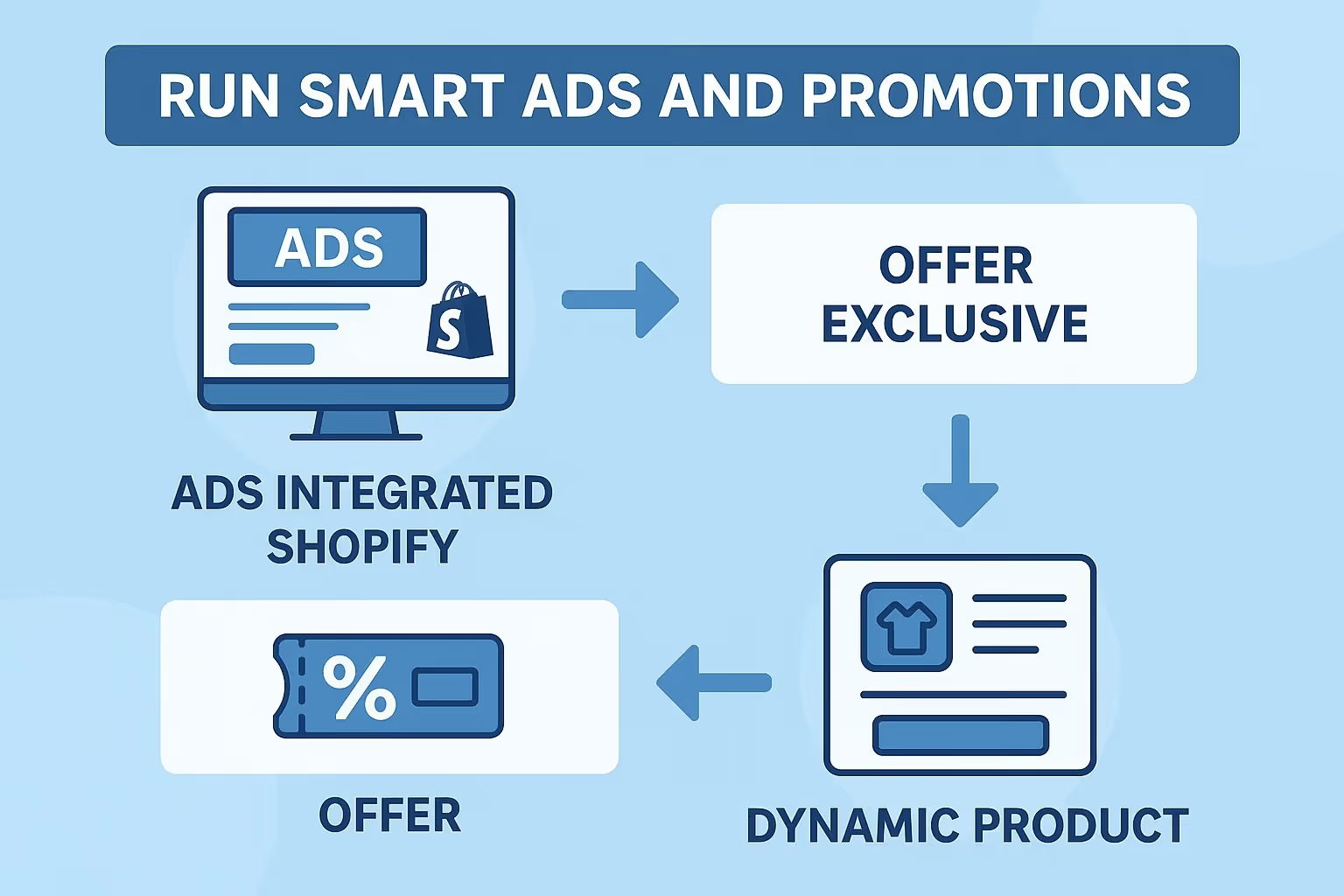
Organic reach can do a lot, but it has its limits. Algorithms shift, competition grows, and sometimes your best content still doesn’t reach the people who would actually buy from you. That’s where paid promotion steps in. When you use ads thoughtfully, you’re not just shouting into the void. You’re putting your products in front of shoppers who already showed interest, or who fit the exact profile of your ideal customer. Smart ads help amplify your presence, not replace it.
Paid campaigns don’t need to feel aggressive or salesy. When you match the right message with the right audience and keep offers relevant, ads become a natural extension of your existing content. They help close the gap between casual scrollers and customers who are ready to take action. Combined with a solid organic strategy, smart promotions can give your Shopify store the momentum it needs to grow faster and reach people you would never reach on content alone.

One of the biggest challenges in running effective Instagram ads is knowing which ideas will actually perform before spending money. Testing blindly can get expensive fast. Our platform Extuitive helps cut out that uncertainty by connecting to your Shopify store, analyzing your products, and generating ad concepts tailored to the right audience. Even better, our platform tests those concepts against thousands of AI-simulated consumer profiles, giving you an early read on potential performance before you launch. It’s essentially a fast, affordable way to validate creative direction without traditional research costs.
For Shopify brands that rely on Instagram to drive sales, this kind of predictive insight makes a measurable difference. Instead of guessing which visuals or messages might resonate, you can move forward with data-backed ideas and spend your budget more strategically. Extuitive helps you experiment faster, refine your creative approach, and launch Instagram campaigns with confidence - an advantage that’s especially valuable in a competitive, fast-moving platform like Instagram.
Instagram might look effortless from the outside, but the brands that grow on the platform aren’t guessing. They pay attention to what works, what falls flat, and how their audience behaves over time. Treating Instagram like a real marketing channel means checking your numbers, understanding patterns, and making decisions based on more than instinct. Data doesn’t kill creativity. It helps you aim it in the right direction.
Consistency, listening to your data, and agility - that’s how you build growth, not just shots in the dark.
Every Shopify brand on Instagram hits a few bumps along the road. It’s normal. The trick is recognizing the patterns that quietly hold your growth back. Most of the time, the issues aren’t dramatic - they’re small habits that, over weeks and months, dilute your message or weaken your connection with followers. By spotting these early, you can steer your strategy in a cleaner, more effective direction without having to overhaul everything at once.
Mistakes on Instagram aren’t fatal. They’re signals. When you catch them and course-correct, your content becomes sharper, your audience feels more connected, and your marketing starts working the way it should. The brands that stand out aren’t perfect. They simply stay aware, stay human, and keep refining their approach with every post.
At the end of the day, Instagram isn’t just another place to post and hope for the best. It’s where people stumble upon new brands, follow stories that catch their eye, and slowly start to trust you enough to hit that “buy” button. The trick is keeping things consistent - posting regularly, tagging your products in smart ways, trying out small promotions, and experimenting a bit to see what sticks. You don’t need a huge team or complicated systems to make it work. Really, all you need is a clear plan, a little creativity, and the willingness to learn as you go. Keep it simple, stay consistent, and let the results guide your next move.
How often should a Shopify store post on Instagram?
There isn’t a one-size-fits-all answer, but consistency is key. Posting a few feed posts per week along with regular Stories helps maintain visibility and allows for testing which content resonates most with the audience.
Can Instagram drive sales, or is it only for brand awareness?
Instagram can accomplish both. Product tags, Reels, and user-generated content make it possible for followers to discover products and move directly from browsing to purchasing, making it a valuable sales and marketing channel.
Why does engagement sometimes drop suddenly?
Fluctuations in engagement are common and can result from algorithm changes, content fatigue, or timing issues. Reviewing analytics, testing new content formats, and interacting with followers can help improve performance.
Are paid ads necessary to see results on Instagram?
Paid ads are not strictly required, but they help reach a wider audience and retarget people who have previously interacted with the store. Even small campaigns can increase conversions and complement organic content.
How long does it take to see results on Instagram?
Results vary, but after about a month of consistent posting, product tagging, and analyzing performance metrics, patterns usually emerge. This information can guide future content strategy and optimization.
Is working with influencers or featuring user-generated content effective?
Collaborations with influencers or highlighting user-generated content can boost reach and credibility. Micro-influencers and real customer content often feel more authentic and can strengthen trust with potential buyers.
Which content formats perform best on Instagram for Shopify stores?
Short-form video like Reels typically drives the most visibility, but a mix of product photos, Stories, educational posts, and behind-the-scenes content creates a balanced feed that engages different types of followers. Testing formats helps identify what works best.


