Unique Online Store Name Ideas (2026 Guide + Examples)
A unique online store name combines memorability, brand identity, and legal availability. The best names are short, easy to spell, and reflect your products or values. Before finalizing, search the USPTO trademark database and check domain availability to protect your brand.
Choosing the right name for an online store shapes everything that follows. It's the first impression customers form, the foundation of brand identity, and a crucial factor in marketing success.
But here's the thing—finding a name that's memorable, available, and actually good is trickier than it sounds. The name needs to work across domains, social media handles, and trademark databases. It should hint at what the business offers without boxing it into a corner as the brand grows.
This guide breaks down proven strategies for creating unique online store names, explores 200+ examples across popular categories, and covers the legal considerations that protect the brand investment.
Why Your Store Name Matters More Than You Think
The name of an online store does more than identify the business. According to the U.S. Small Business Administration, business names should reflect brand identity and align with the types of goods and services offered. Names that accomplish this create immediate recognition and customer trust.
Research from Stanford Graduate School of Business on Lexicon Branding reveals that successful brand names—think Pentium, BlackBerry, and Outback—follow deliberate strategies that blend advertising techniques with linguistic principles. These names weren't accidents. They emerged from systematic processes that considered sound patterns, emotional associations, and market positioning.
A strong store name delivers several advantages. It sticks in memory after a single exposure. It works well in verbal conversations and written marketing. And it differentiates the business from competitors without requiring constant explanation.
Real talk: weak names cost money. They require more advertising spend to achieve recognition, confuse potential customers during word-of-mouth referrals, and limit expansion into new product categories.
Essential Characteristics of Memorable Store Names
What separates forgettable names from those that become household words? Analysis of successful ecommerce brands reveals consistent patterns.
Keep It Short and Snappy
The best store names typically range from one to three words. Short names are easier to remember, simpler to type, and fit better on logos and packaging. They also tend to have better domain availability—though that's becoming increasingly challenging.
Consider examples like Etsy, Warby Parker, or Glossier. None require more than a few syllables, yet each communicates distinct brand positioning.
Make It Easy to Spell and Pronounce
Names that require explanation every time someone asks about the business create unnecessary friction. If customers can't spell the name after hearing it once, they'll struggle to find the website or recommend it to friends.
Avoid intentional misspellings unless there's a compelling reason. While names like Flickr worked during the Web 2.0 era, that trend has largely passed. Modern consumers expect standard spelling conventions.
Ensure It's Distinctive
Generic descriptive names might seem safe, but they fail to differentiate. A name like "Online Clothing Store" tells customers what the business does, but gives them no reason to remember it over dozens of similar competitors.
According to the U.S. Small Business Administration, protecting a business name requires registration with appropriate agencies. But generic descriptive terms receive limited trademark protection because they lack distinctiveness.
Consider Pronunciation Across Languages
For stores targeting international markets, names need to work across linguistic boundaries. A name that sounds appealing in English might carry unfortunate connotations in Spanish, French, or Mandarin.
Testing names with native speakers of target market languages prevents embarrassing—and expensive—mistakes after launch.
Proven Naming Strategies That Work
Professional brand naming firms use systematic approaches rather than random brainstorming. These strategies can guide the process for any online store.
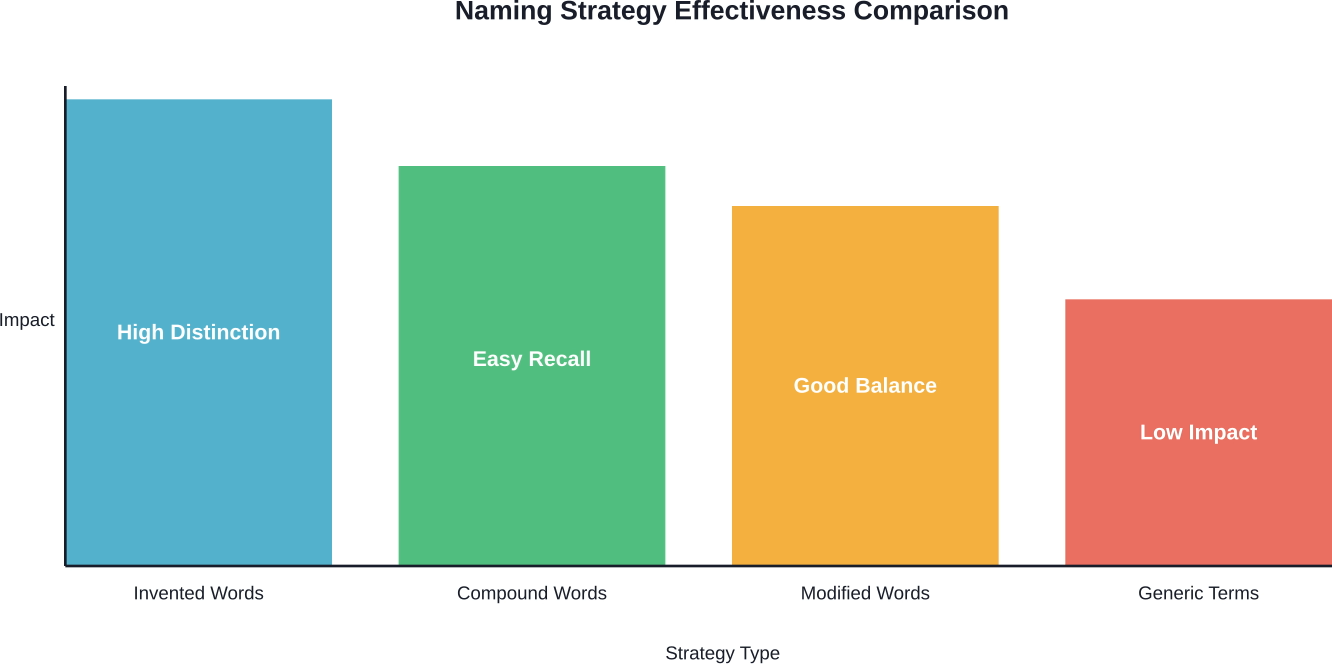
Invented Words (Neologisms)
Creating entirely new words offers maximum distinctiveness. This approach has produced names like Etsy, Kodak, and Xerox—words that didn't exist before the companies created them.
The advantage? Complete originality and strong trademark protection. The challenge? These names require significant marketing investment to establish meaning and associations.
Invented words work best when they incorporate pleasant sound patterns or subtle linguistic associations that feel right even if customers can't explain why.
Compound Words
Combining two existing words creates names that feel familiar yet distinctive. Facebook, Netflix, and PayPal all follow this formula.
For online stores, compound approaches might pair product categories with evocative words: ThreadPeak for outdoor apparel, BrightNest for home goods, or SteelRoot for industrial supplies.
This strategy offers easier memorability than pure invention while maintaining reasonable distinctiveness for trademark purposes.
Modified Real Words
Taking existing words and tweaking their spelling creates names that benefit from linguistic familiarity while achieving technical uniqueness. Tumblr, Lyft, and Shopify demonstrate this approach.
The modifications might involve dropping letters, adding prefixes or suffixes, or using unexpected letter combinations that preserve pronunciation.
Founder Names and Personal Connections
Using surnames or personal names provides immediate authenticity. This formula has worked for Ralph Lauren, Ford, and countless smaller businesses.
For online stores, founder-name approaches work particularly well in categories where craftsmanship, expertise, or personal curation matters: specialty foods, handmade goods, or curated fashion.
One real-world example: Cordina Hair built recognition using a surname combined with a clear product category indicator. This approach immediately communicates both the personal touch and the business focus.
Descriptive Metaphors
Names that use metaphorical language create emotional connections while hinting at brand values. Amazon suggests vastness and comprehensive selection. Apple implies simplicity and approachability.
For online stores, metaphorical names might reference natural elements (Grove, Summit, Horizon), movement (Flow, Stride, Dash), or abstract concepts (Essence, Prime, Haven).
Geographical References
Location-based names work well for stores with strong local identities or those celebrating regional craftsmanship. Brooklyn Industries, California Closets, and Patagonia all leverage geographical associations.
But here's a caution: geographical names can limit perceived scope if the business plans to expand beyond regional markets. What starts as a strength can become a constraint.
200+ Unique Online Store Name Ideas by Category
These examples demonstrate different naming strategies across popular ecommerce categories. Each name is crafted to be distinctive, memorable, and suitable for trademark consideration—though availability should always be verified before use.
Fashion and Apparel Stores
ThreadTheory
WovenStory
FabricForm
StitchMark
PureEdge Apparel
VelvetAnchor
SilkPulse
IndieWeave
ModernStitch
CanvasCrest
TailorMark
FiberCraft
LinenLoft
UrbanThread
ClothHaven
EvolveDenim
PrimeFabric
NimbleWear
BoldSeam
RefinedStitch
Beauty and Cosmetics Stores
PureGlow Beauty
VelvetVial
LuminaLabs
RadiantRituals
BloomEssence
CrystalDrop
SilkCanvas
FloraFinish
GildedBeauty
PrismGlow
PetalBase
PureVelvet
LuxeLayer
BrightBloom
EssenceLoft
GlowMark
VividVault
NectarBeauty
SmoothPetal
VelvetMood
Home and Lifestyle Stores
NestTheory
CozyCraft
HavenHouse
ShelterStyle
RootedHome
WarmSpaceGoods
SimpleNest
PureHaven
ComfortCraft
HomeMark
LoftLiving
DwellCraft
ModernNest
SanctuaryGoods
EssenceHome
ClearSpace
TrueNest
BasementBeam
CoreComfort
TerraNest
One example worth highlighting: Nurture Nature Cards demonstrates literal yet meaningful naming. The company sells 100% plantable gift cards that bloom into Swan River Daisies, and the name perfectly captures both the product concept and brand values.
Tech and Electronics Stores
CircuitCraft
PixelPeak
DataDock
CoreCircuit
BrightByte
VoltVault
NexusGear
PulseTech
ApexDigital
SparkLab
QuantumCart
BinaryBase
FluxGoods
SignalSource
GridGear
ChargePoint
BoltBase
CodeCraft
LinkLab
NodeMarket
Food and Beverage Stores
PurePlate
HarvestMark
FreshRoot
GroveKitchen
CulinaryVault
PantryPeak
SavorySource
BlendCraft
NourishNest
MeadowMarket
ForkPath
SpiceLoft
BarrelBase
TableTheory
FeastCraft
OrganicEdge
PlateForm
CraveCraft
TasteMark
FlavorVault
Sports and Outdoor Stores
TrailMark
PeakPulse
SummitSource
RidgeCraft
RoamGear
BoldTrail
StrideSource
ApexOutdoors
TerrainCraft
CompassCrest
VentureVault
PathfindGoods
TrailTheory
OutpostGear
HorizonBase
WildEdge
FrontierMark
CampCraft
PeakForm
Jewelry and Accessories Stores
LusterLoft
GildedVault
RadiantRing
GemCraft
BrilliantBase
StoneTheory
PureGilt
SparkleSource
VelvetGem
CrystalCrest
FineryForm
AdornMark
PolishedPath
LuxeLocket
PrismPiece
GoldGrove
CharmCraft
ElegantEdge
RefinedRing
TreasureTheo
Pet Supply Stores
PawPeak
TailTheory
FurHaven
PounceCraft
WhiskerWell
PetNest
CozyPaws
BarksideGoods
PurrCraft
CompanionCrest
HappyTails
PetLoft
FurForm
SnoutSource
TreatPath
PawPrint
BuddyBase
WagMark
PetPulse
CreatureCraft
Art and Craft Supply Stores
BrushMark
CanvasCraft
PalettePeak
ArtisanVault
CreateBase
PigmentPath
StudioSource
CraftTheory
MakerMark
ColorCrest
BrushBase
SketchLoft
ArtForm
PureCanvas
VisionCraft
InspireGoods
MuseMarket
CreativeEdge
ArtistryHub
DesignDock
Baby and Kids Stores
TinyTreasure
SproutNest
LittleBloom
WonderWear
TotCraft
PlayfulPath
KiddoMark
NestlingGoods
LittleLeaf
GrowthGrove
JoyfulTiny
SweetSprout
BrightBegin
CozyKids
PlayNest
TinyTheory
PurePlay
LittleLoft
WonderNest
TotTreasure
Books and Stationery Stores
PageTheory
InkLoft
ChapterCraft
BookmarkBase
StoryCrest
PaperPath
QuillMark
ReadNest
TextVault
BinderyCraft
PagePulse
NarrativeGoods
PenPath
ShelfTheory
InkPeak
WordCraft
ScriptSource
PageForm
PaperLoft
TomeMarket
Legal Considerations Before Finalizing Your Name
Finding a great name is only half the battle. Legal availability determines whether that name can actually be used without risking infringement claims or rebranding costs down the line.
Search the USPTO Trademark Database
According to the U.S. Patent and Trademark Office, trademark searches should be completed before applying for registration. The USPTO provides a free trademark search system that checks existing registered marks and pending applications.
The search process isn't as simple as typing a name and seeing if it appears. Trademark protection extends to similar names in related industries. A name might be available if it's used for completely unrelated products, but conflict if it's in the same category.
For online stores, the relevant trademark classes typically include Class 35 (retail services) along with specific product classes depending on what's being sold.
Check Domain Name Availability
Even if a trademark search comes back clear, domain availability poses another hurdle. Most short .com domains have been registered, forcing businesses to get creative with extensions or longer variations.
Options include: - Using alternative extensions (.shop, .store, .co) - Adding modifiers (shop, store, get, buy) - Using hyphens (though these create spelling complications) - Purchasing an existing domain from current owners
According to ICANN, which manages the domain name system, business owners should secure relevant domains early to prevent cybersquatting—the practice of registering domains in bad faith to sell them to trademark holders.
Social Media Handle Availability
Consistent branding across platforms matters. Before committing to a name, check whether corresponding handles are available on major platforms: Instagram, Facebook, Twitter/X, Pinterest, and TikTok.
Tools exist that check username availability across multiple platforms simultaneously, saving considerable time during the research phase.
Register Your Business Name Properly
The U.S. Small Business Administration notes that business names can be protected through four different registration methods, depending on business structure and scope:
First, registering a "doing business as" (DBA) name with the appropriate state or county agency. This provides basic name protection within the registration jurisdiction.
Second, incorporating or forming an LLC automatically registers the business name at the state level, preventing other entities in that state from using identical names.
Third, registering a federal trademark with the USPTO provides the strongest protection. Federal registration creates nationwide rights and legal presumptions of ownership.
Fourth, registering domain names and social media handles, while not legal protections themselves, prevent others from using those specific digital properties.
Common Naming Mistakes to Avoid
Certain patterns consistently create problems. Learning from others' mistakes prevents expensive rebranding efforts later.
Trendy Spellings That Don't Age Well
Replacing vowels with "y" or using intentional misspellings might seem clever initially, but these names often feel dated quickly. What worked during specific internet eras (think late 2000s Web 2.0 aesthetic) now signals a lack of timelessness.
Unless there's a compelling strategic reason, standard spelling provides broader accessibility and longer-term viability.
Names That Are Too Similar to Competitors
Standing out in crowded markets requires differentiation, not imitation. Names that closely mimic successful competitors confuse customers and invite legal challenges.
Even if a similar name is technically legal, the marketing disadvantage of constant comparison undermines brand building efforts.
Geographic Limitations
Names tied to specific cities or regions can create perception problems when the business expands. California Closets works because it became established before expanding nationally. For new businesses, geographic names may artificially limit perceived reach.
That said, if local identity is central to brand positioning and expansion beyond the region isn't planned, geographic names provide instant community connection.
Obscure References Only Insiders Understand
Inside jokes, obscure literary references, or niche cultural allusions might resonate with founders but alienate broader audiences. Names need to work for customers who don't share specific knowledge bases.
The test: if explaining the name requires a paragraph, it's probably too obscure for effective branding.
Names That Limit Future Expansion
A store named "Vintage Vinyl Records" will struggle if it later wants to sell turntables, speakers, or concert merchandise. Product-specific names box businesses into narrow categories.
Better approach: choose names that suggest the brand's values, aesthetic, or customer experience rather than specific inventory items.
Using Store Name Generators Effectively
Name generators can jumpstart the creative process, but they require the right approach to produce useful results rather than generic combinations.
How Name Generators Work
Most generators combine keyword inputs with linguistic patterns, word databases, and randomization algorithms. Users enter descriptive words related to their business, and the tool produces combinations and variations.
Advanced generators incorporate availability checking, showing which generated names have open domains. Some even provide instant logo mockups to visualize how names might appear in branding.
Popular Generator Options
Several platforms offer name generation specifically for ecommerce:
Shopify's Business Name Generator combines keywords with common naming patterns and checks .com domain availability. The tool is free and doesn't require a Shopify account to use.
Other platforms provide similar functionality with varying algorithms and suggestion styles. The National Retail Federation notes that retail technology tools, including branding resources, have become increasingly sophisticated as ecommerce has matured.
Using Generators as Starting Points
Here's the key insight: generators work best for inspiration rather than final decisions. The combinations they produce often need refinement, but they can reveal linguistic patterns or word pairings that wouldn't emerge from traditional brainstorming.
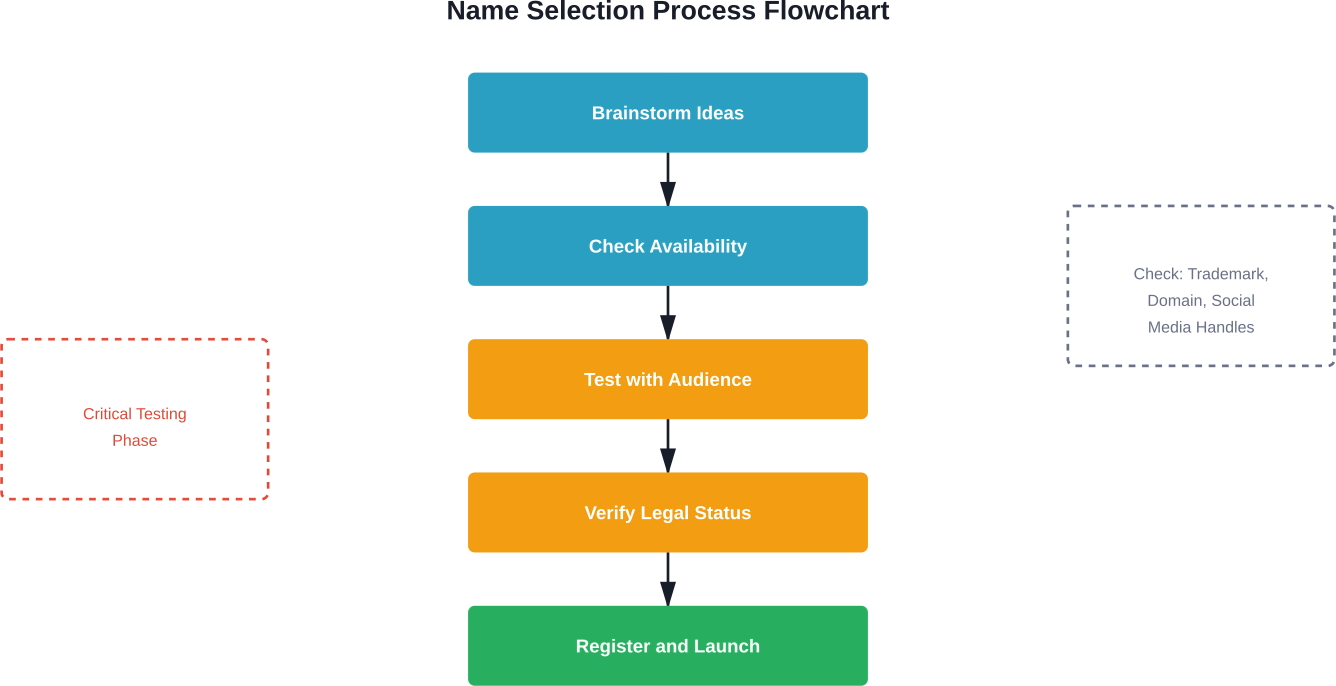
Effective process:
Run multiple keyword combinations through generators
Note interesting patterns or partial ideas
Manually refine promising concepts
Test refined names with target audiences
Verify legal availability before committing
The generated suggestions themselves rarely become final names, but they accelerate the creative process and prevent fixation on limited options.
Testing Names Before Making the Final Decision
Even names that seem perfect internally might fall flat with actual customers. Testing reveals problems before they become expensive mistakes.
Say It Out Loud Repeatedly
How does the name sound in conversation? Can people pronounce it easily after hearing it once? Does it work in phone calls when background noise exists?
Reading names silently on paper creates different impressions than speaking them aloud repeatedly. Testing pronunciation catches awkward syllable combinations or unintentional double meanings.
Check Potential Negative Associations
Run the name through Google to see what existing associations appear. Search it in other languages if targeting international markets. Check urban dictionary entries for slang meanings.
This step prevents launching with a name that carries unfortunate connotations in certain contexts or regions.
Get Feedback from Target Customers
Small focus groups or surveys with people matching the target demographic provide invaluable perspective. Present 3-5 name options without revealing which is preferred, and ask: - Which name is most memorable? - What does each name make you think the business sells? - Which name would you be most likely to recommend to friends? - Do any names create confusion or negative impressions?
The responses often reveal disconnects between internal assumptions and external perceptions.
Test Visual Presentation
Mock up simple logos and social media profiles using each candidate name. How do they look in different contexts? Do they work at small sizes? Are they readable in profile pictures and favicons?
Visual testing catches names that work well verbally but create design challenges in actual application.
Validate Your Store Name Through Ad Performance First
A unique store name might sound right, but that doesn’t mean it will work once you start running ads. What actually matters is how that name shows up in creatives and messaging – and whether it drives clicks or conversions. Extuitive is built for this stage, predicting how ad variations are likely to perform before you spend anything, using AI-simulated audiences instead of trial and error.
Instead of launching campaigns and adjusting later, you can see early which direction has real potential in ads. That means fewer wasted budgets and quicker decisions on what to move forward with. If your plan involves paid traffic, don’t rely on instinct alone – predict your ad performance upfront with Extuitive.
What to Do After Choosing Your Name
Once the decision is made, immediate action protects the investment and establishes consistent brand presence.
Secure All Digital Properties
Purchase the primary domain immediately, along with common variations and misspellings. Also register relevant alternative extensions (.net, .store, .shop) to prevent confusion or competitor misuse.
Create accounts on major social media platforms even if not all will be actively used initially. This prevents others from claiming the handles and creating brand confusion.
File for Trademark Protection
According to the USPTO, trademark registration provides legal presumptions of ownership and nationwide rights. While common law trademark rights exist through actual use in commerce, federal registration strengthens legal position substantially.
The application process typically includes Class 35 (online retail services) and/or specific product classes (e.g., Class 25 for apparel).
Registration typically takes 8-12 months and costs several hundred dollars in filing fees, plus additional costs if using an attorney. But the protection proves invaluable if name conflicts arise later.
Create Brand Style Guidelines
Document how the name should be presented consistently: capitalization, spacing, font treatments, and color specifications. These guidelines ensure consistent presentation across all customer touchpoints.
Even for small businesses, basic brand guidelines prevent gradual drift in how the name appears across different platforms and materials.
Build Name Recognition
The U.S. Small Business Administration notes that marketing takes time, money, and preparation. One of the best ways to stay on schedule and budget is to make a marketing plan that includes consistent use of the business name across all channels.
According to SBA guidance on local marketing, businesses serving customers within a 75-mile radius should focus on local awareness strategies. These might include location-specific advertising on platforms like Facebook.
For online stores with broader reach, national marketing strategies apply. But the principle remains: consistent, repeated exposure builds name recognition that translates to customer trust and sales.
Real Examples of Successful Ecommerce Naming
Looking at businesses that got naming right provides concrete lessons applicable across categories.
Warby Parker
The eyewear company chose a distinctive compound name derived from two Jack Kerouac characters. The name has no obvious connection to glasses, but it's memorable, easy to pronounce, and completely unique in the category.
The choice demonstrates confidence in building meaning through brand experience rather than descriptive clarity.
Glossier
Beauty brand Glossier took the word "glossy" and modified it with a French-inspired suffix. The name sounds cosmopolitan and premium while clearly connecting to beauty products through the "gloss" root.
This approach—taking a category-relevant word and giving it distinctive flair—balances familiarity with differentiation.
Allbirds
The sustainable footwear company uses a simple compound name that suggests flight, freedom, and natural materials. It's easy to remember, pleasant to say, and works well visually in minimal logo treatments.
The name doesn't explicitly mention shoes, providing flexibility as the product line expands into apparel categories.
Casper
The mattress company borrowed a friendly ghost character name, creating immediate associations with sleep and pleasant dreams. The name was already familiar to most consumers, reducing the memorability challenge.
Using an existing cultural reference worked because the association aligned with product positioning and the name was distinctive in the mattress category despite being known in other contexts.
Adapting Your Name as Your Business Grows
Sometimes businesses outgrow their original names. Understanding when and how to evolve brand identity prevents being locked into outdated positioning.
When Rebranding Makes Sense
Several scenarios might justify name changes: expansion beyond the original product category suggested by the name, legal conflicts that emerge after launch, mergers or acquisitions that combine brands, or shifts in target audience that make the original name less appropriate.
But here's the reality: rebranding is expensive and risky. Established name recognition represents accumulated marketing value that's lost when changing names.
The decision should never be made casually. Most naming challenges can be addressed through positioning and messaging rather than complete name changes.
Maintaining Continuity During Transitions
If rebranding becomes necessary, transition strategies minimize customer confusion. These might include running both names simultaneously during a transition period, maintaining domain redirects indefinitely, and clearly communicating the change across all channels.
Customer loyalty transfers more effectively when businesses explain why the change happened and what remains consistent about the brand experience.
Industry Trends Shaping Store Names in 2026
According to the National Retail Federation's 2026 retail trends analysis, understanding customers and their priorities helps create brand journeys that resonate. Naming strategies reflect broader retail trends as consumer preferences and competitive dynamics evolve.
Emphasis on Values and Mission
Modern consumers increasingly align purchasing decisions with personal values. Store names that hint at sustainability, ethical practices, or social missions connect with these priorities.
Names incorporating words like "pure," "honest," "true," or "conscious" signal values-driven positioning without being preachy.
Shorter, More Flexible Names
As brands expand across channels and categories, flexibility matters more than ever. Names that work equally well for physical retail, online stores, mobile apps, and voice shopping provide more versatility.
This trend favors shorter, abstract names over longer descriptive phrases.
Playful and Approachable Over Corporate
Brand personality has become increasingly important in differentiated markets. Names that feel friendly and approachable often outperform formal corporate-sounding alternatives.
This doesn't mean every brand should sound casual, but there's growing recognition that personality attracts attention in crowded digital environments.
Consideration for Voice Search
As voice-activated shopping grows, names need to work in spoken interactions with digital assistants. This reinforces the importance of easy pronunciation and clear spelling.
Names with ambiguous spelling or pronunciation create friction when customers try to voice-order or ask assistants to navigate to websites.
Naming Approach
Advantages
Challenges
Best For
Invented Words
Maximum uniqueness, strong trademark protection, complete originality
Requires significant marketing investment, no inherent meaning
Brands with substantial marketing budgets, tech companies
The perfect online store name combines memorability, brand alignment, and legal availability. It works across digital platforms, resonates with target customers, and provides room for growth as the business evolves.
Finding that name requires systematic research rather than hoping inspiration strikes randomly. The process involves exploring multiple naming strategies, generating numerous options, testing candidates with real audiences, and verifying legal availability before committing.
According to the U.S. Small Business Administration, choosing a business name should reflect brand identity while aligning with the types of goods and services offered. Once settled on a name, protecting it through proper registration ensures the investment in brand building isn't vulnerable to infringement or confusion.
The examples and strategies outlined here provide a framework for approaching this critical decision methodically. Whether using invented words, compound combinations, modified terms, or metaphorical concepts, the key is creating something distinctive that customers will remember and recommend.
Start the naming process early. Give it the time and attention it deserves. Test thoroughly before launching. And once committed, register the name properly to protect what will become one of the business's most valuable assets.
Ready to launch that online store? The right name is waiting—use these strategies to find it.
Frequently Asked Questions
How long should an online store name be?
The most effective store names typically range from one to three words or 6-12 characters. Shorter names are easier to remember, simpler to type, and work better across various digital platforms. They also tend to have better availability for matching domain names and social media handles. That said, a slightly longer name that's distinctive and memorable beats a short generic one. The key is balancing brevity with meaning and uniqueness.
Should my store name describe what I sell?
Not necessarily. While descriptive names like "Downtown Coffee Shop" immediately communicate the offering, they provide limited distinctiveness and weak trademark protection. The most successful brands often use names that suggest values, emotions, or abstract concepts rather than literal product descriptions. This approach provides flexibility as the business grows and expands into new categories. Consider whether immediate clarity or long-term brand building matters more for the specific business model.
Can I use my own name for my online store?
Absolutely. Using founder names or surnames works particularly well for businesses where personal expertise, craftsmanship, or curation matters: specialty foods, handmade goods, fashion, or professional services. This approach provides authenticity and can build on personal reputation. The challenge is that common surnames may face availability issues for domains and trademarks. Pairing a surname with a descriptor or modifier often solves this problem while maintaining the personal connection.
What if my ideal name's domain isn't available?
Several options exist when the perfect .com domain is taken. Consider alternative extensions like .shop, .store, or .co, which have become increasingly accepted for ecommerce. Adding a modifier like "get," "shop," or "buy" before the name can secure a .com variant. Reaching out to current domain owners about purchasing might work if the site isn't actively used. Finally, slight variations on the name might provide better domain availability while maintaining the core concept. What matters most is that the domain matches the business name closely enough to avoid customer confusion.
How do I check if a name is trademarked?
The U.S. Patent and Trademark Office provides a free trademark search system called clouded-based Trademark Search tool (formerly TESS) accessible through uspto.gov. Search for exact matches and similar names in relevant product and service categories. Remember that trademark protection extends beyond identical matches—similar names in related industries can create conflicts. For comprehensive clearance searches, especially for significant brand investments, working with a trademark attorney ensures thorough vetting. They can identify potential conflicts that might not be obvious in basic searches.
Should I choose a .com domain or are other extensions acceptable?
While .com remains the most recognized and trusted domain extension, alternatives have gained acceptance, particularly for ecommerce. Extensions like .shop, .store, and .online immediately communicate the business type. Country-specific extensions (.co.uk, .ca) work well for regionally focused businesses. The key consideration is customer expectation—will the target audience instinctively add .com when trying to remember the website? If there's risk of confusion, securing the .com (even if it redirects to another extension) prevents losing traffic to competitors or domain squatters.
How soon should I trademark my business name?
File for trademark protection as soon as the business begins using the name in commerce. According to the USPTO, trademark rights in the United States are established through actual use rather than just registration, but federal registration provides significantly stronger legal protection. The application process takes 8-12 months, so starting early ensures protection is in place as the brand gains recognition. For businesses planning substantial marketing investments, filing an "intent to use" application before launch can establish priority dates and prevent others from claiming the name.
How much are you wasting on Meta ads? Connect your ad account. See your ad efficiency.