How to Get Your 1099 Form from Shopify Without the Headache
Need your Shopify 1099 tax form? Learn how to access it, when it’s available, and what to do if you can’t find it.
Feb 11, 2026



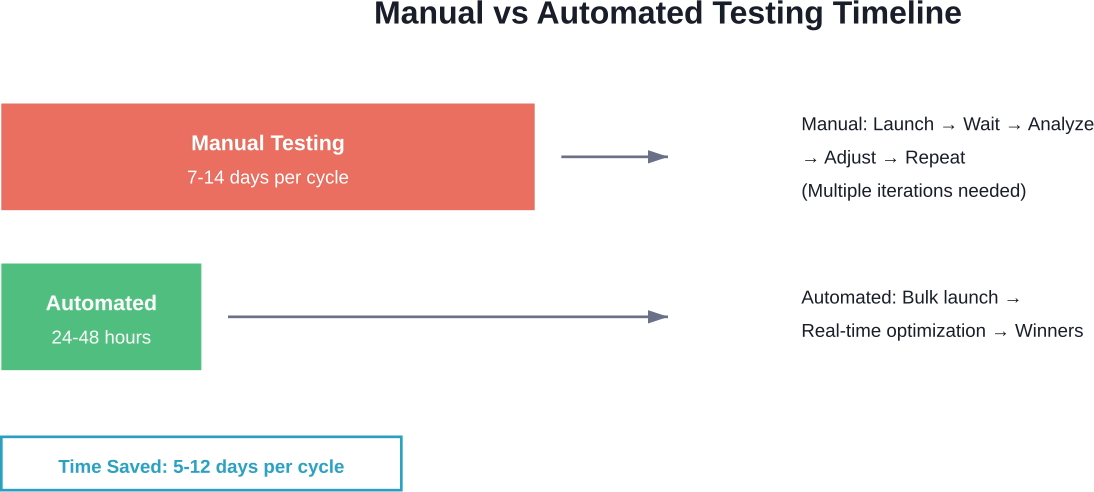
Automated ad creative testing for Facebook ads uses AI-powered tools and workflows to generate, launch, and optimize hundreds of ad variations without manual intervention. This approach eliminates the weeks-long cycle of manual testing, reduces wasted ad spend, and helps advertisers scale winning creatives faster by automatically pausing underperformers and allocating budget to top performers.
Manual Facebook ad testing means launching campaigns, waiting days for statistically significant data, tweaking settings in spreadsheets, and repeating the cycle until something works. By the time a winning creative emerges, thousands of dollars have already burned on underperformers.
Automation changes that equation entirely.
Instead of babysitting campaigns and manually comparing performance metrics, automated creative testing tools handle the heavy lifting. They generate dozens of ad variations, launch structured tests, monitor performance in real-time, and optimize budget allocation without constant human oversight.
Most Facebook ad testing still happens after launch. You push multiple variations live, wait for data, then cut what doesn’t work. It takes time and budget, and a lot of the spend goes into learning what not to run.
Extuitive changes that flow. Instead of relying only on live campaign data, it uses AI models to simulate how people respond to different creatives before they go live. You can generate variations, compare them, and see which directions are worth testing first. That means you go into campaigns with fewer unknowns and a clearer starting point.
This fits naturally into automated creative testing setups. You still build multiple angles, hooks, and formats, but you filter early instead of testing everything blindly. If you want to reduce wasted spend and move faster on what actually works, start using Extuitive before your next campaign goes live.
Facebook's advertising landscape has become significantly more challenging since Apple introduced AppTrackingTransparency in iOS 14.5. According to eMarketer data from 2021, advertisers faced intensified pressure as Facebook's exposure to iOS changes disrupted traditional tracking and optimization methods.
The duopoly's dominance—Google and Meta together attracting 48.4% of US digital ad dollars in 2022, per eMarketer forecasting—means competition for attention has never been fiercer. Meta made strategic acquisitions like Instagram and WhatsApp that expanded its advertising reach, but this also means more advertisers competing in the same auction environment.
Creative fatigue happens faster. Audiences scroll past repetitive ads. And manual testing simply can't keep pace with the volume needed to stay competitive.
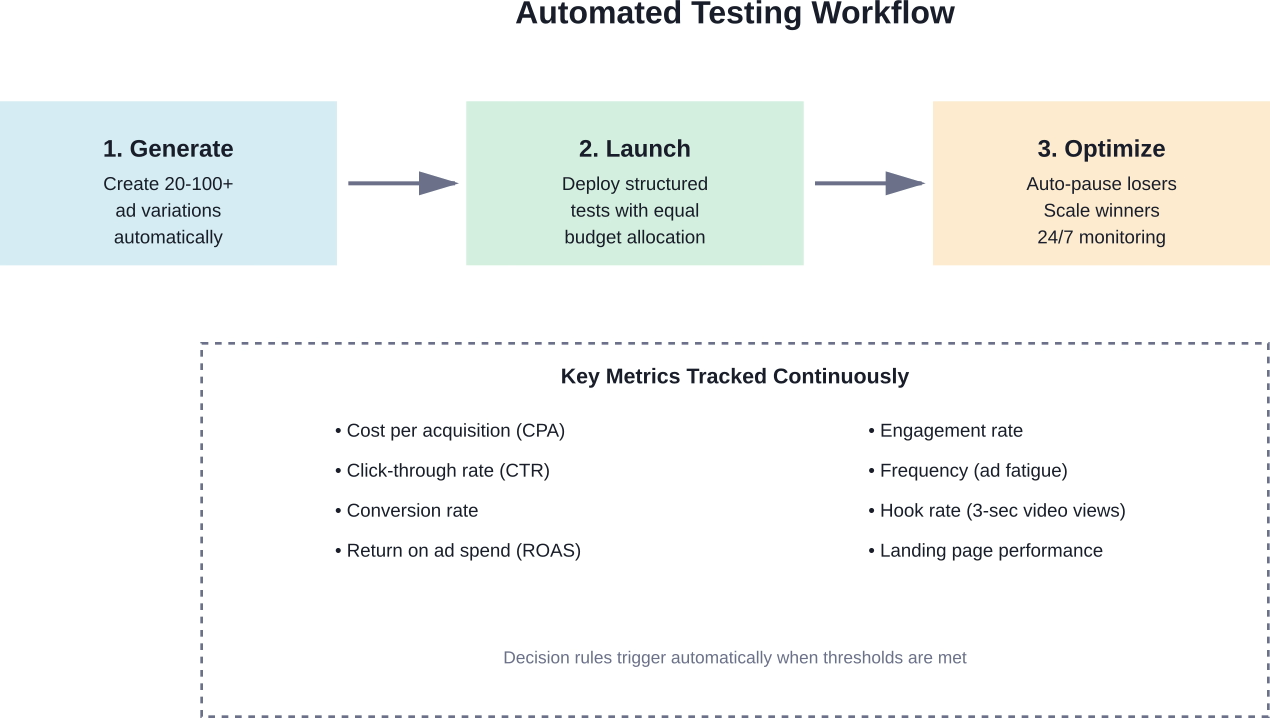
The process breaks down into three core phases: generation, launching, and optimization.
Automation tools generate dozens of ad variations by combining different elements. A single product can spawn 50+ unique ads by mixing headlines, images, body copy, and calls-to-action.
Some platforms use AI to create variations. Others provide templates and batch generation workflows. The goal remains consistent: produce enough creative diversity to test what resonates without spending hours in design tools.
Instead of manually setting up campaigns in Meta Ads Manager, automation tools launch structured tests at scale. This means creating campaign structures, assigning budgets, configuring audience targeting, and activating ads—all through automated workflows.
The testing framework typically follows controlled experiments. Equal budget allocation at the start ensures fair comparison. Statistical significance thresholds determine when to make decisions.
Here's where automation really shines. Tools monitor performance metrics continuously and make budget adjustments based on predefined rules.
Underperforming ads get paused automatically. Winners receive increased budget allocation. The system runs 24/7 without requiring constant human monitoring.
Several platforms specialize in creative testing automation for Meta ads. Each brings different strengths to the workflow.
Pricing varies significantly. Entry-level plans start around $49/month for basic automation, according to AdStellar's pricing structure, while enterprise solutions can exceed $500/month. Most platforms offer free trials to test functionality before committing.
Automation tools handle execution, but strategy still matters. Random testing produces random results.
Start with hypothesis-driven tests. What element likely drives performance? Headlines? Images? Offer positioning? Test one variable at a time when possible to isolate what actually moves metrics.
Meta Ads Manager includes a Creative Testing feature at the ad level that provides native testing capabilities. But many advertisers report better control and insights using dedicated third-party automation platforms.
Statistical significance remains critical. Shutting down tests too early leads to false conclusions. Most experts recommend waiting for at least 50-100 conversions per variation before making final decisions, though this varies by conversion volume and business model.
Automation doesn't mean set-and-forget. Tools require proper configuration and monitoring.
Over-testing dilutes budgets. Launching 100 variations with $5 daily budgets each produces noise, not insights. Focus on quality variations with sufficient budget for meaningful data collection.
Ignoring creative fatigue causes performance decay. Winning ads eventually saturate audiences. Automation should include refresh cycles that introduce new creatives before performance drops significantly.
Trust issues matter more than many advertisers realize. Research from 2020 found that nearly one-third (32%) of US Facebook users at least somewhat disagreed that they had confidence in Facebook to protect their data and privacy. Creative messaging that acknowledges these concerns and builds genuine connection tends to outperform purely promotional content.


