How to Sell eBooks on Shopify Without Overthinking It
Learn how to sell ebooks on Shopify step by step, from setup to delivery, pricing, and promotion, without technical headaches.
Jan 27, 2026



Shopify gets mentioned everywhere, but it’s often described in ways that feel vague or overstated. Some call it an “all-in-one solution.” Others treat it like a shortcut to running a successful business. Neither is fully accurate.
At its core, Shopify is a tool for selling. It gives people a reliable way to set up an online store, take payments, manage products, and keep orders moving without worrying about hosting, servers, or technical maintenance. What it does not do is run the business for you. The strategy, products, pricing, and marketing still sit firmly with the owner.
Understanding what Shopify is used for becomes much easier once you strip away the hype and look at how real businesses actually rely on it day to day.
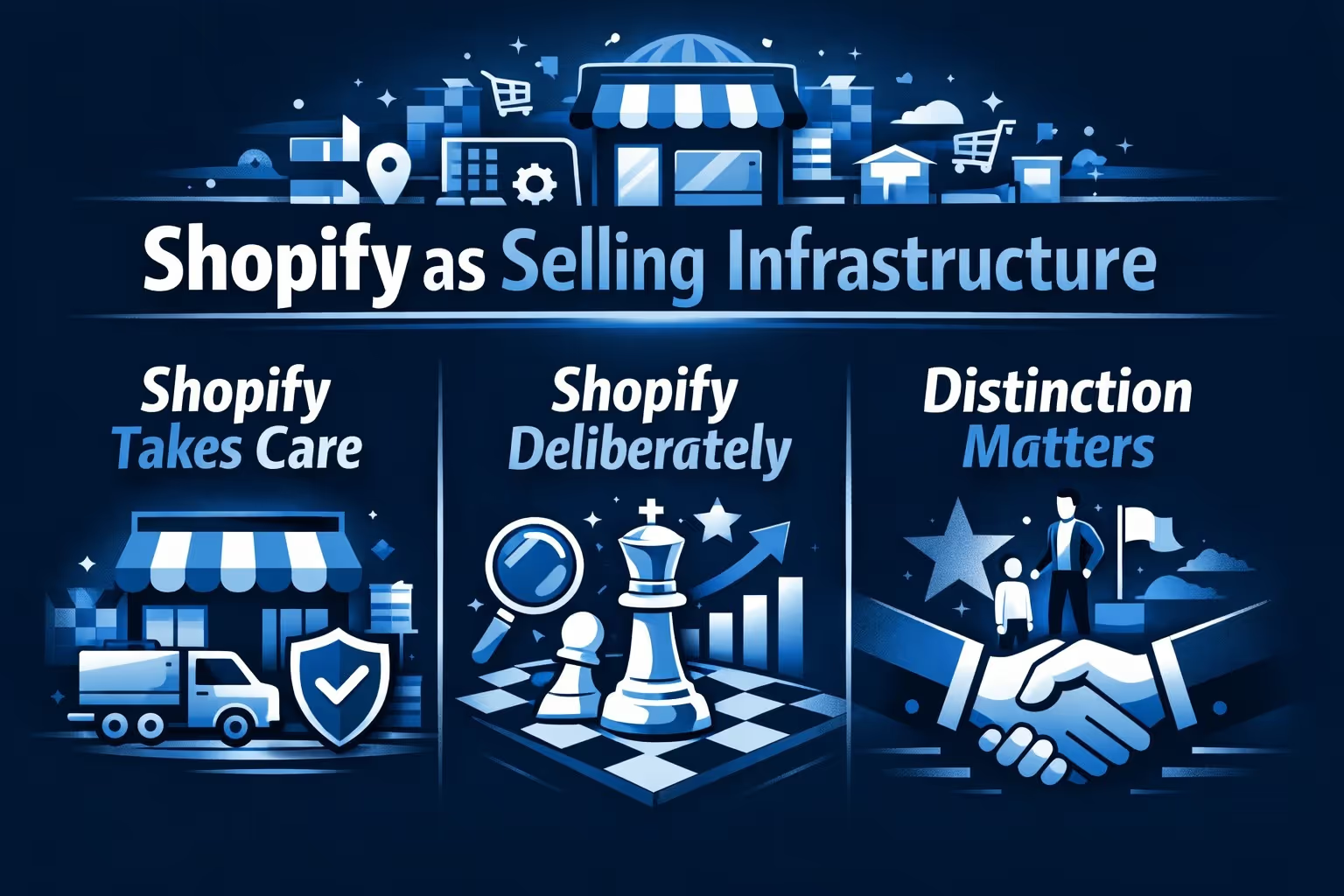
One of the biggest reasons people misunderstand Shopify is because they expect it to behave like a business solution, rather than a selling platform. Shopify is very good at what it is designed to do, but it is intentionally limited in other areas. Understanding that split makes everything else about the platform easier to judge.
Shopify handles the technical foundation that keeps a store running day to day. This includes hosting, security, performance, and updates, all of which happen in the background without user involvement.
It also manages checkout, payment processing, order flow, and basic inventory logic. When traffic spikes, Shopify scales automatically. When security standards change, Shopify updates its systems. When payments need to support new methods, those options are added centrally.
For most businesses, this removes a large category of risk and distraction. You do not need to think about servers, certificates, downtime, or software maintenance. You log in, manage your store, and sell.
Just as important is what Shopify does not attempt to control.
Shopify does not choose what you sell. It does not validate whether your product has demand. It does not write your positioning, create your brand, or bring customers to your store by default.
Marketing, pricing strategy, product selection, and customer experience are left entirely in the hands of the business owner. Shopify provides tools that support these decisions, but it does not make them for you.
This is not a weakness. It is a design choice. Shopify avoids locking businesses into a specific model, which is why it can support everything from a single digital product to a global retail brand.
Many frustrations with Shopify come from expecting it to fill gaps it was never meant to address. When a store does not convert, or ads do not perform, Shopify often gets blamed even though the issue lies elsewhere.
When Shopify is used for what it actually is, a stable selling infrastructure, it tends to perform very well. When it is treated as a business shortcut, disappointment usually follows.
Seeing Shopify as a foundation rather than a promise sets more realistic expectations and leads to better long-term results.

Shopify makes it easy to launch a store. Where many founders get stuck is everything that comes after. Creating ads that actually resonate, knowing which message to lead with, and deciding where to spend budget without burning weeks on guesswork. That gap between launching a Shopify store and finding what truly converts is exactly where we come in.
At Extuitive, we help Shopify brands create, validate, and launch high-performing ads in minutes, not months. Our AI agents are modeled on more than 150,000 real consumer profiles and are built to replace slow, expensive consumer research. Instead of guessing which creative might work, we generate multiple ad concepts, test them against realistic buyer segments, and predict purchase intent before a dollar is spent. You connect your Shopify store, and our system adapts recommendations based on your products, audience, and goals.
What makes this especially valuable for Shopify merchants is speed and clarity. We generate ad creatives, copy, and positioning, validate them through large-scale AI consumer simulations, and help launch ads with confidence. No panels. No long feedback loops. No wasted spend. For growing Shopify businesses, Extuitive becomes the missing layer between having a store and knowing how to market it effectively, with less risk and far more signal.
The most common use of Shopify is also the most straightforward. People use it to build and operate online stores.
Shopify lets you create a website where products are displayed, orders are placed, payments are processed, and customers receive confirmation automatically. Everything is managed through a central admin panel that does not require technical knowledge.
Store owners can:
This is why Shopify appeals to beginners. You do not need to configure hosting, manage servers, or worry about security updates. Those responsibilities are already handled.
At the same time, Shopify does not lock businesses into basic setups. Developers can customize themes, build custom storefronts, or use Shopify purely as a backend. That flexibility allows the same platform to support very different business sizes.
For businesses selling physical goods, Shopify often becomes the operational center.
Inventory updates automatically as orders come in. Products can be grouped into collections. Variants like size or color are handled in a structured way. Shipping labels can be generated directly from the dashboard.
Many merchants connect Shopify to fulfillment services so that packing and shipping happen without manual coordination. Orders flow automatically, reducing errors and saving time.
This setup works well for brands that want to focus on sourcing, branding, and customer experience rather than backend systems. Whether the product is clothing, electronics, home goods, or niche items, Shopify handles the mechanics quietly in the background.
Dropshipping is one of the most discussed uses of Shopify, and also one of the most misunderstood.
Shopify itself does not run a dropshipping business. What it does is integrate easily with tools that connect stores to suppliers. Products can be imported into a Shopify store, orders are forwarded to suppliers, and tracking details are sent back to customers.
This model attracts people because it lowers the barrier to entry. There is no need to buy inventory upfront or manage storage.
However, Shopify does not solve the real challenges of dropshipping. Product quality, shipping speed, refunds, and customer trust are still the responsibility of the store owner. Shopify simply removes friction from setup and order handling.
That is why many people choose Shopify for testing product ideas quickly. It makes experimentation easier, not guaranteed success.
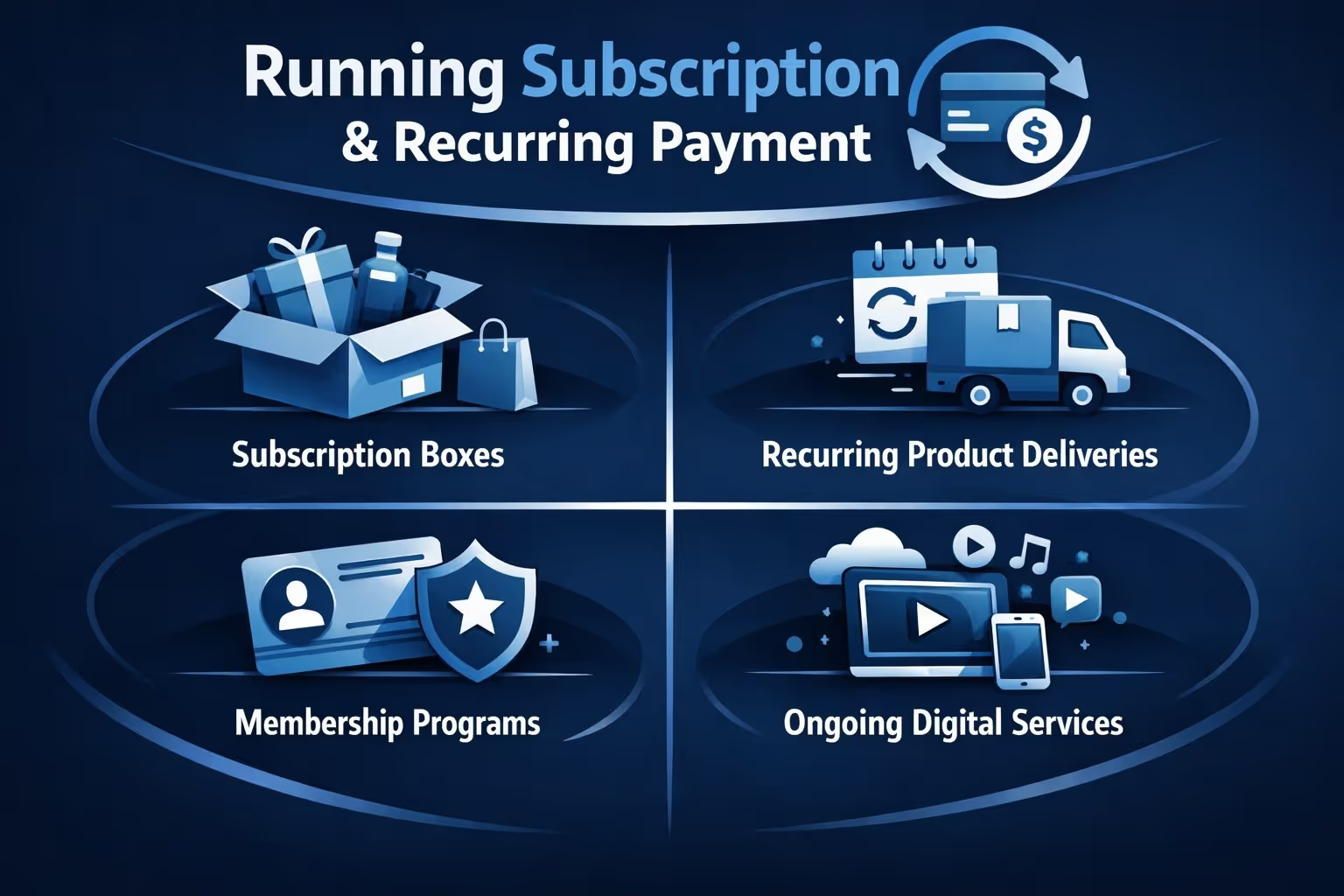
Another growing use of Shopify is for subscription-based businesses.
These include:
Shopify supports recurring payments through the official Shopify Subscriptions app and various third-party specialized apps. Store owners can manage billing cycles, renewals, failed payments, and customer accounts without doing it manually.
Subscriptions appeal to businesses that value predictable revenue. Shopify’s role is not to design the subscription strategy, but to make recurring billing stable once that strategy exists.
Commerce today rarely happens in one place. Customers browse on social media, discover products through ads, and sometimes complete purchases on marketplaces.
Shopify is widely used because it brings these channels together.
From one admin panel, businesses can sell through:
Inventory, orders, and customer data stay synchronized. That reduces the confusion that often comes with managing multiple platforms separately.
For businesses selling in more than one place, Shopify becomes the system of record. This consistency is a major reason people continue using it as they grow.
Shopify is not limited to online sales.
Through Shopify POS, businesses can process in-person transactions at retail stores, pop-up shops, markets, or events. Sales data, inventory, and customer profiles are shared with the online store automatically.
This is useful for brands that operate both online and offline. Customers can buy in-store and receive digital receipts. Inventory stays accurate. Returns and exchanges are easier to manage.
Shopify’s role here is coordination. It keeps online and offline operations aligned.
Although Shopify is often associated with consumer brands, it is also used for wholesale and B2B sales.
Businesses use Shopify to:
Larger companies often rely on Shopify Plus for this, but the core idea remains the same. Shopify provides the structure while businesses define the relationships.
Shopify is not limited to physical products. Many businesses use it to sell digital downloads, online courses, event tickets, consulting services, and access to gated content through a single storefront.
Payments, delivery, and access control can be handled through Shopify and its app ecosystem, which removes the need for custom development or separate platforms. This makes Shopify a practical option for creators and service-based businesses that want a simple, reliable way to monetize their work without turning their operation into a technical project.
Shopify’s popularity is not accidental. Several practical reasons explain why people keep choosing it.
First, it lowers technical risk. Hosting, security, updates, and scalability are handled by Shopify.
Second, it balances simplicity with flexibility. Beginners can launch quickly, while advanced teams can customize deeply.
Third, it scales without forcing migrations. A store can grow from a side project into a high-volume business on the same platform.
Fourth, it has a large ecosystem. Apps, developers, agencies, and integrations are easy to find.
Finally, Shopify stays focused on commerce. Its features are built around selling, payments, and operations.
Shopify is not perfect, and understanding its limits helps avoid disappointment.
There are monthly fees. Many advanced features rely on paid apps. Checkout customization is limited unless you are on higher plans. Transaction fees apply in certain cases.
Most importantly, Shopify does not remove the need for strategy. A weak product or unclear positioning will not succeed simply because it runs on Shopify.
Successful merchants tend to treat Shopify as a tool, not a promise.
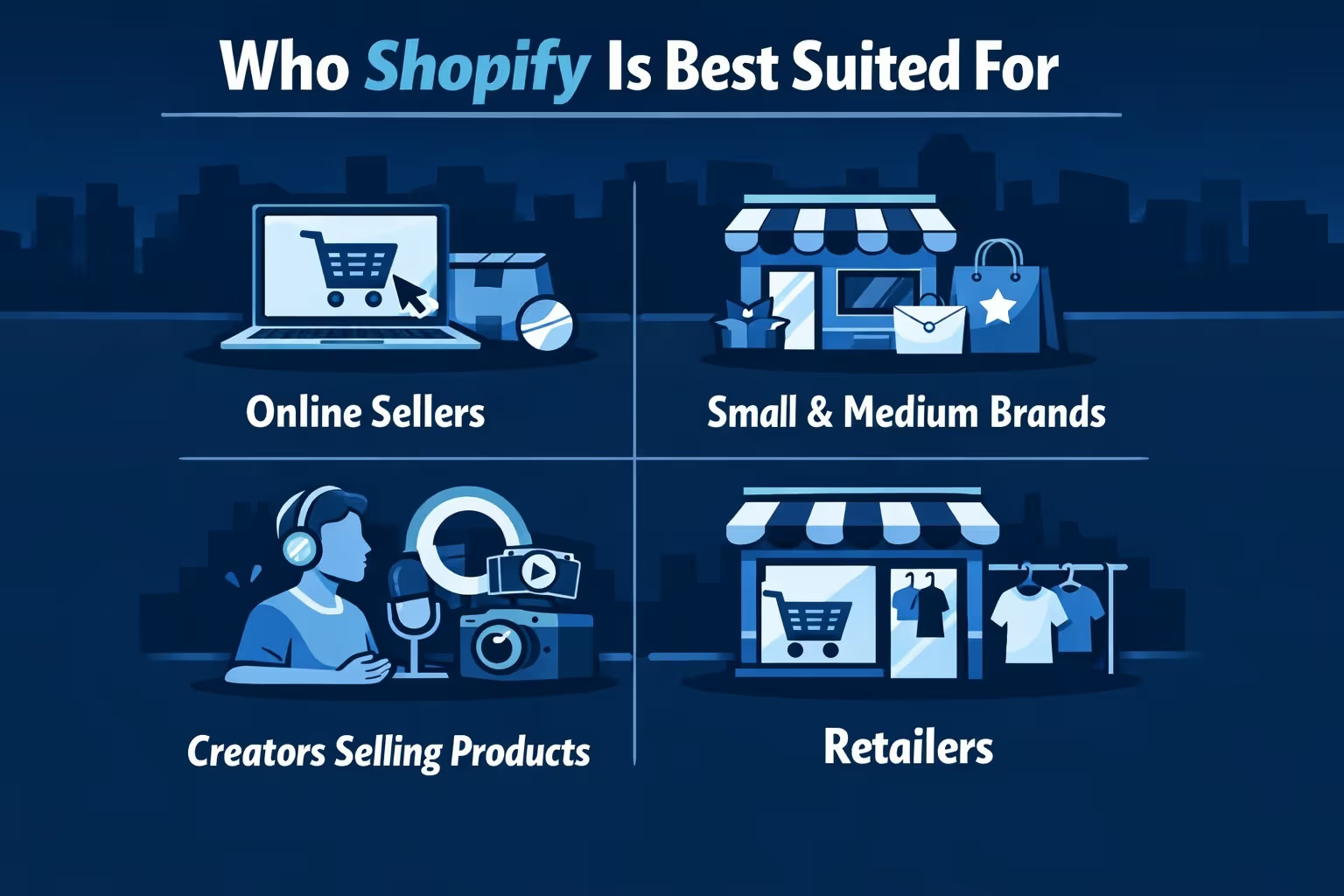
Shopify works best for people who want to focus on building a business rather than maintaining software. It removes many of the technical decisions that can slow progress early on and replaces them with a system that is predictable and easy to manage.
It is a strong fit for:
Shopify may be less suitable for businesses that want full control over every technical detail or prefer fully custom-built systems from day one. Those setups can offer more flexibility, but they also require ongoing development, maintenance, and higher long-term costs.
Shopify is used to sell. That sounds obvious, but it is often buried under marketing language.
It helps people launch stores, manage operations, accept payments, and grow across channels without rebuilding their foundation every year. It does not replace judgment, creativity, or effort.
People choose Shopify because it removes friction from commerce. Not because it guarantees success, but because it makes selling simpler once the real work begins.


