Marketing Ideas for Assisted Living That Drive Occupancy
Discover proven assisted living marketing strategies for 2026. Digital tactics, local events, and engagement ideas that convert prospects into residents.
May 18, 2026



Choosing the right name for an online clothing shop involves finding a memorable, brandable name that reflects your style, niche, and target audience. A strong name should be easy to spell, unique enough to stand out, and legally available for trademark registration. This guide provides creative name ideas across different fashion niches, plus practical strategies for selecting and protecting your brand name.
Naming a clothing business is one of the most critical decisions entrepreneurs make. The name becomes the foundation of brand identity, influences customer perception, and affects everything from marketing to trademark protection.
According to the U.S. Small Business Administration, choosing a business name that reflects your brand identity and doesn't clash with the types of goods and services you offer is important, and protecting that name through proper registration is essential for long-term success.
This comprehensive guide explores hundreds of online shop name ideas for clothes across multiple fashion categories, from streetwear to luxury brands, along with proven strategies for selecting a name that resonates with customers and stands the test of time.
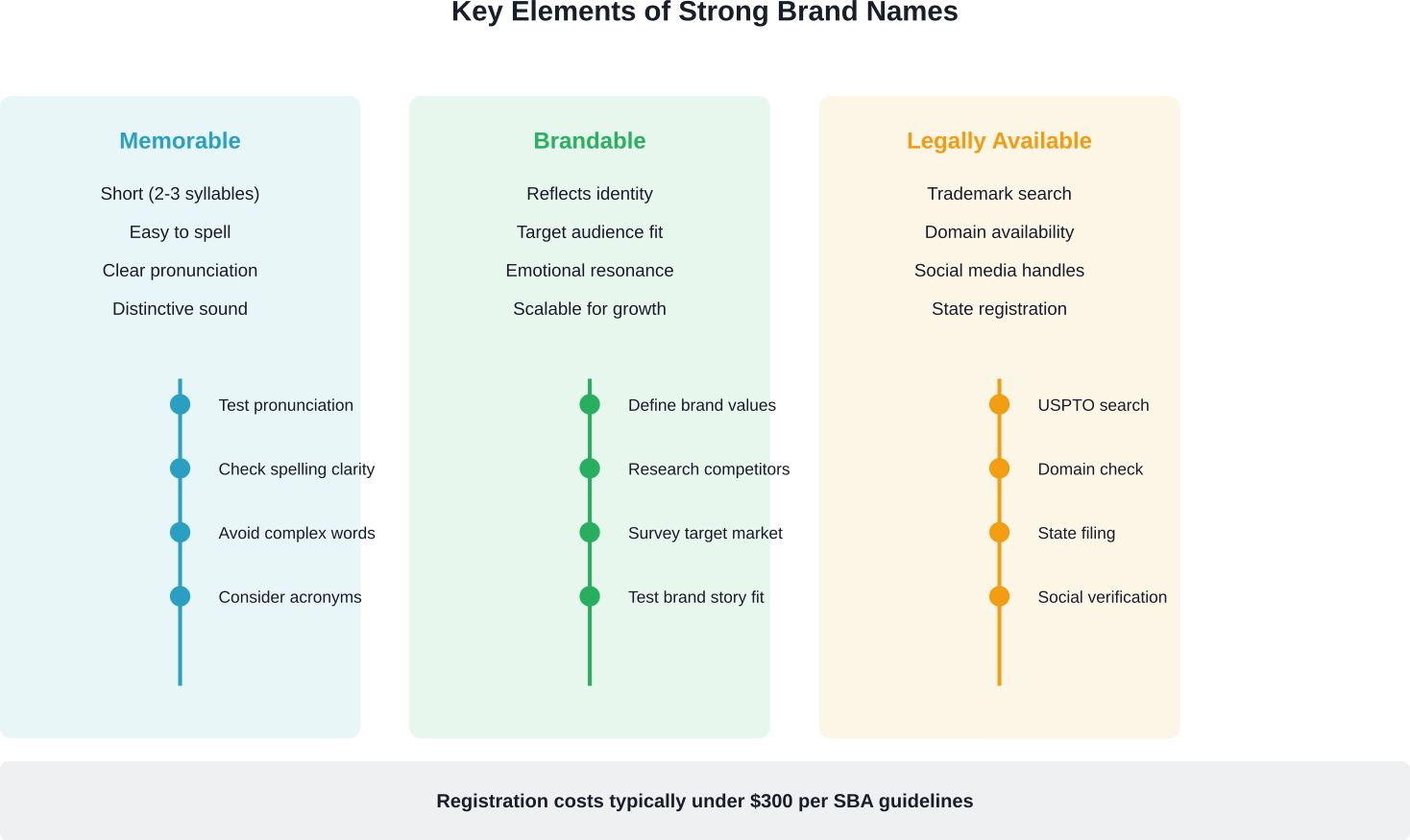
Before diving into specific name ideas, understanding the characteristics of effective brand names helps narrow down options. Great clothing brand names share several common traits that contribute to their memorability and commercial success.
The best clothing brand names stick in customers' minds after a single exposure. Short names with two or three syllables typically perform better than lengthy, complex ones. Pronunciation matters significantly—if potential customers can't say the name confidently, they're less likely to recommend the brand to others.
Names like Zara, Gap, and Nike demonstrate this principle perfectly. They're brief, phonetically simple, and impossible to mispronounce.
According to the U.S. Small Business Administration, you should choose a business name that reflects your brand identity and doesn't clash with the types of goods and services you offer. A luxury fashion brand requires a different naming approach than a casual streetwear label.
The emotional resonance of a name influences purchasing decisions more than many realize. Research from Harvard Business Review shows that when companies connect with customers' emotions, the payoff can be huge, with emotional connections linked to customer value.
Even the most creative name becomes problematic if it's already trademarked or if the domain isn't available. The cost to register a business varies significantly by state and entity type; for example, forming a Corporation or LLC in states like Connecticut, Nevada, or Massachusetts typically exceeds $300 in initial filing fees alone. Protecting a fashion or beauty brand through federal trademarks is particularly important since U.S. copyright protection does not extend to useful objects like apparel.
Women's fashion represents one of the largest segments in online retail, with diverse subcategories ranging from casual wear to formal attire. These name ideas span elegant, modern, and approachable styles.
Additional women's fashion name ideas include Velvet Rose Studio, Aurora Threads, Serene Style Co., Madison & Monroe, Orchid Avenue, Lumina Closet, and Radiant Wardrobe. These names work particularly well for boutiques targeting women aged 25-45 who value quality and personal style.
Men's clothing brands typically emphasize strength, reliability, and timeless style. Successful men's fashion names often use shorter words with strong consonants.
Here are compelling options across different men's fashion categories:
Streetwear continues dominating youth fashion markets globally. According to Wharton School research discussed in authoritative sources, younger consumers crave authenticity and connection in their brands. Streetwear names should feel edgy, authentic, and culturally relevant.
Top streetwear name ideas include Concrete Kingdom, Asphalt Culture, Underground Society, Metro Legends, Block Party Wear, Urban Canvas Co., Street Code Apparel, District Native, Concrete Dreams, City Pulse Threads, Pavement Culture, Block Heritage, Metro Rebel Wear, Urban Echo Co., and Street Identity.
These names work because they capture urban energy while remaining memorable and pronounceable. The single-word or two-word construction makes them ideal for logo design and social media presence.
Luxury fashion requires names that convey exclusivity, sophistication, and timeless elegance. These names often draw inspiration from European languages, rare materials, or abstract concepts of beauty.
Other luxury options include Velvet Dynasty, Opulent Threads, Regal Heritage, Imperial Wardrobe, Aristocrat Collection, Celestial Couture, and Infinite Elegance.
Sustainability has become a major purchasing factor. Research from Wharton School indicates that brands giving customers a voice and aligning with their values see stronger loyalty, particularly among millennials and Generation Z.
Eco-conscious brand names should communicate environmental commitment while remaining stylish: Earth Thread Co., Green Closet Collective, Eco Chic Studio, Sustainable Souls, Planet Wear, Conscious Threads, Nature's Wardrobe, Eco Heritage, Green Horizon Fashion, Earthly Garments, Renewal Threads, Eco Balance Wear, Pure Planet Fashion, Green Legacy Co., and Sustainable Standard.
These names signal environmental values without sacrificing style appeal, making them ideal for brands targeting conscious consumers.
The athleisure market continues expanding as consumers seek versatile clothing that transitions from gym to everyday wear. Fitness brand names should convey energy, performance, and motivation.
Body positivity and inclusive sizing represent significant growth opportunities. Brand names should celebrate all body types without calling excessive attention to size as a limiting factor.
Inclusive fashion names: All Bodies Beautiful, Confidence Threads, Radiant Curves, True Form Fashion, Every Shape Style, Celebrate You Apparel, Empowered Wardrobe, Bold & Beautiful Co., Universal Chic, Inclusive Threads, Body Love Fashion, Curve Collective, All Welcome Wear, Embrace Style Co., and Limitless Fashion House.
Children's apparel names should appeal to both parents (who make purchase decisions) and kids (who influence choices). Playful yet trustworthy names work best.
Consider these options: Little Explorers Wear, Tiny Threads Co., Playful Wardrobe, Wonder Kids Fashion, Growing Style Co., Mini Mavericks, Adventure Ready Kids, Giggle & Grow, Happy Feet Fashion, Cuddle Club Clothes, Bright Beginnings Wear, Joyful Journey Apparel, Small Wonders Fashion, Kiddo Comfort Co., and Sprout Style House.
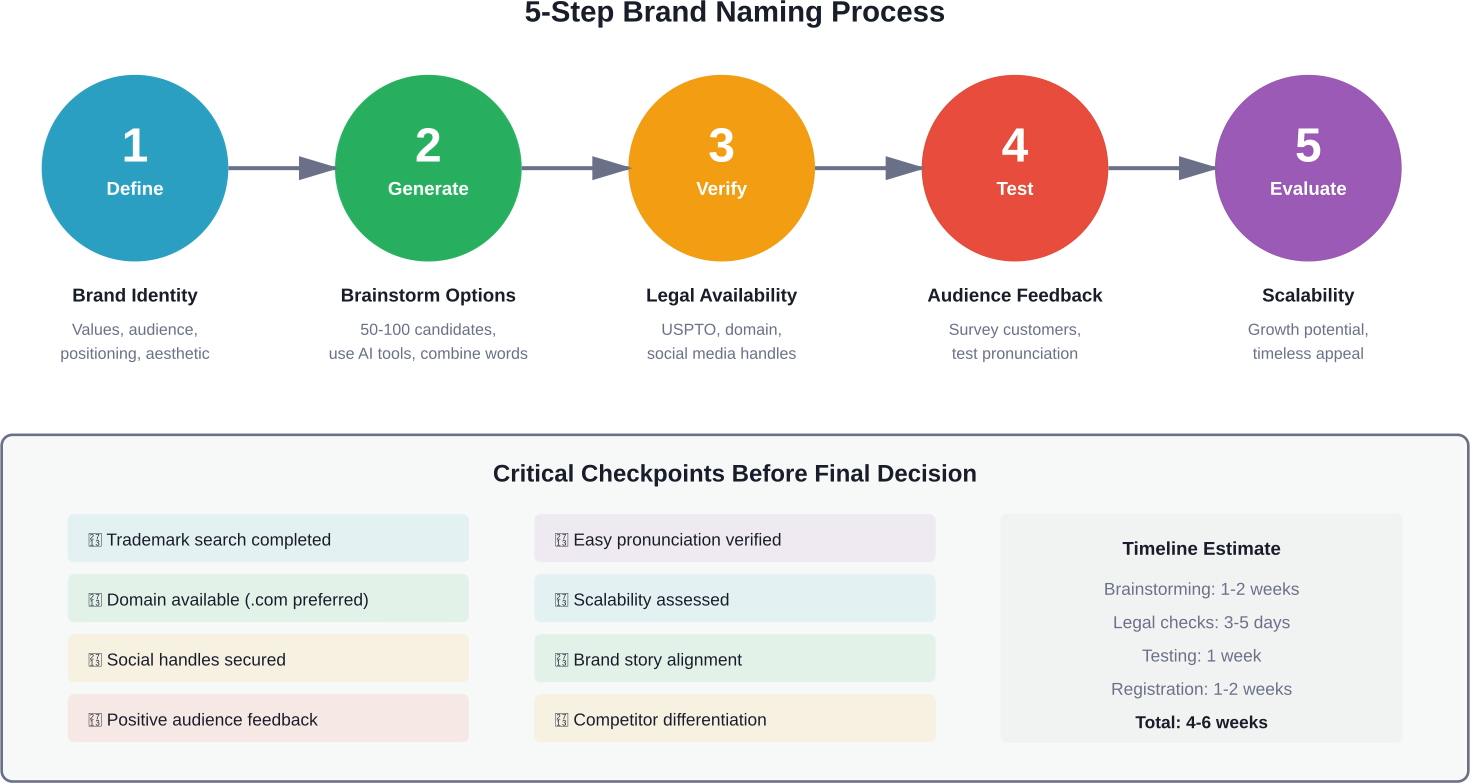
With hundreds of possibilities, narrowing down to a final choice requires systematic evaluation. This process ensures the selected name aligns with business goals and legal requirements.
Before selecting names, clarify what the brand represents. According to Harvard Business Review research on customer emotions, brands that connect with specific emotional motivators see stronger customer relationships and increased value.
Document brand values, target demographic, price positioning, and style aesthetic. This foundation guides name selection toward options that authentically represent the business.
Create an extensive list without self-editing initially. Many experts suggest using AI tools alongside traditional brainstorming. Tools like Shopify's Business Name Generator or Squarespace's AI Business Name Generator can help identify relevant options across categories.
Combine different word types: descriptive words (Urban, Modern, Classic), emotional words (Radiant, Bold, Serene), materials (Cotton, Silk, Steel), and abstract concepts (Momentum, Echo, Nova).
According to the U.S. Small Business Administration, protecting a business name involves registration at multiple levels. The USPTO Trademark Center provides search tools to verify if similar trademarks already exist.
According to the USPTO, the base filing fee for each class of goods or services is $350. For fashion brands, clothing typically falls under Class 25, while retail services may require additional classes.
Beyond trademark searches, verify domain availability and social media handles. Consistent branding across platforms strengthens recognition.
Community feedback provides invaluable insights. Survey potential customers about name preferences, asking specific questions about memorability, pronunciation, and brand perception.
Research from Wharton School emphasizes understanding customer priorities to create experiences that resonate. Names should align with how target audiences see themselves and their aspirations.
Consider whether the name limits future growth. A name like "NYC Streetwear" restricts geographic expansion, while "Urban Standard" remains flexible.
Similarly, overly specific style references might feel dated as fashion trends evolve. Balance distinctiveness with longevity.
A long list of clothing store name ideas helps with inspiration, but it doesn’t show which direction will actually perform once you start running ads. That’s where Extuitive fits. It focuses on predicting ad performance before launch by generating and testing different creatives against AI-simulated consumers, so you can see what’s likely to convert without spending budget first.
Instead of launching campaigns and learning through wasted spend, you get early signals on what’s worth pushing. That means faster decisions and fewer bad bets when you start promoting your store. If ads are part of your growth plan, don’t rely on guesswork – predict your ad performance upfront with Extuitive.
Analyzing established brands reveals patterns in effective naming strategies. Understanding why certain names succeeded provides valuable lessons.
Gap, Zara, and Uniqlo demonstrate the power of short, distinctive names. These brands chose simple words or invented terms that became synonymous with their fashion philosophy.
The brevity makes them easy to remember, pronounce globally, and incorporate into logo design. Research from Harvard Business Review shows that when companies connect with customers' emotions, the payoff can be huge, with emotional connections linked to customer value.
American Eagle, Banana Republic, and Urban Outfitters use descriptive naming that immediately communicates brand positioning. These names tell stories about the brand's identity and target audience.
While longer than minimalist approaches, descriptive names provide instant context for new customers discovering the brand.
Tommy Hilfiger, Calvin Klein, and Ralph Lauren built empires on personal names. This approach works particularly well for luxury and designer brands where the designer's vision and reputation drive the brand.
However, founder names require significant marketing investment to build recognition unless the founder already has name recognition in the industry.
Understanding pitfalls prevents costly rebranding efforts later. These mistakes appear frequently in failed fashion startups.
Names requiring explanation or unusual spelling create friction. If customers can't spell the name after hearing it, they'll struggle to find the website or recommend the brand to others.
Avoid excessive use of silent letters, unexpected letter combinations, or intentional misspellings that seem clever but create confusion.
Names referencing specific cities or regions limit perceived scope. "Brooklyn Threads" sounds local, while "Metropolitan Threads" feels more expansive, even if both operate from the same location.
According to research on omnichannel retail, omnichannel retail represents the future of fashion. Names should accommodate both physical and digital expansion.
Fashion terminology evolves rapidly. Names incorporating current slang or trending phrases risk feeling dated within years. "Swag Clothing Co." already feels anchored to a specific era, limiting longevity.
Failing to conduct thorough trademark searches leads to legal complications. The USPTO provides trademark search tools specifically to prevent conflicts.
Even if direct conflicts don't exist, names too similar to established brands create customer confusion and potential legal challenges. The cost of rebranding after building initial market presence far exceeds upfront trademark research.
Once the perfect name is selected, legal protection becomes essential. According to the U.S. Small Business Administration, there are four different ways to register business names, depending on structure and location.
State business name registration provides basic protection within that state. In most cases, the total cost to register your business will be less than $300, but fees vary depending on your state and business structure.
This registration is typically required to operate legally and open business bank accounts, but it provides limited protection against trademark infringement.
Federal trademark registration through the USPTO offers the strongest protection. According to the USPTO, the base filing fee for each class of goods or services is $350.
For clothing brands, Class 25 covers most apparel items. The USPTO notes that it can be difficult to prevent copycats from imitating the designs of others in the U.S. fashion industry, because U.S. copyright protection does not extend to useful objects like apparel.
Federal registration provides nationwide protection and legal presumption of ownership, significantly strengthening enforcement rights against infringers.
Beyond legal registration, securing matching domains and social media handles prevents brand confusion. Consistency across platforms strengthens brand recognition and makes it easier for customers to find the business.
Consider purchasing multiple domain extensions (.com, .net, .shop) even if only using one primarily, preventing competitors or bad actors from confusing customers.
Selecting the right name for an online clothing shop represents a crucial foundation for brand success. The name influences first impressions, customer memory, legal protections, and long-term scalability.
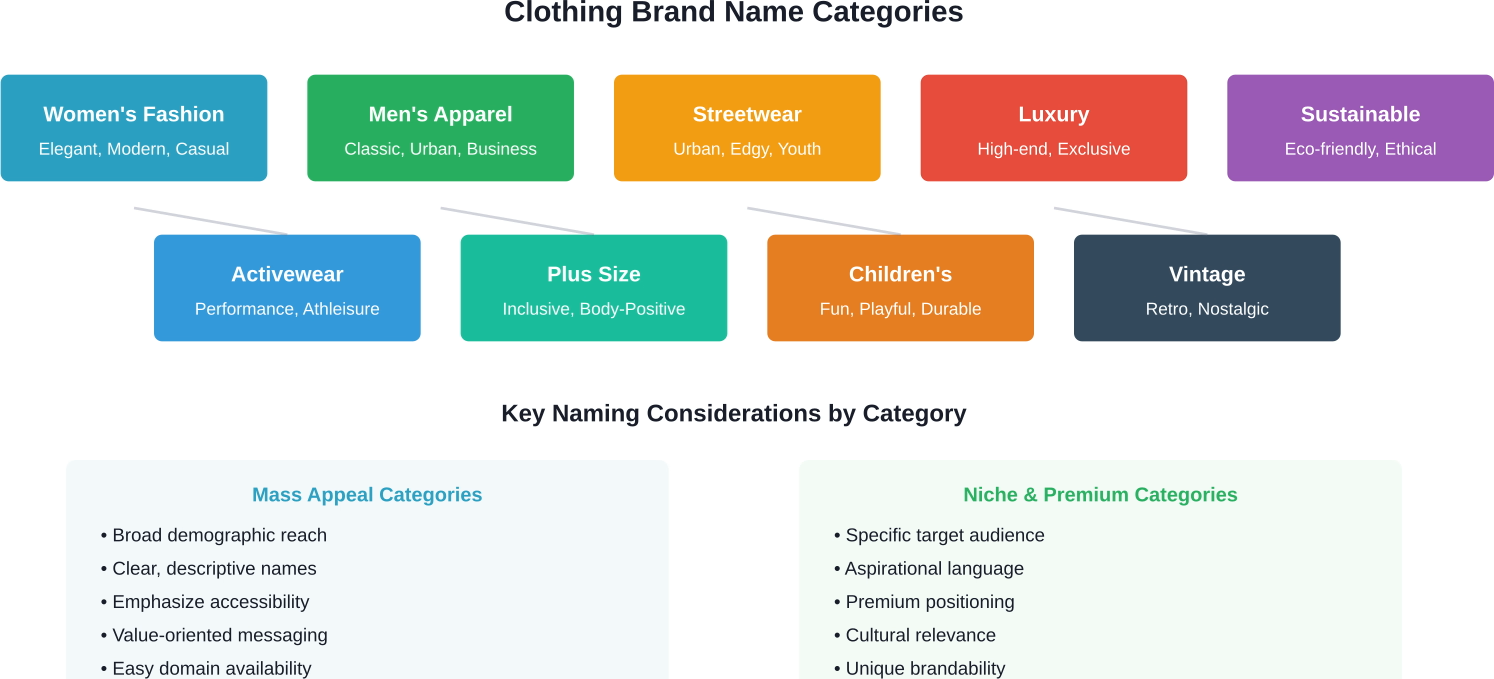
This guide has provided hundreds of name ideas across diverse fashion categories—from women's fashion and men's apparel to streetwear, luxury brands, sustainable fashion, activewear, plus-size clothing, and children's apparel. Each category requires slightly different naming approaches aligned with target audience expectations and brand positioning.
Beyond inspiration, the strategic naming process involves defining brand identity, generating options, conducting thorough legal searches, testing with target audiences, and evaluating long-term scalability. According to the U.S. Small Business Administration, proper registration protects that carefully selected name, with most registrations costing under $300.
Remember that trademark searches through the USPTO, domain verification, and social media handle availability checks prevent costly conflicts later. According to the USPTO, federal trademark registration for clothing brands typically costs $350 per class and provides the strongest legal protection.
Real-world examples from successful brands demonstrate that both minimalist names like Gap and descriptive names like Urban Outfitters can succeed with proper execution. The key lies in alignment between name, brand identity, and consistent customer experience.
Common mistakes—overly complex spelling, geographic limitations, trend-dependent language, and trademark conflicts—can be avoided through careful planning and research. The time invested in selecting the right name pays dividends through stronger brand recognition and reduced legal complications.
Whether launching a sustainable fashion line, luxury boutique, or streetwear brand, the perfect name exists within these ideas or will emerge through the strategic process outlined here. The naming journey represents not just a business necessity but an opportunity to crystallize brand vision into a single powerful word or phrase that resonates with customers for years to come.
Start by defining brand values, generate extensive options, verify legal availability, and test with real customers. The investment of 4-6 weeks in proper name selection and registration establishes a solid foundation for everything that follows in building a successful online clothing business.


