How Does Shopify Make Money? A Simple Breakdown
A clear look at how Shopify makes money, from subscriptions to transaction fees and merchant tools that scale with store growth.
Jan 26, 2026



If you ask someone when Shopify started, you’ll usually hear a quick answer: 2006. That answer is technically correct, but it misses the most interesting part of the story. Shopify did not begin as a polished tech startup with investors, pitch decks, or grand ambitions to reshape global commerce. It began as a practical solution to a frustrating problem faced by three friends who simply wanted to sell snowboards online. This article explains when Shopify started, why it started, and how its early decisions shaped what it is today. The focus stays tight on the origin story, early milestones, and the context that made Shopify possible, without repeating surface-level summaries you have likely seen elsewhere.
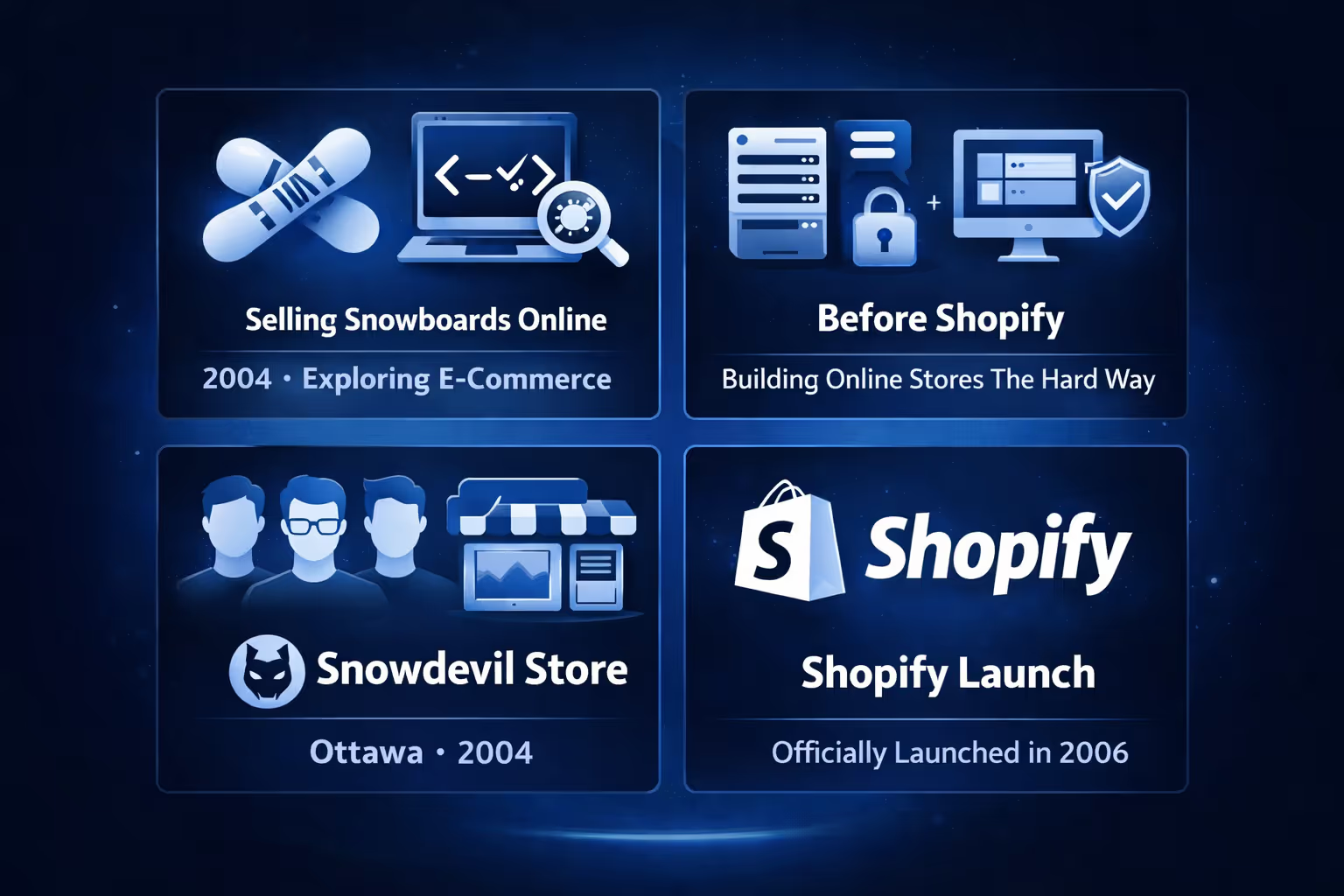
Shopify officially launched as an e-commerce platform in 2006. However, the real beginning of Shopify traces back to 2004, when its founders started building an online snowboard store and discovered that existing e-commerce software simply did not work the way they needed it to. To understand Shopify’s true start date, you need to understand both years.
In the early 2000s, selling products online was far more complicated than it is today. Tools that are now taken for granted simply did not exist in a unified form.
Merchants typically had to:
Content platforms like WordPress were becoming easier to use, but e-commerce lagged behind badly. Online selling was fragmented, expensive, and technical. This gap in the market created the conditions that made Shopify possible.
Shopify’s story begins in Ottawa, Canada, in 2004. Three friends, Tobias Lütke, Daniel Weinand, and Scott Lake, wanted to launch an online store selling snowboarding equipment, which they named Snowdevil. This was not a side project or a casual experiment. They were serious about building a real online business. The problem they quickly ran into was simple but stubborn: none of the existing e-commerce platforms could do what they needed them to do.
At the time, available e-commerce solutions were rigid, slow, and difficult to customize. They forced technical compromises that made little sense for a small but serious online business. Some platforms emphasized templates but sacrificed flexibility. Others were powerful on paper yet required heavy technical expertise to operate and maintain. None offered a clean, all-in-one system that balanced ease of use with real control.
Rather than forcing Snowdevil to adapt to someone else’s limitations, Tobias Lütke made a different choice: build exactly what they needed themselves. That decision quietly set everything in motion.
Lütke was a programmer who believed software should be simple, elegant, and designed around real users. Using Ruby on Rails, a relatively new framework at the time, he built a custom e-commerce system specifically for Snowdevil.
The system handled everything a merchant needed:
What mattered was not sophistication for its own sake, but practical usefulness. The software worked exactly the way a merchant expected it to work. After roughly two months of development, Snowdevil launched. The store sold real products to real customers using software that didn’t yet have a name. That software became the foundation of Shopify.
One often-overlooked detail in Shopify’s history is that the first product ever sold using Shopify’s technology happened before Shopify was a company. That product was snowboarding equipment sold through Snowdevil. This matters because Shopify was tested in real commercial conditions from the start. It was not built in isolation or theory. It was built by merchants, for merchants, because its creators were merchants themselves. This practical origin explains much of Shopify’s long-term philosophy.
After Snowdevil launched, something unexpected happened. Other business owners began noticing how smooth the store experience was and started asking questions. Could the same system work for their own stores? Could it be reused beyond snowboarding gear?
This was the moment the founders realized they had built more than a single online shop. The software behind Snowdevil was solving a broader problem by making online selling accessible without taking control away from merchants. That realization changed the direction of everything that followed.
In 2006, the team decided to release their internal e-commerce system as a standalone product, marking the official start of Shopify as a platform. The company initially operated under the name Jaded Pixel before adopting the name Shopify, chosen to reflect the simplicity of setting up and running an online store. The launch itself was quiet and deliberate. Rather than chasing attention, Shopify entered the market focused on building a stable, reliable product, a choice that would shape its growth in the years ahead.
When Shopify launched in 2006, it entered a market filled with e-commerce tools, but few of them were built with merchants in mind. Shopify stood out by offering a fully hosted solution that removed the need for server management, technical maintenance, or complex setup. Payments and checkout were built in, templates were flexible without requiring heavy coding, and the platform prioritized merchant experience over developer convenience.
More importantly, Shopify was designed to scale. Businesses could start small and grow over time without rebuilding their store or switching platforms. This kind of long-term thinking was uncommon in e-commerce software at the time and quickly became one of Shopify’s defining strengths.
Shopify’s early growth was steady rather than aggressive. The platform attracted small and mid-sized businesses looking for reliability and simplicity, not hype. Instead of chasing rapid expansion, Shopify focused on refining the product and responding to real merchant needs.
By 2009, merchants on Shopify had generated over $100 million in combined sales. That same year, Shopify launched its API, allowing developers to extend the platform and tailor it to different business models. This move quietly set the foundation for the app ecosystem that would later become central to Shopify’s growth.
The launch of Shopify’s API in 2009 marked an important shift in how the company thought about growth. Shopify stopped being just a piece of software and became a platform others could build on.
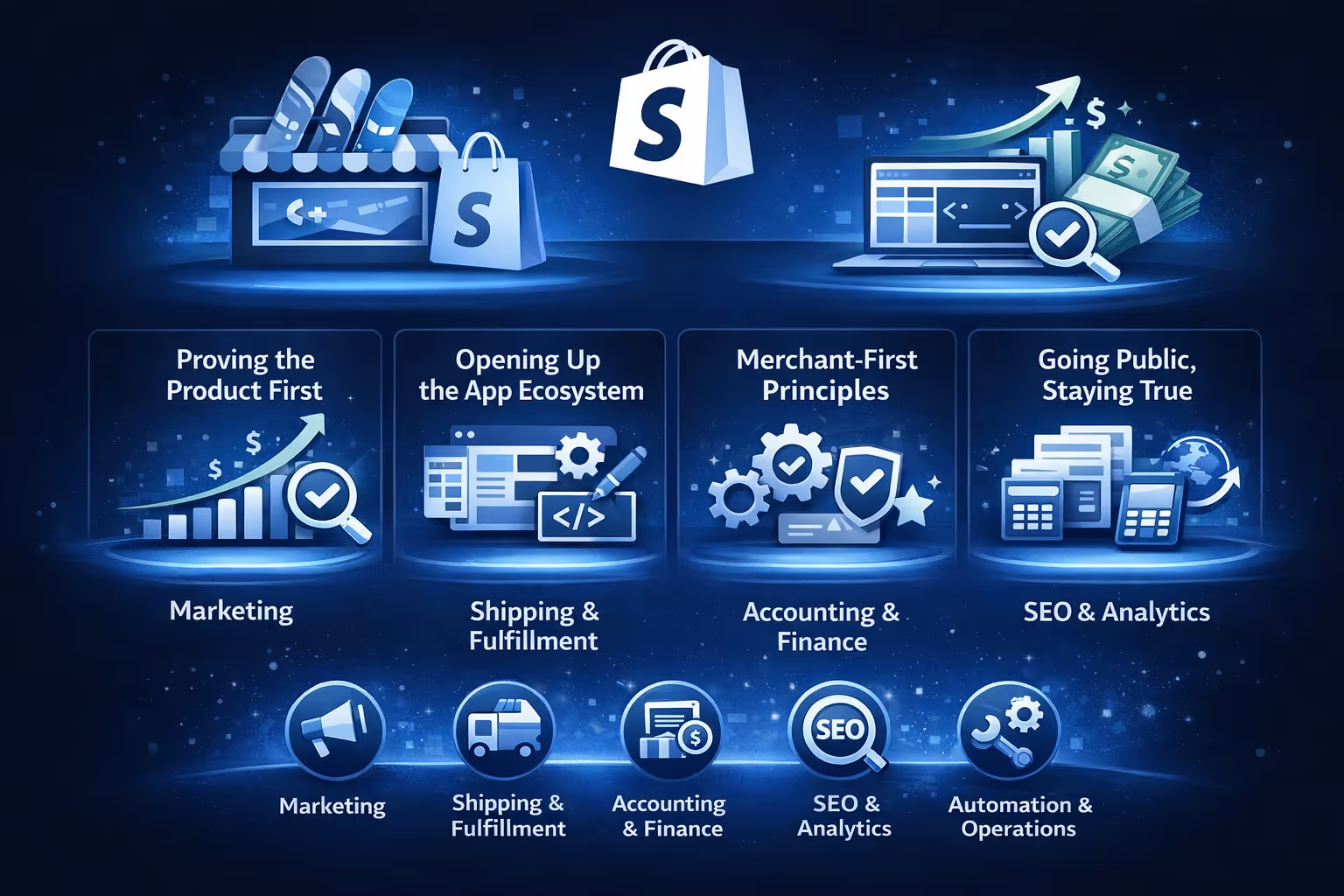
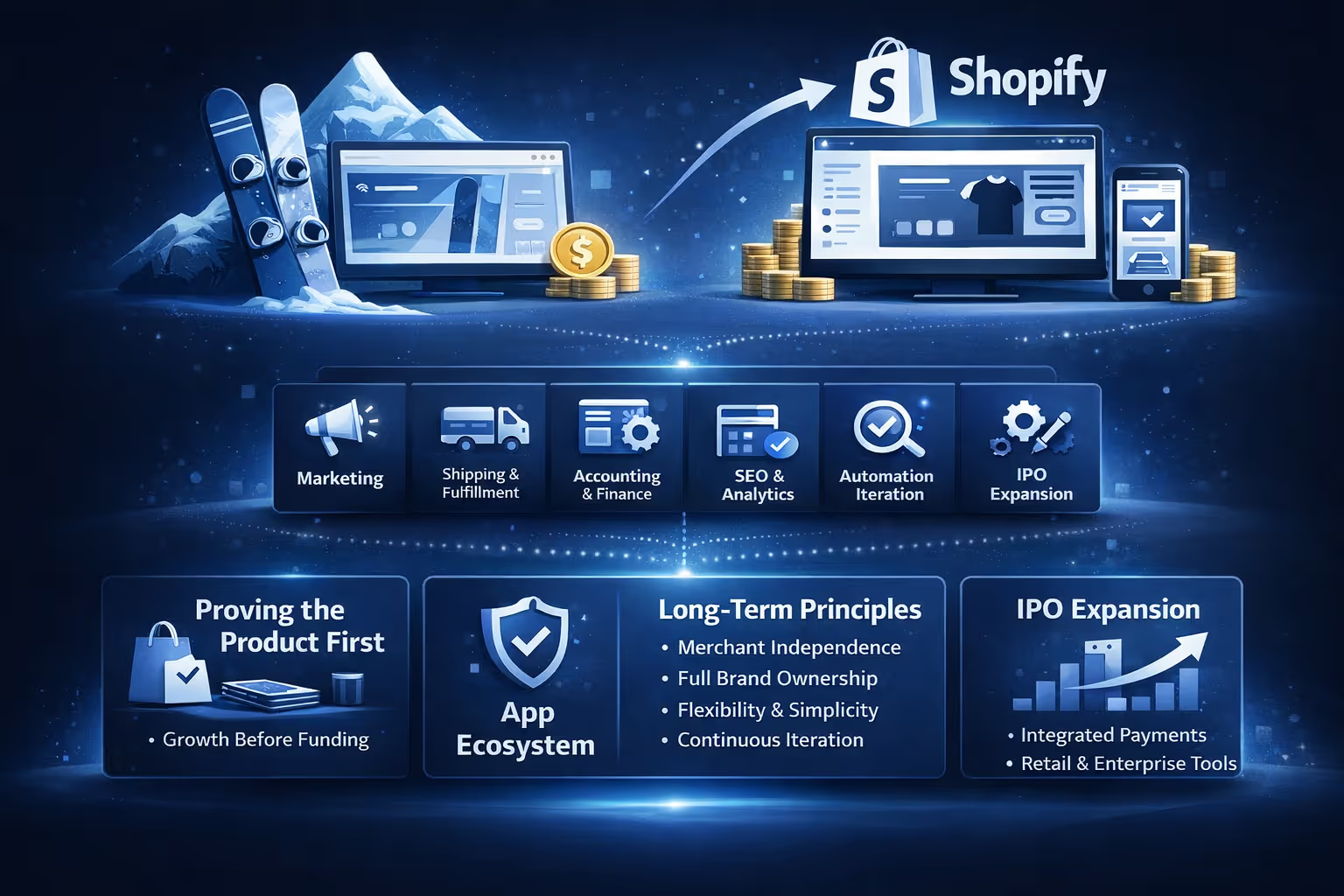
Instead of trying to cover every possible use case internally, Shopify opened the door to developers. This allowed merchants to extend their stores with apps for:
This approach reflected a mindset that existed from the very beginning: keep the core product clean and simple, and let the ecosystem handle the rest. That philosophy came directly from Shopify’s origins as a tool built by merchants who understood that no two businesses operate the same way.
Unlike many startups that prioritize raising investment early, Shopify focused on proving the product first. By the time the company raised its Series A funding round in 2010, securing $7 million, the platform was already stable and fully functional. Merchants were actively selling real products, and revenue was already flowing through the system. This order of events mattered because it showed that Shopify was built around solving real merchant problems rather than meeting investor expectations. Funding arrived as fuel for growth, not as a replacement for product-market fit.
Because Shopify started as a merchant-built tool rather than a corporate product, certain principles became part of its DNA early on and never left.
These included:
Each of these ideas can be traced back to Snowdevil and the frustrations that pushed its founders to build something better.
When Shopify went public in 2015, its role in global commerce expanded dramatically. The company added new layers to the platform, including:
Yet despite this growth, Shopify never repositioned itself as a marketplace competing with its merchants. It continued to frame itself as infrastructure for entrepreneurs, the same way it had from the start.
That positioning did not begin at the IPO. It started back in 2004, when three founders built a tool to sell snowboards and accidentally laid the groundwork for a global commerce platform.

Looking at how Shopify started helps explain why tools like Extuitive exist today. Shopify was built to remove friction for merchants and give them control without forcing them to become technical experts. That same philosophy shows up in the ecosystem that has grown around the platform. We now have access to tools that solve problems Shopify was never meant to handle directly, while still fitting naturally into how Shopify stores operate.
Extuitive is a good example of how far that ecosystem has come. Instead of guessing which ads might work or burning budget on trial and error, we can validate creative ideas and audience fit before launching campaigns. By connecting directly to a Shopify store, Extuitive helps us move faster from idea to execution, staying aligned with Shopify’s original promise: let merchants focus on growth while the tools handle the complexity in the background.
Many articles and summaries simplify Shopify’s history in ways that create confusion. Let’s clear that up directly.
So when someone asks when Shopify started, the most accurate answer depends on context.
If you mean:
Both answers are correct.
Timing played a major role in Shopify’s creation. In the early 2000s, web technologies were becoming more flexible, small businesses were starting to take online selling seriously, and existing e-commerce platforms were struggling to keep up with real merchant needs. Shopify emerged at the exact moment when e-commerce needed simplification without sacrificing power. Had it launched earlier, the tools were not ready. Had it launched later, the space would have been far more crowded.
That timing still shows in how Shopify operates today. The platform continues to reduce friction for merchants, preserve control without adding unnecessary complexity, and adapt quickly as commerce evolves. These priorities are not marketing slogans added later. They are direct extensions of the same mindset that shaped Shopify from the beginning.
If you want the clean answer, Shopify launched in 2006. But if you want the honest one, it really started earlier, back in 2004, when three founders were just trying to sell snowboards online and ran into software that didn’t do the job.
That difference is important. Shopify wasn’t born from a grand plan to build a global platform. It grew out of a real business, real frustrations, and real sales happening online before anyone thought of calling it a startup. The company didn’t rush to scale or chase funding. It focused on making something that worked, then letting it grow naturally.
That early mindset still shows today. Shopify remains practical, flexible, and merchant-first because it was built that way from the beginning. Understanding when Shopify started helps explain why it became so widely trusted and why it continues to evolve without losing sight of who it’s built for.


