Does AI Believe in God? Consciousness vs Computation
Can artificial intelligence have religious beliefs? Explore what AI actually does when discussing God, the consciousness debate, and why machines can't truly believe.
Apr 16, 2026



When people ask what they can sell on Shopify, they’re often expecting a short list. T-shirts, candles, maybe dropshipping products. That’s the usual picture. In reality, Shopify is much broader than most people realize, and that’s where many good ideas get missed.
At its core, Shopify is not limited to physical inventory or traditional online stores. It’s a commerce platform, which means it’s built to handle transactions in many forms. Products, yes, but also services, bookings, digital files, subscriptions, and even things that don’t look like “products” at all.
This article breaks down what you can sell on Shopify in practical terms. No hype, no edge cases you’ll never use. Just real examples of how people actually use the platform, and what tends to work depending on your goals, skills, and setup.
Shopify treats everything you sell as a product, even when it does not look like one. A haircut appointment, a downloadable file, a coaching call, and a physical item all move through the same system: product page, checkout, payment, fulfillment.
This matters because it shapes what works well on the platform.
Anything that can be clearly defined, priced, purchased, and delivered in a predictable way fits Shopify naturally. Anything that relies on vague scope, constant negotiation, or heavy customization tends to fight the system.
That is the lens to keep in mind as we move through different categories.

Understanding what Shopify treats as a product is only half of the equation. The harder part is deciding which of those ideas is worth backing with time, money, and attention. That is exactly where we come in.
At Extuitive, we help Shopify merchants pressure-test product ideas and ad concepts before they commit. Instead of guessing which product, message, or angle might work, we simulate real consumer reactions using our AI-driven consumer models. These agents are trained on real behavioral data and represent hundreds of thousands of realistic buyer profiles, not abstract personas.
For Shopify sellers, this changes the decision-making process. You can validate whether a physical product, a digital offer, a subscription, or a service actually resonates before you spend weeks building pages or burning ad budget. We show which messages trigger interest, which price points feel acceptable, and which ideas quietly fall flat. All of that happens in minutes, not months.
We are especially useful when the question is not just “what can I sell,” but “what makes sense to sell right now.” Whether you are choosing between product categories, refining a value proposition, or deciding if a new offer is worth launching, Extuitive helps remove guesswork from the process. You get clearer signals, faster feedback, and more confidence that what you are putting into Shopify has a real chance to convert once it goes live.
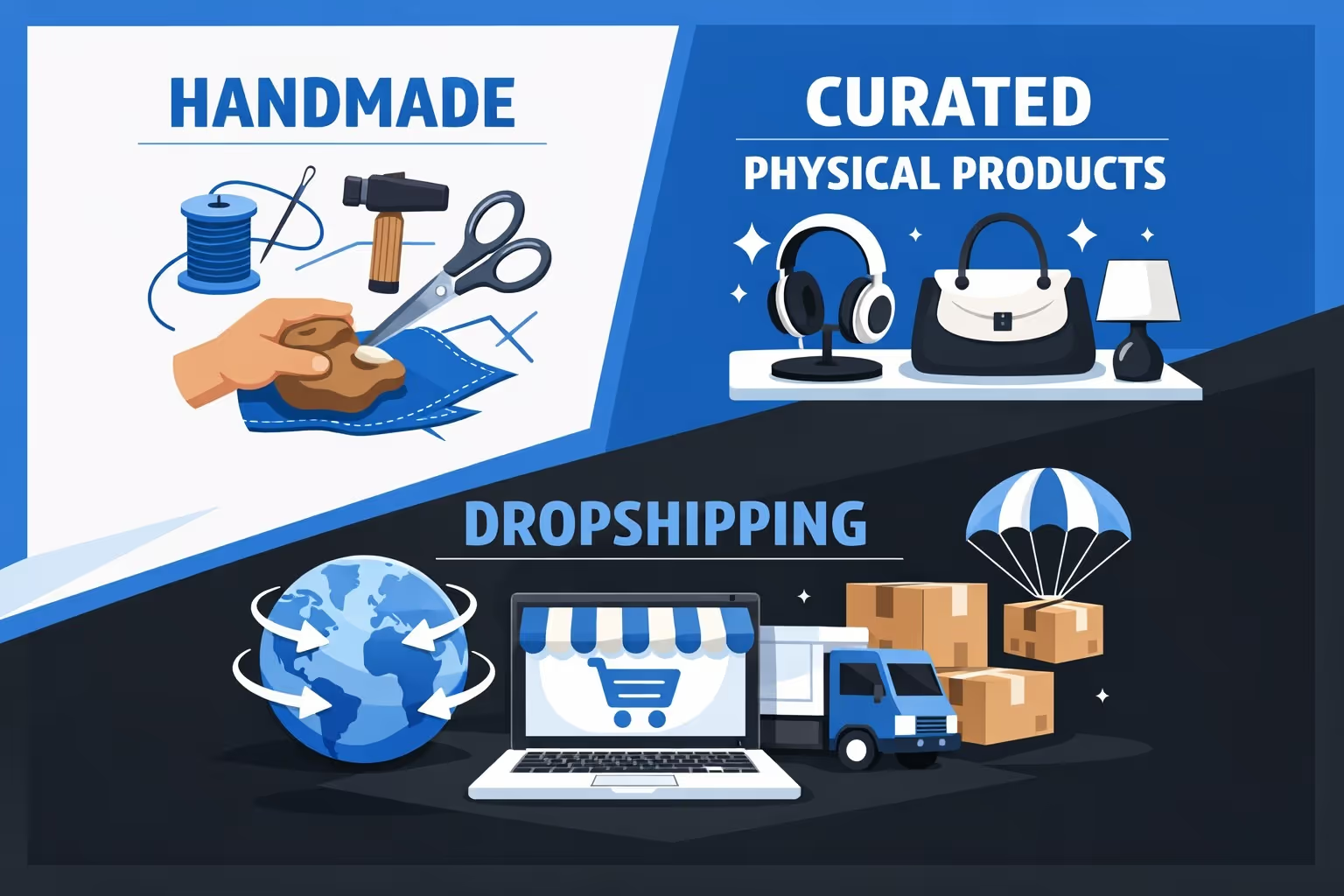
Handmade products are one of the most common entry points into Shopify, especially for people turning a hobby into a business. Jewelry, ceramics, art, specialty food, custom apparel, and home goods all fall into this category.
This model makes sense when craftsmanship is visible and valued. Customers are not just buying the object. They are buying the story, the care, and the sense that the item was made by a real person.
Where handmade businesses struggle is pricing and scale. Many founders underprice because they compare their work to mass-produced alternatives. That usually leads to long hours, thin margins, and burnout.
Handmade works best when:
It becomes difficult when every sale feels like starting from zero again.
Curated stores sit between handmade and traditional retail. You are not making the products, but you are making the selection. That selection is the value.
This approach works when your taste, expertise, or point of view is strong. For example, skincare for a specific condition, tools for a particular profession, or gifts designed around a very narrow audience.
It fails when the curation is shallow. If customers cannot tell why you chose these products instead of hundreds of others, the store feels interchangeable. Interchangeable stores compete on price, and price is rarely a comfortable place to live.
Curation is not about having fewer products. It is about having a reason for each one.
Dropshipping is often marketed as the easiest way to start because it removes inventory and shipping from your workload. That part is true. What usually gets left out is how competitive the space is.
Dropshipping works when treated as a brand, not a shortcut. Stores that succeed invest in messaging, positioning, and customer trust. Stores that rely on copying ads and swapping products rarely last long.
This model makes sense if you are willing to:
It makes less sense if your plan depends entirely on finding the next viral product.
Print on demand sits close to dropshipping but behaves differently in practice. Here, the product itself is secondary. The design, message, or identity is what customers are buying.
This works well for creators, communities, and brands with a clear voice. Musicians, artists, influencers, and niche communities often use print on demand to give their audience something tangible.
It struggles when designs are generic or disconnected from a real group of people. Uploading slogans and hoping traffic appears rarely works.
Print on demand is not passive income. It is creative work paired with consistent marketing.
Digital products are attractive because they remove many logistical headaches. No shipping, no inventory, instant delivery. But that simplicity raises expectations.
Customers expect clarity, usefulness, and trust.
Templates, guides, planners, and resources can sell very well when they solve a specific problem. Broad, generic digital products struggle because free alternatives are everywhere.
Digital downloads make sense when:
They struggle when the value proposition is vague or inflated.
Courses are popular for a reason. They scale well and can create meaningful income. But they only work when the creator brings real experience or insight.
A course makes sense if you can teach from lived experience, not just research. People buy clarity, not information alone.
Courses fail when they promise too much, feel rushed, or lack support. Shopify supports course delivery well through apps, but the platform cannot fix weak content.
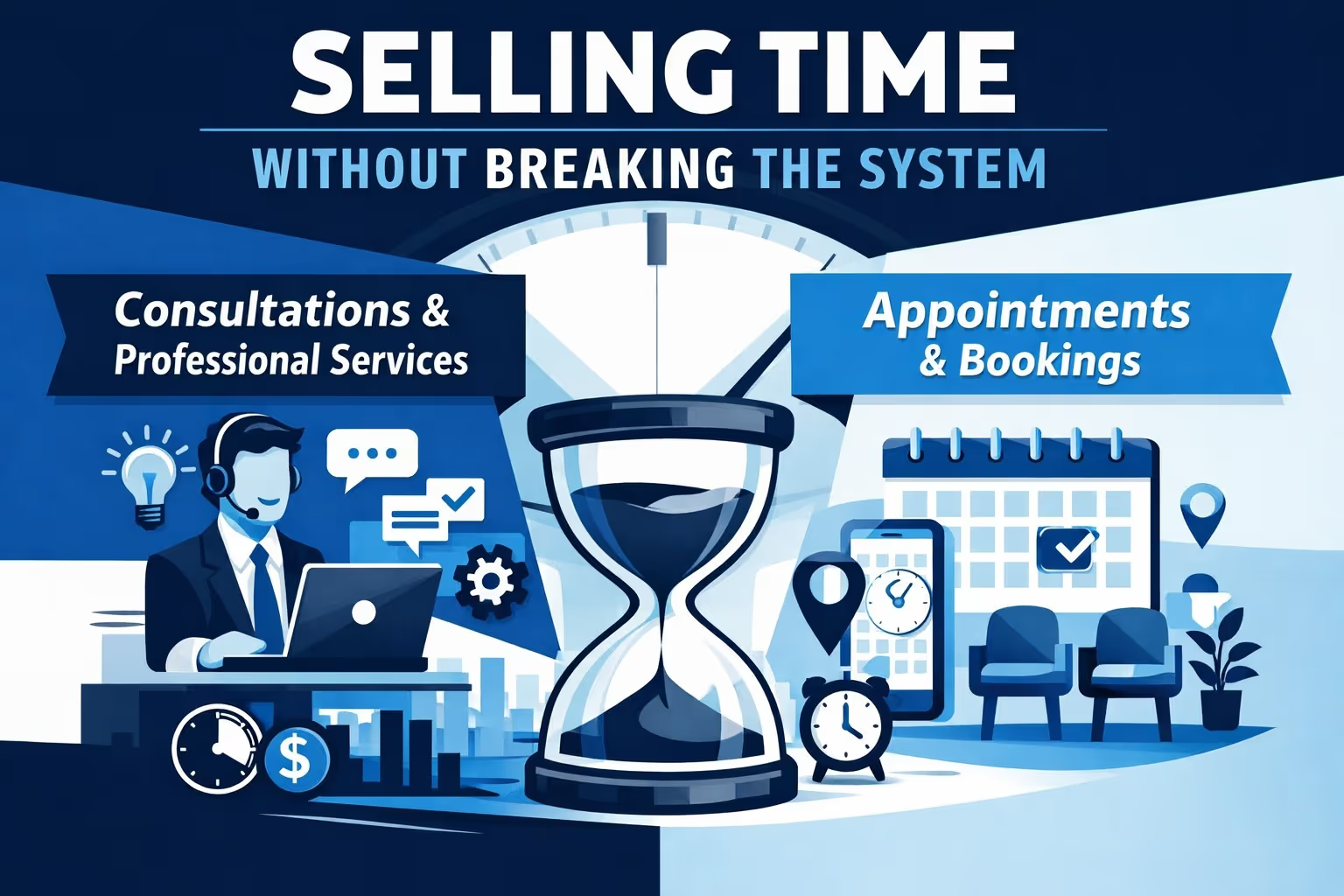
Shopify is often overlooked as a platform for services, but it works surprisingly well when used intentionally.
Consultants, coaches, and freelancers can use Shopify to sell clearly defined service packages. This removes friction from invoicing and booking while setting expectations upfront.
Services sell best on Shopify when:
It becomes messy when everything is custom and undefined.
Time-based businesses benefit from online booking because it reduces back-and-forth communication. Salons, tutors, trainers, and repair services often see smoother operations with self-serve scheduling.
This model fits best when availability matters and services are standardized. For highly custom projects, quote-based systems usually work better.
Recurring revenue sounds attractive, and it can be. But memberships are not just a billing model. They are a promise.
Memberships work when there is a clear reason to stay subscribed. That reason might be content, access, savings, or community.
They fail when the value is front-loaded and forgotten.
Subscriptions require consistency. If you enjoy building long-term relationships with customers, this model can be powerful. If not, it can feel heavy.
Selling access instead of objects changes the dynamic. Experiences often carry higher perceived value, but also higher expectations.
Shopify works well for:
This model succeeds when logistics are clear. Dates, locations, policies, and communication need to be handled carefully. Ambiguity creates stress for both seller and buyer.
Nonprofits and mission-driven brands often use Shopify as a simple, reliable way to accept donations or sell products that support a specific cause. Because the checkout experience is familiar and secure, people are more comfortable contributing, especially when they already trust the organization behind it.
This model works best when the purpose is clear and the impact is easy to understand. Donors want to know where their money goes and why it matters, even if the contribution is small. Clear messaging, visible outcomes, and straightforward reporting build confidence over time.
Donations start to feel awkward when they are added as a side note or a generic button without context. If a cause is central to your brand, it should be reflected across the store, not tucked away on a single page. When done thoughtfully, Shopify can support both fundraising and cause-based sales without making the experience feel transactional or forced.
Just because Shopify supports a certain type of product does not automatically make it a good fit for most sellers. The platform is flexible, but flexibility can hide risk, especially for first-time or small teams.
Common problem areas include:
A simple test helps here. If you struggle to explain what you are selling to a friend in one or two sentences, selling it online will likely be harder than it looks.
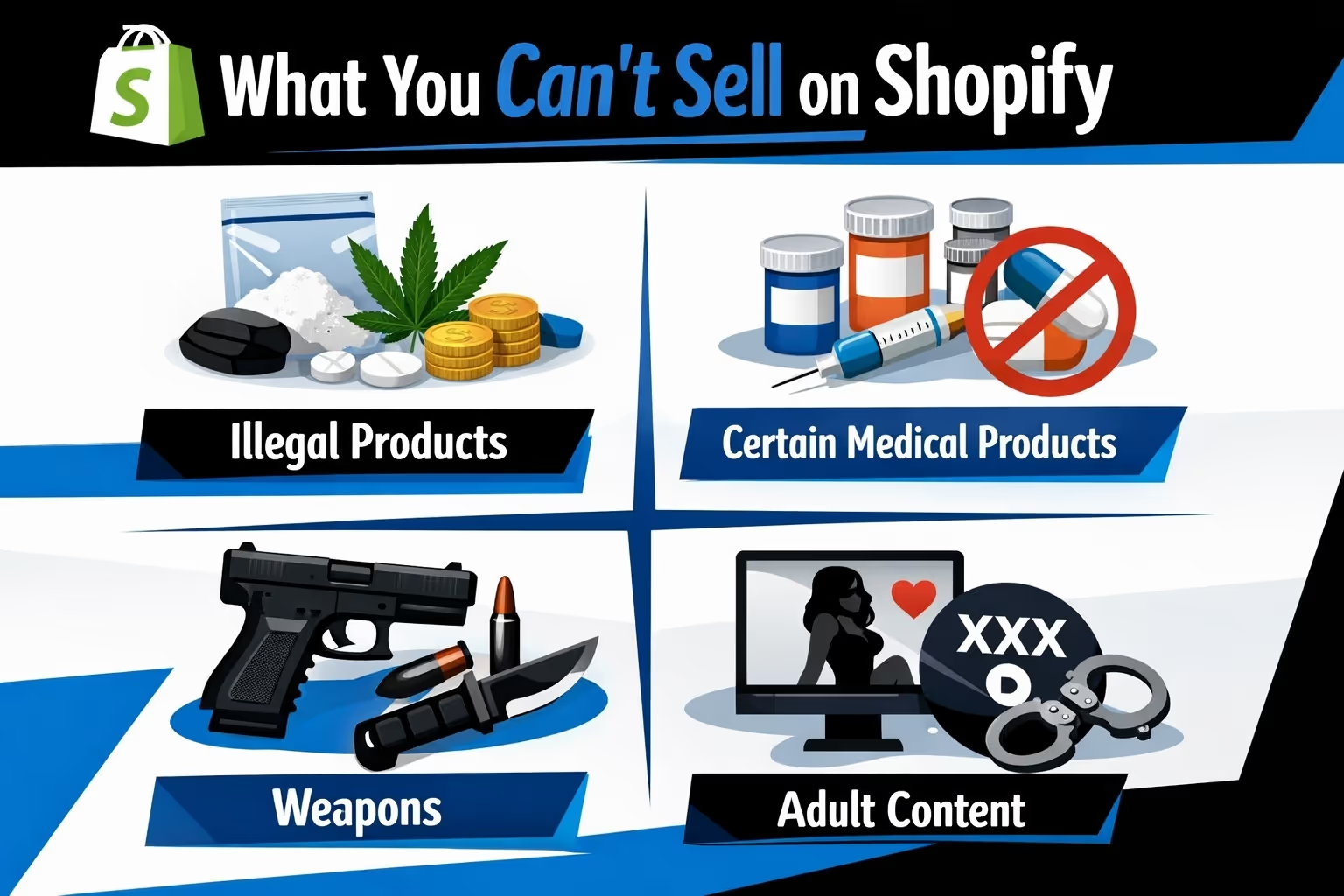
While Shopify is flexible, it does have firm boundaries. Some product types are restricted or outright prohibited, either because of legal risk, payment processor rules, or platform policy. Ignoring these limits can lead to payment holds, product removals, or even store suspension.
In general, Shopify does not allow stores to sell:
Beyond outright bans, some categories sit in a gray area. Alcohol, tobacco, CBD, cosmetics, and food products may be allowed in certain regions but require licenses, disclosures, age verification, or specific payment setups. In these cases, the platform may allow the store, but payment processors might not.
The safest approach is simple. If a product raises legal, ethical, or regulatory questions, research it carefully before building the store around it. Shopify’s policies and payment rules matter just as much as demand.
Instead of starting with a long list of product ideas, it helps to start with your constraints. Those limits are not weaknesses. They are what shape a business you can actually sustain.
Ask yourself:
The strongest Shopify businesses tend to be focused and grounded in reality. They grow by improving what already works, not by chasing every new idea that looks easy or trendy.
You can sell almost anything on Shopify. That part is easy.
What matters is choosing something that fits how you work, how you think, and how much energy you can realistically sustain. Shopify is a powerful tool, but it rewards clarity more than cleverness.
If you build around something you understand and can explain honestly, the platform gets out of the way and lets you grow. If you chase ideas that look easy but feel empty, Shopify will still work, but the business may not.


