How to Change Your Shopify Store Name Without Breaking Anything
Learn how to change your Shopify store name step by step, what it affects, what it doesn’t, and what to double-check before saving.
Jan 8, 2026



There’s no shortage of places to sell stuff online, but two names come up almost every time: Shopify and Etsy. They both help you reach buyers, but they couldn’t be more different in how they do it.
Etsy gives you a ready-made crowd and a fast setup – great if you’re just dipping your toe in. Shopify, on the other hand, hands you the keys to your own store, where you’re in full control (and also fully responsible for getting traffic).
If you’re wondering which one makes more sense for your products or your goals, you’re not alone. Let’s break it down in plain English – no hype, no jargon, just the real trade-offs.
The biggest difference is where your store lives.
Etsy is a shared space. You list your products on a marketplace that millions of buyers already visit. You don’t need to build a website. You’re part of Etsy’s ecosystem and follow its rules.
Shopify gives you your own online store. You build it, design it, and run it yourself. It’s your domain, your checkout, your branding. But you also have to bring your own customers.
If you're a creator who wants fast exposure and minimal setup, Etsy gets you out the door quickly. If you're trying to build a brand with long-term control and flexibility, Shopify gives you the tools to make it happen.
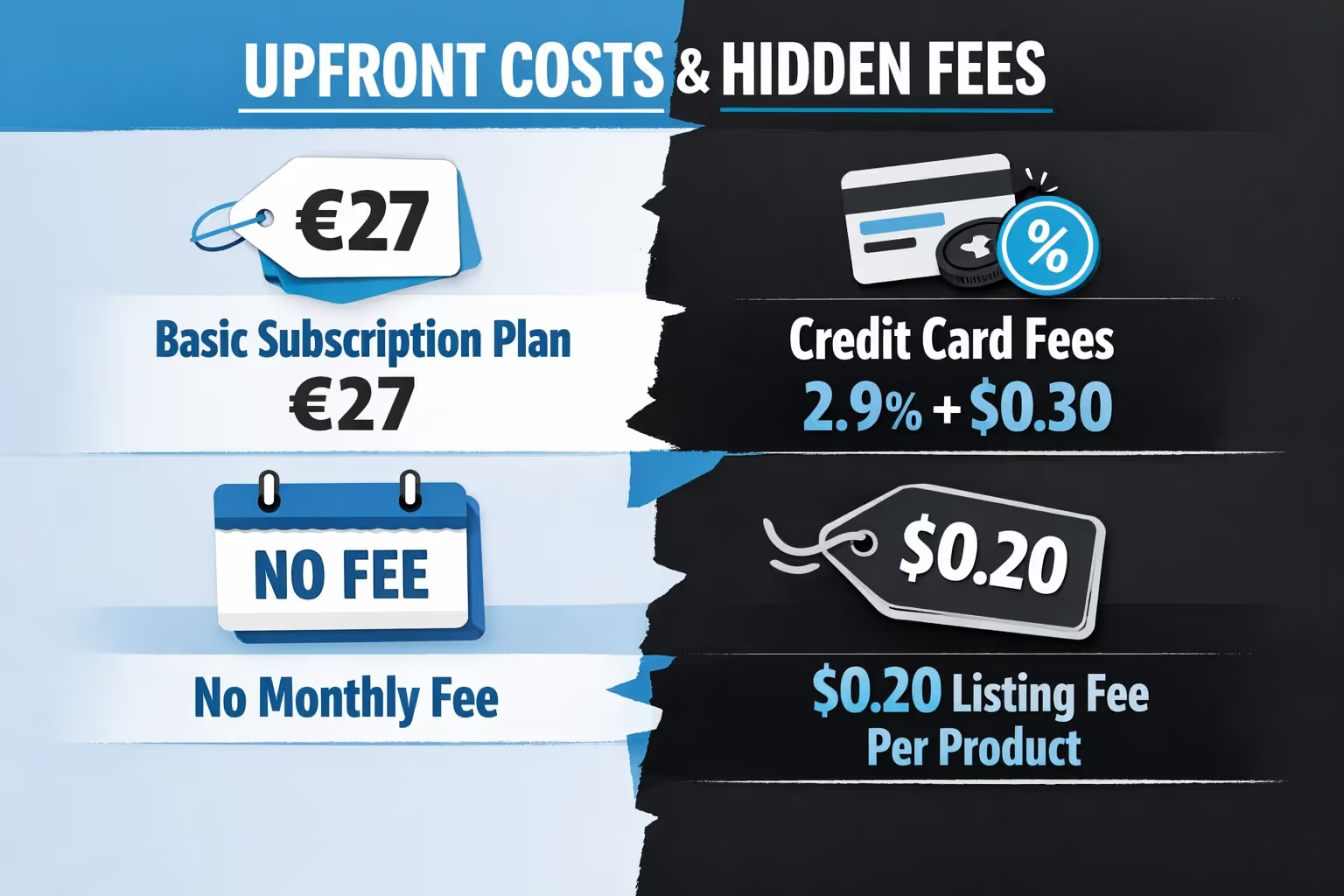
Let’s talk about money. Not just obvious pricing, but the stuff that quietly adds up.
Now here’s the kicker: even though Etsy doesn’t charge a monthly fee, once your sales volume grows, their per-sale fees can start to eat into your profits in a big way.
If you sell 150 orders a month at $40 each on Etsy, the fees break down like this: the 6.5% transaction fee on $6,000 comes to $390, the 3% payment processing fee adds another $180, and the $0.25 per-order fee totals $37.50. Altogether, that’s about $607.50 per month in fees, not counting listing fees or any offsite ad charges. That’s more than double what many Shopify sellers would pay at the same order volume.
So if you're just starting and testing the waters, Etsy is more affordable. But if you're selling consistently or planning to scale, Shopify’s pricing structure becomes much more sustainable.
Etsy makes setup feel like filling out a profile. Create an account, add listings, set prices, configure shipping, and you’re basically done. Most sellers can launch in under an hour.
Shopify takes more work upfront. There’s more to build: choose a theme, design your site, write policies, add products, connect payments, configure taxes and shipping zones. It’s still beginner-friendly, but not instant.
That said, Shopify's guided onboarding is solid. And the learning curve pays off, especially if you care about how your store looks and functions.
In short, Etsy is faster out of the gate, while Shopify gives you more control, but takes more time.
This is one area where the gap between the two platforms gets huge.
If your product is the brand, Etsy works. If your brand is the product, Shopify gives you the creative freedom you need.
Let’s be clear about this: Etsy brings the audience, Shopify makes you build one.
Etsy had over 90 million active buyers last year. People go there already looking for personalized gifts, handmade goods, or unique finds. If you optimize your listings and use Etsy SEO properly, you can start getting sales with no ad budget.
Shopify, meanwhile, starts empty. No traffic, no SEO rankings, no social followers. It’s your job to bring people in. That can be a lot to take on if you’re just starting out, but it’s also where the upside lives. You’re not competing with hundreds of similar listings. Your visitors came for you.
If you’re comfortable with social media, email marketing, and paid ads (or plan to be), Shopify is where you build something lasting. Etsy is perfect if you want sales without a marketing plan... at least in the beginning.
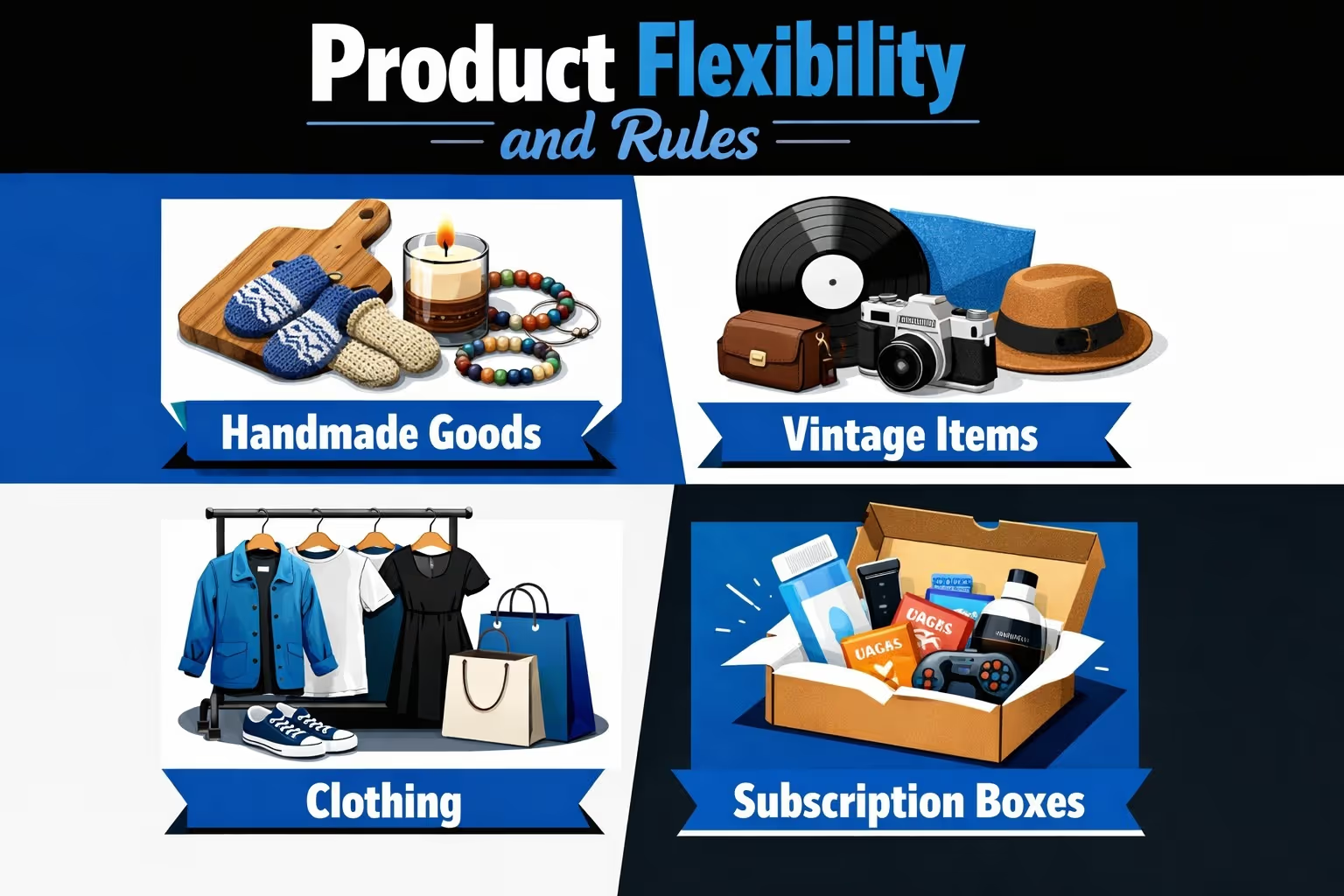
This one's easy: Shopify lets you sell whatever you want (as long as it’s legal). Etsy has guardrails.
Allowed on Etsy:
Not allowed on Etsy:
Shopify gives you broad flexibility, but still prohibits certain categories like firearms, illegal goods, or products with false health claims. You can sell:
If your product catalog doesn’t fit Etsy’s vibe or rules, your only real option is Shopify.
Etsy gives you just enough to get by:
Shopify gives you a full business toolkit:
If you’re trying to run an actual business, not just a storefront, Shopify gives you a serious operational advantage.

If you’ve decided Shopify is your long-term platform, one thing becomes clear fast: running a store means also running ads. And running good ads takes time, testing, and money unless you change the way you do it.
That’s where we come in.
At Extuitive, we help Shopify sellers create and validate high-performing ads without burning through budget or wasting weeks on trial and error. Our AI agents simulate feedback from real consumer profiles, giving you instant insight into how your ads will perform before you ever spend a dime. Whether you're launching a new product or reworking messaging for your bestseller, we help you find the right audience, dial in your creativity, and predict purchase intent with real-world accuracy.
It’s not just faster, it’s smarter. We built Extuitive to support real sellers with real goals, not just ad agencies with big teams. If you're already selling on Shopify or planning to make the move, we make sure your ads are built to convert from day one.
This is where things get real.
On Etsy:
On Shopify:
It’s the difference between being a tenant and being a homeowner. Etsy is safer in the short term, but Shopify offers real independence.
If you're thinking beyond your home country, Shopify has the better toolkit. It lets you set prices in different currencies, translate your storefront into multiple languages, and tailor the shopping experience based on where your customers are. You can also set up regional tax rules and define custom shipping zones, so everything feels local to your buyers no matter where they are.
Etsy supports international selling with automatic VAT/GST collection in supported regions, but sellers still have limited control over localization and shipping rules compared to Shopify. Plus, the buyer experience stays mostly the same regardless of region.
If you want to scale globally, Shopify is just built for it.

Both platforms are secure. Both are PCI-compliant. But the seller experience is different.
Shopify:
Etsy:
If something breaks, you’ll get better help (and faster) on Shopify. Etsy’s support works, but you might be waiting longer than you’d like.
Here’s a little secret: a lot of sellers use both. Start on Etsy to test products and get sales fast. Build on Shopify for long-term growth, branding, and customer ownership.
They don’t compete. They complement each other. And with Shopify apps that integrate with Etsy, you can sync your listings and inventory across platforms.
There’s no universal answer. But here’s a rule of thumb I’d use. Choose Etsy if you want to test the waters, sell handmade goods, and get fast exposure with minimal effort. Choose Shopify if you want to build a brand, keep your customer data, and scale a real business over time.
Etsy is your shortcut. Shopify is your runway.
If you’ve got ambition and are willing to invest a little more time upfront, Shopify pays off later. If you’re looking to make sales without building a brand yet, Etsy has your back.
Either way, you’re not locked in. You can start small, grow smart, and choose the platform that makes the most sense for where you are right now.


