Top AI Tools for Boosting ROAS on Meta Ads
Discover top AI platforms that optimize Meta ads for higher ROAS. Scale faster and more profitably with predictive testing and smart automation tools
Mar 24, 2026



For most sellers, Shopify doesn’t act like Amazon or Etsy. You’re not joining a giant online mall. You’re building your own store, on your own terms. That independence is a big part of Shopify’s appeal, but it also means the rules around taxes, logistics, and compliance can be very different.
Still, a new question has started popping up more often lately: is Shopify now considered a marketplace facilitator?
Thanks to a few key changes, especially involving the Shopify Shop app, the answer isn’t as straightforward as it used to be. This article breaks down what a marketplace facilitator actually is, where Shopify fits into that definition today, and what it means for sellers trying to stay compliant (without losing their minds over tax forms).
The core difference comes down to who owns the customer relationship, and who’s responsible for what.
Marketplaces (like Amazon, eBay, or Etsy) give you access to shoppers who are already browsing. You don’t need to drive your own traffic. But in exchange, they take a cut of every sale, control the shopping experience, and often handle taxes and shipping. You’re more like a tenant in their mall.
E-commerce platforms like Shopify, on the other hand, give you the tools to build your own store. You bring in your own customers, set your own rules, and own the data. But you also handle more of the backend, like customer service, fulfillment, and yes, taxes.
For years, Shopify was clearly in the second category. But the last few years introduced some new wrinkles.
A marketplace facilitator, legally speaking, is a business that helps third-party sellers make sales and then takes responsibility for collecting and remitting sales tax on those transactions.
This usually applies when:
Most U.S. states have marketplace facilitator laws that require platforms meeting this definition to handle sales tax on behalf of their sellers.
This is why Amazon collects tax for sellers in most states – it legally has to. It’s also why the idea of Shopify becoming a facilitator raises big questions about tax compliance.
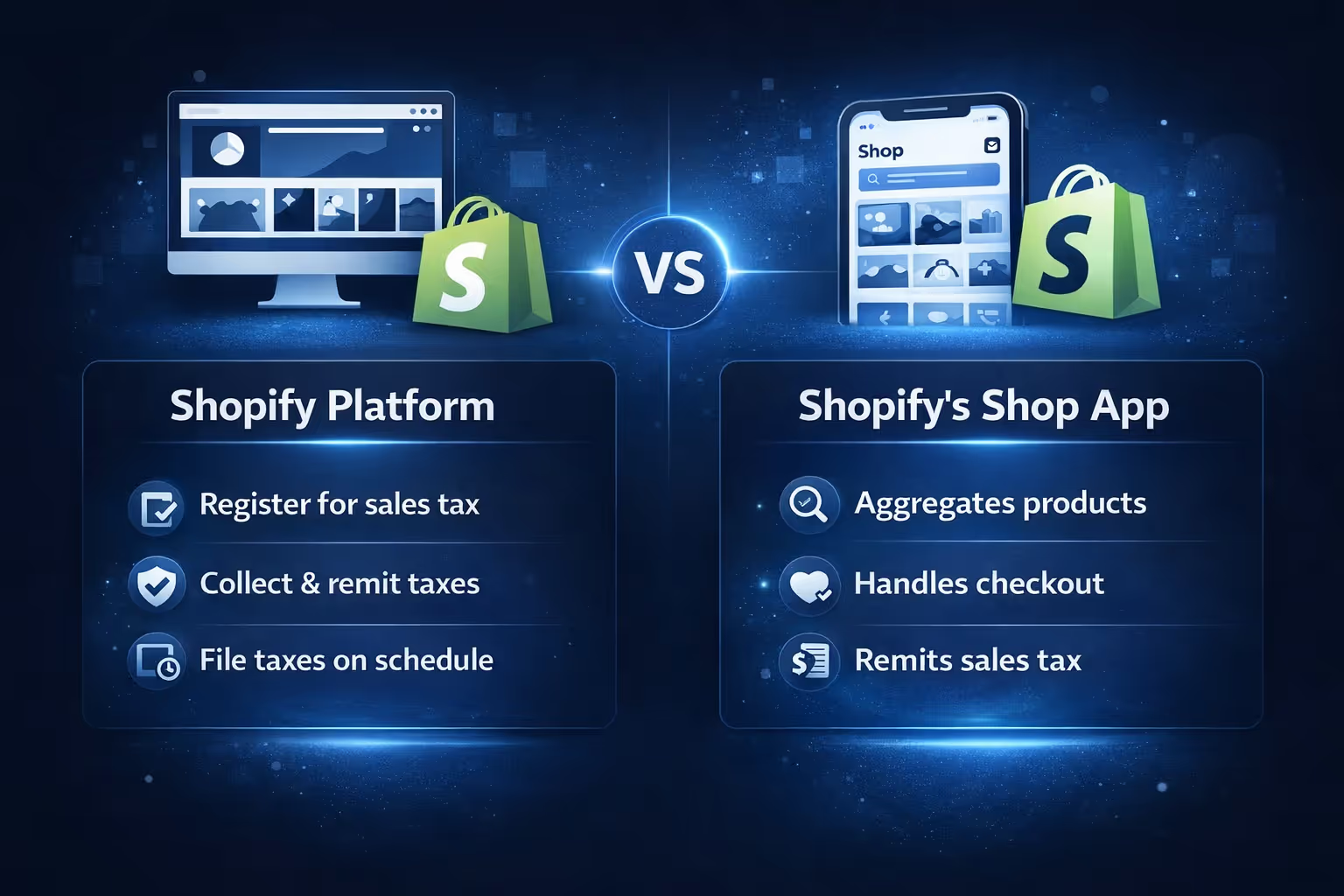
Let’s split the answer into two parts:
If you’re running a standard Shopify store – on your own domain, under your own brand – then Shopify is just the platform provider. It’s like renting software. You’re responsible for:
Shopify gives you tax calculation tools, but it does not handle tax filings or payments for you.
This hasn’t changed.
This is where things get more interesting.
Shopify currently collects and remits sales tax for orders placed through the Shop app, which may classify it as a marketplace facilitator in certain states.
The Shop app:
Because it checks all the boxes, Shopify is considered a marketplace facilitator, but only for sales that happen through the Shop app.
If a customer buys your product directly from your Shopify storefront, you handle the tax.
If they buy it through Shop, Shopify handles the tax.
Here’s where things get practical. Depending on how and where you sell, your tax obligations may vary.
In this case, you're in charge of all things sales tax. That means figuring out where you have nexus, whether it’s based on where you’re located or how much you’re selling in a particular state. Once you cross a threshold, you're expected to register in that state and start collecting tax from customers there.
It doesn’t stop there. You’ll also need to make sure your products are classified correctly, since not everything is taxed the same way. From there, it’s on you to file returns – monthly, quarterly, or however often your state requires – and to send in the taxes you’ve collected. Shopify can calculate the tax for you at checkout, but the actual filing and payment is still your responsibility.
Things work a little differently when sales happen inside the Shop app. Shopify will collect and remit the sales tax for those transactions, but that doesn’t mean you’re completely off the hook. You still have to keep an eye on your overall sales across all platforms to make sure you’re tracking economic nexus correctly. Just because Shopify is handling the tax for Shop app orders doesn’t mean those sales don’t count toward your thresholds.
In some states, you’ll also need to report marketplace sales separately, even if the tax was already collected. A few states might ask you to file a return anyway, even if the amount is zero. And if you ever get audited, it’s on you to provide proof, so you may need to request tax collection certificates from Shopify to show that they handled those specific transactions.
The short version? Shopify helps, but you're still involved.
Nexus is what decides whether you even need to worry about collecting sales tax in a particular state.
There are two types:
After the 2018 Supreme Court decision in South Dakota v. Wayfair, most states adopted economic nexus rules. That means:
Shopify doesn’t automatically notify you when you establish a nexus. You have to track it yourself.
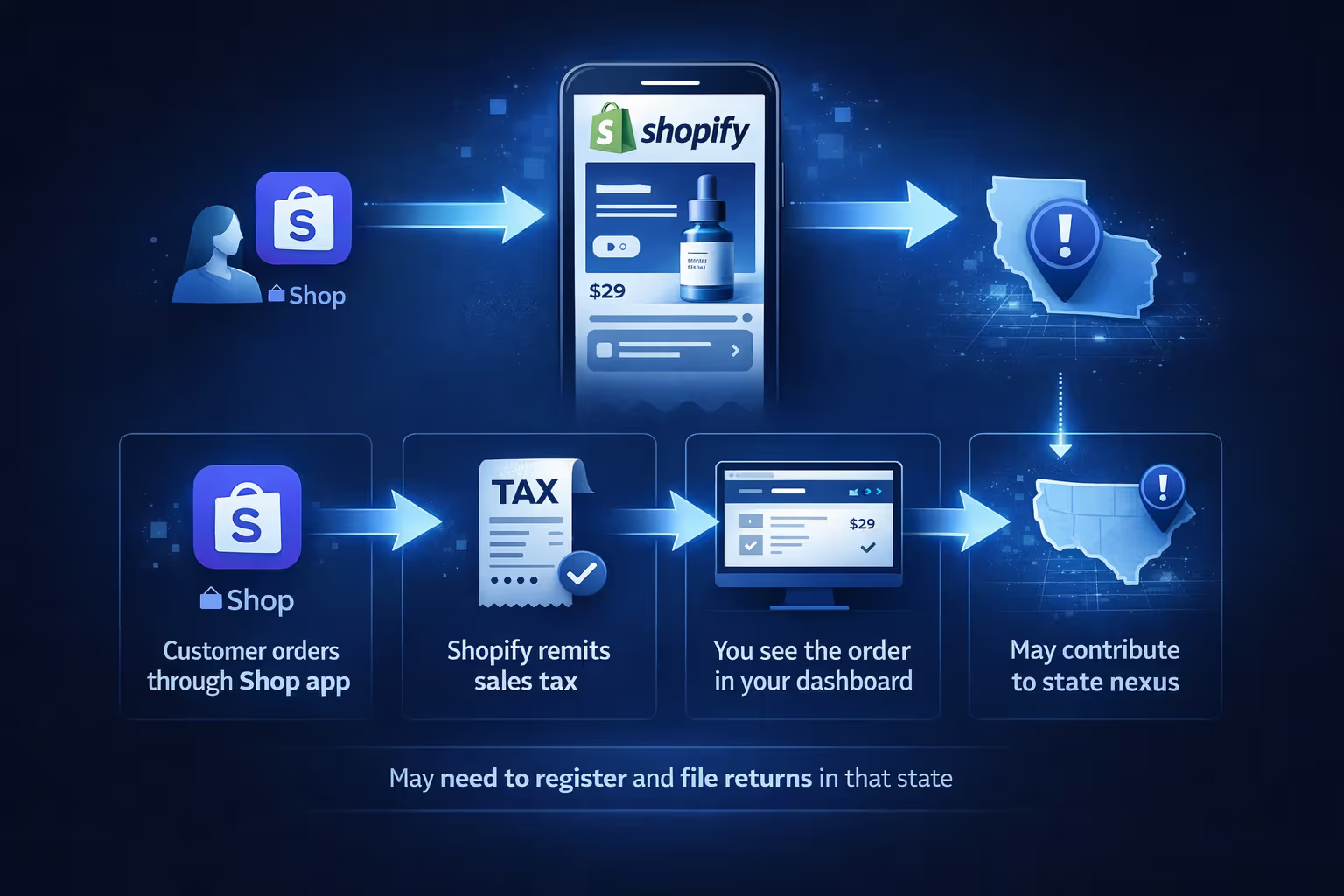
Let’s say you’re a skincare brand running your own Shopify store. You’ve recently enabled the Shop channel.
A customer finds your face serum through the Shop app and places an order.
Not exactly.
Shopify’s core business still revolves around letting merchants build and run their own stores. The Shop app is more of a discovery layer than a full marketplace. It doesn’t promote competing products on your listings, replace your store experience, or charge a commission per sale.
That said, it does give Shopify some marketplace-like responsibilities, especially on the tax side. And it does give sellers a bit of built-in exposure – something Shopify traditionally lacked.
The Shop app isn’t Amazon. But it’s no longer just an order tracking tool either.
Here’s a quick recap of what really matters:

Handling tax is one part of running a Shopify store. The other? Actually making sales. At Extuitive, we help you do just that. Our platform is built for Shopify merchants who want smarter, faster ways to create and validate ad concepts. Instead of guessing which headlines or visuals might convert, we use AI agents modeled on real consumer behavior to predict purchase intent before you spend a dollar on live ads.
We connect directly with your Shopify store, analyze your products and audience, then generate ad creatives that fit your brand. From there, we test those ads across simulated customer profiles, helping you launch with data-backed confidence. If Shopify gives you the storefront, we help bring the right people through the door.
This becomes even more important if you're selling across both your store and the Shop app. With discovery happening in more places and tax rules split across channels, your ads need to work harder and adapt faster. That’s where we come in.
Shopify didn’t start as a marketplace, and it still isn’t one in the traditional sense. But parts of the experience, especially the Shop app, have taken on marketplace-like traits. That has real implications when it comes to sales tax.
If you’re running a Shopify store, the key is knowing where your sales happen, how that impacts your tax obligations, and when you need to act.
It’s not the most glamorous side of e-commerce, but getting it wrong can cost you. And now that Shopify is handling taxes in some places but not others, a clear understanding isn’t optional – it’s essential.


