Automated Dropshipping Guide: Top Tools & Strategies
Discover how automated dropshipping streamlines ecommerce operations. Compare top tools, learn best practices, and start building a profitable online store.
Apr 15, 2026



At some point, almost every Shopify store owner asks the same question: Is Shopify a CRM, or do I need something else? The confusion makes sense. Shopify shows customer profiles, order history, and contact details. On the surface, that looks a lot like customer relationship management.
But a CRM is not just a place where data lives. It is a system designed to track relationships over time, across channels, and through every stage of the customer journey. Shopify does some of that surprisingly well. Other parts, not so much.
Before you decide whether Shopify is “enough” or whether you need to add another tool, it helps to be clear about what Shopify actually is, what it was built for, and where the limits start to show.
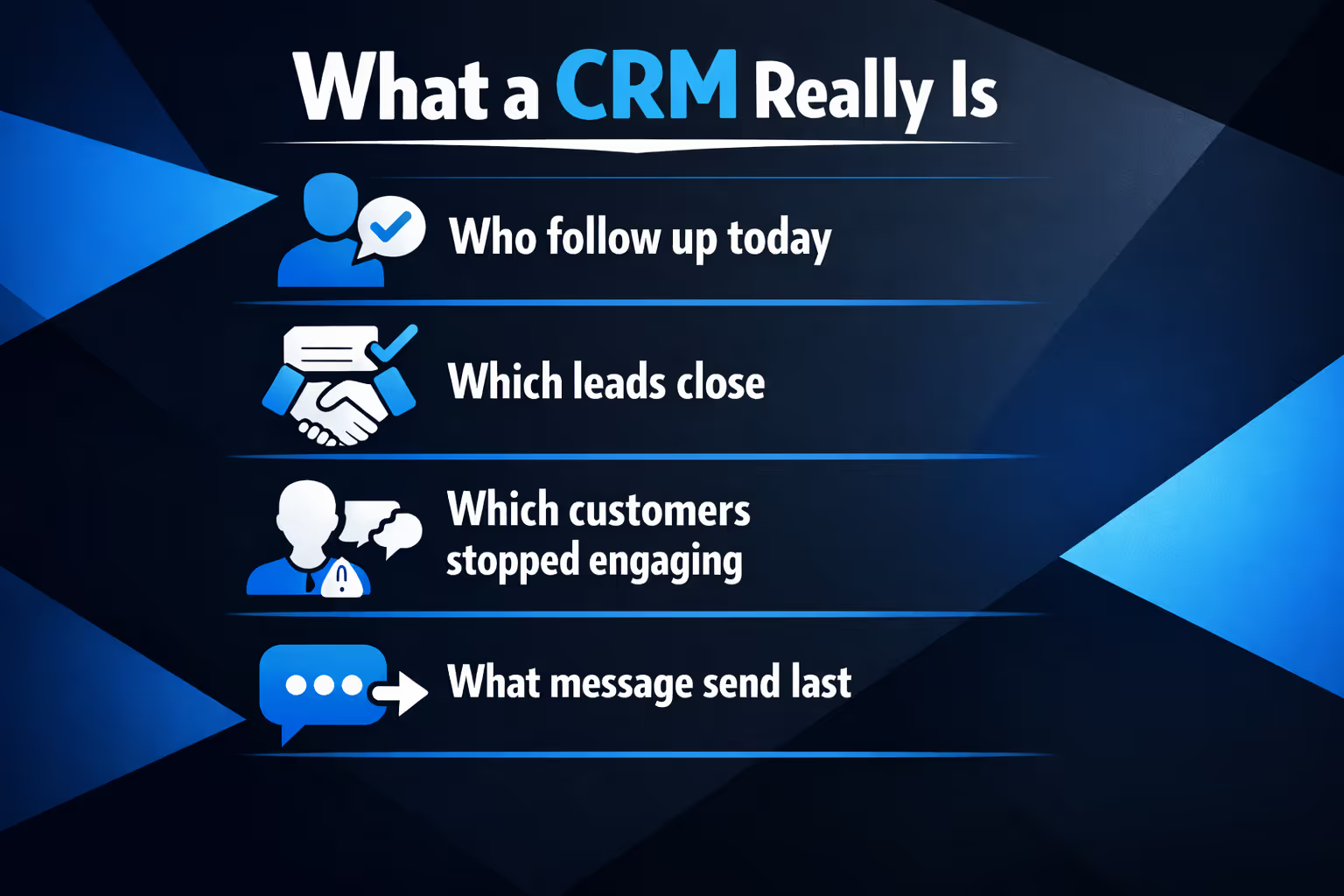
A CRM, short for Customer Relationship Management, is not just a database of contacts. At its core, a CRM is a system built to manage relationships over time.
That means tracking how a customer moves from first contact to first purchase, and then to repeat buyer or long term client. It means recording conversations, follow ups, and decisions. It means helping teams understand where each customer stands right now, not just what they bought in the past.
Most CRMs focus on things like lead stages, pipelines, communication history, task reminders, and automation tied to behavior. They are designed to answer questions such as:
This is important, because once you understand what a CRM is meant to solve, it becomes easier to see where Shopify fits, and where it does not.
Shopify is an ecommerce platform first. Everything else comes second.
Its main job is to help you sell products online. That includes product listings, checkout, payments, taxes, shipping, inventory, and order management. Around that core, Shopify adds supporting tools such as basic content management, analytics, and customer records.
The customer section inside Shopify exists to support transactions. It answers questions like:
That information is essential for running a store, but it is still transactional in nature. Shopify records what happened during a purchase. It does not actively manage the relationship outside that context.
This distinction matters more than it seems at first glance.
No, Shopify is not a CRM in the traditional sense.
It includes basic customer management features, but it does not provide the tools that define a full CRM system. There is no built in lead pipeline. There is no native way to track conversations across multiple channels. There are no automated follow ups tied to relationship stages. There is no unified view of a customer beyond their orders.
That does not mean Shopify is weak. It means Shopify is focused. Its customer features exist to support selling, not relationship management.
Once you accept that, the rest of the picture becomes much clearer.
If Shopify is not a CRM, why does the question keep coming up?
The answer is simple. For many small and mid sized stores, Shopify is the first system where customer data lives in one place. Before Shopify, some sellers rely on email inboxes, spreadsheets, social media messages, and payment processors scattered everywhere. Shopify already feels like a huge step forward.
When you can click on a customer and see their order history, tags, notes, and total spend, it feels powerful. For a solo founder or a small team, that level of visibility can be enough for a long time.
The illusion breaks when communication becomes more complex. The moment you are dealing with Instagram messages, WhatsApp chats, email campaigns, support tickets, and sales follow ups at the same time, Shopify’s limits become obvious.
These features are solid and reliable. They are designed to be simple and fast, not flexible or deep. Once your workflow depends on pipelines, follow ups, or multi-channel conversations, Shopify alone stops being enough.
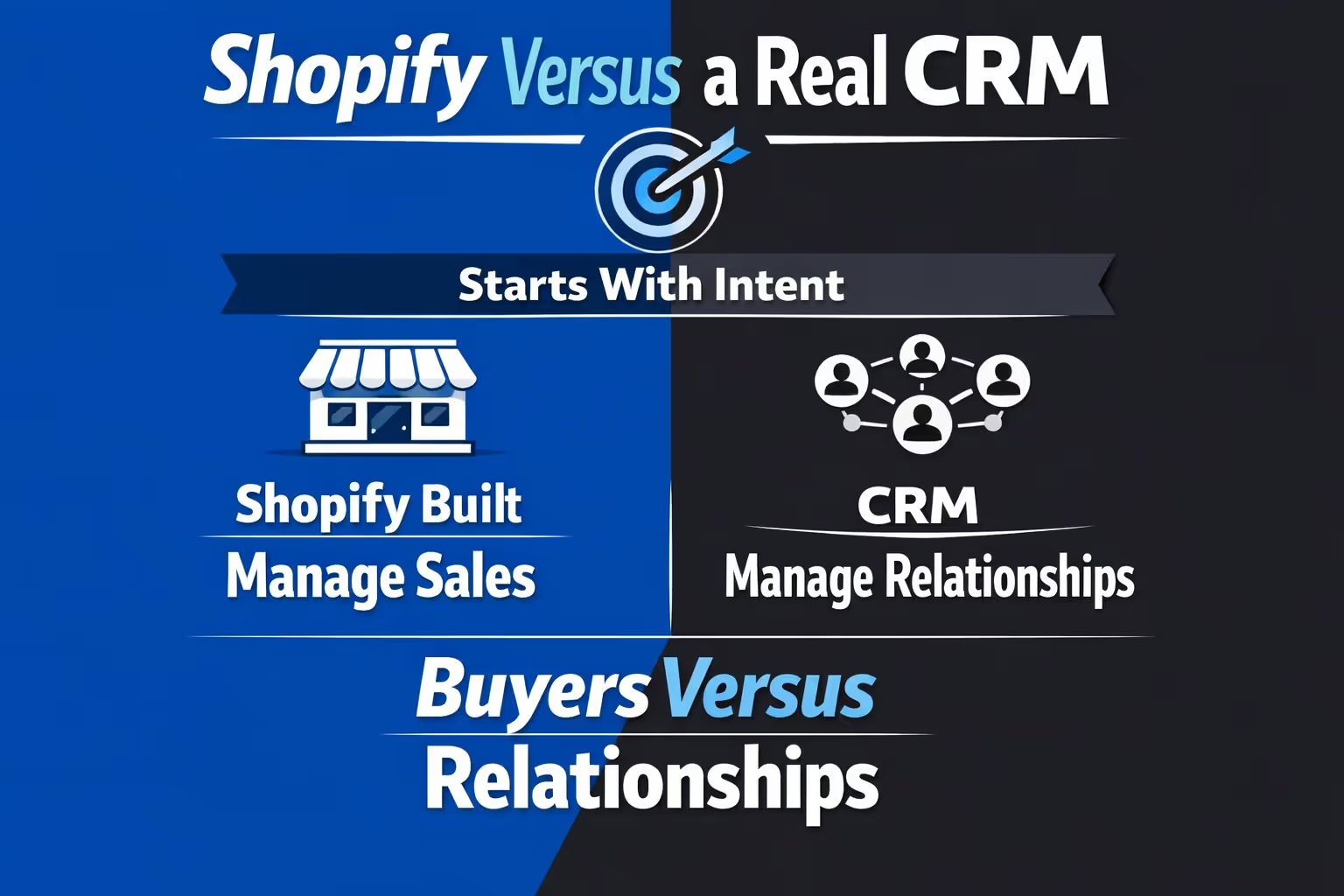
The easiest way to understand the difference is to look at intent. Shopify and CRM systems are built to answer very different questions.
Shopify focuses on one core job: processing and managing sales. Orders, payments, refunds, and fulfillment sit at the center of everything. Customer data exists to support those transactions and make selling smoother.
A CRM focuses on people, not just purchases. It is designed to track relationships before, during, and after a sale. That includes conversations, follow ups, lead stages, and long term engagement across multiple channels.
Shopify treats customers primarily as buyers. CRMs treat customers as ongoing relationships. This difference shapes how each system is used day to day.
In Shopify, you usually look at orders first and customers second. In a CRM, you look at people first and transactions second. Neither approach is wrong. They are built for different jobs and solve different problems.
In many ways, yes.
Shopify includes content management features that allow you to create pages, blog posts, product descriptions, and navigation structures. This makes it a specialized ecommerce CMS.
Unlike general CMS platforms, Shopify’s content tools are tightly connected to products and checkout. That is a strength, not a weakness. But it reinforces the idea that Shopify’s core identity is commerce, not relationship management.
Understanding this helps avoid unrealistic expectations. Shopify does not try to be everything, and that is part of why it scales so well.
There are plenty of cases where Shopify’s native customer features are sufficient. If you run a small store with a limited product catalog, simple customer journeys, mostly one way communication, and minimal manual follow ups, Shopify can work just fine on its own.
Many early stage stores operate this way for years without issues. The key sign that Shopify is enough is when customer relationships are straightforward and driven mostly by transactions, not ongoing conversations.
The need for a CRM usually appears gradually, not overnight. Common warning signs include losing track of customer conversations, forgetting to follow up on leads, managing messages across multiple inboxes, running campaigns without clear targeting, or lacking visibility into customer intent.
At this stage, Shopify still handles orders perfectly, but it no longer provides enough context to act with confidence. This is where adding a CRM and integrating it with Shopify becomes important.

At Extuitive, we work with Shopify brands that have outgrown guesswork. Shopify does a great job managing orders and customer data, but it does not explain why customers respond to certain messages or offers. That insight usually comes too late, after money has already been spent.
We help teams validate ads and messaging before launch using AI agents modeled after more than 150,000 real consumer profiles. Instead of testing ideas live with paid traffic, brands can see what resonates in minutes and focus on creatives and audiences that are more likely to convert.
Extuitive fits naturally alongside Shopify and CRM tools. Shopify runs the store, CRMs manage relationships, and we help teams make smarter decisions earlier so the right customers arrive in the first place.
When you see articles or tools talking about a “Shopify CRM,” they almost always mean one of two things.
Either they mean a third party CRM that integrates with Shopify, or they mean a CRM built specifically to work alongside Shopify.
Shopify itself is rarely the CRM in these setups. It becomes one data source among others.
This distinction is subtle but important. Shopify does not become a CRM just because it connects to one. The roles remain separate.
In most setups, Shopify acts as the transaction layer. The CRM acts as the relationship layer.
Customer data flows from Shopify into the CRM. Orders, products, and purchase behavior become part of a broader customer profile. Communication tools, automation, and pipelines live inside the CRM.
This division of labor works well because each system does what it is best at. Shopify handles selling. The CRM handles relationships.
The result is not duplication, but clarity.
For very small teams, the answer can be yes, at least for a while. If you are managing a limited number of customers and handling interactions manually, Shopify’s built-in customer records and order history can be enough to stay organized. In early stages, simplicity often matters more than structure, and Shopify does a good job of keeping everything in one place.
That said, the limit is not team size, it is complexity. The moment your operation relies on memory, sticky notes, or mental reminders to keep track of follow ups, you are already past what Shopify was designed to handle. A CRM is not about having more people. It is about needing a system that can manage growing relationships without things slipping through the cracks.
One of the most common mistakes is assuming that adding more Shopify apps will somehow turn Shopify into a full CRM. Apps can extend specific functions, but they do not change the platform’s core purpose. You may gain extra features, but without a central relationship system, those features often stay disconnected.
The real goal is not to force Shopify into a role it was never meant to play. The goal is to build a stack where each tool has a clear responsibility. Shopify runs the store. A CRM manages relationships. When those roles are clear, your systems feel simpler, not more complicated.
Shopify is not a CRM, and that is not a flaw. It is a focused ecommerce platform with solid customer records and excellent selling tools.
If your business needs more than that, the solution is not to stretch Shopify beyond its limits, but to complement it with the right CRM. Store owners who understand this early avoid a lot of frustration later. They build systems that scale, not workarounds that break under pressure.
If there is one takeaway from this article, it is this: Shopify manages sales. CRMs manage relationships. Knowing the difference puts you back in control.


